Peptides are short chains of amino acids, the same building blocks as protein. Some are approved drugs with big trials behind them, and many are research compounds with animal data and little else. This list sorts them by what people use them for, says plainly which are approved, and links each one to its full guide. If you’re new to all of it, start with how to start peptides.
Types of Peptides
This peptide list sorts them into six types, below. A few popular compounds sold next to them aren’t peptides at all; they’re listed at the end. About half of active Regimen users track more than one compound. Which ones people take most, ranked from Regimen data: the most popular peptides.
GLP-1 and Weight-Loss Peptides
- Retatrutide: a weekly shot that acts on three hormone receptors (GLP-1, GIP and glucagon). Investigational, not approved anywhere, and the most-tracked compound in Regimen.
- Tirzepatide (Mounjaro, Zepbound): a weekly GLP-1 and GIP shot, FDA-approved for type 2 diabetes and weight loss.
- Semaglutide (Ozempic, Wegovy): a weekly GLP-1 shot, FDA-approved for type 2 diabetes and weight loss. See also Ozempic side effects and is Ozempic a peptide.
- Cagrilintide: a long-acting copy of amylin, another appetite hormone, often paired with semaglutide or retatrutide. Not approved.
- AOD-9604: a 16-amino-acid fragment of growth hormone sold for fat loss. Tested as an oral obesity drug, never approved, no published weight-loss result.
Growth Hormone Peptides
- Sermorelin: the first 29 amino acids of GHRH, which tells your pituitary to release growth hormone. Approved as Geref until its maker discontinued it in 2008.
- Tesamorelin: a stabilized form of the full GHRH, FDA-approved (Egrifta) to reduce belly fat in adults with HIV-associated lipodystrophy.
- CJC-1295 and ipamorelin: a GHRH analog and a ghrelin-receptor peptide, usually taken together at bedtime. Not approved.
- IGF-1 LR3: a long-acting, lab-made form of IGF-1, the hormone growth hormone raises. Not approved.
Recovery and Anti-Inflammatory Peptides
- BPC-157: 15 amino acids from a stomach protein, studied in animals for tendon, ligament and gut healing. Not approved.
- TB-500: a lab-made fragment of thymosin beta-4, used for recovery, often with BPC-157 as the Wolverine stack. Not approved.
- KPV: 3 amino acids from alpha-MSH, studied in mice for gut and skin inflammation. Not approved.
- GHK-Cu: a copper peptide used on the skin and injected. Not approved as an injection.
- KLOW and GLOW: blends. KLOW is GHK-Cu, BPC-157, TB-500 and KPV in one vial; GLOW is the same without KPV.
More on this group: anti-inflammatory peptides.
Mitochondrial and Metabolic Peptides
- MOTS-c: a 16-amino-acid peptide made from your mitochondrial DNA, which switches on the cell’s energy sensor. Not approved.
- SS-31 (elamipretide): a 4-amino-acid peptide that binds the inner membrane of mitochondria. FDA-approved in 2025 as Forzinity, for Barth syndrome only.
- Glutathione: a 3-amino-acid antioxidant your body makes, taken as a shot or IV. The FDA warned about injectable glutathione in 2026.
Hormone and Fertility Peptides
- Kisspeptin: the brain signal at the top of the testosterone and fertility chain. Raised LH and testosterone in small studies; never approved.
- hCG: a pregnancy hormone that acts like LH on the testes, used with TRT to protect fertility. Approved as a prescription drug.
Brain Peptides (Nasal Sprays)
- Semax: a nasal-spray peptide based on a piece of ACTH, used for focus. Not approved in the US.
- Selank: a nasal-spray peptide based on tuftsin, used for calm. Not approved in the US. Compare them in semax vs selank.
Sold With Peptides, But Not Peptides
- 5-amino-1MQ: a small molecule that blocks the enzyme NNMT. Not approved; tested only in cells and mice.
- NAD+: a coenzyme every cell uses for energy, taken as a shot or IV.
- MK-677 (ibutamoren): a daily pill that raises growth hormone. Not approved.
- Orforglipron (Foundayo): Lilly’s daily GLP-1 pill, FDA-approved for weight loss in 2026.
- Testosterone cypionate: a steroid hormone, FDA-approved for low testosterone. See peptides vs steroids.
Peptide Calculators and How-To Guides
- Peptide calculator: units to draw for any vial, water and dose. For blends, the peptide blend calculator.
- How to reconstitute peptides: mixing with bacteriostatic water, step by step.
- Peptide injection sites: where and how to rotate.
- Peptide cycling: how people run peptides on and off.
- Peptide half-life chart: how long each compound lasts.
- Are peptides safe?: side effects, risks and drug tests.
Track Your Peptides With Regimen
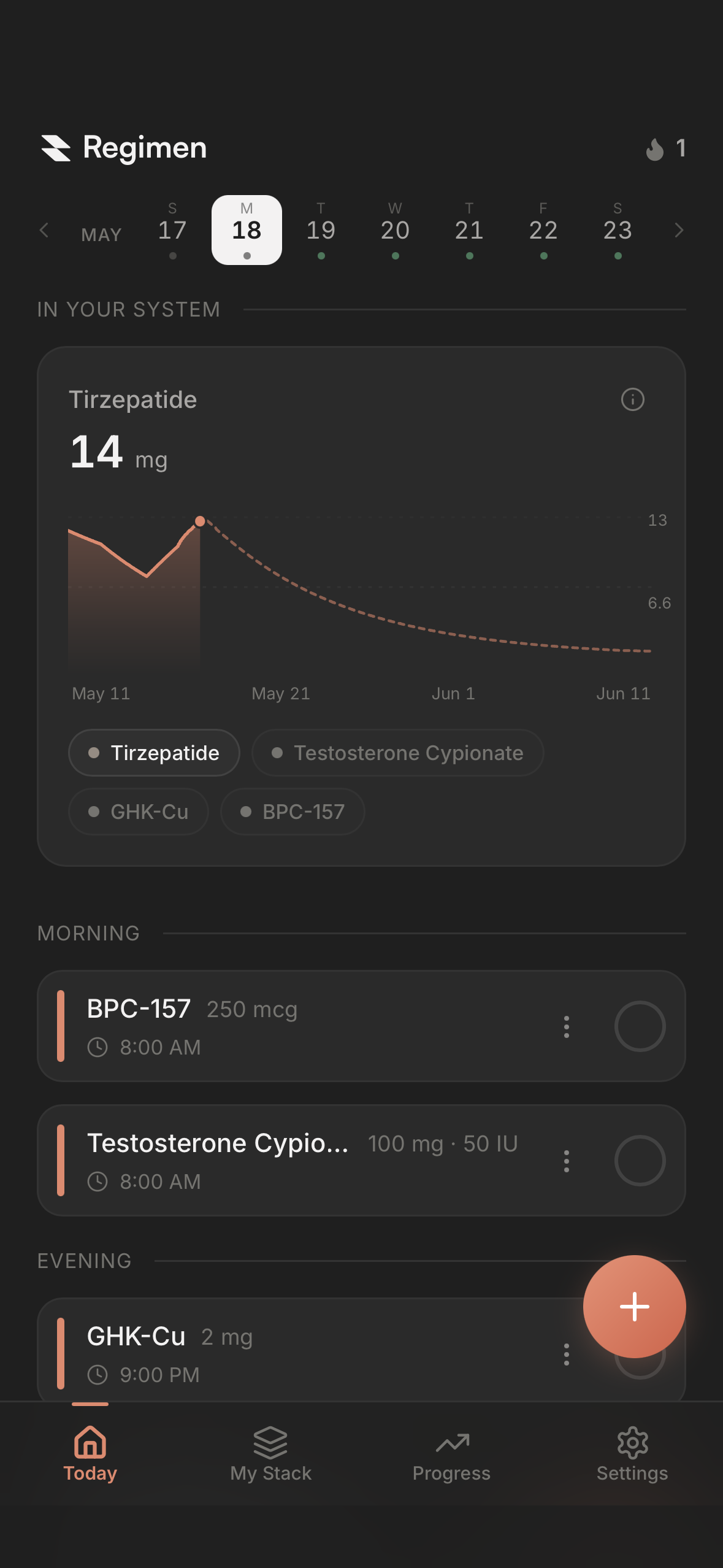
Regimen is a peptide tracker with 200+ compounds and brands in its library. Each one gets its own schedule and reminders, and a blend like KLOW is logged as one compound, with what’s in it shown.
This list is for education and tracking. It is not medical advice.
Frequently asked questions
Are all peptides injected?
No. Most are injected under the skin, but semax and selank are used as nasal sprays, GHK-Cu is also used on the skin, and semaglutide comes as a daily tablet (Rybelsus) as well as a weekly shot.
What are some peptide hormones?
Your body makes many: GLP-1 from the gut after a meal, ghrelin (the hunger hormone), and oxytocin and vasopressin from the brain. Many peptide drugs are copies or pieces of these, like semaglutide, a modified GLP-1.
Which peptides are FDA-approved?
On this list: semaglutide (Ozempic, Wegovy), tirzepatide (Mounjaro, Zepbound), tesamorelin (Egrifta), hCG and elamipretide (SS-31, sold as Forzinity, for Barth syndrome). Sermorelin was approved as Geref until 2008. Most others, like BPC-157, TB-500, KPV and MOTS-c, are not approved for any use.