Peptide Blend Calculator

Calculate exact doses for multi-peptide blended vials. See how much of each compound you get per injection, for any blend reconstitution.

Peptide blend

Multi-peptide vial dosing

Doses for blended vials where peptides share one fixed ratio.

mg
mg
mL

Blends have a locked ratio

When peptides are combined in one vial, you cannot dose them independently. Setting your target dose for one peptide automatically determines how much of every other peptide you get per injection.

Not all peptides can be safely blended

Combining peptides in a single vial can affect stability, potency, and safety. Some compounds degrade or interact when mixed. Only use blends from reputable sources with verified compatibility, and consult your healthcare provider before using any blended protocol. This calculator does not validate whether a given combination is safe.

This calculator is for informational purposes only, so always double-check your result with a healthcare provider. It does the dosing math but does not check whether a blend is safe, and combining peptides can affect stability and potency. We assume no liability for dosing errors.

The tool

How it works, what it tells you, what it doesn't.

The peptide blend calculator handles vials that hold more than one peptide. Add each peptide and its mg amount, enter your bacteriostatic water volume, then pick the peptide you want to dose. It returns the units to draw, the volume, and a per-injection breakdown of every peptide in the vial. Because a blend shares one fixed ratio, setting the dose for one compound locks in the dose of the others, and the calculator makes that trade-off explicit so you know exactly what each injection delivers.

How to use it

How to Use This Calculator

  1. 01

    Enter your peptides

    Add each peptide in the vial and its total mg amount

  2. 02

    Add BAC water

    Enter how much bacteriostatic water you added (1-3mL)

  3. 03

    Set target dose

    Choose one peptide and enter your target dose for it

  4. 04

    Read your results

    See syringe units and how much of each peptide per injection

Get the app

Track your full blend protocol

Regimen logs multiple compounds in one stack with built-in dose calculators, reminders, and progress tracking. Free for one compound.

  • Multi-compound stack tracking
  • Smart injection reminders
  • Progress correlation charts
  • Private, on-device data

Free to download. Free for your first compound.
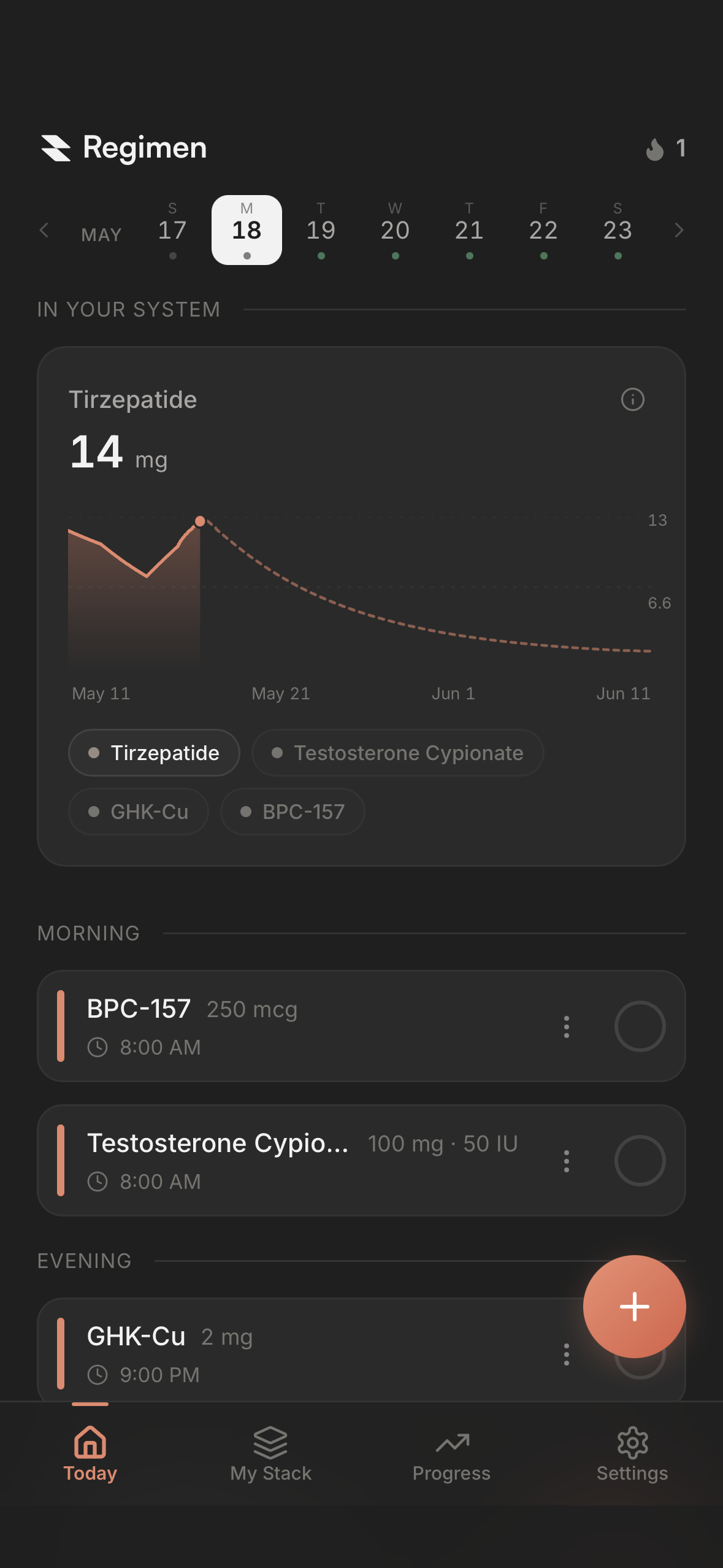
Regimen app Today view with doses and estimated levels

Questions

Frequently Asked Questions

Can I mix multiple peptides in one vial?

Yes - many research peptides are sold as pre-mixed blends, and some users reconstitute multiple lyophilized peptides into the same vial of bacteriostatic water. Common combinations include BPC-157 + TB-500 for recovery, CJC-1295 + Ipamorelin for growth hormone support, and popular named blends like GLOW and KLOW. The key thing to understand is that once blended, the ratio is locked - you can't dose each peptide independently.

What is the GLOW peptide blend?

GLOW is a popular 3-peptide blend containing GHK-Cu (50mg), TB-500 (10mg), and BPC-157 (10mg) per vial - 70mg total. It's primarily used for skin, collagen, and tissue repair support. Because the ratio is fixed, dosing for one peptide automatically determines your dose of the other two. Use this calculator to see the exact per-injection breakdown.

What is the KLOW peptide blend?

KLOW is a 4-peptide blend containing GHK-Cu (50mg), BPC-157 (10mg), TB-500 (10mg), and KPV (10mg) per vial - 80mg total. It builds on the GLOW formula by adding KPV, an anti-inflammatory peptide. The locked ratio means every injection delivers all four peptides in a fixed proportion.

What does 'locked ratio' mean for peptide blends?

When two or more peptides share one vial, every time you draw from that vial you get a fixed proportion of each compound. For example, if a vial has 5mg BPC-157 and 5mg TB-500, drawing any amount always gives you equal parts of both. If you want 250mcg of BPC-157, you'll automatically get 250mcg of TB-500 too. This calculator shows you exactly what you're getting of each peptide per injection.

How do I calculate a blend peptide dose?

Enter each peptide and its total mg in the vial, then enter how much BAC water you added. Choose which peptide you want to set a target dose for - the calculator shows you how many syringe units to draw and exactly how much of each peptide you'll receive. The math works the same as single-peptide reconstitution, but applied to each compound simultaneously.

What's the best BPC-157 and TB-500 blend dose?

A common research protocol uses 250-500mcg of BPC-157 with 250-750mcg of TB-500, typically injected once or twice daily subcutaneously near the site of injury. Many blended vials contain equal amounts of each peptide (e.g., 5mg/5mg or 10mg/10mg), making it straightforward to dose. Use this calculator to determine the exact syringe units for your specific vial and target dose.

How much BAC water should I add to a blended vial?

The same rules apply as single-peptide reconstitution: 1-3mL is typical. More water makes it easier to measure small doses accurately but gives you fewer total injections per vial. Less water concentrates the dose but can make small doses harder to read on your syringe. For most blends, 2mL is a good middle ground.

Can I dose each peptide separately in a blend?

No - that's the key limitation of blends. Once peptides are in the same vial, every draw contains all of them in the same fixed ratio. If you need to adjust one peptide's dose independently, you'll need to reconstitute them in separate vials. This calculator helps you understand exactly what you're getting so you can decide if a blend works for your protocol.

Is it safe to blend any peptides together?

No - not all peptides are compatible in the same solution. Some compounds can degrade, lose potency, or interact negatively when combined. Factors like pH, solubility, and chemical stability all matter. Only use pre-made blends from reputable sources with verified compatibility data, or consult with a knowledgeable provider before combining peptides yourself.

How do I dose a CJC-1295/Ipamorelin blend?

A common CJC-1295/Ipamorelin blend contains 2mg of each peptide per vial (4mg total). A typical protocol targets 100-300mcg of each peptide, injected 1-3 times daily - usually before bed or post-workout. Since the blend ratio is 1:1, whatever dose you target for CJC-1295, you'll get the same amount of Ipamorelin. Use this calculator to enter your vial amounts, BAC water, and target dose to get exact syringe units.