Intranasal Peptide Calculator
Enter your peptide concentration, spray volume, and target dose, get the number of sprays per administration and bottle longevity.
Nasal spray dosing
Sprays per dose, concentration, and how long a bottle lasts.
Most nasal sprays deliver 0.1mL per spray
This calculator is for informational purposes only, so always double-check your result with a healthcare provider. We assume no liability for dosing errors.
Last updated September 2026 · Reviewed by the Regimen Team
The tool
How it works, what it tells you, what it doesn't.
The intranasal calculator tells you exactly how many sprays to use per dose for nasal peptide preparations like BPC-157, Selank, Semax, and NAD+. Each actuation of a nasal spray pump delivers a fixed volume (typically 0.1 mL). Enter your preparation details and the calculator shows dose per spray, sprays needed for your target, total sprays per bottle, and estimated days of supply at your dosing frequency.
How to use it
How to Use This Calculator
- 01
Enter peptide amount
The total amount of peptide in your solution (mg or mcg)
- 02
Enter liquid volume
Total volume of solution in your spray bottle (mL)
- 03
Set spray volume
Volume per spray actuation (typically 0.1mL)
- 04
Enter target dose
How much peptide you want per administration
How Peptide Nasal Sprays Work
Intranasal delivery sends peptides directly through the nasal mucosa - the thin, highly vascularized tissue lining your nasal passages. Because this tissue is rich in blood vessels and has a large surface area, peptides can absorb rapidly into systemic circulation, bypassing the digestive system entirely.
Not every peptide works well as a nasal spray. The best candidates share a few characteristics:
- Molecular weight under ~6,000 Daltons. Smaller molecules pass through the nasal mucosa more efficiently.
- Some degree of lipophilicity. Peptides that are moderately fat-soluble cross the nasal membrane more readily.
- Stability in solution. The peptide needs to remain active in a water-based solution at nasal pH for a reasonable shelf life.
Absorption rates generally fall between 5-20% bioavailability nasally, compared to near-zero orally and close to 100% via injection. The trade-off between convenience and bioavailability is why nasal doses are typically higher than injectable doses for the same peptide.
Common Peptide Nasal Spray Doses
The table below covers typical nasal dosing for commonly used peptides. These are general reference ranges - your specific dose may differ based on your protocol.
| Peptide | Typical Concentration | mcg per Spray (0.1 mL) | Sprays per Dose | Doses per Day | Common Daily Total |
|---|---|---|---|---|---|
| BPC-157 | 2,000 mcg/mL | 200 mcg | 1-2 | 2 | 400-800 mcg |
| Semax (0.1%) | 1,000 mcg/mL | 100 mcg | 1-2 | 2-3 | 200-600 mcg |
| Selank | 1,500 mcg/mL | 150 mcg | 1-2 | 2-3 | 300-900 mcg |
| DSIP | 1,000 mcg/mL | 100 mcg | 1 | 1 (before bed) | 100 mcg |
| PT-141 | 5,000 mcg/mL | 500 mcg | 2-4 | As needed | 1,000-2,000 mcg |
| Oxytocin | 100 IU/mL | 10 IU | 1-2 | 1-2 | 10-40 IU |
| NAD+ | 100 mg/mL | 10 mg | 1-2 | 1-2 | 10-40 mg |
Concentrations listed above are chosen so that each 0.1 mL spray delivers a practical single-spray dose. When reconstituting your own peptide, you control the concentration by adjusting how much diluent you add.
How to Prepare a Peptide Nasal Spray
- Reconstitute the peptide. Add your chosen diluent (bacteriostatic water or sterile 0.9% sodium chloride) to the peptide vial. Aim the stream down the inside wall and let it dissolve gently - do not shake.
- Calculate your concentration. Divide the total peptide content (in mcg) by the total diluent volume (in mL). For example, 5,000 mcg of BPC-157 reconstituted in 2.5 mL gives you 2,000 mcg/mL.
- Transfer to the nasal spray bottle. Use a syringe to draw the reconstituted solution and transfer it into a clean nasal spray bottle. Standard bottles deliver approximately 0.1 mL per actuation.
- Prime the sprayer. Before first use, pump several times until a fine mist appears. You will typically waste 3-5 sprays during priming - account for this when calculating total doses.
- Calculate total doses per bottle. Divide the total volume in your bottle by 0.1 mL to get the number of sprays. Then divide by your sprays-per-dose to find how many doses the bottle contains.
For a deeper walkthrough of reconstitution math, see our Peptide Reconstitution Calculator Guide.
Logging each spray and rotating nostrils gets tedious fast. Compare the best peptide tracker apps if you want intranasal protocols tracked alongside injectables.
Storage and Shelf Life
Reconstituted peptides are far less stable than lyophilized (freeze-dried) powder. Proper storage directly affects how long your nasal spray remains effective.
- Refrigerate at all times. Store your nasal spray bottle at 2-8°C (standard refrigerator temperature). Do not freeze. Remove it only briefly for dosing, then return it immediately.
- Protect from light. Many peptides are photosensitive. Use an amber or opaque nasal spray bottle if available.
- Expect 28 days of stability. Once reconstituted, most peptides remain stable for approximately four weeks when refrigerated. When in doubt, prepare smaller batches more frequently.
- Signs of degradation: Cloudiness, particulate matter, unusual color change, or a different smell all suggest the solution has degraded. Discard and prepare a fresh batch.
Tips for Better Nasal Absorption
How you administer a nasal spray affects how much peptide actually reaches your bloodstream. These practical tips help maximize absorption:
Clear your nasal passages first
Blow your nose gently or use a saline rinse 5-10 minutes before dosing. Mucus blocks absorption.
Alternate nostrils
If your dose requires two sprays, put one in each nostril. This doubles the absorptive surface area.
Tilt your head slightly forward
A gentle forward tilt helps direct the spray onto the nasal mucosa rather than down your throat.
Do not sniff hard after spraying
A sharp sniff pulls the solution past the mucosa into your throat. Breathe in gently through your nose.
Wait 30-60 seconds between sprays
Give each spray time to absorb before administering the next to prevent pooling and dripping.
Avoid blowing your nose for 15 minutes
Give the peptide time to fully absorb before clearing your nasal passages.
Track Your Nasal Peptide Protocol
Nasal peptide protocols often involve multiple compounds, varying doses, and subtle effects that are hard to evaluate without data. Tracking makes the difference between guessing and knowing what works.
Peptide Reconstitution Calculator
Calculate reconstitution volumes for any peptide
Semax Nasal Spray Dosing Guide
Detailed Semax protocol reference
Step-by-step reconstitution walkthrough
Get the app
Track Your Peptide Protocol
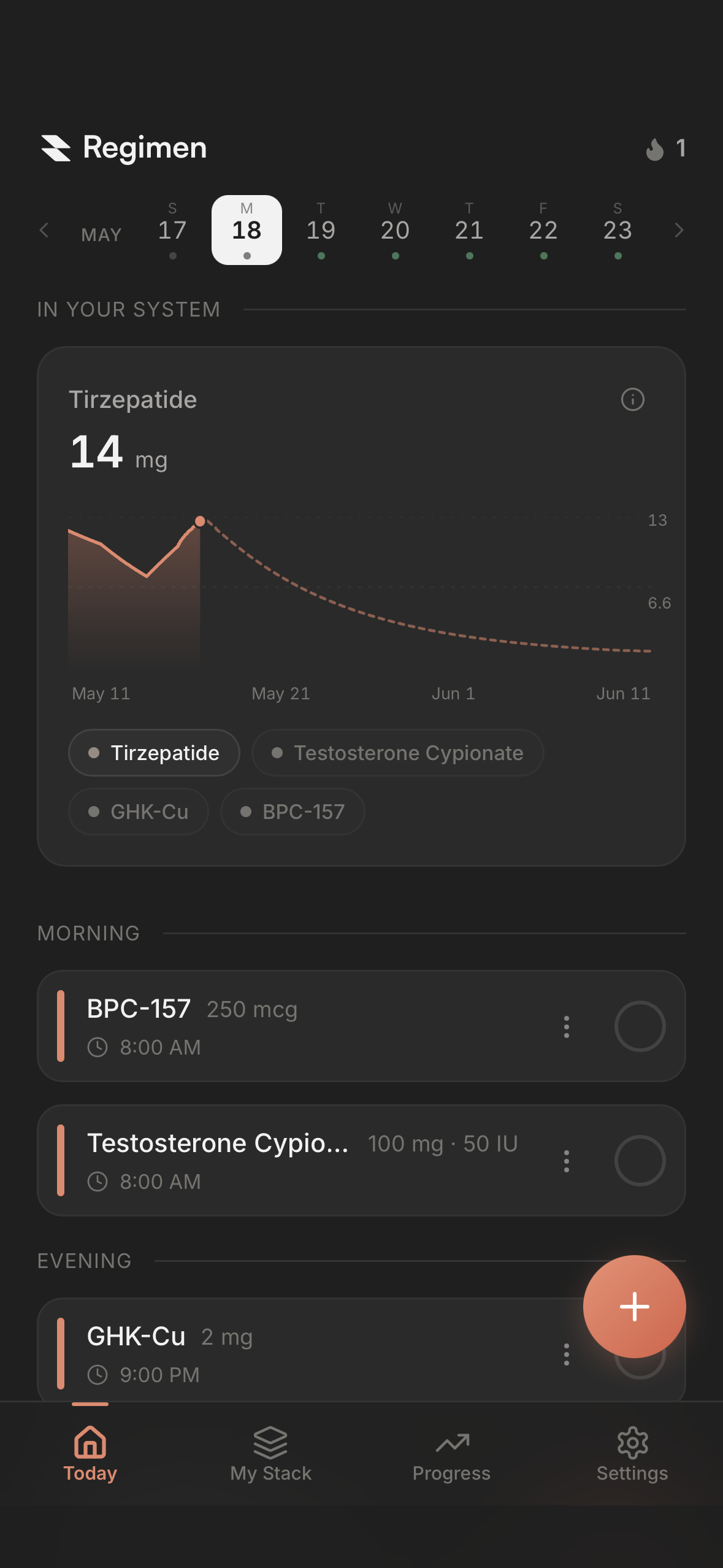
Regimen logs every dose, tracks reconstitution dates, and reminds you when to administer. Free for one compound.
- Log intranasal and injectable doses
- Smart dosing reminders
- Track effects and progress over time
- Private, secure health data


Free to download. Free for your first compound.
Questions