Glutathione injections (also sold as L-glutathione injections) put the body’s main antioxidant straight into tissue or the bloodstream, which taking it by mouth can’t do. People use them for skin brightening, recovery after hard training, liver support and general antioxidant support, and the dose, route and schedule change with the goal.
What Glutathione Actually Does
Glutathione is the body’s primary antioxidant, produced in the liver and used by every cell. It neutralizes free radicals, supports the liver’s detox pathways, regulates immune response, and plays a role in melanin production, which is what the skin brightening angle is built on.
When you take it orally, your digestive system breaks it down before much reaches circulation. That’s why people inject it. Injection bypasses the gut and gets it into the bloodstream intact.
The mechanisms that make it useful are the same regardless of why you’re using it. What changes is your goal, which determines the dose and frequency.
Delivery Routes: SubQ, IM, and IV
Most people in the at-home community use either SubQ or IM. IV is a clinic thing.
SubQ (subcutaneous)
SubQ is the most accessible home route. You inject into belly fat or the outer thigh, same as peptides. The absorption is slower than IM, which some people actually prefer for tolerability.
The catch: glutathione can sting at the injection site. This is a preparation issue (pH and formulation vary by product), not the compound itself. Stinging is more common with some manufacturers than others, and how it gets reconstituted also matters. The community fixes that consistently help: warm the vial in your hand for a minute before drawing, inject slowly, and rotate sites. If a specific product stings every time, that’s a signal to ask your prescriber or pharmacy about a different formulation.
For SubQ, a 10-12mm needle is typical. Inject slowly. The volume is small enough that SubQ works well, but going too fast will cause localized burning.
IM (intramuscular)
IM means injecting into a large muscle: glute, quad, or deltoid. Absorption is faster than SubQ. The pH issue is less prominent with IM because muscle tissue has better buffering capacity.
For consistent home use, IM tends to be the smoother experience if SubQ is too uncomfortable.
IV (intravenous)
IV delivers glutathione directly into the bloodstream within seconds. Higher peak concentration, faster effect. This is what clinics do, and it should stay in a clinic. Rapid IV infusion is associated with chest tightness and flushing (vasodilation effect), which is why experienced clinic staff push it slowly over 5-10 minutes.
IV at home is not the move.
Reconstitution
Glutathione comes as a lyophilized (freeze-dried) powder, typically in single-use vials: 600mg, 1,200mg, and 2,400mg are the most common sizes.
What to reconstitute with
Bacteriostatic water (BAC water) works fine. Normal saline also works. The pH of BAC water is typically around 5.5, which is close to physiologically neutral and doesn’t add much sting. Some preparations specify saline. Check your product label.
Pro Tip
If your glutathione stings on injection, the most reliable factors that help are: warming the vial in your hand for 60 seconds before drawing, injecting slowly (30-60 seconds), and choosing a fresh injection site. Stinging varies by preparation. If a particular product consistently stings, ask your prescriber or compounding pharmacy about a buffered version.
How to mix
- Swab the vial top with alcohol. Let it fully dry (15 seconds).
- Draw your reconstitution volume into a plastic syringe (not glass).
- Insert at a slight angle, aim the stream at the glass wall, not the powder.
- Push slowly, let the fluid run down the side and dissolve the cake.
- Swirl gently. Don’t shake. Should dissolve in 30-60 seconds and look clear to faintly yellow.
Storage: Reconstituted glutathione is only stable for 24-48 hours in the fridge. Not 28 days like BAC-reconstituted peptides. Mix what you’ll use within one to two sessions.
What Doses People Commonly Discuss
Glutathione injection dosage and frequency depend on what people are using it for. The ranges below show what comes up consistently in community discussions and wellness forums for each use case. None of this is medical guidance, and none of it replaces what a prescriber sets for you. It’s context, not a protocol.
| Use case | Doses commonly discussed | Frequency in community use |
|---|---|---|
| General antioxidant / immune support | 600-1,200 mg | 1-2x weekly |
| Skin brightening / hyperpigmentation | 1,200-2,500 mg | 1-2x weekly |
| Athletic recovery / performance | 600-1,800 mg | 1-2x weekly |
| Liver support / detox | 600-1,200 mg | 1-2x weekly |
| Heavier protocols | 1,200-3,000 mg | Up to 3x weekly |
For skin brightening specifically, community discussions suggest people often start lower and work up only if needed. Before-bed timing comes up consistently in those discussions, with the theory being that glutathione production naturally ramps during sleep.
Cycling
A common pattern in community and clinical protocols is 2-3 months of consistent use followed by a 1-2 month break. Running it indefinitely is not typical practice.
Warning
Glutathione injections are not FDA-approved for skin brightening, anti-aging, or athletic performance. The doses above describe what’s commonly discussed in community settings. They are not a recommendation. Any specific protocol should be set by a qualified healthcare provider who knows your full health picture.
Glutathione Injection Benefits: What People Use It For
People inject glutathione for a few different reasons:
Skin brightening / hyperpigmentation: The most-discussed use case in many communities. Glutathione inhibits melanin synthesis by acting on the tyrosinase enzyme. Higher doses, more frequent protocols. Results typically appear over 4-12 weeks of consistent use.
Athletic recovery and performance: Glutathione depletes after intense training. Replenishing it through injection may speed recovery, reduce oxidative stress from hard exercise, and support mitochondrial function. Lower to mid-range doses, often timed around training.
Liver support and detoxification: The liver is the primary producer and user of glutathione. Supplementing it directly is used by people doing aggressive compound protocols (TRT, GLP-1, peptide stacks) who want to support liver clearance. Mid-range doses, consistent frequency.
General antioxidant and immune support: Baseline wellness use. Not targeting any specific outcome, just maintaining glutathione levels that drop with age and stress.
Sleep and recovery stacking: Some users note improved sleep quality when dosing before bed. Whether this is a direct glutathione effect or indirect (through reduced oxidative stress) isn’t clear, but it comes up consistently enough to be worth noting.
Community Insight
In Telegram and Reddit communities, the stinging issue with SubQ glutathione comes up constantly. The most experienced users land on the same answer: it’s the preparation, not the compound. BAC water tends to be more tolerable than saline for some products. Slower injection helps. If a specific product consistently stings, that’s a sign to talk to your prescriber or pharmacy about a different formulation.
Glutathione Injection Side Effects
The most common glutathione injection side effect is stinging or burning at the injection site. It comes from the preparation (pH and formulation vary by product), not the compound, and the fixes are the ones above: warm the vial in your hand, inject slowly, rotate sites.
- Injection-site sting or burn (SubQ more than IM). If one product stings every time, ask your prescriber or pharmacy about a different formulation.
- Chest tightness and flushing with fast IV infusion. This is why clinics push IV glutathione slowly over 5-10 minutes, and why IV stays in a clinic.
- Contaminated product. In August 2026 the FDA warned compounders not to use dietary-supplement-grade glutathione in injectables, after patients given IV glutathione reported fever, chills, dizziness and sepsis-like symptoms, and some were hospitalized. The FDA says the symptoms are consistent with too much endotoxin. Ask where your glutathione comes from (FDA notice).
No drug label lists side effects for skin or performance use.
Tracking Your Protocol
Glutathione has more variables to track than most injectable compounds. Route (SubQ vs IM), dose per session, frequency, and goal-specific response (skin changes, energy, recovery quality) all matter and all change over a protocol.
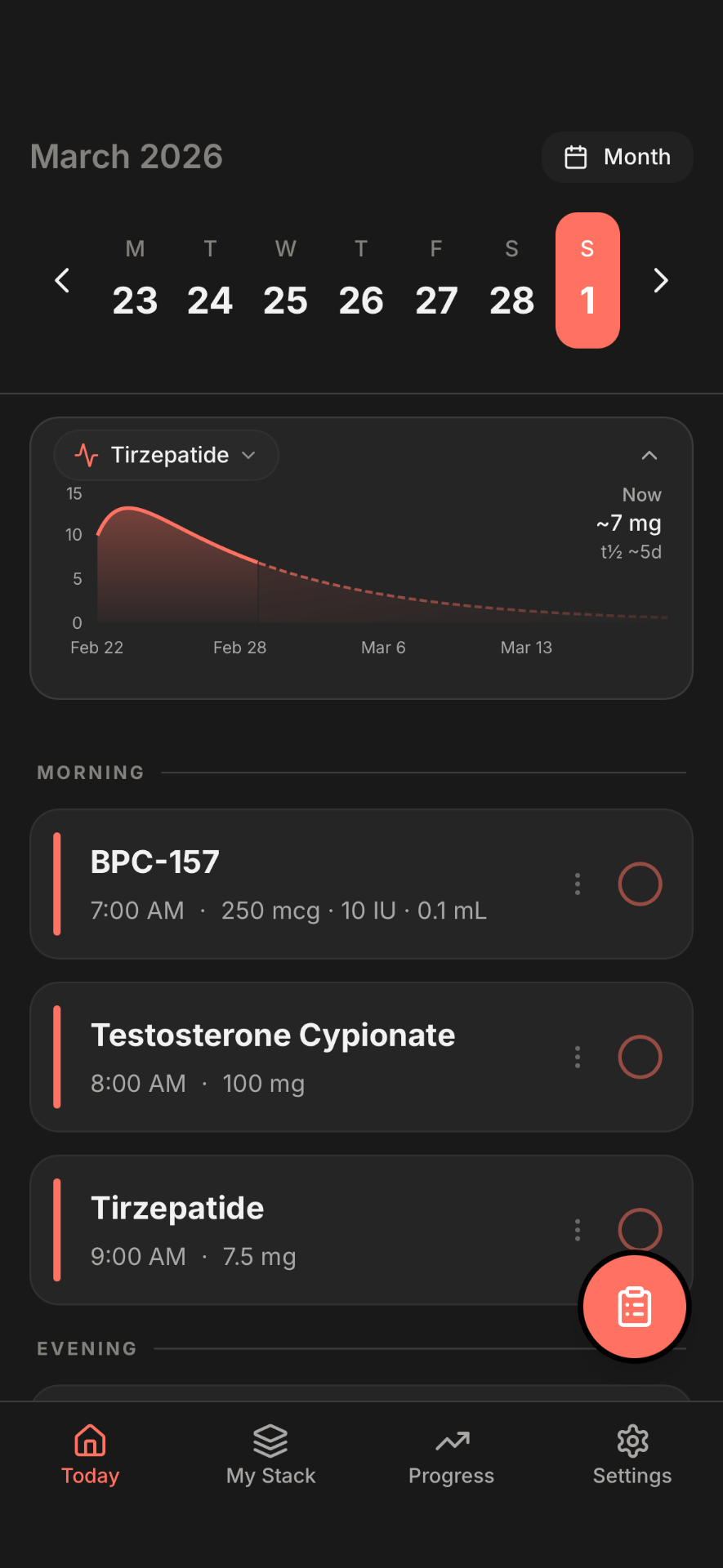
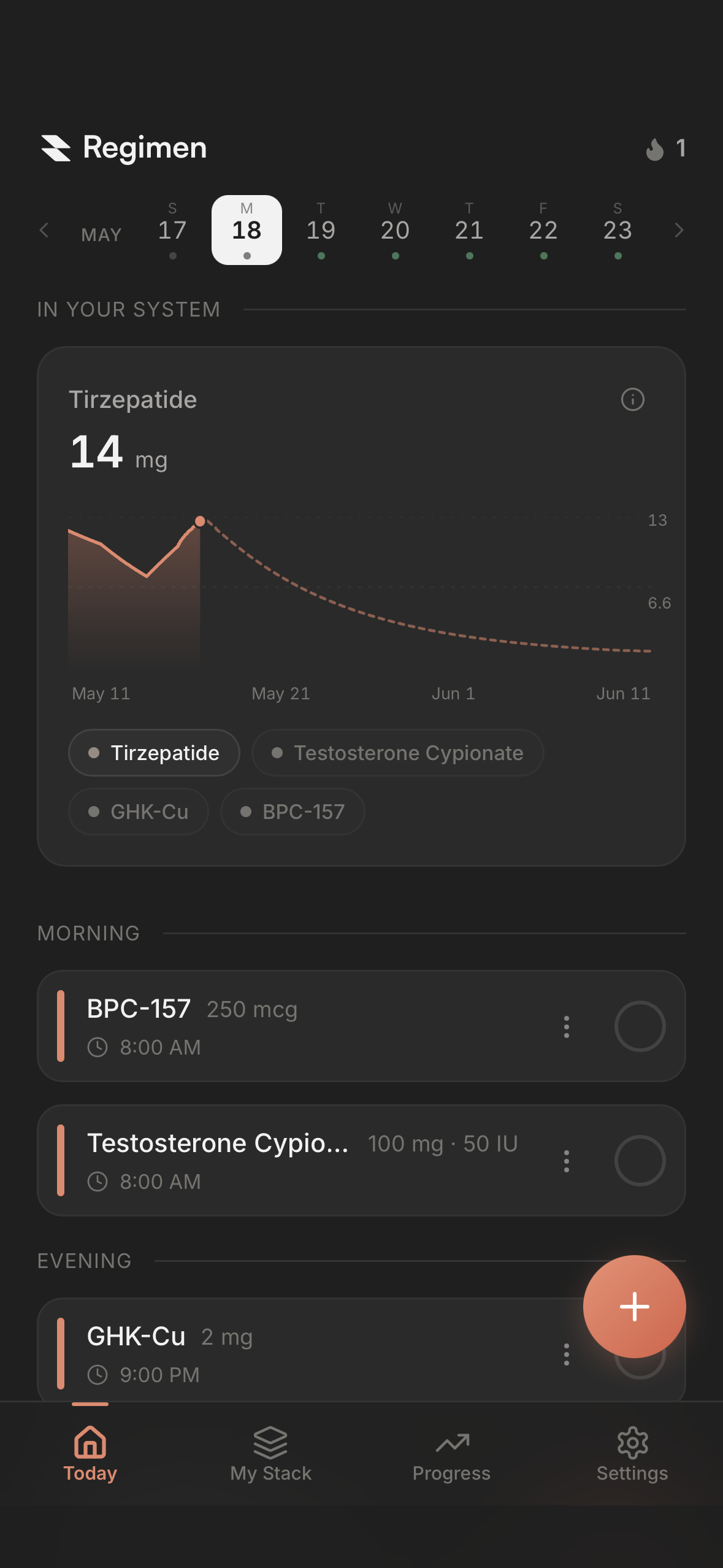
Tracking this systematically is exactly what Regimen is built for. Log each session with dose, route, and any subjective notes. Over 4-8 weeks, your own data tells you what’s working and what needs adjusting.
Track your glutathione protocol with Regimen
Frequently Asked Questions
How do I track my glutathione protocol with Regimen?
Log each session with dose in mg, delivery route (SubQ/IM), injection site, and response notes. Regimen tracks glutathione protocols the same way it handles peptides: dose history, frequency, and notes in one place.
Does glutathione actually work for skin brightening?
Community experience and clinical use suggest yes, with consistent protocols at adequate doses. The mechanism is real: glutathione inhibits tyrosinase, the enzyme involved in melanin production. Results take time, typically 4-12 weeks of consistent use, and depend heavily on dose and frequency. Lower doses used inconsistently produce little change.
Can I do glutathione injections at home?
SubQ and IM glutathione can be done at home with proper training. IV should stay in a clinic. For SubQ and IM, have your first few injections supervised by a healthcare provider. Reconstitute fresh before each session and use within 24-48 hours. Glutathione doesn’t have the extended refrigerated stability of BAC-reconstituted peptides.
Why does glutathione sting when I inject it?
It’s the preparation, not the compound itself. Some products sting more than others depending on the formulation. Things that consistently help: warming the vial in your hand for a minute before drawing, injecting slowly over 30-60 seconds, and rotating sites. If a specific product stings every time, ask your prescriber or pharmacy about a different formulation.
What’s the difference between SubQ, IM, and IV glutathione?
SubQ is subcutaneous (belly fat or outer thigh), home-friendly, with slower absorption. IM is intramuscular (glute, quad, deltoid), faster absorption and typically smoother tolerability. IV is intravenous, clinic-only, with the highest peak concentration per session. Most home users do SubQ or IM. IV is for clinic loading protocols.
What are the benefits of glutathione injections?
The benefits people use glutathione injections for are skin brightening (glutathione inhibits tyrosinase, the enzyme behind melanin), recovery after hard training, liver support, and general antioxidant and immune support. Injecting gets glutathione into the bloodstream intact, which taking it by mouth does not. Skin results typically take 4-12 weeks of consistent use. Glutathione injections are not FDA-approved for skin brightening, anti-aging or athletic performance.
What are the side effects of glutathione injections?
The most common side effect is stinging or burning at the injection site, which comes from the product’s preparation more than the compound. Rapid IV infusion can cause chest tightness and flushing, which is why clinics push IV glutathione slowly over 5-10 minutes. The bigger risk is the product itself: in August 2026 the FDA warned compounders not to use dietary-supplement-grade glutathione in injectables, after patients given IV glutathione reported fever, chills, dizziness and sepsis-like symptoms, some needing hospital care.
Disclaimer: This article is for educational purposes only and is not medical advice. Use only under the supervision of a qualified healthcare provider. Individual results may vary.
Ready to track your protocol?
- Smart reminders so you never miss a dose
- Track weight, photos, and progress over time
- Medication level curves for every compound