The Bottom Line
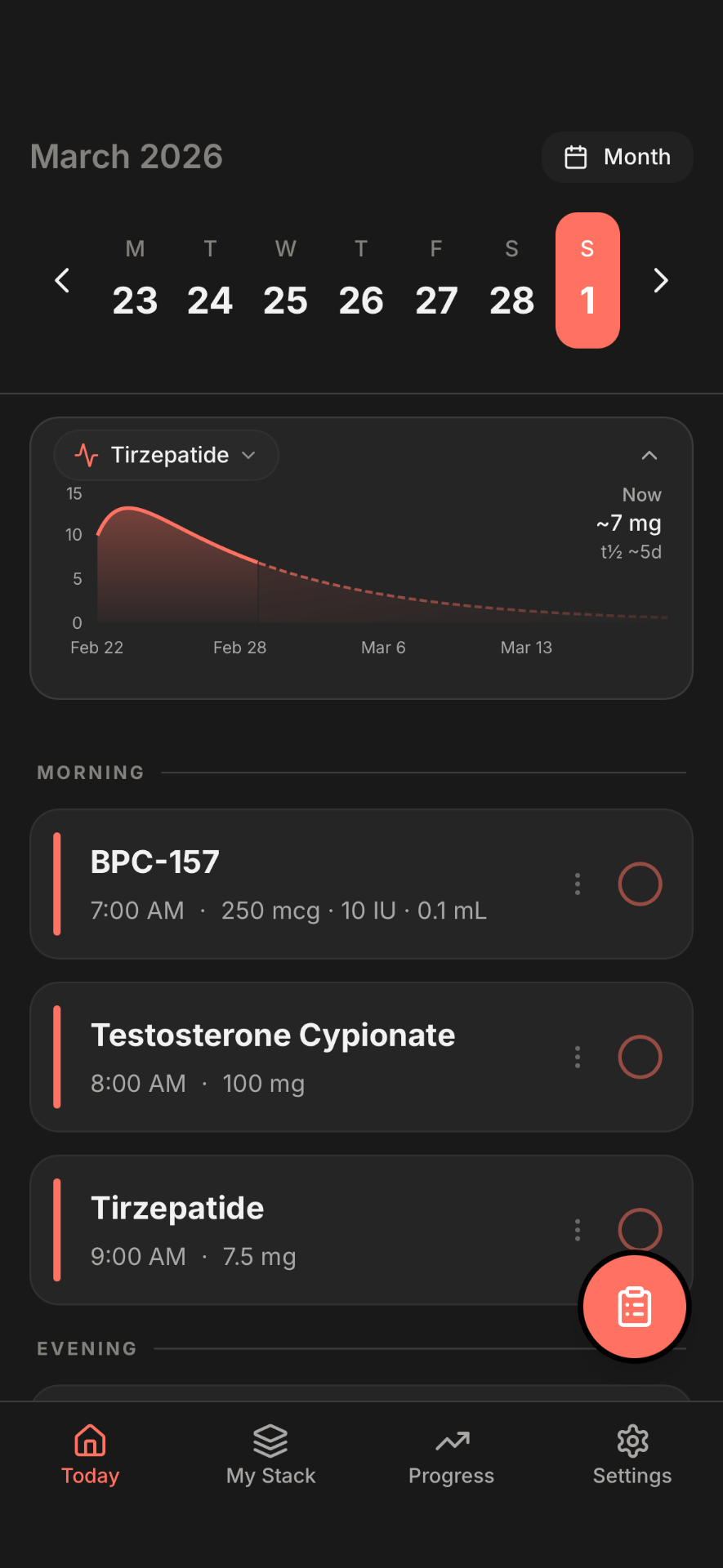
Most research peptides should be cycled 4-12 weeks on, 2-4 weeks off. The goal is to prevent receptor desensitization and maintain effectiveness. GLP-1 medications and TRT are exceptions because they are typically continuous protocols. Set your cycle timers before you start so you do not have to rely on memory.
Why Cycling Matters
Most cycling guides tell you to cycle everything for the same reason (“your receptors downregulate”), and that’s only true for one group of peptides. There are actually two different reasons to cycle, and knowing which one applies tells you how strict to be.
Reason 1: real receptor desensitization (the GH peptides). Growth hormone secretagogues like CJC-1295 and Ipamorelin work by prodding your pituitary to pulse out GH. Hit that system non-stop and it pushes back: the pituitary gets less responsive to the same signal over time. This one is backed by actual research. Continuous exposure measurably blunts the GH response, while pulsed dosing keeps it working. For this group, cycling (or at least pulsing, like 5 days on and 2 off) genuinely protects the effect.
Reason 2: everything else, where cycling is precaution, not a reset. BPC-157, TB-500, GHK-Cu, and KPV don’t act through a single receptor that fatigues, so the “your receptors get tired” line doesn’t really apply to them. You cycle these for different reasons: to check whether the benefit is actually holding (or whether you’ve been masking something), to limit exposure to compounds that don’t have long-term human safety data, and, for the copper ones, to keep cumulative copper in check.
The practical upshot: miss a cycle on a GH secretagogue and you’re leaving results on the table. Run BPC-157 a couple weeks long and it’s mostly a non-event.
Compound-Specific Cycling Protocols
BPC-157
Typical cycle: 4–8 weeks
Off period: 2–4 weeks
Common dose: 250–500 mcg/day
Injection: SubQ, near injury site
BPC-157 is most commonly run for a specific injury. Once the injury has healed (or significantly improved), stop. If you’re running it for general gut health or systemic recovery, cap your cycle at 8 weeks and take at least 2 weeks off before restarting.
Most community protocols follow 4 weeks on / 2 weeks off for mild issues, or 8 weeks on / 4 weeks off for chronic injuries. Longer cycles (12+ weeks) show diminishing returns in anecdotal reports.
TB-500
Loading phase: 2–4 weeks at higher dose
Maintenance: 4–8 weeks at lower dose
Off period: 4–8 weeks
Common dose: 750 mcg 2×/week
TB-500 is often used with a loading protocol: higher doses (2–5 mg/week) for the first 2-4 weeks, then dropping to a maintenance dose (750 mcg–2 mg/week) for another 4-8 weeks. Total cycle typically runs 6-12 weeks.
Off periods for TB-500 tend to be longer (4-8 weeks) because of its long-acting systemic effects. If you’re stacking with BPC-157, you can stagger the cycles so you’re never completely off both. See our BPC-157 vs TB-500 comparison.
CJC-1295 / Ipamorelin (GH Secretagogues)
Typical cycle: 8–12 weeks
Off period: 4–8 weeks
Common dose: 100-300 mcg each, 1-2×/day
Best timing: Before bed, fasted
GH secretagogues stimulate your pituitary to release growth hormone. The concern with extended use is pituitary desensitization. Your pituitary can produce less GH in response to the same signal over time, so cycling helps preserve responsiveness.
CJC-1295 with DAC has a longer half-life (~8 days) and may need longer off periods. CJC-1295 without DAC (mod GRF 1-29) clears quickly and is often stacked with Ipamorelin for synergistic GH release.
If you want help remembering on/off windows across multiple compounds, our roundup of the best peptide tracker apps compares the options that handle cycle timers well.
Tesamorelin
Typical review window: 8-12 weeks
Reassessment: Labs + symptom trend review
Common dose pattern: Provider-directed daily protocol
Watch for: IGF-1, fasting glucose, edema
Tesamorelin is usually managed as a clinician-guided protocol, not a strict self-directed cycle. In practice, many people review results around the 8-12 week mark and adjust based on labs and symptoms.
If you include tesamorelin in a broader stack, keep your tracking disciplined: dose timing, symptom notes, and regular biomarker reviews matter more than fixed internet cycle templates.
KPV
Typical cycle: 4–8 weeks on
Off period: 2–4 weeks
Common use: Gut inflammation, systemic anti-inflammatory
KPV is the tail end of a hormone your body already makes (alpha-MSH), and people use it to calm inflammation. It’s the “K” in KLOW. For chronic gut issues like ulcerative colitis or Crohn’s, some run it longer: around 12 weeks on, 4 weeks off. Like BPC-157, KPV doesn’t act on a receptor that fatigues, so the off-period is really about checking whether your inflammation stays down once you stop, not resetting anything.
MK-677 (Ibutamoren)
Typical cycle: 8–12 weeks on, 2–4 weeks off (if you cycle at all)
Common dose: 10–25mg/day, oral
The real reason to cycle: Metabolic, not receptor
MK-677 is the odd one out. It’s a GH secretagogue like CJC/Ipamorelin, but unlike the injectables, it doesn’t desensitize your pituitary, studies have run it continuously for up to two years with GH and IGF-1 staying elevated the whole time. So the usual “cycle it or it stops working” logic doesn’t apply here.
People still cycle it, but for a completely different reason: MK-677 raises blood sugar and insulin resistance over time, and it brings water retention and a big jump in appetite. So if you cycle MK-677, you’re managing your metabolic health, not your GH response. Either way, keep an eye on your fasting glucose.
GHK-Cu: injectable and topical aren’t cycled the same way
This one trips people up, because GHK-Cu comes two ways and they follow opposite rules.
- Injectable GHK-Cu: cycle it. Around 8–12 weeks on, 4–6 weeks off. The off-period is about cumulative copper, not receptors. A 1–2mg dose only carries roughly 160–320mcg of actual copper (well under dietary limits), but people take the break as a precaution and some monitor serum copper.
- Topical GHK-Cu (serums): no cycling needed, use it continuously. Almost no copper gets through intact skin, so a GHK-Cu serum is fine to run daily, indefinitely. (More on making and using one in our GHK-Cu serum guide.)
Cycling KLOW, GLOW & Other Blends
Blends are where cycling gets confusing, because now you’re running three or four peptides on one schedule. Two of the most popular:
- GLOW = GHK-Cu + BPC-157 + TB-500. A standard 70mg vial is about 50mg GHK-Cu, 10mg BPC-157, and 10mg TB-500, so it’s roughly 70% GHK-Cu by weight.
- KLOW = GLOW plus KPV. The standard 80mg vial adds 10mg of KPV (the “K”) for extra anti-inflammatory action through a separate pathway.
Here’s what makes cycling them simple: pace the cycle by the ingredient that needs it most, and in both blends that’s the GHK-Cu. It’s the bulk of the vial and it’s the one carrying copper, so you don’t cycle GLOW or KLOW on the BPC-157 timeline, you cycle them on the GHK-Cu timeline.
Quick guide to blend cycling
- GLOW: most people run 8–12 weeks on, 4–8 weeks off.
- KLOW: usually a bit shorter, commonly 4–8 weeks on, 2–4 weeks off, often dosed 5 days on and 2 off.
If you’re running a blend mainly for skin or a low-grade nagging injury, the shorter end (6–8 weeks) is plenty. And remember what the off-period is doing here: it’s a copper break and a chance to see if the benefit holds, not a receptor reset.
Compounds That Don’t Need Cycling
Not everything needs to be cycled. Some medications are specifically designed for continuous, long-term use:
- GLP-1 agonists (semaglutide, tirzepatide): designed for continuous use. Stopping causes rebound appetite. See our GLP-1 maintenance guide for tapering strategies.
- Testosterone (TRT): continuous use under medical supervision. Cycling off TRT crashes your testosterone and can cause major side effects.
- HCG on TRT: often taken continuously alongside testosterone to maintain fertility/testicular volume.
- Thyroid medications: continuous prescribed use.
- Enclomiphene: typically continuous under medical supervision as a TRT alternative.
Signs You Need to Cycle Off
Even within recommended cycle lengths, pay attention to these signals that it’s time for a break:
Watch for these signs
- Diminished response: The same dose is no longer producing the same effect as weeks 1-4
- New side effects: Side effects appear or worsen at a stable dose
- Goal achieved: Injury healed, recovery complete. Don’t run peptides “just because”
- Blood work changes: IGF-1 or fasting glucose moving outside your target range
- Water retention or bloating: Common with longer GH peptide runs
How to Track Your Cycles
The biggest mistake people make with cycling isn’t the protocol. It’s forgetting when they started or when they’re supposed to stop. Here’s what to track:
- Cycle start date: when you took your first dose of this cycle
- Planned cycle length: decide before you start, not mid-cycle when you “feel fine”
- Off-period length: commit to the off-period. It’s tempting to restart early.
- Notes on effectiveness: log how you feel at weeks 2, 4, 6, and 8 to optimize future cycles.
- Side effects: track side effects so you can adjust dose or duration next cycle
If a new cycle also means a new vial or a new mix, run the numbers first with the peptide reconstitution calculator so your syringe units match the dose you actually planned.
Quick Reference: Cycling Guidelines
| Compound | On Period | Off Period | Notes |
|---|---|---|---|
| BPC-157 | 4–8 weeks | 2–4 weeks | Stop when healed |
| TB-500 | 6–12 weeks | 4–8 weeks | Loading + maintenance |
| CJC-1295/Ipamorelin | 8–12 weeks | 4–8 weeks | Fasted dosing; real desensitization risk |
| Tesamorelin | 8-12 week review | Provider-guided | Reassess with labs |
| MK-677 | 8–12 weeks | 2–4 weeks | Cycle for glucose, not GH |
| KPV | 4–8 weeks | 2–4 weeks | Anti-inflammatory |
| GHK-Cu (injectable) | 8–12 weeks | 4–6 weeks | Copper break, not receptor |
| GHK-Cu (topical) | Continuous | N/A | No cycling needed |
| GLOW (blend) | 8–12 weeks | 4–8 weeks | Paced by the GHK-Cu |
| KLOW (blend) | 4–8 weeks | 2–4 weeks | Paced by GHK-Cu + KPV |
| PT-141 | As needed | N/A | Not for daily use |
| Semaglutide | Continuous | N/A | Taper, don’t cycle |
| Testosterone (TRT) | Continuous | N/A | Medical supervision |
Frequently Asked Questions
Do all peptides need to be cycled?
No. GLP-1 agonists (semaglutide, tirzepatide) are designed for continuous use and don’t require cycling. TRT is also continuous. Cycling primarily applies to research peptides like BPC-157, TB-500, growth hormone secretagogues, and similar compounds where receptor desensitization is a concern.
What happens if I don’t cycle off BPC-157?
The main risk is diminished response over time. BPC-157 appears to lose effectiveness after extended continuous use (beyond 8-12 weeks). Your body may downregulate the receptors it acts on. Taking 2-4 weeks off allows receptor sensitivity to reset.
Can I run BPC-157 and TB-500 on different cycle schedules?
Yes, many people stagger their cycles. For example, you might run BPC-157 for 8 weeks, take 4 weeks off, and during that off period start TB-500 for its own 8-week cycle.
How do I know when to cycle off?
Watch for diminished response - if you’re no longer feeling the benefits you got in weeks 1-4, it’s time for a break. Other signs include increased side effects at the same dose, or just hitting your target (e.g., injury is healed).
Do I need to taper off peptides or can I stop cold?
Most peptides can be stopped abruptly without withdrawal effects. BPC-157, TB-500, and GH peptides can all be stopped cold. The exception is GLP-1 medications, where gradual dose reduction is recommended to avoid rebound appetite.
What about MK-677 cycling?
MK-677 causes sustained GH elevation and can increase insulin resistance over time. Most protocols suggest 8-12 weeks on, 4-8 weeks off. Some users run it 5 days on / 2 days off continuously. Monitor fasting glucose and cycle off if it starts creeping up.
Disclaimer
This guide is for educational purposes only and does not constitute medical advice. Cycling protocols are based on community experience and limited research data. Consult a healthcare provider before starting, stopping, or modifying any peptide protocol. Individual responses vary significantly.
Ready to track your protocol?
- Smart reminders so you never miss a dose
- Track weight, photos, and progress over time
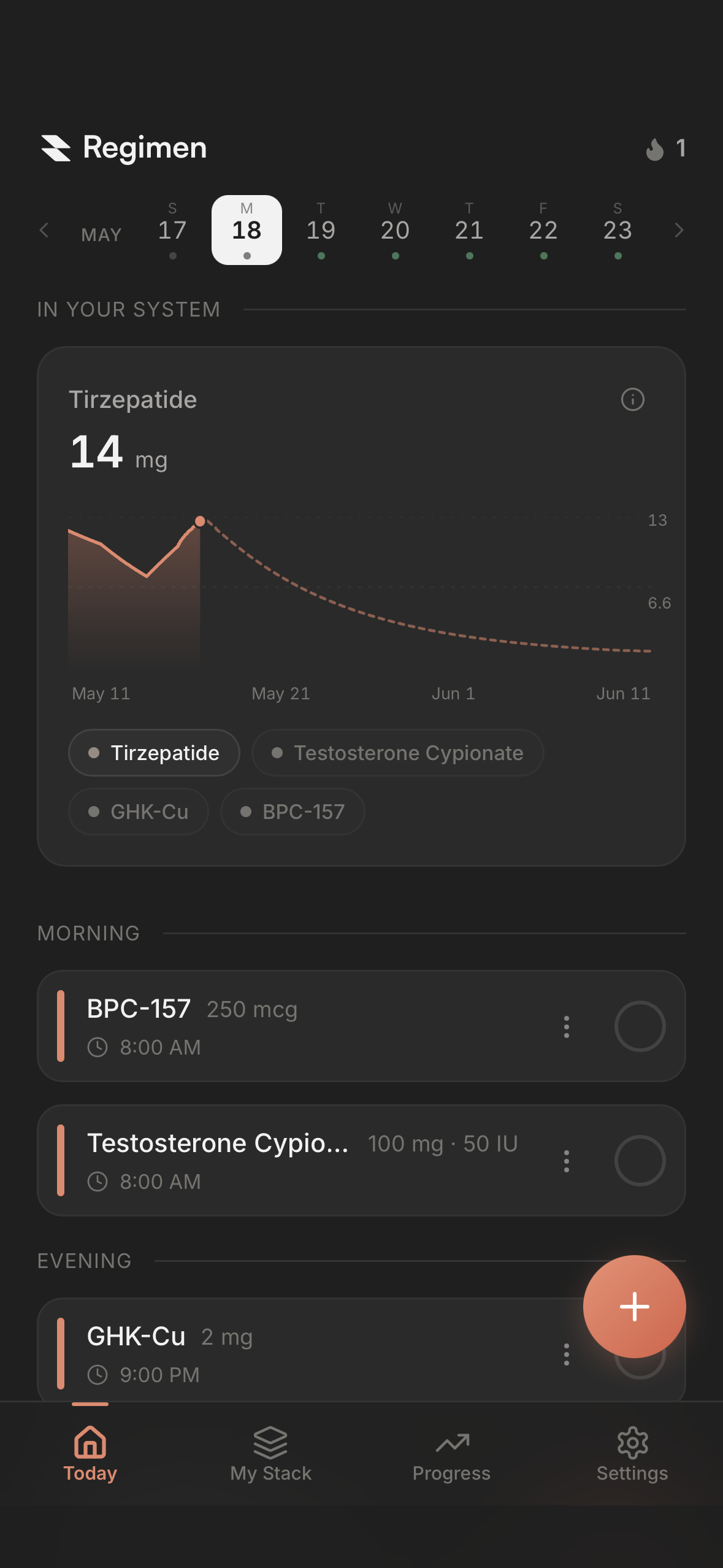
- Medication level curves for every compound
What about tesamorelin cycling?
Tesamorelin is usually prescribed with ongoing clinician oversight. In broader protocol communities, many users run 8-12 week blocks and then reassess with labs and symptom trends. Because evidence outside labeled use is limited, treat cycle timing as provider-guided rather than fixed DIY rules.