The Bottom Line
Reaching your goal weight on a GLP-1 isn’t the finish line - it’s a transition point. Most people need some form of ongoing treatment to maintain their loss, whether that’s a reduced maintenance dose, dose spacing, or eventual tapering combined with strong lifestyle habits. The worst strategy is abruptly stopping. The best strategy is a planned, tracked transition to the lowest effective dose.
You Hit Your Goal Weight. Now What?
This is the question nobody talks about during the first excited months of GLP-1 weight loss. You’ve lost 30, 50, 80+ pounds. Your clothes don’t fit. People are commenting. The scale shows a number you haven’t seen in years.
And then the panic sets in: What do I do now? Do I stay on this forever? What if I gain it all back?
These are legitimate fears. The STEP 1 trial extension showed that participants who stopped semaglutide regained approximately two-thirds of their lost weight within a year. That number sounds terrifying - but the full picture is more nuanced, and your outcome depends heavily on how you transition off active weight loss.
What Happens When You Stop (the Data)
Let’s be honest about what the research shows:
Week 1-2Appetite gradually returns. The “food noise” comes back. This is the GLP-1 receptors returning to baseline as the drug clears your system.
Month 1-3Most people regain 5-10% of the weight lost if no maintenance plan is in place. Hunger hormones (ghrelin) rebound.
Month 3-12Without intervention, regain continues. The STEP 1 extension showed ~67% regain at 1 year post-discontinuation in study participants.
Key caveatThese studies had no structured maintenance protocol. Participants just stopped. Real-world outcomes with planned maintenance are significantly better.
The critical insight: the study participants who regained weight had no maintenance plan. They went from full therapeutic doses to nothing, overnight. That’s the worst-case scenario - and it’s completely avoidable.
4 Maintenance Strategies That Work
Here’s what providers and experienced users are actually doing. These aren’t mutually exclusive - most people combine 2-3 of these approaches:
1. Reduced maintenance dose
The most common approach. Once you’ve reached your goal, your provider titrates you down to the lowest dose that maintains appetite control and weight stability.
Typical Maintenance Dose Ranges
Semaglutide (Ozempic/Wegovy)0.25 - 1.0 mg/week
Tirzepatide (Mounjaro/Zepbound)2.5 - 5.0 mg/week
Compounded versionsFlexible - provider-determined
The advantage of compounded semaglutide or tirzepatide is dosing flexibility. Brand-name pens come in fixed increments, but compounded vials let you dial in the exact maintenance dose that works for you.
2. Dose spacing (extending the interval)
Instead of reducing the dose amount, some people extend the time between injections. Semaglutide’s long half-life (~7 days) makes this theoretically feasible:
- Every 10 days instead of every 7
- Every 2 weeks at your current dose
- Some people find every-10-day dosing at their therapeutic dose provides the same coverage as weekly dosing at a lower amount
This approach is less formally studied, so track your weight and appetite closely. If you notice hunger returning before your next dose, the spacing may be too aggressive.
3. Structured tapering
For people who want to eventually stop entirely, a slow taper over 3-6 months gives your body time to adjust:
Example Semaglutide Taper (from 1.0 mg therapeutic)
Weeks 1-40.5 mg/week
Weeks 5-80.25 mg/week
Weeks 9-120.25 mg every 10-14 days
Week 13+Discontinue (with close monitoring)
Important: if you regain more than 5% of your lost weight during tapering, that’s a signal to stabilize at your current dose rather than continuing to reduce.
4. Lifestyle-only maintenance (highest difficulty)
Some people do successfully maintain their weight loss without ongoing medication. They tend to share certain characteristics:
- Consistent exercise habit (especially resistance training) established during the weight loss phase
- High protein intake (0.8-1g per pound of body weight) maintained long-term
- They lost a moderate amount of weight (20-30 lbs), not extreme amounts
- Strong behavioral changes established during GLP-1 use (smaller portions, mindful eating, meal planning)
Be honest with yourself about whether this is realistic. If you had these habits before, you likely wouldn’t have needed a GLP-1 in the first place. For most people, some level of ongoing pharmacological support produces better outcomes.
How to Reduce Your Dose Safely
Whether your provider is guiding this or you’re managing compounded medication yourself, here are the principles:
- Drop one step at a time. Go from your therapeutic dose to the next lower increment. Don’t skip levels.
- Stay at each lower dose for at least 4 weeks before deciding if it’s working. Your body needs time to find a new equilibrium.
- Track your weight weekly (at the same time of day, same conditions). Look at the 4-week trend, not daily fluctuations.
- Monitor appetite honestly. Some increased hunger is expected and normal. The question is whether it’s manageable or whether “food noise” has returned to pre-medication levels.
- Have a “floor” in mind. Decide in advance: “If I regain X pounds, I’ll go back to my previous dose.” A common threshold is 5% of total weight lost.
If you are adjusting compounded semaglutide or tirzepatide doses, use the GLP-1 dose calculator to get exact syringe units for your new maintenance dose.
Dose Spacing: Extending the Interval
Dose spacing works because of semaglutide’s pharmacokinetics. With a half-life of approximately 7 days, even after 10-14 days you still have meaningful drug levels. Here’s what to consider:
- Start conservative. Go from 7 days to 8-9 days first. If stable, try 10 days. Incremental changes.
- Track appetite by day. Note when hunger increases relative to your last injection. If you notice a significant increase on day 8, 10-day spacing may be too long.
- This works best with compounded medication. Brand-name pens are designed for weekly use, and the dosing isn’t easily adjusted for spacing changes.
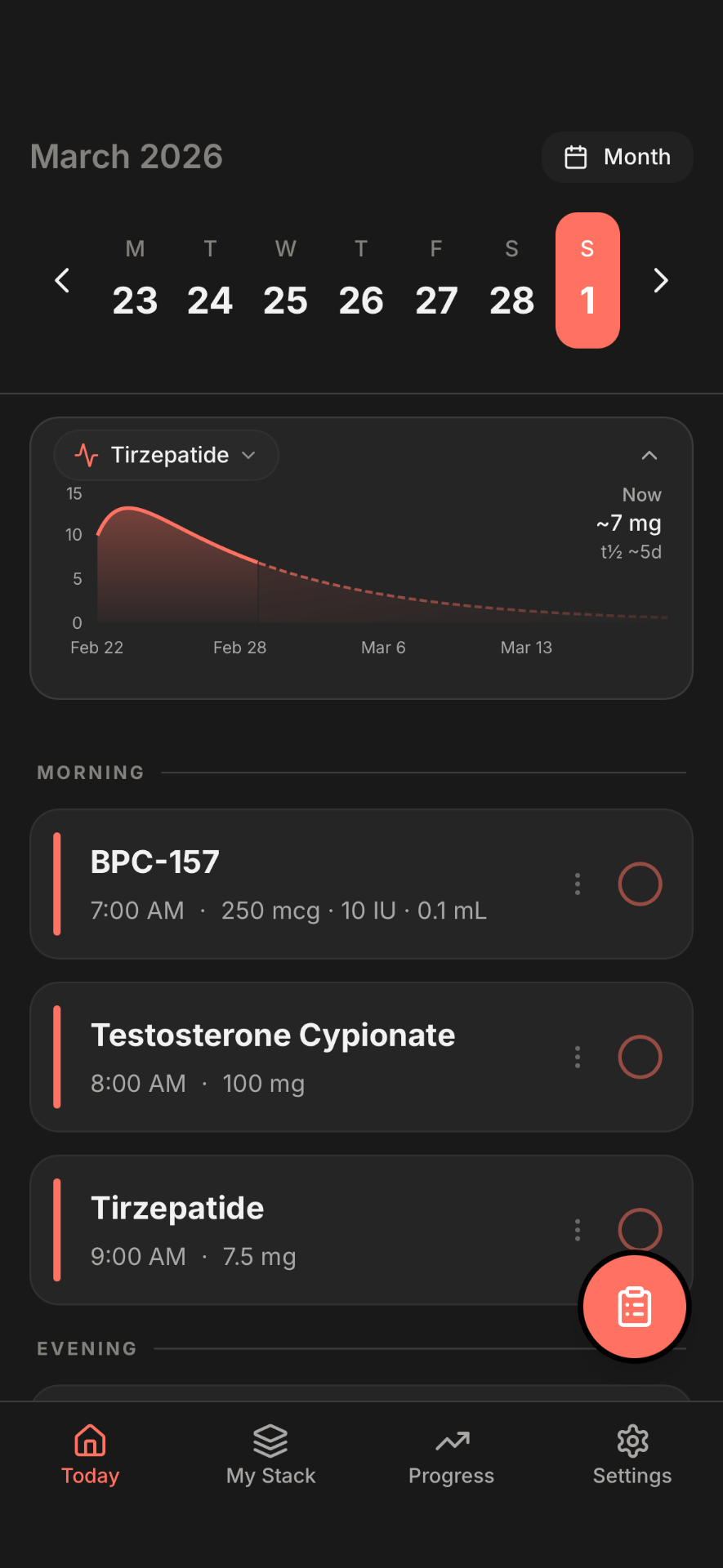
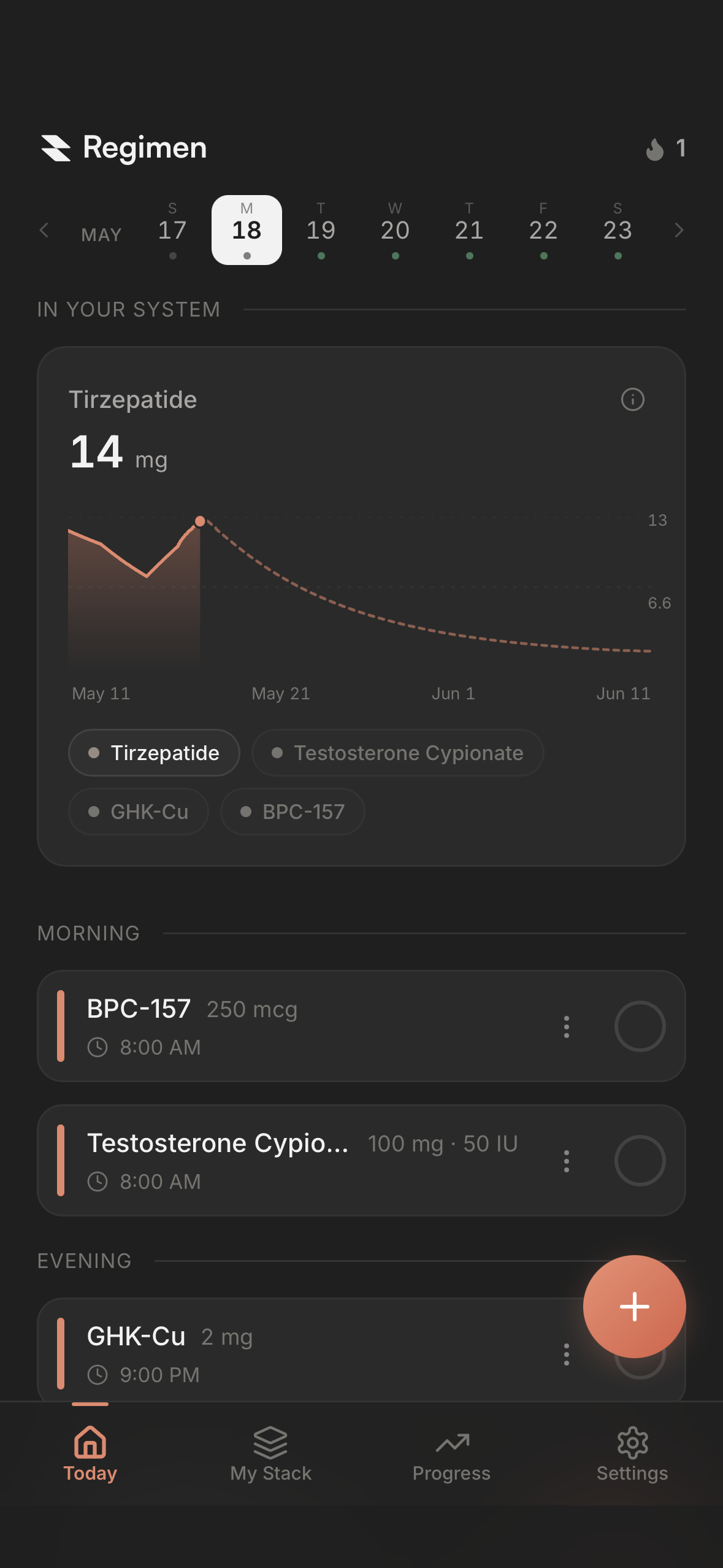
One emerging approach: the half-life visualizer can show you predicted medication levels at different dosing intervals, helping you understand the pharmacokinetic reality of spacing.
The Lifestyle Factors That Matter Most
Regardless of your medication strategy, these lifestyle factors disproportionately impact maintenance success:
1. Protein intake (non-negotiable)
0.8-1g per pound of target body weight, daily. Protein preserves muscle mass (which keeps your metabolism higher), has the highest thermic effect of any macronutrient, and is the most satiating. This is the single highest-impact dietary habit for maintenance.
2. Resistance training (extremely important)
GLP-1 weight loss includes some lean mass loss. Resistance training during and after active weight loss minimizes this and may even build muscle, which directly supports your metabolic rate. Aim for 2-4 sessions per week.
3. Sleep (underrated)
Poor sleep increases ghrelin (hunger hormone) and decreases leptin (satiety hormone). If you’re sleeping 5-6 hours, your appetite will be harder to control regardless of your medication dose. Track sleep quality - it correlates directly with weight maintenance.
4. Step count (easy win)
Non-exercise activity thermogenesis (NEAT) drops as you lose weight - your body naturally moves less. Maintaining a daily step count of 7,000-10,000 counteracts this metabolic adaptation. Track it through Apple Health or Google Health Connect and correlate it with your weight trend.
What to Track During Maintenance
Maintenance tracking is different from active weight loss. You’re looking for stability and early warning signs, not a downward trend:
Maintenance Tracking Checklist
- • Weekly weight - same day, same time, same conditions. Look at the 4-week moving average.
- • Monthly progress photos - the scale lies about body composition. Photos don’t.
- • Dose log - track every dose, especially if spacing or reducing. Your history is your safety net.
- • Appetite/hunger level - rate 1-10 daily. A sustained increase is an early warning sign.
- • Sleep and activity - auto-synced from Apple Health. These are your leading indicators.
- • Weight trend alerts - set a personal threshold (e.g., +5 lbs from goal) that triggers a dose review.
The key insight: during active weight loss, you track to celebrate progress. During maintenance, you track to catch problems early. A 3-pound regain caught in week 2 is easy to address. A 15-pound regain noticed 3 months later is much harder.
When to Go Back Up
There’s no shame in increasing your dose again. Maintenance isn’t always linear, and life happens - stress, holidays, injury, illness. Here are reasonable triggers for reconsidering your dose:
- Regained more than 5% of your lost weight sustained over 4+ weeks
- Appetite has returned to pre-medication levels despite lifestyle optimization
- “Food noise” is back - constant thoughts about food, difficulty controlling portions
- Waist measurement increasing even if the scale hasn’t moved much (suggests fat regain)
If you notice these signs, talk to your provider about stepping back up to a dose that was previously effective. You usually don’t need to retitrate from the beginning - your body has been exposed to the drug before.
Frequently Asked Questions
What happens when you stop taking Ozempic or Wegovy?
Most people experience increased appetite within 1-3 weeks. Without a structured maintenance plan, studies show approximately two-thirds of weight lost is regained within a year. A planned transition to a lower maintenance dose significantly reduces regain.
Can I take a lower dose of semaglutide for maintenance?
Yes. Many providers titrate down to the lowest effective dose once you’ve hit your goal weight. For semaglutide, this might be 0.25-0.5 mg/week. The goal is the minimum dose that maintains appetite control and weight stability.
How long should I stay on a GLP-1 for maintenance?
Current evidence suggests indefinite use for most people, though at a lower dose. Obesity is a chronic condition and GLP-1s treat the underlying appetite dysregulation. Think of it like blood pressure medication.
Can I space out my GLP-1 injections instead of stopping entirely?
Some providers experiment with every-10-day or every-2-week dosing during maintenance. Semaglutide’s long half-life (~7 days) makes this theoretically viable. Track weight and appetite closely if you try this approach.
Will I gain all the weight back if I stop my GLP-1?
Not necessarily. People who maintain exercise habits, adequate protein intake, and behavioral changes retain more weight loss. But most experts recommend some form of ongoing treatment, even at a reduced dose.
What’s the difference between a maintenance dose and a therapeutic dose?
A therapeutic dose is what you take during active weight loss - typically the highest tolerable dose. A maintenance dose is the lowest dose that keeps appetite controlled and weight stable, often 50-75% lower than therapeutic.
Disclaimer: This article is for educational purposes only and is not medical advice. Never adjust or discontinue GLP-1 medications without consulting your prescriber. Dose tapering and maintenance strategies should always be supervised by a qualified healthcare provider. Individual results may vary.
Ready to track your GLP-1?
- Smart reminders so you never miss a dose
- Track weight, photos, and progress over time
- Medication level curves for every compound
Is it safe to stay on semaglutide or tirzepatide long-term?
Long-term safety data for semaglutide extends 4+ years from the STEP trials and decades of diabetes use. Tirzepatide has less long-term data but shows a similar safety profile. Discuss ongoing monitoring (thyroid, pancreas, gallbladder) with your provider.