This article describes what published trials and community reports show about GI side effects on retatrutide. It is educational, not medical advice.
Quick answer
GI side effects are the most common issue people deal with on retatrutide. Nausea hits hardest in the first week after starting or after any dose increase, then usually tapers over 2 to 3 weeks. Constipation is the under-discussed one. Sulfur burps and the “food stuck” feeling are real and have practical fixes. Most GI side effects settle into something manageable at a stable dose. Severe vomiting that will not stop, severe abdominal pain, or signs of pancreatitis are different patterns that warrant prompt medical attention.
Retatrutide does some specific things to your gut. The reason it works for weight loss is also the reason your stomach is acting weird. Once you understand why, the side effects make more sense and become easier to manage.
Gut symptoms are the ones people ask about most, but they rarely arrive alone. If you are also getting headaches, a flat and tired stretch, or a faster resting heart rate, each of those has its own guide.
Why retatrutide messes with your gut
Retatrutide hits three appetite-related receptors at once: GLP-1, GIP, and glucagon. The GLP-1 part is the biggest culprit for GI side effects because it slows down gastric emptying, the rate at which food moves out of your stomach. Slower emptying is part of what makes you feel full longer, but it is also what causes nausea, that “food stuck” feeling, and the constipation pattern that surprises people.
Your stomach is holding food longer than it is used to. That is the headline. Everything else flows from that.
Nausea: when it hits, when it tapers
A large analysis of GLP-1 user posts (covering hundreds of thousands of semaglutide and tirzepatide users; the GLP-1 class profile generalizes to retatrutide) found nausea is by far the most reported side effect, with about 37% of users reporting it at some point.
When it shows up:
- Week 1 after starting: sharpest
- Week 1 to 2 after any dose increase: spikes again
- Weeks 3 to 4 at a stable dose: usually tapers to manageable
What people often find helps:
- Eating smaller meals more often instead of three big meals
- Stopping before feeling full
- Avoiding very greasy or rich foods, especially after a dose
- Staying ahead on water (dehydration makes nausea worse)
- Ginger (tea, chews, capsules); no strong evidence base, but anecdotally common
When nausea crosses the line into something that needs a prescriber call:
- Vomiting that will not stop
- Inability to keep food or fluids down for 24+ hours
- Severe abdominal pain alongside the nausea
Those are not “ride it out” patterns. Those are “call your prescriber today” patterns.
People moving over from tirzepatide often report that the first week of retatrutide feels like a stronger version of the tirz GI spike. The same gap-week and start-low protocol applies.
Constipation: the under-discussed one
About 15% of GLP-1 users report constipation in social-data analysis. It is less talked about than nausea but it is persistent. People deal with it for months, not weeks.
Why it happens: slower gastric emptying slows the whole GI system. Plus, retatrutide tends to suppress appetite enough that people eat less fiber and drink less water without realizing.
What people often find helps:
- Fiber intake, increased gradually (adding too much too fast makes it worse)
- More water than feels necessary
- Magnesium citrate (community favorite)
- Daily movement, even just walking
- Fruits like prunes, kiwi, berries
If it is getting severe (no bowel movement for 4+ days, abdominal pain, bloating), that is worth a prescriber call.
Sulfur burps: the weird one
These are the burps that smell like rotten eggs, and they are a real thing on retatrutide. People describe them as embarrassing and persistent.
The cause: food sitting in the stomach longer than usual, fermenting, producing sulfur compounds that come up with the burps. Slower gastric emptying again.
What people often find helps:
- Smaller, more frequent meals
- Lower-sulfur foods around dose timing (less red meat, eggs, garlic, onions, dairy, broccoli)
- Time, since sulfur burps often improve as the body adapts to the dose
The “food stuck” feeling
A specific complaint on retatrutide: feeling like food is just sitting in the stomach, not moving. It is not actually stuck. Emptying is just slower than the body is used to.
What people often find helps:
- Stopping eating earlier (the satiety signal lags, so by the time you feel full, you have usually over-eaten)
- Lighter foods around dose day
- Patience, since the feeling usually passes within hours
If the feeling lasts more than a day, or you actually cannot keep food down, that is different and worth a prescriber call.
What to eat (and what tends to cause problems)
Lots of people figure this out through trial and error. Patterns that show up consistently:
| Tends to help | Tends to cause problems |
|---|---|
| Lean protein (chicken, fish, Greek yogurt) | Greasy or fried foods |
| Eggs in moderation | Heavy red meat in big portions |
| Rice, oats, simple carbs | Rich sauces and creams |
| Bananas, apples | Carbonated drinks |
| Vegetable soup | Spicy foods (varies by person) |
| Clear broths | Alcohol (tends to make nausea much worse) |
| Plenty of water | Very large meals |
There is no one-size-fits-all here. Tracking what you eat alongside how you feel for a couple weeks usually reveals personal patterns.
When GI symptoms are normal vs concerning
Normal GI patterns on retatrutide:
- Nausea that spikes after dose changes and then tapers
- Constipation that responds to water, fiber, and magnesium
- Occasional sulfur burps
- “Food stuck” feelings that pass within hours
Patterns that warrant a prompt prescriber call:
- Severe abdominal pain, especially radiating to the back (this is the pancreatitis pattern)
- Vomiting that will not stop or inability to keep fluids down
- Signs of dehydration (dark urine, dizziness, rapid heartbeat)
- Blood in stool or vomit
- Severe constipation with no bowel movement for 4+ days
- Anything that feels wrong and is not passing
When in doubt, call. Prescribers would rather hear about a pattern early than after it becomes an emergency.
What to track
If you are trying to understand your own GI pattern on retatrutide, the most useful things to track:
- Nausea level after meals and after each dose
- Bowel function (frequency, consistency)
- What you ate each day
- Hydration (rough estimate of water intake)
- Sulfur burps frequency
- “Food stuck” feeling frequency
Patterns usually become visible after 2 to 3 weeks of consistent tracking.
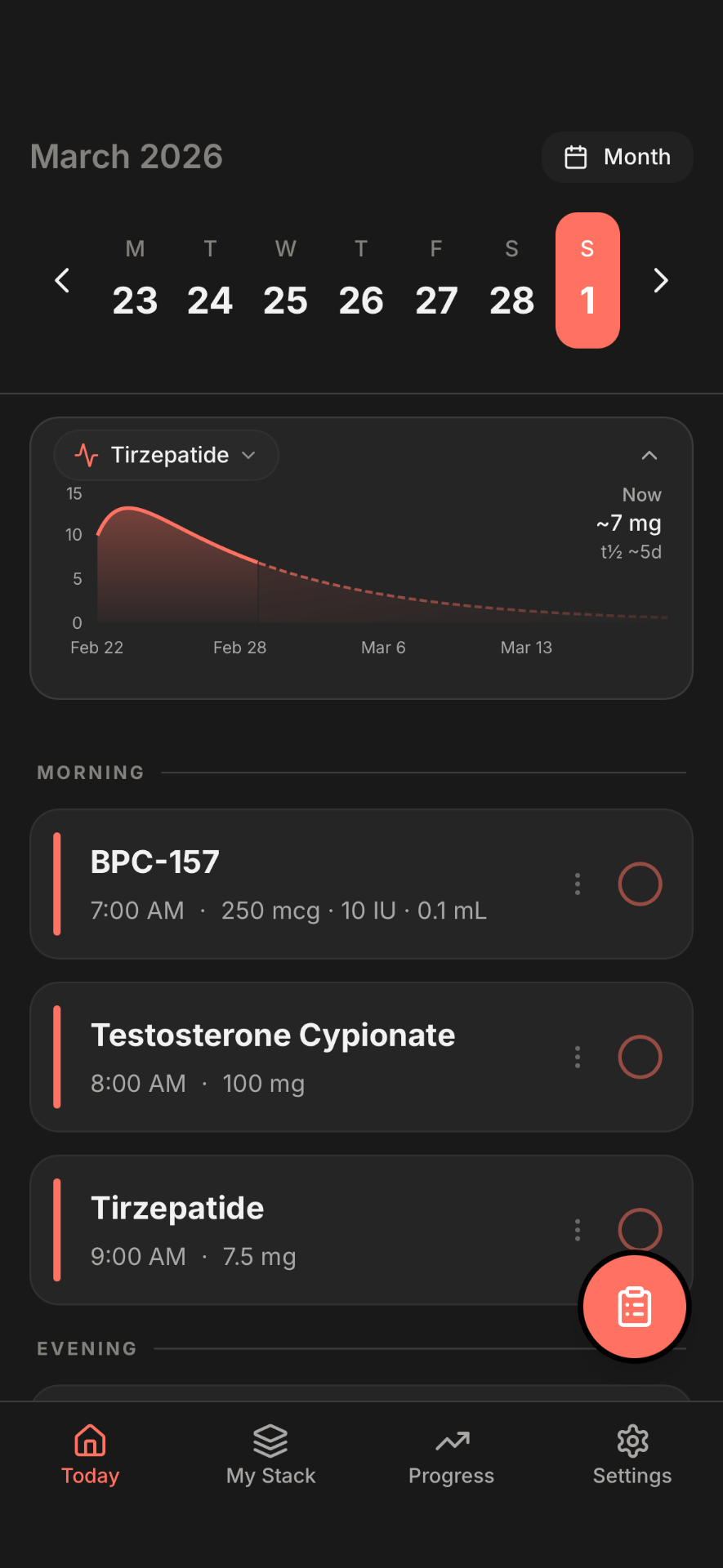
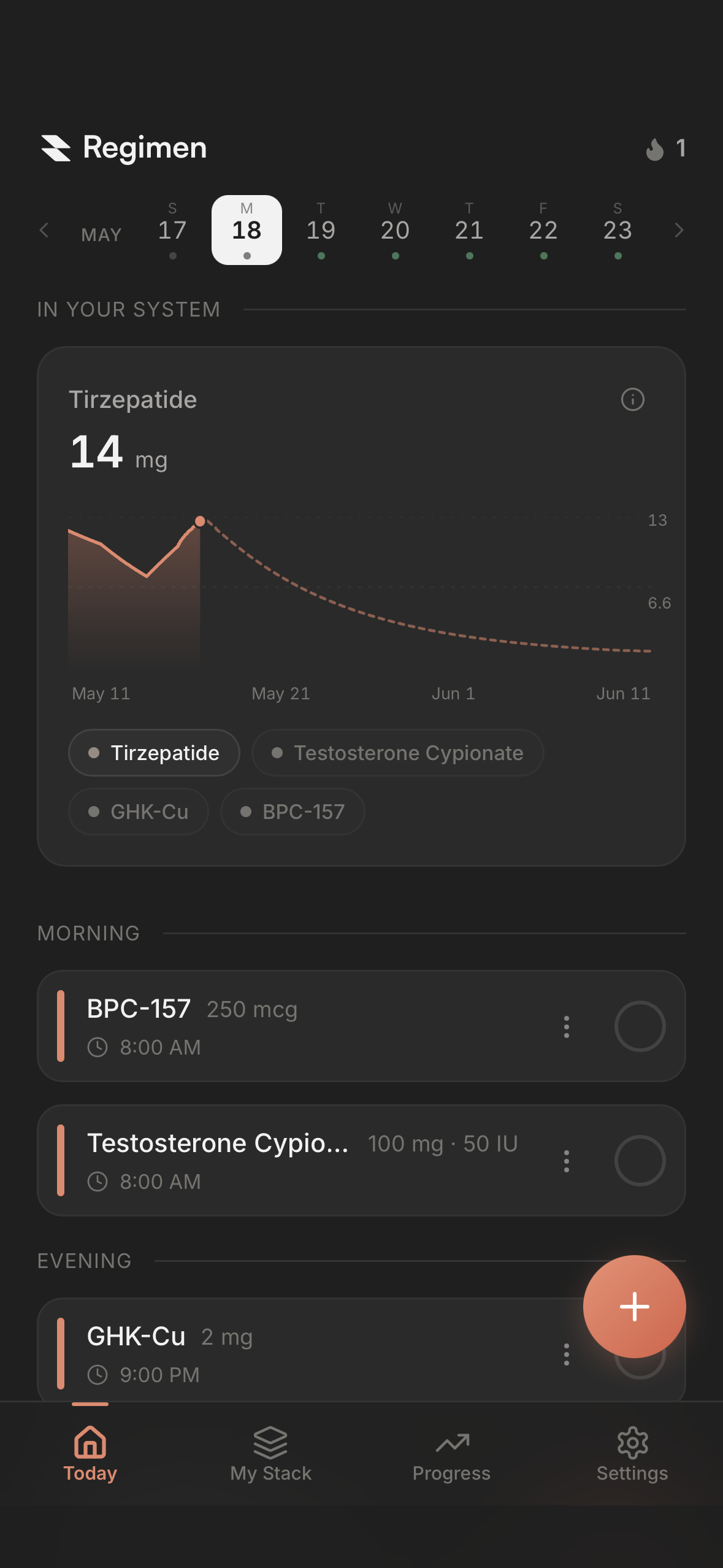
The Regimen retatrutide tracker handles GI markers across its 50+ marker library: nausea, bowel function, sulfur burps, the food-stuck feeling, and you can add anything specific to your own pattern. Dose changes overlay on your symptoms so you can see exactly which GI patterns show up around which dose changes. You can also log your blood work over time, so when your prescriber asks how your numbers have moved since the last labs, you have a clear visual instead of trying to remember. Free for one compound.
Frequently Asked Questions
How long do retatrutide GI side effects last?
For most people, week 1 after starting or after a dose change is the spike. Weeks 2 to 3 are the taper. By week 4 at a stable dose, most GI symptoms have settled to something manageable. If you are still in active GI spike at week 4, the dose may have ramped too fast for you.
What helps nausea on retatrutide?
Smaller more frequent meals, stopping before you feel full, staying ahead on water, avoiding greasy foods, and ginger. Most people find a combination of two or three of those gets them through.
Why am I so constipated on retatrutide?
Slower gastric emptying slows the whole GI system, and appetite suppression often means less fiber and water without realizing it. More water, gradual fiber increase, magnesium citrate, and daily movement help most people.
What are sulfur burps and why do I have them?
Burps that smell like rotten eggs. They are from food sitting in the stomach longer than usual and producing sulfur compounds. Smaller meals and lower-sulfur foods (less red meat, eggs, garlic, onions) around dose days tend to help.
Is the “food stuck” feeling in my stomach normal?
Yes, it is common. Slower emptying means food really is moving through the stomach slower than usual. Smaller portions, eating earlier in the day, and lighter foods around dose time usually resolve it within hours.
When should I call my prescriber about GI side effects?
Severe abdominal pain (especially radiating to the back), vomiting that will not stop, inability to keep fluids down, blood in stool or vomit, severe constipation lasting 4+ days, or anything that feels wrong and is not passing.
Does eating slowly actually help on retatrutide?
Yes. The satiety signal is delayed on GLP-1 drugs, so by the time you feel full, you have usually eaten too much. Eating slowly gives the signal time to catch up.
Does Regimen track GI symptoms specifically?
Yes. The retatrutide tracker handles all the common GI markers (nausea, bowel function, sulfur burps, food-stuck feeling) plus 50+ other markers you can add. Dose changes overlay on symptoms so you can see which GI patterns showed up around which dose changes. Free for one compound.
Related reading
- Retatrutide Side Effects: What to Expect Week by Week
- Retatrutide Dosing Guide: How to Titrate and When to Move Up
- Retatrutide vs Tirzepatide vs Semaglutide: Side Effects Compared
- Retatrutide Tracker
This article describes patterns reported in published GLP-1 user research and community discussions. It is not medical advice. Talk to a qualified healthcare provider before starting, changing, or stopping any medication.
Ready to track your GLP-1?
- Smart reminders so you never miss a dose
- Track weight, photos, and progress over time
- Medication level curves for every compound