The Bottom Line
Retatrutide (commonly called “reta”) shares the GLP-1 side effect class with tirzepatide and semaglutide, but its glucagon receptor adds a few unique effects: a stronger thermogenic signal, more pronounced GI intensity at higher doses, and a mild resting heart rate increase (5-12 bpm). Most side effects peak 24-48 hours after injection and improve within 2-3 weeks at each dose tier. The 6mg to 8mg dose jump is consistently reported as the hardest transition. Track your side effects alongside doses in the Regimen app to identify patterns and share data with your provider.
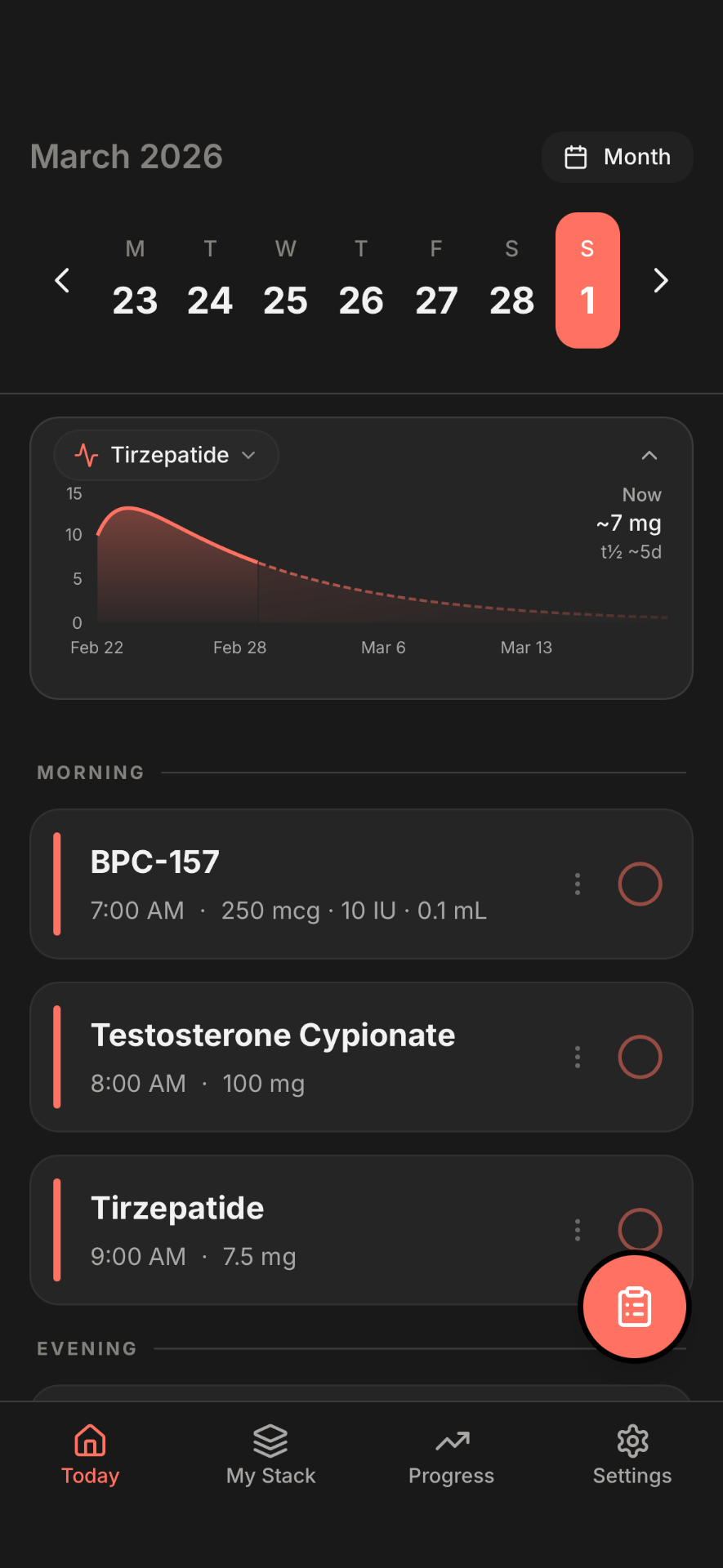
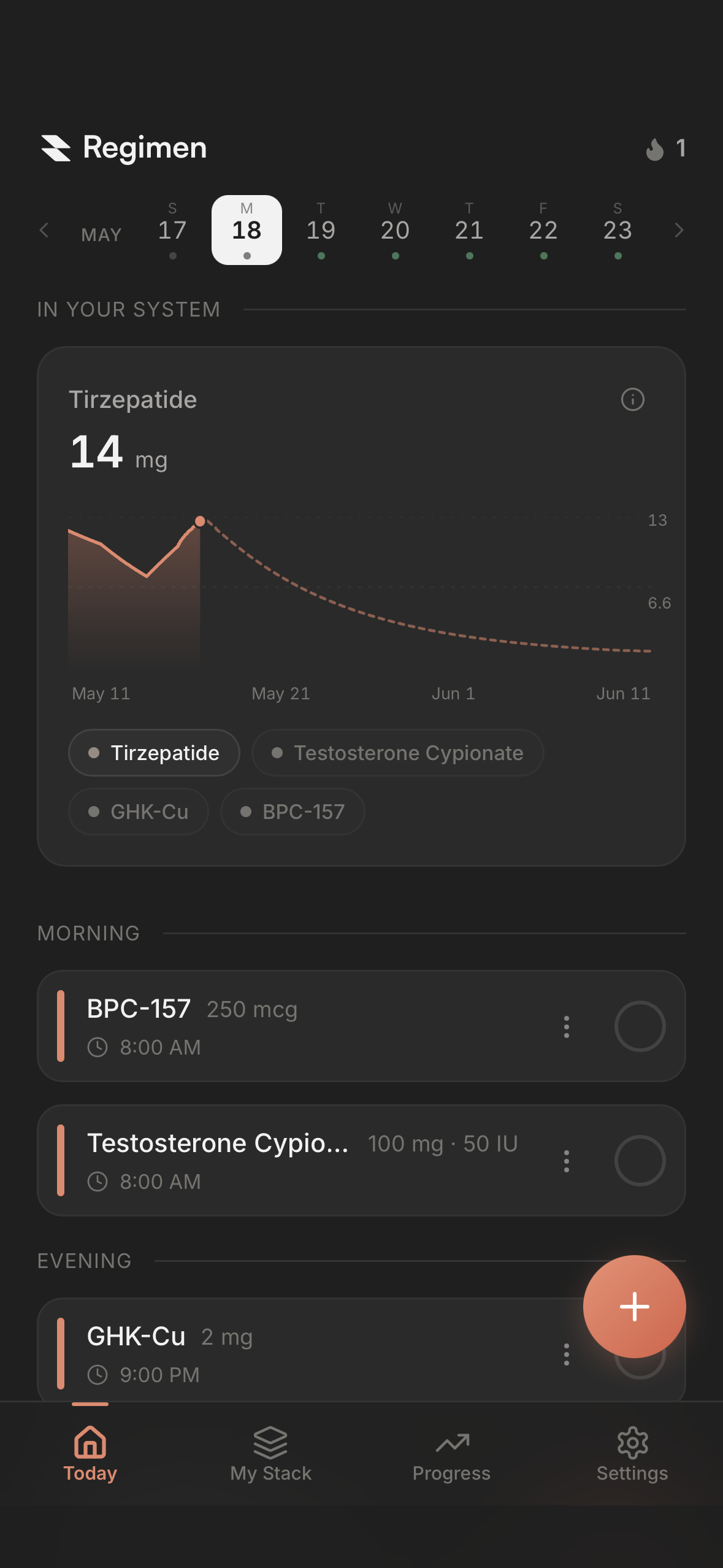
Regimen is a GLP-1 and peptide tracker app that logs each reta side effect against the dose you took, so you can see which ones fade with time and which ones follow your titration.
Is retatrutide safe?
Retatrutide is still investigational and not FDA-approved, so its long-term safety is genuinely still being studied. In the Phase 3 TRIUMPH-1 trial the side effects were mostly the digestive ones common to this whole drug class, with no unexpected safety surprises reported, but that is trial data, not a green light. Anyone using it should be working with a provider and watching how their own body responds.
This guide is for informational purposes only. Retatrutide is an investigational compound currently in Phase 3 clinical trials. It has not been FDA-approved. Work with a licensed healthcare provider for any medical decisions.
Retatrutide is the most-tracked GLP-1 compound among Regimen users. That’s a big part of why there’s so much shared experience on how it actually feels week to week.
In this guide:
- How Retatrutide Side Effects Differ from Other GLP-1s
- Week-by-Week Timeline: What to Expect
- The Glucagon Difference: Unique Retatrutide Effects
- Where to Find Detailed Guides for Each Side Effect
- When to Lower Your Dose
- When to Stop and Contact Your Provider
- Tracking Side Effects
- Frequently Asked Questions
How Retatrutide Side Effects Differ from Other GLP-1s
Retatrutide is a triple hormone receptor agonist that activates GLP-1, GIP, and glucagon receptors simultaneously. This means its side effect profile differs from semaglutide (GLP-1 only) and tirzepatide (GLP-1 + GIP) in specific ways. The shared GLP-1 effects - nausea, decreased appetite, slowed gastric emptying - are present across all three compounds. What’s unique to reta is the glucagon receptor activation, which adds:
- Increased resting metabolic rate (felt as body heat, especially after meals)
- More pronounced appetite suppression at higher doses
- Slightly higher nausea intensity at the 8mg+ range
- A dose-dependent increase in resting heart rate (5-12 bpm on average)
- More frequent injection site reactions compared to tirz, which is the main reason a proper injection site rotation matters more on reta than it does on tirz
Most users describe the experience as “tirzepatide but turned up” - similar side effects, but more intense at equivalent weight-loss doses. Dialing in the right dose makes a big difference here; use our retatrutide reconstitution calculator to confirm your units before each injection.
Week-by-Week Timeline: What to Expect
Weeks 1-4 (2mg - Tolerance Phase)
| What You’ll Feel | How Common | Duration |
|---|---|---|
| Mild nausea after injection | Common | 12-36 hours post-injection |
| Slightly reduced appetite | Common | Ongoing (mild at this dose) |
| Fatigue or low energy | Occasional | First 1-2 weeks, then resolves |
| Mild headache | Occasional | First week |
| Injection site redness or itching | Occasional | 24-48 hours per injection |
Most people tolerate 2mg with minimal issues. This dose is below the therapeutic threshold for significant weight loss. Its purpose is letting your body adapt to the triple-receptor mechanism. Mild headaches in the first week are common and usually resolve as your body adapts. If yours are not settling, our reta headache troubleshooting guide works through the usual causes, and the fatigue guide does the same for the tiredness that often arrives with them.
Side effects at 2mg are usually mild, but this still matters if you’re coming off tirzepatide - the 2mg starting phase is still required because the glucagon receptor is new to your body regardless of GLP-1/GIP tolerance.
Weeks 5-8 (4mg - Early Therapeutic)
| What You’ll Feel | How Common | Duration |
|---|---|---|
| Noticeable appetite suppression | Very common | First dose where most people “feel it” |
| Nausea 24-48 hours post-injection | Common | Usually resolves by day 3 post-injection |
| Early satiety (feeling full quickly) | Very common | Ongoing - this is the GLP-1 effect working |
| Mild constipation or loose stools | Common | Usually stabilizes within 2 weeks |
| Increased body warmth after meals | Occasional | Glucagon-mediated thermogenesis beginning |
GI symptoms tend to spike around here. Here’s how to ride out the worst of it.
Weeks 9-12 (6mg - Intermediate)
| What You’ll Feel | How Common | Duration |
|---|---|---|
| Stronger appetite suppression | Very common | Ongoing |
| Nausea (moderate) | Common | 24-48 hours post-injection |
| Noticeable body heat increase | Common | Glucagon effects become more apparent |
| Reduced interest in food | Very common | Some users need to consciously eat enough |
| Mild heart rate increase (3-7 bpm) | Occasional | Stabilizes within 2-3 weeks |
At 6mg, the triple mechanism is fully engaged. Users report that food becomes “less interesting” rather than revolting. It is not that eating makes you sick; it is that the drive to eat diminishes significantly. This is distinct from the more GI-driven appetite suppression of semaglutide. If your head is pounding at this tier, start here.
Weeks 13-16+ (8mg - The Transition Point)
| What You’ll Feel | How Common | Duration |
|---|---|---|
| Intense nausea for first 3-5 days | Common | Usually improves by week 2-3 at this dose |
| Very strong appetite suppression | Very common | Some users struggle to eat 1,000+ calories |
| Body heat / feeling “hot” | Common | Glucagon-driven thermogenesis at full effect |
| Heart rate increase (5-10 bpm from baseline) | Common | Stabilizes within weeks |
| Fatigue and low energy | Occasional | First 1-2 weeks at 8mg |
| Acid reflux / GERD | Occasional | May need dietary adjustments |
Community Insight
The 6mg to 8mg jump is the most discussed dose transition in reta communities. Users consistently describe the first week at 8mg as the hardest point in the entire protocol. The side effect load eases for most people by week 3 at this dose.
Weeks 17+ (10-12mg - Maximum Doses)
Side effects at 10-12mg are similar to 8mg but intensified. The heart rate increase may reach 8-12 bpm above baseline. Most users who reach 12mg have already adapted to the core side effects and report that the jump from 10mg to 12mg is less dramatic than 6mg to 8mg.
Not sure if a side effect is the dose or just the end-of-week dip? Log it in Regimen next to your dose and where you are in the week, and you can see which one it lines up with.
Log your side effects in RegimenThe Glucagon Difference: Unique Retatrutide Effects
These effects are specific to retatrutide and not seen with semaglutide or tirzepatide:
Increased Thermogenesis
The glucagon receptor activation increases your metabolic rate, which users feel as body warmth - especially after meals and during the first 24 hours post-injection. This is not a fever. It’s your body burning more energy at rest. Some users report sweating more during exercise and feeling warmer at night. This effect is dose-dependent and most noticeable at 6mg+.
Heart Rate Elevation
Reta raises resting heart rate by an average of 5-12 bpm in a dose-dependent manner. At 2-4mg, the increase is typically negligible (1-3 bpm). At 8-12mg, most users see a 5-10 bpm increase. This is attributed to the glucagon-mediated increase in metabolic activity. The increase usually stabilizes within 3-4 weeks at each dose and is considered clinically mild, but should be monitored - especially in users with pre-existing cardiac conditions.
Stronger Appetite Suppression
The triple mechanism produces more intense appetite suppression than the dual mechanism. Some users at 8mg+ report needing to consciously ensure they eat enough protein and calories to avoid muscle loss and metabolic adaptation. If you find yourself eating under 1,000 calories consistently, this is a sign your dose may be too high or you need to split it. The recomp trial numbers show most of the weight lost is fat when protein and training are in place.
More Injection Site Reactions
Injection site redness, itching, and mild swelling were reported at higher rates in Phase 2 data compared to tirz. Rotating injection sites helps - see our injection sites guide for a body map of recommended SubQ locations.
Where to Find Detailed Guides for Each Side Effect
Each of the big ones has its own playbook, so here’s where to go for the details:
- Nausea, constipation, sulfur burps and the rest of the gut stuff: the full breakdown of reta’s GI side effects
- Headaches: what actually helps with reta headaches
- Heart rate, blood pressure and the “burning skin” reports: what the cardiovascular data actually shows
- Fatigue and tiredness: why reta drains your energy and what helps
- For women specifically: what the evidence shows (and what it does not)
When to Lower Your Dose
Consider stepping back to the previous dose tier if:
- Nausea persists beyond 3 weeks at the current dose without improvement
- You’re consistently eating under 1,000 calories despite trying to eat more
- Your resting heart rate has increased more than 15 bpm from your pre-retatrutide baseline
- You’re experiencing persistent vomiting (not just nausea)
- Side effects are interfering with daily activities, work, or training
Lowering your dose is not failure. Many users find their optimal long-term dose is 6-8mg rather than 12mg. The goal is sustainable weight loss with manageable side effects - not maximum dose.
When to Stop and Contact Your Provider
Warning
Stop taking retatrutide and contact your healthcare provider immediately if you experience:
- Severe abdominal pain that doesn’t resolve (possible pancreatitis - rare but serious)
- Persistent vomiting for more than 48 hours (dehydration risk)
- Signs of allergic reaction: swelling of face, lips, tongue; difficulty breathing; severe rash
- Resting heart rate consistently above 100 bpm
- Signs of hypoglycemia: shakiness, confusion, sweating, rapid heartbeat (especially if diabetic or taking other glucose-lowering medications)
- Severe depression or suicidal thoughts (reported rarely with GLP-1 agonists)
Persistent headaches that interfere with daily function or don’t respond to hydration and rest are also worth flagging. See which headaches warrant a call versus the ones that settle on their own.
Tracking Side Effects
What to track daily or at each dose change:
- Side effect type and severity (1-10 scale for nausea, appetite, energy, GI)
- Timing relative to injection (how many hours post-dose did symptoms peak?)
- Resting heart rate (check each morning before getting out of bed)
- Calorie and protein intake (especially at 8mg+ where undereating is common)
- Weight (daily for moving average - don’t react to single-day fluctuations)
- Body measurements (weekly - waist, hips, chest)
Sharing this data with your provider helps them make informed decisions about dose adjustments. The Regimen app logs all of this in one place with trend charts.
Frequently Asked Questions
Is retatrutide safe?
Retatrutide is investigational and not FDA-approved, so its long-term safety is still being characterized. In the Phase 3 TRIUMPH-1 trial the side effect profile was mostly the GI effects common to the GLP-1 class, with no unexpected safety signals reported. That is trial data, not a green light. Anyone using it should be working with a licensed provider and monitoring how their own body responds.
What are the most common retatrutide side effects?
The most commonly reported effects mirror the GLP-1 class: nausea, other GI symptoms (constipation, diarrhea, reflux, sulfur burps), headache, fatigue, and injection-site reactions. Retatrutide’s glucagon component adds a few that are more specific to it: increased body warmth from thermogenesis, a mild resting heart rate increase of roughly 5 to 12 bpm, and more pronounced appetite suppression at higher doses. Most effects peak in the first 1 to 2 weeks at each new dose tier and taper over 2 to 3 weeks.
Do women get different side effects on retatrutide?
In the trial data, the side effect profile for women looks similar to the overall profile: mostly GI. There is no established sex-specific side effect for retatrutide reported in the published data. Some women anecdotally report menstrual cycle changes during rapid weight loss, but that pattern shows up with any large caloric deficit and is not specific to retatrutide. Retatrutide is not recommended in pregnancy or while trying to conceive; talk to your provider if that applies.
Are retatrutide side effects worse than tirzepatide?
At equivalent therapeutic doses, retatrutide side effects are generally described as more intense, particularly nausea at the 8mg+ range and the unique heart rate elevation. However, retatrutide produces more weight loss (28.3% vs 22.5%), so the side effects are proportional to the stronger pharmacological effect. Many users who tolerated tirzepatide well still experience a notable adjustment period when switching to retatrutide, because the glucagon receptor activation is a new physiological stimulus.
How long do retatrutide side effects last?
Most side effects peak during the first 1-2 weeks at each new dose tier and improve significantly by week 3-4. The heart rate increase stabilizes within 3-4 weeks. Long-term, most users at their maintenance dose report minimal ongoing side effects beyond reduced appetite.
Does retatrutide cause hair loss?
Rapid weight loss from any cause, including GLP-1 medications, can trigger telogen effluvium (temporary hair shedding). This is caused by the caloric deficit and nutritional changes, not by retatrutide specifically. Ensuring adequate protein intake (1.2-1.6g/kg/day), biotin, and iron can help minimize hair thinning.
Will retatrutide side effects get better over time?
Yes, for most people. The body adapts to each dose tier over 2-4 weeks. Users who have been at their maintenance dose for 2+ months typically report minimal ongoing side effects, mainly reduced appetite and mild body warmth. The acute GI symptoms, fatigue, and headache are primarily a titration phenomenon.
Is the heart rate increase from retatrutide dangerous?
In clinical trials, the average heart rate increase was 5-12 bpm, which is considered clinically mild. For reference, drinking a cup of coffee increases heart rate by 3-5 bpm. However, if your resting heart rate increases by more than 15 bpm or consistently exceeds 100 bpm, you should discuss with your provider.
Logging your side effects week by week (not just remembering them) is the most useful thing you can do during dose escalation. Several peptide tracker apps for GLP-1 dose escalation include symptom logging built around GLP-1 escalation schedules.
Ready to track your GLP-1?
- Smart reminders so you never miss a dose
- Track weight, photos, and progress over time
- Medication level curves for every compound