The Bottom Line
Retatrutide (commonly called “reta” in online communities) is a triple-agonist peptide targeting GLP-1, GIP, and glucagon receptors - one more receptor than tirzepatide’s (often called “tirz”) dual GIP/GLP-1 mechanism. In Phase 3 trials (TRIUMPH-1), retatrutide produced about 28.3% average weight loss at 12mg over 80 weeks, compared to tirzepatide’s 22.5% at 15mg over 72 weeks. The glucagon receptor adds an energy expenditure component that tirzepatide lacks, meaning your body actively burns more stored fat rather than relying solely on appetite suppression. Retatrutide is not FDA-approved as of March 2026 and is currently in Phase 3 clinical trials. Tirzepatide is FDA-approved and available as Mounjaro (diabetes) and Zepbound (weight loss). Use our free GLP-1 dose calculator to calculate doses for either compound.
The Core Difference: Two Receptors vs Three
Retatrutide (LY3437943) is a triple hormone receptor agonist developed by Eli Lilly that simultaneously activates GLP-1, GIP, and glucagon receptors. Tirzepatide (Mounjaro/Zepbound) is a dual agonist that activates only GLP-1 and GIP receptors. The addition of glucagon receptor activation is what sets retatrutide apart - it introduces a direct energy expenditure pathway that promotes fat oxidation and reduces hepatic fat independently of appetite suppression.
Think of it this way: semaglutide pulls one lever (appetite). Tirzepatide pulls two (appetite + fat metabolism). Retatrutide pulls all three (appetite + fat metabolism + energy expenditure). Each additional receptor doesn’t just add - it compounds the effect.
Pro Tip
The glucagon receptor is the reason retatrutide shows better fat-to-lean-mass loss ratios in early data. Glucagon signals the liver to break down stored fat for energy, which means more of the weight you lose comes from fat rather than muscle - a critical distinction for people who train.
Head-to-Head Weight Loss Comparison
| Metric | Retatrutide (12mg) | Tirzepatide (15mg) |
|---|---|---|
| Trial name | TRIUMPH-1 (Phase 3) | SURMOUNT-1 (Phase 3) |
| Duration | 80 weeks | 72 weeks |
| Average weight loss | 28.3% / 71.2 lbs (32.3 kg) | 22.5% / ~52 lbs |
| Patients reaching 15%+ loss | ~80% | ~70% |
| Patients reaching 20%+ loss | ~70% | ~55% |
| Receptor targets | GLP-1 + GIP + Glucagon | GLP-1 + GIP |
| FDA status | Phase 3 trials (not approved) | FDA approved |
| Developer | Eli Lilly | Eli Lilly |
The ~28.3% weight loss from TRIUMPH-1 at 80 weeks is the highest ever recorded in an obesity drug trial. For context, semaglutide (Wegovy) produces approximately 15% weight loss. Both retatrutide and tirzepatide are developed by Eli Lilly, and it’s expected that retatrutide will eventually be positioned as the next step up for patients who need more aggressive weight loss or have plateaued on tirzepatide.
Important
Retatrutide is currently in Phase 3 clinical trials and has not received FDA approval for any indication. The data presented here is from published clinical trial results (TRIUMPH-1, Phase 2 NEJM study). This comparison is for educational purposes only. Always work with a licensed healthcare provider for treatment decisions.
Mechanism of Action Breakdown
| Receptor | What It Does | Semaglutide | Tirzepatide | Retatrutide |
|---|---|---|---|---|
| GLP-1 | Reduces appetite, slows gastric emptying, improves insulin sensitivity | ✓ | ✓ | ✓ |
| GIP | Enhances fat metabolism, works synergistically with GLP-1 signaling | — | ✓ | ✓ |
| Glucagon | Increases energy expenditure, promotes hepatic fat oxidation, raises metabolic rate | — | — | ✓ |
GLP-1 makes you eat less. GIP helps your body process fat more efficiently. Glucagon makes your body burn more energy even at rest. Tirzepatide gives you the first two. Retatrutide gives you all three - which is why it produces more weight loss with potentially better preservation of lean muscle mass. For the published fat loss vs muscle retention data, see the retatrutide body recomposition guide.
Community Insight
Users who have tried both compounds frequently report that the appetite suppression from reta feels “sharper” than tirz, and that they notice increased body heat - particularly after meals. This is consistent with glucagon receptor activation increasing thermogenesis. The common description is “you feel like your metabolism is running hotter.” This is anecdotal and varies by individual.
Side Effects Comparison
| Side Effect | Tirzepatide | Retatrutide |
|---|---|---|
| Nausea | Common (especially during titration) | Common (more pronounced at 8mg+) |
| Decreased appetite | Very common | Very common (stronger) |
| Diarrhea | Common | Common |
| Constipation | Common | Common |
| Injection site reactions | Occasional | More common than tirzepatide |
| Vomiting | Occasional | Occasional (more common at higher doses) |
| Elevated heart rate | Rare | Occasional (5-12 bpm increase, dose-dependent) |
| Fatigue | Occasional | Occasional (more common in first 2 weeks at each dose) |
The glucagon receptor activation in retatrutide produces a somewhat different side effect profile. Users report that the 6mg to 8mg dose jump is where GI effects intensify most - similar to the semaglutide 0.5mg to 1.0mg transition. The heart rate increase (averaging 5-12 bpm) is unique to retatrutide and is attributed to the glucagon-mediated increase in metabolic rate. Most users find this tolerable and it stabilizes within a few weeks at each dose level.
Pro Tip
Many users manage retatrutide’s stronger nausea by splitting their weekly dose into two injections (e.g., 4mg Monday + 4mg Thursday instead of 8mg once weekly). This “microdosing” approach smooths out blood levels and reduces the nausea spike that comes 24-48 hours after a full weekly injection. Use our split-dose calculator to calculate the exact units for each injection.
Cost Comparison: Compounded vs Brand-Name
| Factor | Tirzepatide | Retatrutide |
|---|---|---|
| Brand-name (pharmacy) | $550-1,100/month (Mounjaro/Zepbound with insurance varies) | Not available (not approved) |
| Compounded | $150-350/month depending on dose and pharmacy | $200-450/month depending on source and dose |
| Insurance coverage | Possible (FDA-approved) | Not covered (investigational) |
| Availability | Widely available via prescription | Research/compounding only |
Tirzepatide has the significant advantage of FDA approval, which means insurance coverage is possible and the supply chain is regulated. Compounded retatrutide is sourced from compounding pharmacies or research suppliers, with varying quality and no insurance coverage. If cost and accessibility are primary factors, tirzepatide is the more practical choice today.
Switching from Tirzepatide to Retatrutide
“I’ve plateaued on tirzepatide - should I switch to retatrutide?” This is one of the most common questions in the GLP-1 community right now.
When Switching Makes Sense
- You’ve been on maximum tirzepatide dose (15mg) for 8+ weeks with stalled weight loss
- You’ve optimized diet, protein intake, and exercise and still plateaued
- You’re working with a provider who can monitor your transition
Our dedicated switching guide covers how to actually make the switch week by week, including the gap week and the 2mg start.
The Switching Protocol (Community-Sourced)
| Step | Action |
|---|---|
| Week 0 | Take your last tirzepatide dose |
| Week 1 | Skip (gap week - both compounds have ~5-6 day half-lives) |
| Week 2 | Start retatrutide at 2mg regardless of your previous tirzepatide dose |
| Weeks 3-5 | Stay at 2mg - assess GI tolerance to the glucagon receptor |
| Week 6+ | Titrate up to 4mg, then follow standard titration (4 to 6 to 8 to 12mg every 4 weeks) |
Important
There is no established medical conversion protocol for switching from tirzepatide to retatrutide, as retatrutide is not FDA-approved and no switching studies have been published. The protocol above is based on community experience and provider guidance. Always start retatrutide at 2mg regardless of your previous tirzepatide dose - the glucagon receptor activation introduces pharmacological effects your body has not been exposed to.
Community Insight
Users who switched from tirz to reta commonly report breaking through weight loss plateaus within 2-3 weeks. The most frequently mentioned effect is the return of strong appetite suppression that had faded on tirzepatide, plus a noticeable increase in energy and body heat - consistent with the added glucagon mechanism. Some users describe it as “feeling like when you first started tirzepatide, but stronger.”
Which One Should You Choose?
Choose Tirzepatide If:
- You want an FDA-approved, insurance-coverable medication
- You’re starting your first GLP-1 compound
- You prefer a well-established safety profile with years of real-world data
- Your BMI is 30-40 and you’re looking for 15-22% weight loss
- Cost and accessibility are important factors
Choose Retatrutide If:
- You’ve plateaued on tirzepatide or semaglutide
- You have a BMI of 40+ and need maximum weight loss
- You’re comfortable using an investigational compound under provider supervision
- You specifically want the energy expenditure benefits of glucagon activation
- Muscle preservation during fat loss is a priority (e.g., you train regularly)
Regimen tracks both. Whether you’re on tirzepatide, retatrutide, or transitioning between them, track your doses, weight, side effects, and blood levels in one place. Compare your protocols
Tracking Your Protocol
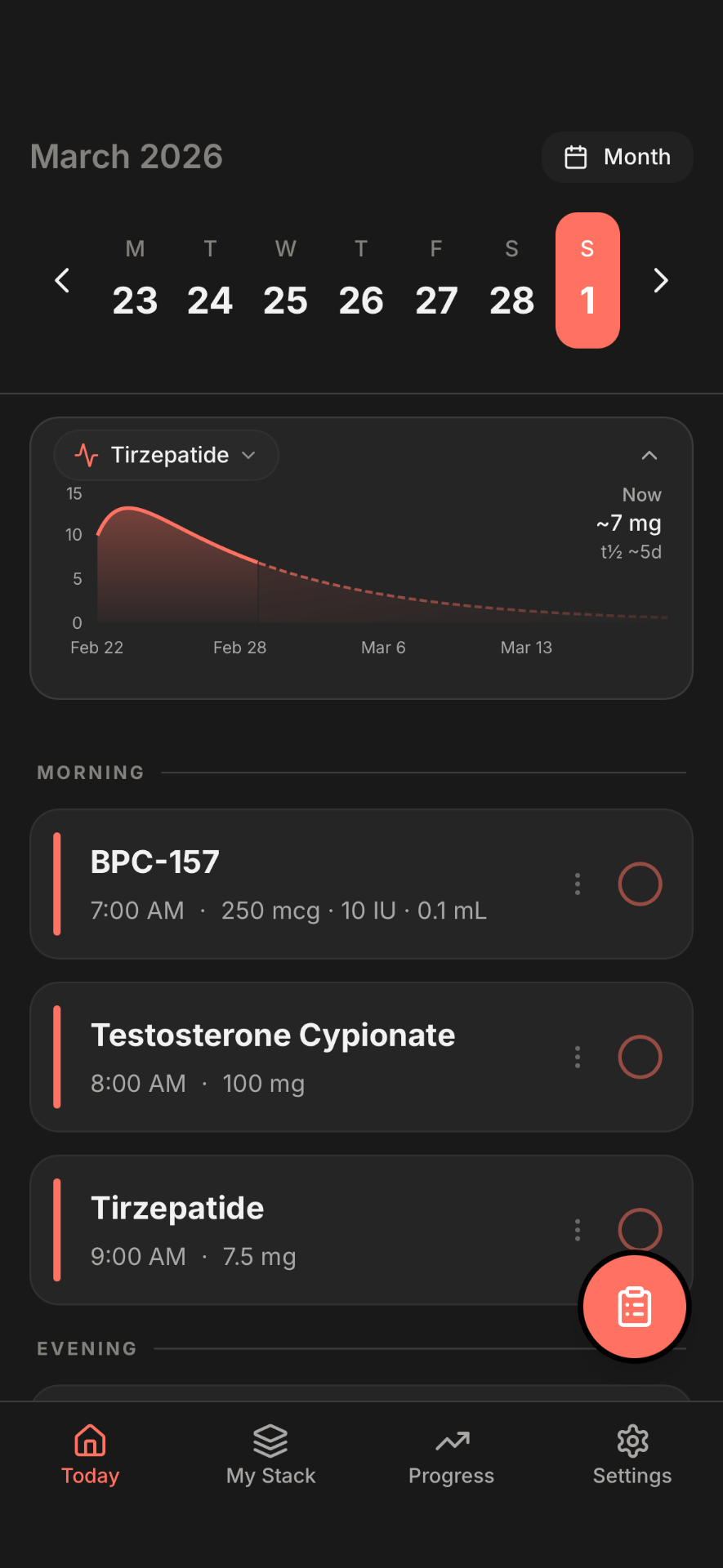
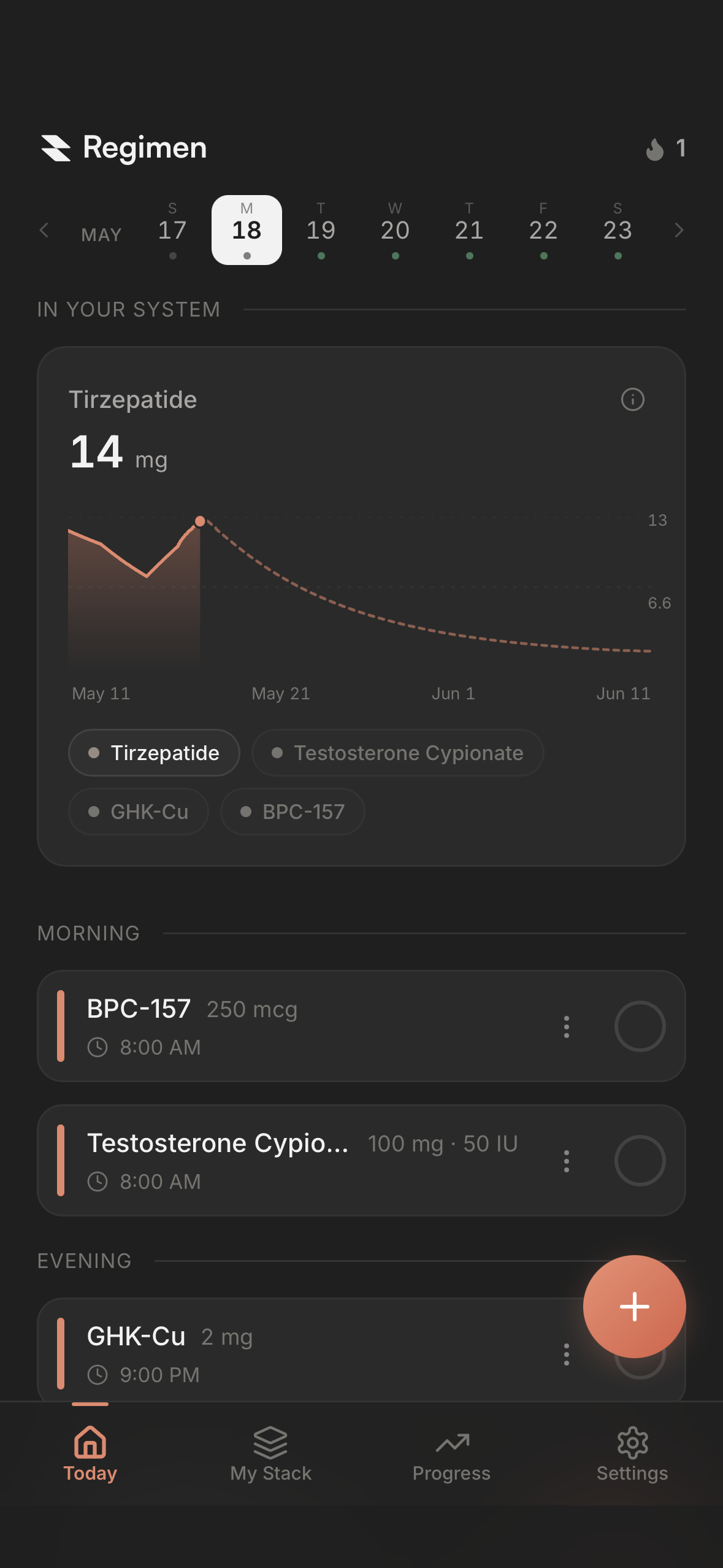
Whether you’re sticking with tirzepatide or switching to retatrutide, tracking matters. Log every dose, track your weight trend, note side effects at each dose tier, and share your data with your provider. The Regimen app supports both compounds with pharmacokinetic blood level modeling - you can see exactly where your levels peak and trough throughout the week.
Related: Retatrutide Tracker | Tirzepatide Tracker | GLP-1 Dose Calculator | Split Dose Calculator
Deeper reads: Best Peptides for Fat Loss in 2026 | Body Recomposition with Peptides
Frequently Asked Questions
Is retatrutide FDA-approved?
No. As of early 2026, retatrutide is in Phase 3 clinical trials (TRIUMPH program). It has not been approved by the FDA for weight loss or diabetes.
Can I switch from tirzepatide to retatrutide?
There are no established switching protocols because retatrutide isn’t approved. Most providers suggest finishing your current tirzepatide cycle, waiting 1-2 weeks, then starting retatrutide at the lowest dose.
Is retatrutide stronger than tirzepatide?
Phase 2 data suggests retatrutide may produce more weight loss at maximum doses (up to 24.2% vs 22.5%), but these are different trials. Direct head-to-head data isn’t available yet.
What are the side effects of retatrutide vs tirzepatide?
Both share GI side effects. Retatrutide’s glucagon component may cause increased heart rate and potential blood sugar fluctuations. Phase 2 data showed similar tolerability profiles.
How much does retatrutide cost compared to tirzepatide?
Compounded retatrutide costs $200-500/month. Brand tirzepatide costs $1,000+/month without insurance, or $300-600/month compounded. Retatrutide has no insurance coverage.
Can I track retatrutide in a peptide tracker app?
Yes. Regimen supports retatrutide with pharmacokinetic modeling, dose logging, and health metric correlation alongside other compounds.
Disclaimer: This article is for educational purposes only and is not medical advice. Retatrutide is not FDA-approved and is currently in Phase 3 clinical trials. Never switch medications without consulting your prescriber. Individual responses to these medications vary significantly.
Ready to track your GLP-1?
- Smart reminders so you never miss a dose
- Track weight, photos, and progress over time
- Medication level curves for every compound
Can I take retatrutide and tirzepatide together?
No. Both compounds activate GLP-1 and GIP receptors. Taking them simultaneously would create overlapping receptor stimulation with unpredictable and potentially dangerous effects, including severe nausea, hypoglycemia, and gastroparesis. Choose one compound at a time. If switching from tirzepatide to retatrutide, allow a 1-week washout period between your last tirzepatide dose and your first retatrutide dose.
When will retatrutide be FDA approved?
Retatrutide is currently in Phase 3 clinical trials (the TRIUMPH program, with 7+ trials). The TRIUMPH-4 trial reported positive results in late 2025. If remaining trials are successful, Eli Lilly is expected to submit for FDA approval in late 2026, with a potential approval in 2027. Until then, retatrutide is only available through clinical trials, research sources, or compounding pharmacies.
How much does compounded retatrutide cost?
Compounded retatrutide typically costs $200-450/month depending on the dose, vial size, and compounding pharmacy. This is comparable to or slightly higher than compounded tirzepatide ($150-350/month). Neither compounded version is covered by insurance. Brand-name tirzepatide (Mounjaro/Zepbound) may be partially covered by insurance, making it significantly cheaper for patients with coverage.
Does retatrutide cause more muscle loss than tirzepatide?
Early data suggests the opposite, retatrutide may preserve lean mass slightly better than tirzepatide during weight loss. The glucagon receptor activation promotes preferential fat oxidation, meaning more of the weight lost comes from fat rather than muscle. However, this needs confirmation in larger studies. Regardless of which compound you use, maintaining adequate protein intake (1.2-1.6g/kg/day) and resistance training are the most important factors for preserving muscle during GLP-1-mediated weight loss.
What’s the difference between retatrutide and semaglutide?
Semaglutide targets one receptor (GLP-1). Retatrutide targets three (GLP-1, GIP, and glucagon). This translates to meaningfully different weight loss results: semaglutide produces ~15% weight loss while retatrutide produces ~28.7%. Semaglutide is FDA-approved with years of real-world safety data. Retatrutide is investigational. For a full three-way comparison, see the mechanism table in the article above.