Peptides have transformed weight loss. Compounds like semaglutide (Ozempic, Wegovy) and tirzepatide (Mounjaro, Zepbound) have made significant fat loss achievable for people who couldn’t get there with diet and willpower alone. The landscape now includes a growing range of options: the original GLP-1s, the more aggressive triple agonist retatrutide, amylin combinations like CagriSema, oral pills like orforglipron, and adjunct compounds that complement the major peptides. This guide covers what each of them actually does, how to pick the right one for your situation, and what to do to make sure the weight you lose is fat (and stays off).
Quick answer
The most effective and well-evidenced fat loss peptides in 2026: tirzepatide (Mounjaro, Zepbound) for the strongest FDA-approved option, semaglutide (Ozempic, Wegovy) as the broadest and most accessible, retatrutide as the most aggressive (still investigational), CagriSema (cagrilintide + semaglutide) as the strongest evidence-backed combination, and orforglipron as the new oral option for people who don’t want injections. Adjunct compounds like 5-Amino-1MQ, AOD-9604, and Lipo-C can complement the GLP-1s. The key to making any of these work long-term: protein and resistance training to protect muscle, slow titration to manage side effects, and patience with the timeline.
Peptides have changed what’s possible, but they’re not magic
Before walking through the compound landscape, one piece of context worth getting straight: GLP-1s and the newer compounds in the same family do something diet and exercise alone usually can’t. They quiet the “food noise” that derails most weight loss attempts, slow how fast your stomach empties so you feel full longer, and make a sustained caloric deficit possible without constant willpower.
What they don’t do: protect muscle on their own, work without behavior changes, or produce permanent results if you stop them without a maintenance plan. People who lose 60 pounds on a GLP-1 and look “skinny-fat” instead of lean usually lost about a third of that weight as muscle. The compounds aren’t the problem. The protein, training, and sleep around them were.
The rest of this article covers which peptide fits which situation, how to combine them, and what to do alongside them to make sure the weight loss is actually fat and the results actually hold.
The current fat loss peptide landscape
There are five broad categories of compounds being used for fat loss in 2026, ranging from the well-established FDA-approved drugs to the investigational compounds people are accessing through research peptide vendors. Each has a different use case and a different risk profile.
FDA-approved and accessible
These are the compounds most people will start with, either through insurance coverage or cash-pay telehealth.
- Tirzepatide (Mounjaro for diabetes, Zepbound for weight loss). Hits two appetite receptors at the same time (GIP and GLP-1), which is why it tends to outperform semaglutide on the scale. Currently the strongest FDA-approved obesity drug, with around 20% body weight loss over 72 weeks in the SURMOUNT trials. Weekly injection, titrated up from 2.5mg to a maximum of 15mg over months. LillyDirect cash-pay is around $299 to $449 per month depending on dose.
- Semaglutide (Ozempic for diabetes, Wegovy for weight loss, Rybelsus as a daily oral). The compound that started the wave. Around 14-15% body weight loss over similar timelines. Slightly less potent than tirzepatide, but the broader franchise and longer track record make it the most accessible option for most people. Available through insurance, cash-pay branded, and (less reliably than in 2024) through compounding pharmacies.
- Liraglutide (Saxenda for weight loss, Victoza for diabetes). The previous-generation GLP-1. Still works, but it’s a daily injection rather than weekly, and the weight loss numbers are lower. Mostly relevant as historical context now that weekly options exist.
- Orforglipron. The new oral GLP-1, FDA-approved in April 2026 (sold as Foundayo). Around 12.4% weight loss at the highest dose over 18 months. The big advantage: no injection, no food or water restrictions, daily pill. The trade-off: less potent than the injectables.
Investigational and gray-market
These compounds aren’t FDA-approved but are heavily used in the peptide and biohacker communities through research peptide vendors.
- Retatrutide. The newest and most aggressive of the group. Hits three different pathways at once (GLP-1, GIP, and glucagon), which is why the Phase 2 data showed roughly 24% body weight loss at 48 weeks. That’s the largest number in the category. Phase 3 is ongoing. Not FDA-approved, and the FDA has issued warning letters to vendors selling it as an unapproved drug. The most popular gray-market GLP-1 right now.
- Cagrilintide. A long-acting amylin agonist (different appetite hormone than GLP-1). Standalone weight loss is meaningful but the bigger story is the combination with semaglutide.
Combination therapy (the strongest evidence-backed “stack”)
- CagriSema (cagrilintide + semaglutide). The combination delivered roughly 20% body weight loss in the REDEFINE 1 trial, with a side-effect profile that can be friendlier than maximum-dose tirzepatide. This is the cleanest evidence in the entire space for a “stack” producing better results than either compound alone.
Adjunct compounds (work alongside the major peptides)
These compounds work on different mechanisms than the GLP-1s, which is why they can pair well without piling on side effects.
- 5-Amino-1MQ. A small molecule (not technically a peptide) that targets an enzyme involved in fat storage. The pitch is fat loss without appetite suppression, which appeals to people who can’t tolerate GLP-1s or want a complementary mechanism. Human evidence is still emerging.
- AOD-9604. A growth hormone fragment originally developed as a fat loss drug. Human evidence is weaker than the marketing suggests, but it’s still used as an adjunct in some protocols. Often paired with a GLP-1.
- Lipo-C (lipotropic injections). A blend of methionine, inositol, choline, and B12 that supports how your body processes and metabolizes fat. Used in medical weight-loss clinics for decades. Lower evidence floor than the others, but cheap, low-risk, and often included in physician-prescribed weight loss protocols.
- Tesofensine. A non-peptide compound with stronger appetite suppression than some GLP-1s. More cardiovascular risk because of its stimulant-adjacent profile. Less common, more niche.
On the horizon (worth watching)
These are still in clinical trials but worth knowing about if you’re planning longer-term:
- Eloralintide (LY3841136, sometimes called “ELORA” in community discussions). Eli Lilly’s amylin agonist. Phase 3 starting in 2026.
- Amycretin. A single molecule that combines GLP-1 and amylin effects (instead of CagriSema’s combination approach). Phase 1b/2a showed around 14.5% weight loss at 36 weeks.
- Mazdutide. A dual GLP-1/glucagon agonist. Already approved in China. US trials ongoing.
- Survodutide and Pemvidutide. Both are dual GLP-1/glucagon agonists with promising metabolic effects, including better liver fat numbers than pure GLP-1s.
- VK2735 and CT-388. Dual GLP-1/GIP agonists from companies other than Lilly. The market is getting crowded, which is good for patients (more options, eventually lower prices).
The headline shift in 2026: the question is no longer “is there a drug that works for weight loss.” There is. The question is now “which one fits my situation, my insurance, my tolerance, and my goal?”
Building your protocol
The right peptide for you depends on what you have access to, what side effects you can tolerate, what your goal is, and what your timeline looks like. The decision tree below covers the most common situations.
Pick your starting point based on your situation
If you have insurance coverage for a GLP-1: Start with whatever’s covered (usually semaglutide or tirzepatide). Insurance access is the single biggest variable in long-term affordability.
If you’re paying cash and want the strongest approved option: Tirzepatide through LillyDirect or telehealth. Currently the best efficacy-per-dollar in the FDA-approved tier.
If you’ve maxed out on tirzepatide and hit a plateau: Retatrutide is the typical next step in the community, though it requires accepting the gray-market sourcing and regulatory uncertainty.
If you can’t tolerate the GI side effects of GLP-1s: Try slower titration first. If that doesn’t work, the amylin agonists (cagrilintide, CagriSema) often have a gentler GI profile.
If you don’t want to inject: Orforglipron is now FDA-approved as an oral GLP-1. Less potent than the injectables but real and accessible.
If you’re looking for an adjunct alongside your GLP-1: Lipo-C is the cheapest and lowest-risk. 5-Amino-1MQ is the most interesting mechanistically but the evidence is younger.
Smart protocol principles:
- Titrate slowly. The FDA-approved schedule is the floor, not the ceiling. Many people do better holding at lower doses longer than the package insert suggests. The dose where you can still eat, sleep, and function is the right dose.
- Track everything. Weight (weekly average, not daily), waist measurement, energy, side effects, sleep, dose, injection day. The correlations matter when you’re deciding whether to titrate up, hold, or back off.
- Add one thing at a time. If you’re considering adding an adjunct compound to a GLP-1, give the GLP-1 at least 8 to 12 weeks first. Then add the adjunct and give it another 4 to 6 weeks before evaluating.
- Plan the maintenance phase from the start. People who lose significant weight on a GLP-1 and then stop without a plan tend to regain. The maintenance phase usually involves a lower maintenance dose plus the protein and training habits that protected muscle during the loss phase.
A note on sourcing
The FDA has shifted its position on compounded versions of GLP-1s several times in 2025 and 2026. Compounded semaglutide and tirzepatide were widely available during the original shortage, then restricted as the shortage resolved, then re-evaluated. Retatrutide is not FDA-approved and the FDA has issued warning letters to vendors. If you’re sourcing outside of FDA-approved channels, understand that quality control varies, product authenticity matters, and the regulatory environment can change with little notice. This article is not a sourcing guide.
What we see in Regimen data
Retatrutide is the most-tracked fat loss compound on the platform, ahead of tirzepatide and semaglutide. Most retatrutide users on Regimen run a weekly dosing schedule, though about 1 in 6 use a less-frequent pattern (twice weekly, every 5 days, or every 3 days), suggesting that microdosing or extended-interval protocols are a real and growing community behavior on the long-half-life compound.
The fundamentals that make peptide fat loss actually work
This is the part most articles on this topic skip or treat as an afterthought. It’s also the part that decides whether the weight you lose on a GLP-1 is fat (good) or a mix of fat and muscle (bad). The compounds make the deficit possible. These habits make the deficit produce the result you actually want.
Protein, every day. When you’re in a caloric deficit, your body is choosing between burning fat and burning muscle to make up the difference. Protein intake is the single biggest variable that pushes that choice toward fat. The target most people land on is around 0.8 to 1 gram per pound of target bodyweight. If you’re aiming to weigh 150 pounds, that’s 120 to 150 grams of protein every day. On a GLP-1, this becomes the make-or-break variable because appetite suppression makes eating enough protein hard. Front-load it earlier in the day, use protein shakes if you need them, and treat the protein number as more important than the calorie number.
Resistance training, two to three times per week minimum. Lifting weights tells your body to hold onto muscle. Without it, your body has no reason to preserve lean tissue and will catabolize it for energy. Cardio doesn’t protect muscle. Walking doesn’t. Resistance training does. You don’t have to bench heavy or train like a bodybuilder. Two to three sessions per week of basic compound movements (squat, deadlift or row, press, pull) is enough for most people on a GLP-1 to preserve most of their muscle through the loss phase.
Hydration. GLP-1s dehydrate you, partly because they slow gastric emptying and reduce thirst signals. Most people on a GLP-1 are mildly dehydrated and don’t realize it. Aim for at least half your bodyweight in ounces of water per day. If you get headaches, fatigue, or constipation during titration, dehydration is often the first thing to check.
Sleep, 7 to 9 hours. Sleep debt raises cortisol, worsens insulin sensitivity, and increases hunger. Six hours or less per night fights against everything the GLP-1 is doing for you. This is the cheapest intervention on the list and the most universally skipped.
Slow titration. The package insert’s titration schedule is a guideline. Many people do better holding at lower doses for longer than the schedule suggests, especially if side effects are tough or if higher doses are killing their ability to eat enough protein. Pushing for the maximum dose isn’t the goal. Sustainable, side-effect-tolerable weight loss is.
If you do these five things consistently, your GLP-1 will deliver close to the results you saw in the clinical trials. If you skip them, you’ll lose weight but you won’t be happy with what’s underneath when the fat comes off.
How to know if it’s actually working
The scale moves on a GLP-1, but the scale alone doesn’t tell you whether the weight loss is the right kind. A few things to track instead:
- Weekly weight averaged. Weigh daily, but track the seven-day average. Day-to-day numbers are noise from water, sodium, glycogen, and gut content.
- Waist measurement. At the navel, relaxed, same time of day. Once a week. If your waist is shrinking, you’re losing fat.
- How clothes fit. Belt holes, the way a shirt sits across the shoulders, jeans through the thigh. Pure body composition data.
- Energy and training quality. If your workouts are getting harder and you’re feeling weak, the deficit is too aggressive or your protein is too low. Adjust.
- Bloodwork every 8 to 12 weeks. Lipid panel, fasting glucose, HbA1c. These tell you whether the loss is improving your metabolic health (the actual goal) or just changing the scale number.
- Body composition scan (DEXA or InBody) every 3 to 6 months. This is the gold standard for confirming the weight you’ve lost is fat, not muscle. Worth doing at least once during the loss phase to calibrate.
A common pattern people miss: the scale stalls for two to three weeks, then drops a few pounds in a single week. That’s normal. Fat loss happens in plateaus and woosh moments, not in smooth linear declines. Don’t quit during a plateau.
Common mistakes that derail GLP-1 fat loss
The same failure modes show up over and over. Most of them are about behavior around the compound, not the compound itself.
Mistake 1: Chasing the maximum dose. The temptation is to titrate to the maximum on the assumption that more is better. The cost is that at higher doses, appetite suppression can become so strong that protein intake collapses, lean mass loss accelerates, and quality of life drops. Most people who get good long-term results hold at a moderate dose rather than max-dosing.
Mistake 2: Skipping protein because the appetite is gone. This is the single biggest cause of “I lost weight but I look soft” outcomes. The GLP-1 makes you not hungry. Your body still needs protein. The fix is structure, not willpower: protein at every meal, shakes when needed, track it loosely until it becomes a habit.
Mistake 3: No resistance training during the loss phase. Walking and cardio are good for you, but they don’t protect muscle. If your fitness routine is “30 minutes on the treadmill three times a week” while you’re on a GLP-1, you’re losing muscle along with the fat. Add lifting, even if it’s basic.
Mistake 4: Daily weighing and emotional reactions. The scale fluctuates day to day for reasons that have nothing to do with fat loss. People who weigh daily and react emotionally to the number derail more often than people who weigh daily and track the weekly average.
Mistake 5: Stopping abruptly without a maintenance plan. People who lose 50 pounds on a GLP-1 and then stop cold turkey without a maintenance dose or a behavior plan tend to regain. The maintenance phase usually involves a lower ongoing dose plus the protein and training habits that protected muscle during the loss phase.
Mistake 6: Ignoring side effects that are signaling something. Mild nausea during titration is normal. Severe vomiting, persistent constipation, or symptoms that aren’t getting better after a few weeks at a stable dose are signals worth taking to your prescriber. Most GLP-1 side effects can be managed by titrating slower or holding at a lower dose.
Mistake 7: Treating the compound as the entire solution. The GLP-1 is one tool. Protein, training, sleep, and hydration are the other tools. People who get the best long-term results treat the peptide as part of a system, not as a substitute for everything else.
Frequently Asked Questions
What is the best peptide for fat loss?
Depends on what you mean by best. Tirzepatide is the strongest FDA-approved option (around 20% weight loss in trials). Retatrutide is more aggressive (about 28.3% at 80 weeks in Phase 3 TRIUMPH-1) but still investigational. Semaglutide has the broadest access and longest track record. CagriSema is the strongest evidence-backed combination. Orforglipron is the new oral option. For most people, the practical answer is whatever you have insurance coverage for, titrated slowly, paired with protein and resistance training.
How long should I stay on a GLP-1?
There is no single answer. The trial data suggests continued use produces continued benefit, and people who stop typically regain at least some of the weight. Many people stay on a maintenance dose indefinitely, either at a lower dose than they used during the loss phase or with periodic dose adjustments.
How do I avoid Ozempic face?
Ozempic face is just facial fat loss that happens when you lose significant body weight. The face stores fat, and rapid weight loss makes the face look gaunt. The fix is slower weight loss (do not max-dose the GLP-1) plus enough protein and resistance training to preserve muscle, including facial muscle. The structural issue is rate of loss, not the compound itself.
What about cycling or stopping for a break on GLP-1s?
GLP-1s are not typically cycled the way some peptides are. They work by maintaining a steady level, and the appetite suppression depends on consistent dosing. Most people either stay on a maintenance dose indefinitely or taper down over time, but they do not take scheduled breaks. The exception is if side effects become unmanageable.
What’s the best peptide for fat loss?
Depends on what you mean by “best.” Tirzepatide is the strongest FDA-approved option (around 20% weight loss in trials). Retatrutide is more aggressive (about 28.3% at 80 weeks in Phase 3 TRIUMPH-1) but still investigational. Semaglutide has the broadest access and longest track record. CagriSema is the strongest evidence-backed combination. Orforglipron is the new oral option. For most people, the practical answer is “whatever you have insurance coverage for, titrated slowly, paired with protein and resistance training.”
How much weight can I lose on a GLP-1?
The trial numbers: around 15% body weight loss on semaglutide over 68 weeks, around 20% on tirzepatide over 72 weeks, around 28% on retatrutide over 80 weeks (Phase 3 TRIUMPH-1, still investigational). Real-world results vary based on protein intake, training, sleep, and how aggressively you titrate. Most people who follow the protocol get within a few percentage points of the trial numbers.
How long should I stay on a GLP-1?
There’s no single answer. The trial data suggests continued use produces continued benefit, and people who stop typically regain at least some of the weight. Many people stay on a maintenance dose indefinitely, either at a lower dose than they used during the loss phase or with periodic dose adjustments. The decision usually comes down to cost, side effect tolerance, and how stable your weight is at maintenance.
Will I gain the weight back if I stop?
If you stop abruptly with no maintenance plan, yes, most people regain a meaningful portion. If you taper to a lower maintenance dose and keep up the protein and training habits, weight tends to stay relatively stable. The newest research suggests that switching from injectable to oral GLP-1 (orforglipron) for maintenance can help preserve some of the loss even at lower doses.
Should I take other peptides while I’m on a GLP-1?
Depends on your goal. If your goal is just fat loss and the GLP-1 is working, you probably don’t need to add anything. If you want extra muscle preservation, a GH-axis peptide like tesamorelin or CJC-1295 with ipamorelin can help (more on that in the body recomposition pillar). If you’re feeling flat metabolically, MOTS-c or SS-31 can help on the cellular side. If you can’t tolerate the GLP-1 side effects, an adjunct like 5-Amino-1MQ or Lipo-C might let you stay at a lower GLP-1 dose.
How do I avoid “Ozempic face”?
“Ozempic face” is just facial fat loss that happens when you lose significant body weight, regardless of the compound. The face stores fat, and rapid weight loss makes the face look gaunt. The fix is slower weight loss (don’t max-dose the GLP-1) plus enough protein and resistance training to preserve muscle, including facial muscle. Some people also benefit from collagen support or targeted treatments after the loss phase, but the structural issue is rate of loss, not the compound itself.
Is compounded semaglutide safe?
The compounded versions made during the original shortage were generally safe when sourced from legitimate compounding pharmacies, though quality control varies. The FDA’s position has tightened in 2026, and access to compounded versions has narrowed. If you’re considering compounded GLP-1s, vet the pharmacy carefully, look for 503A licensure, and be aware that the regulatory environment can change. Compounded “semaglutide sodium” or “semaglutide acetate” are salt forms that haven’t been shown to be safe and effective in the way the approved versions have.
What’s the difference between Ozempic and Wegovy?
Same compound (semaglutide), different brand names for different FDA indications. Ozempic is approved for type 2 diabetes. Wegovy is approved for chronic weight management. Same molecule, slightly different maximum doses, different insurance coverage. Most people who don’t have diabetes are prescribed Wegovy for weight loss.
Can I use peptides for fat loss if I’m not obese?
You can, but the medical and ethical conversation is different. The FDA approvals for the major GLP-1s are for BMI 27 with a comorbidity or BMI 30 without. Off-label use for vanity weight loss is widespread but the risk-to-benefit math changes when you’re not actually obese. Side effects are still real. Cost is still real. Muscle loss is still real. If you’re considering peptides for cosmetic weight loss rather than medical weight loss, a body recomposition approach (see the body recomp pillar) is usually a better fit than a fat-loss-only approach.
What about cycling or stopping for a break?
GLP-1s aren’t typically cycled the way some peptides are. They work by maintaining a steady level, and the appetite suppression depends on consistent dosing. Most people either stay on a maintenance dose indefinitely or taper down over time, but they don’t take scheduled breaks. The exception is if side effects become unmanageable, in which case stopping (or holding at a lower dose) is appropriate.
Related reading
- Body Recomposition with Peptides: The Complete 2026 Stack Guide
- MOTS-c Guide: Mitochondrial Peptide, Evidence, Protocols
- NAD+ Injection Guide: At-Home Subcutaneous Protocol
- Retatrutide Side Effects Guide
- Switching from Tirzepatide to Retatrutide: Protocol Guide
- Retatrutide + TRT Stack: Dosing and Timing
- GLP-1 Dose Calculator
- Tirzepatide Reconstitution Calculator Guide
- How to Track Body Recomposition
This article is for educational purposes only. It is not medical advice, a prescription, or a recommendation to use any compound. Several compounds discussed (retatrutide, 5-Amino-1MQ, AOD-9604, tesofensine, eloralintide, amycretin, VK2735, CT-388, mazdutide, survodutide, pemvidutide) are not FDA-approved and the FDA has issued warning letters to vendors selling some of them as unapproved drugs. The compounding pharmacy landscape for GLP-1s changed materially in 2025-2026 and continues to evolve. Always consult a qualified healthcare provider before starting, stopping, or changing any medication or health protocol.
Ready to track your protocol?
- Smart reminders so you never miss a dose
- Track weight, photos, and progress over time
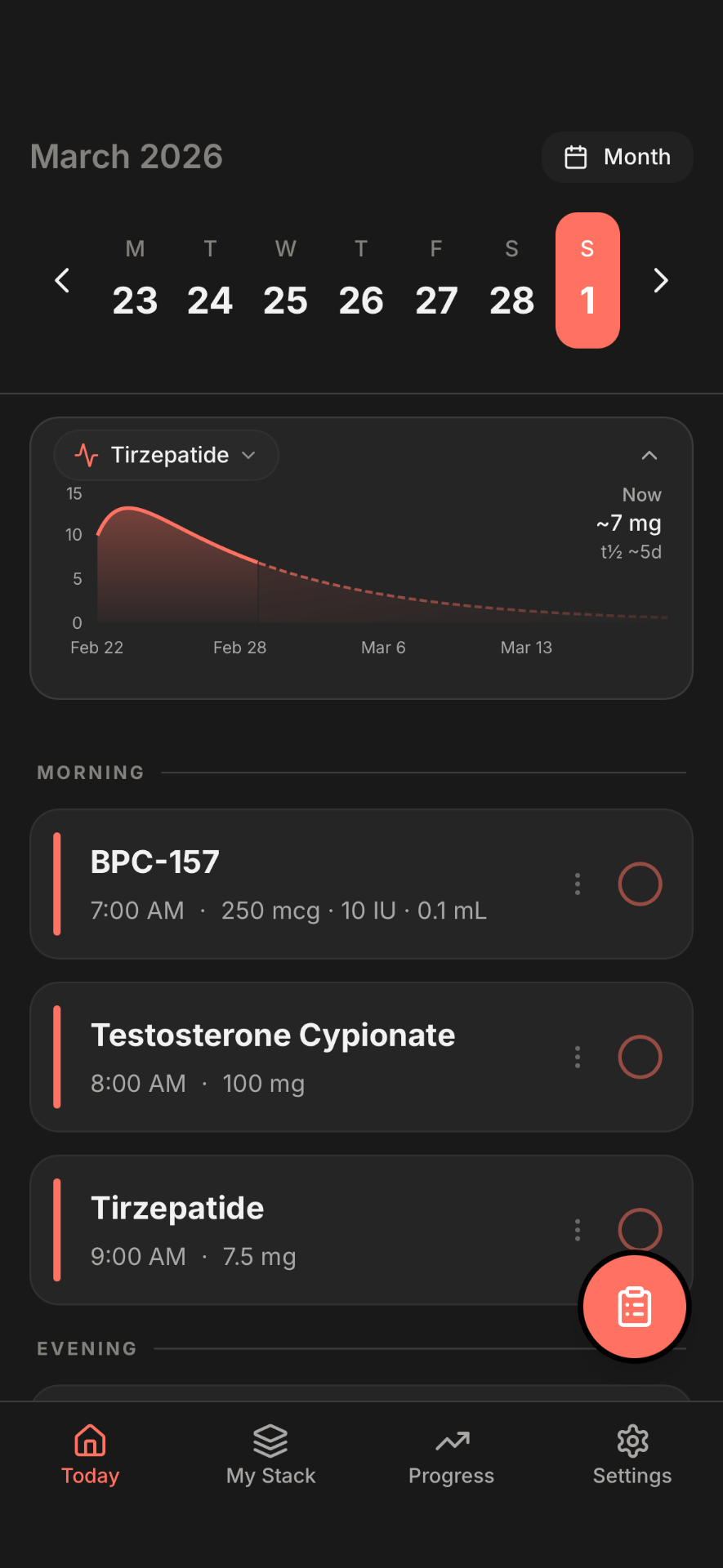
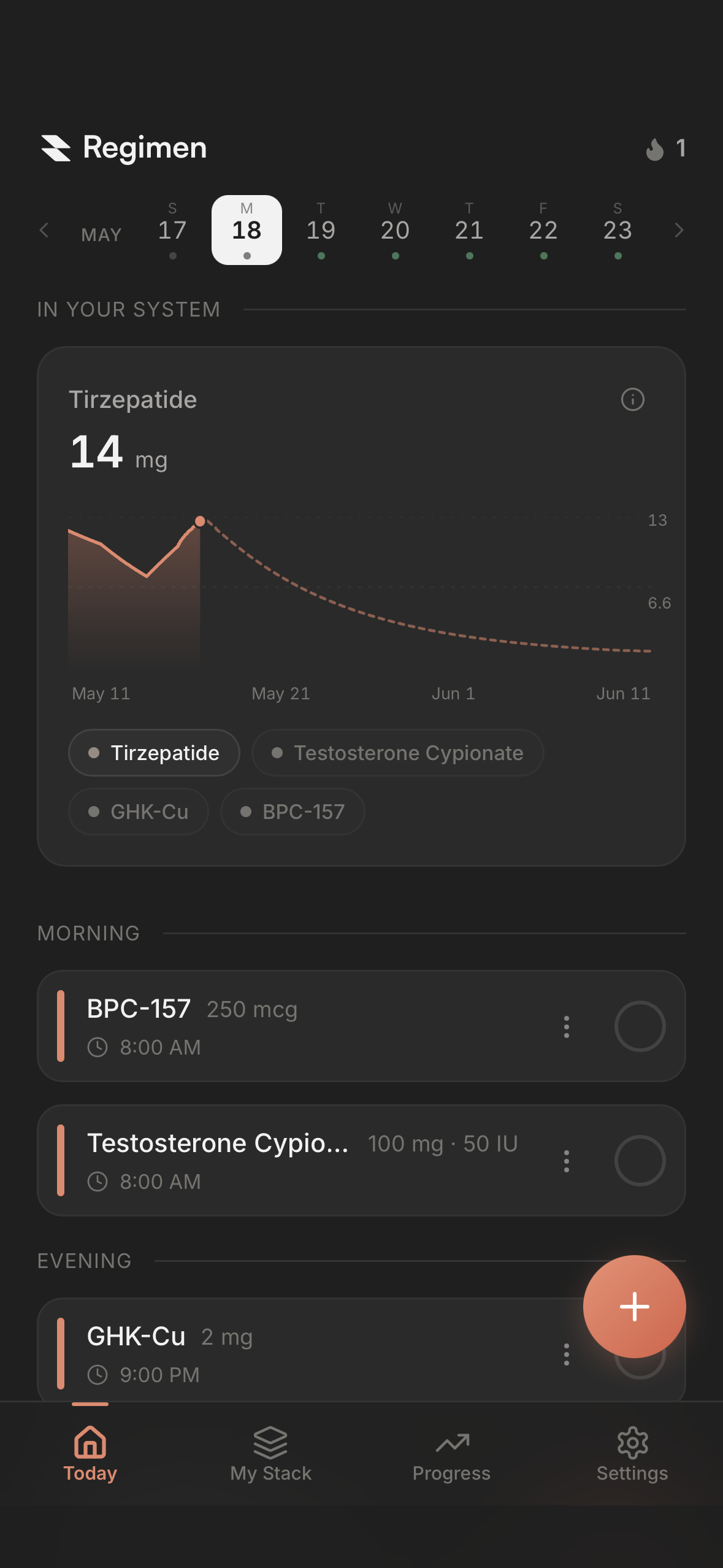
- Medication level curves for every compound