The Bottom Line
The scale lies during body recomposition. If you are losing fat and gaining muscle simultaneously, your weight may barely change while your body transforms. Track waist circumference, strength benchmarks, progress photos, and how your clothes fit. These metrics tell the real story the scale cannot.
Why the Scale Lies During Body Recomposition
Here is the classic scenario: you lose 15 lbs of fat, gain 10 lbs of muscle, and the scale says you lost 5 lbs. You feel like a failure when you are actually transforming. This is the single most common reason people quit protocols that are working. They are measuring the wrong thing.
Body recomposition means losing fat while maintaining or gaining muscle. It happens when you combine a moderate caloric deficit with resistance training and adequate protein. It is especially common in people on TRT, GLP-1 medications, or growth hormone peptides because these compounds shift the body’s fat-to-muscle ratio.
The problem is that muscle is denser than fat. One pound of muscle takes up significantly less space than one pound of fat. So your waist shrinks, your shirts fit tighter in the shoulders, you look different in the mirror, but the number on the scale barely moves. Without better metrics, you have no way to see the progress that is actually happening.
The 5 Metrics That Actually Show Recomp Progress
| Metric | What It Tells You | How Often to Measure | Effort Level |
|---|---|---|---|
| Waist circumference | Fat loss (especially visceral) | Weekly | 30 seconds |
| Strength benchmarks | Muscle preservation/gain | Every workout | Already doing it |
| Progress photos | Visual changes your brain cannot see in the mirror | Every 2 weeks | 1 minute |
| How clothes fit | Real-world body changes | Ongoing | Zero effort |
| DEXA/body composition scan | Gold standard fat vs lean mass | Every 3-6 months | $50-150 |
You do not need all five. But you need at least two besides scale weight. Waist circumference plus strength benchmarks gives you 90% of the picture with almost no extra effort.
How to Take Useful Progress Photos
Progress photos are one of the most powerful tracking tools available, but only if you take them consistently. The comparison only works when conditions are the same every time.
The protocol:
- Same time of day (morning, fasted, before eating or drinking)
- Same lighting (natural light or a consistent overhead light source)
- Same poses: front relaxed, side relaxed, back relaxed
- Same clothing (or lack thereof)
- Same distance from the camera
Your brain adapts to gradual changes. You see yourself every day, so your mirror becomes useless for tracking progress. Side-by-side photos taken 4-8 weeks apart reveal changes that daily mirror checks cannot. This is why most transformation stories are only visible in retrospect through consistent photo documentation.
Strength Benchmarks That Show Muscle Preservation
If your big lifts are maintaining or increasing during a caloric deficit, you are not losing meaningful muscle. This is the simplest and most reliable real-time indicator of muscle preservation during a cut or recomp.
Key lifts to track:
- Bench press (upper body push)
- Row or pull-up (upper body pull)
- Squat or leg press (lower body)
- Overhead press (shoulders)
You do not need to hit PRs. Maintenance is the goal during a deficit. If your bench press stays at 185 for 3x8 while you lose 15 lbs of body weight, that is a clear signal that the weight you are losing is fat, not muscle. If your lifts drop significantly (more than 10-15%), you may be cutting too aggressively or not eating enough protein.
When the Scale IS Useful
The scale is not useless. It is just misused. The key is weekly averages, not daily readings. Weigh yourself at the same time every day (morning, after bathroom, before eating), then average the seven readings at the end of the week.
Weekly average weight should trend down during a fat loss phase, but slowly. A rate of 0.5-1% of body weight per week is ideal for muscle preservation. For a 200 lb person, that is 1-2 lbs per week. Faster than that and you risk losing muscle along with fat.
During a true recomp (eating near maintenance), weekly average weight may stay flat or fluctuate within a 2-3 lb range. This is expected and is not a sign that nothing is happening. Pair it with a shrinking waist measurement and stable strength numbers, and you have confirmation that the recomp is working.
Putting It All Together: A Weekly Tracking Routine
| Day | What to Track | Time Required |
|---|---|---|
| Monday | Morning weight, waist measurement | 1 minute |
| Wednesday | Progress photo (bi-weekly) | 1 minute |
| Training days | Key lift numbers | Already tracking |
| Monthly | Review trends, adjust if needed | 10 minutes |
Total additional time per week: about 2 minutes. That is the difference between knowing your protocol is working and guessing.
Common Recomp Tracking Mistakes
These are the patterns that lead people to quit protocols that are actually working:
- Weighing daily and reacting to each number. Daily weight fluctuates 2-5 lbs based on water, sodium, carb intake, and bowel movements. Only weekly averages matter.
- Ignoring waist circumference. This is the single most informative measurement for fat loss. A shrinking waist with stable weight is the textbook definition of a successful recomp.
- Taking progress photos inconsistently. Different lighting, different times of day, and different poses make comparison impossible. Standardize your setup.
- Expecting linear progress. Body composition changes in waves. You may see three weeks of no change followed by a noticeable shift. This is normal.
- Comparing yourself to social media timelines. Most transformation content is cherry-picked, filtered, and taken under ideal lighting conditions. Compare yourself to your own previous photos, not someone else’s highlight reel.
How Compounds Affect Recomp Tracking
Different compounds create different tracking challenges:
- TRT: Expect 3-8 lbs of water weight gain in the first 2-6 weeks from increased glycogen storage. This is not fat. After the initial water stabilization, waist circumference becomes the primary tracking metric. Read our TRT body recomp timeline for a month-by-month breakdown.
- GLP-1 medications: Weight drops faster than expected because appetite suppression reduces caloric intake significantly. The risk is losing muscle along with fat. Track strength benchmarks closely. If lifts are dropping, increase protein and consider reducing the caloric deficit.
- Growth hormone peptides: The scale may not move at all while visceral fat decreases and lean mass maintains. Waist circumference is the only reliable metric for compounds like tesamorelin.
When to Adjust Your Protocol
Use your tracking data to make informed decisions instead of guessing:
- Waist shrinking + strength stable + weight flat: Perfect recomp. Change nothing.
- Waist flat + strength dropping + weight dropping fast: Too aggressive. Increase calories by 200-300/day, prioritize protein.
- Everything flat for 4+ weeks: Potential plateau. Re-evaluate caloric intake, training intensity, and sleep quality.
- Waist growing + weight increasing + strength flat: You are gaining fat. Reduce calories, check training volume.
What We See in Regimen Data
Regimen’s tracking data reinforces what the research says: the scale is the least useful metric for people actively managing their body composition. Among Regimen subscribers, weight is one of the most frequently logged health metrics - but the users who report the highest satisfaction with their progress are the ones tracking multiple metrics simultaneously. Subscribers who log both weight and waist circumference are significantly more likely to stick with their protocol past the 90-day mark compared to those tracking weight alone.
The data also reveals how compound-specific the tracking challenge is. TRT users on Regimen frequently see 3-5 lbs of scale weight increase in their first month (water and glycogen), which triggers unnecessary protocol anxiety if they are not also watching their waist measurement trend downward. GLP-1 users show the opposite pattern: rapid early scale drops that mask potential lean mass loss unless they are also monitoring strength benchmarks. And growth hormone peptide users - particularly those on tesamorelin - often see zero scale movement for weeks while their waist circumference steadily decreases. The tracking approach needs to match the compound, and Regimen was built around exactly this reality.
Related Resources
- Body Recomposition with Peptides: The 2026 Stack Guide
- TRT Body Recomposition Timeline: Month-by-Month Guide
- TRT Dose Calculator
- TRT Blood Work Guide: What to Test and When
- TDEE Calculator
This article is for educational purposes only and is not medical advice. Body recomposition results vary based on individual factors including genetics, training history, nutrition, and hormonal status. Consult your healthcare provider before starting or modifying any exercise or nutrition program, especially if you are on hormone therapy or other medications.
Ready to track your protocol?
- Smart reminders so you never miss a dose
- Track weight, photos, and progress over time
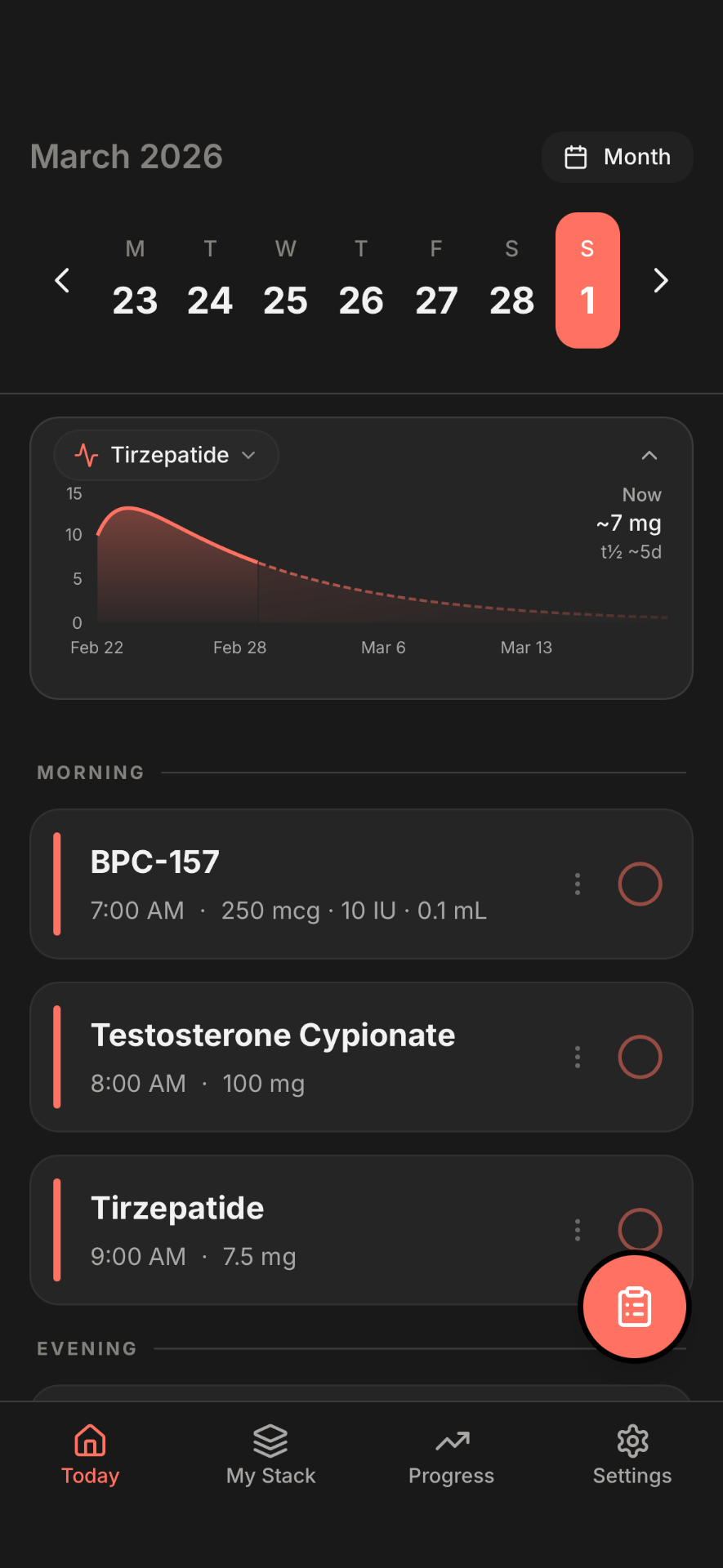
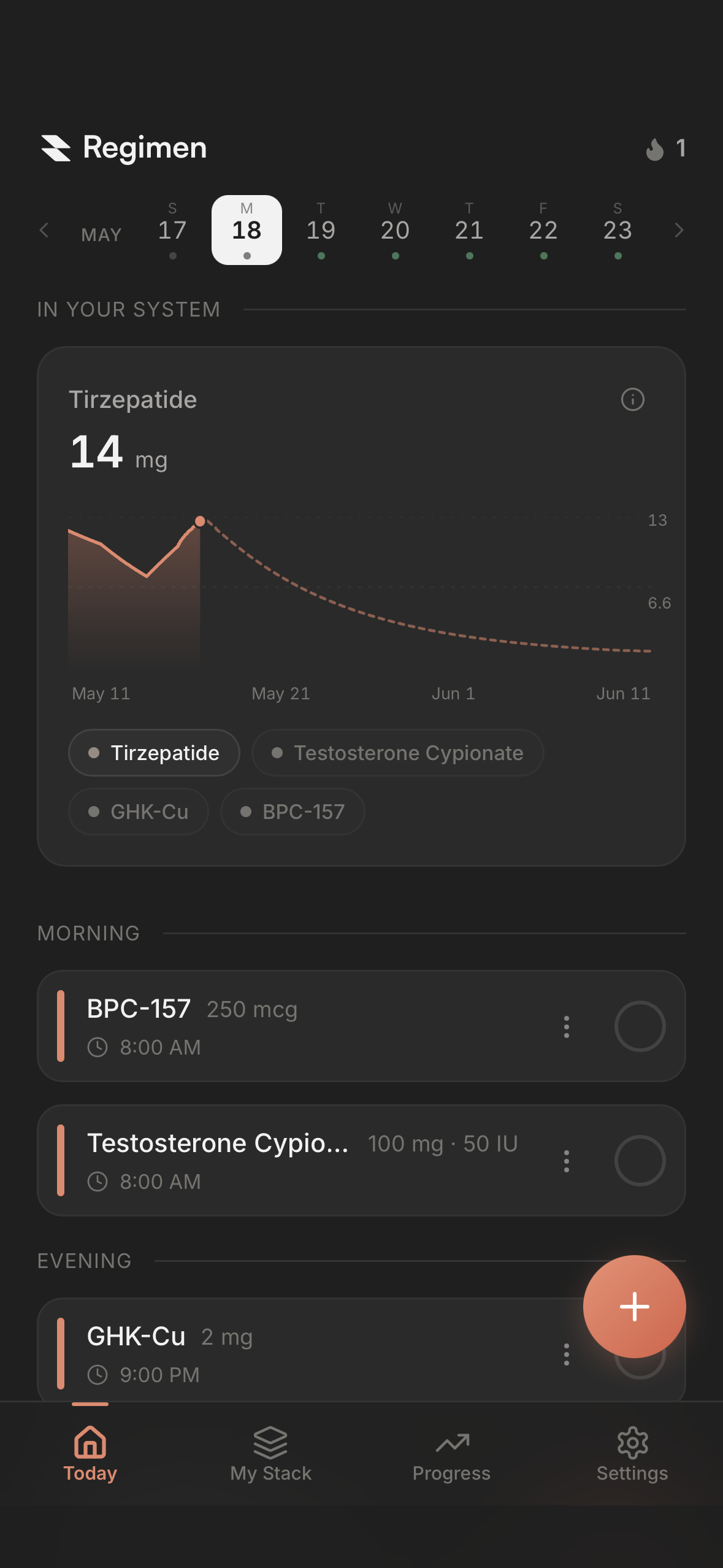
- Medication level curves for every compound