←Part of TRT, Explained: The Complete Guide
The Bottom Line
Every TRT patient needs baseline labs before starting, a follow-up at 6-8 weeks, and ongoing monitoring every 3-6 months. The core panel includes total testosterone, free testosterone, estradiol (sensitive), hematocrit/CBC, and a metabolic panel. Always draw blood at trough - the morning of your injection day, before injecting.
The Essential TRT Lab Panel
Not every lab is needed at every draw. Here is what to order and when, based on clinical guidelines and real-world TRT management practice.
| Test | Why It Matters | When to Order |
|---|---|---|
| Total Testosterone | Your headline number. Confirms your dose is producing adequate levels. | Every blood draw |
| Free Testosterone | What your body can actually use. More clinically meaningful than total T alone. | Every blood draw |
| Estradiol (E2, sensitive) | Estrogen balance. Too high causes water retention, mood changes, gynecomastia. | Every blood draw |
| Hematocrit / CBC | Polycythemia risk. The primary safety concern on TRT. | Every 3-6 months |
| PSA | Prostate screening baseline and monitoring. | Baseline + annually |
| LH / FSH | Confirms primary vs secondary hypogonadism. Suppressed on TRT (expected). | Baseline only |
| SHBG | Affects free testosterone calculation. High SHBG can mask adequate total T. | Baseline + as needed |
| Comprehensive Metabolic Panel (CMP) | Liver function, kidney function, glucose, electrolytes. | Baseline + annually |
| Lipid Panel | TRT can affect HDL and LDL cholesterol. | Baseline + every 6 months |
| Thyroid (TSH, free T3/T4) | Rules out thyroid issues that mimic low T symptoms. | Baseline |
When to Get Blood Work on TRT
Timing matters as much as which labs you order. Here is the standard monitoring timeline:
- Baseline (before starting TRT): Full panel including LH/FSH, thyroid, lipids, CBC, CMP, PSA. This is your reference point for everything.
- 6-8 weeks: First check after starting or changing dose. Total T, free T, E2, CBC. Draw at trough.
- 12 weeks: Second check to confirm levels are stable. Same panel as 6-8 weeks.
- Every 3-6 months (ongoing): Total T, free T, E2, CBC. Add CMP and lipids annually.
Pro Tip: Always Draw at Trough
Draw blood on the morning of your injection day, before injecting. This gives you your lowest (trough) testosterone level. Trough levels are more useful for dose optimization than peak or mid-cycle levels because they tell you the minimum your body is working with.
How to Read Your TRT Lab Results
Lab reference ranges are not the same as optimal ranges. Most labs report “normal” total testosterone as 264-916 ng/dL (or similar), which includes the entire male population from age 18 to 80+. Being at 280 ng/dL is technically “normal” but may leave you symptomatic.
Here is what most TRT-experienced providers target:
- Total Testosterone (trough): 600-900 ng/dL
- Free Testosterone: 15-25 pg/mL (use the free testosterone calculator to check yours)
- Estradiol (sensitive): 20-40 pg/mL (varies by individual)
- Hematocrit: Below 52% (above 54% requires intervention)
Common Scenarios
- High E2 with symptoms: Consider splitting your dose into more frequent injections before adding an aromatase inhibitor. See the microdosing TRT guide.
- Elevated hematocrit: Increase hydration, consider therapeutic phlebotomy, or reduce dose. See the hematocrit management guide.
- Low free T despite good total T: Check SHBG. High SHBG binds more testosterone, leaving less free T available.
Where to Get TRT Blood Work
- Your prescribing provider: Most TRT clinics and endocrinologists order labs as part of your treatment plan.
- Direct-to-consumer labs: Services exist that let you order blood work without a doctor’s order. Useful for interim monitoring between provider visits.
- Testing frequency: Follow your provider’s recommendations. More data is better than less, but every 3-6 months is the standard for stable patients.
What to Track Between Labs
Blood work gives you a snapshot every few months. But your day-to-day experience between labs tells you just as much about whether your protocol is working. The patterns you notice in daily tracking often reveal what a single lab draw cannot.
TRT Blood Work in the UK
If you are in the UK, your GP or private TRT clinic will order similar tests, but reference ranges are reported in nmol/L rather than ng/dL. To convert: 1 ng/dL = 0.0347 nmol/L (or multiply ng/dL by 0.0347). A total testosterone of 600 ng/dL is approximately 20.8 nmol/L.
- NHS blood tests: Your GP can order testosterone, SHBG, LH/FSH, and CBC through the NHS. However, NHS labs may not include sensitive estradiol or free testosterone calculation. Request these specifically.
- Private testing: Services like Medichecks and Blue Horizon offer comprehensive TRT panels (GBP 80-150) that include sensitive E2, free T, SHBG, prolactin, and full blood count. Results are available within 2-3 days.
- UK reference ranges: The NHS “normal” range for total testosterone is typically 8.64-29 nmol/L (249-836 ng/dL). Most private TRT clinics target trough levels above 15-20 nmol/L (432-576 ng/dL).
Related Guides
- Free Testosterone Calculator - calculate free and bioavailable T from your lab results
- TRT Dose Calculator - calculate injection volume for testosterone cypionate and enanthate
- TRT Hematocrit Management Guide
- Testosterone Cypionate Dosage Guide
- First TRT Injection: What to Expect
- TRT Cost Guide 2026
- Low Testosterone Screening Quiz
This guide is for educational purposes only and is not medical advice. Blood work interpretation and TRT dose adjustments should always be done in consultation with your prescribing provider. Do not change your dose or protocol based solely on information in this article.
Ready to track your protocol?
- Smart reminders so you never miss a dose
- Track weight, photos, and progress over time
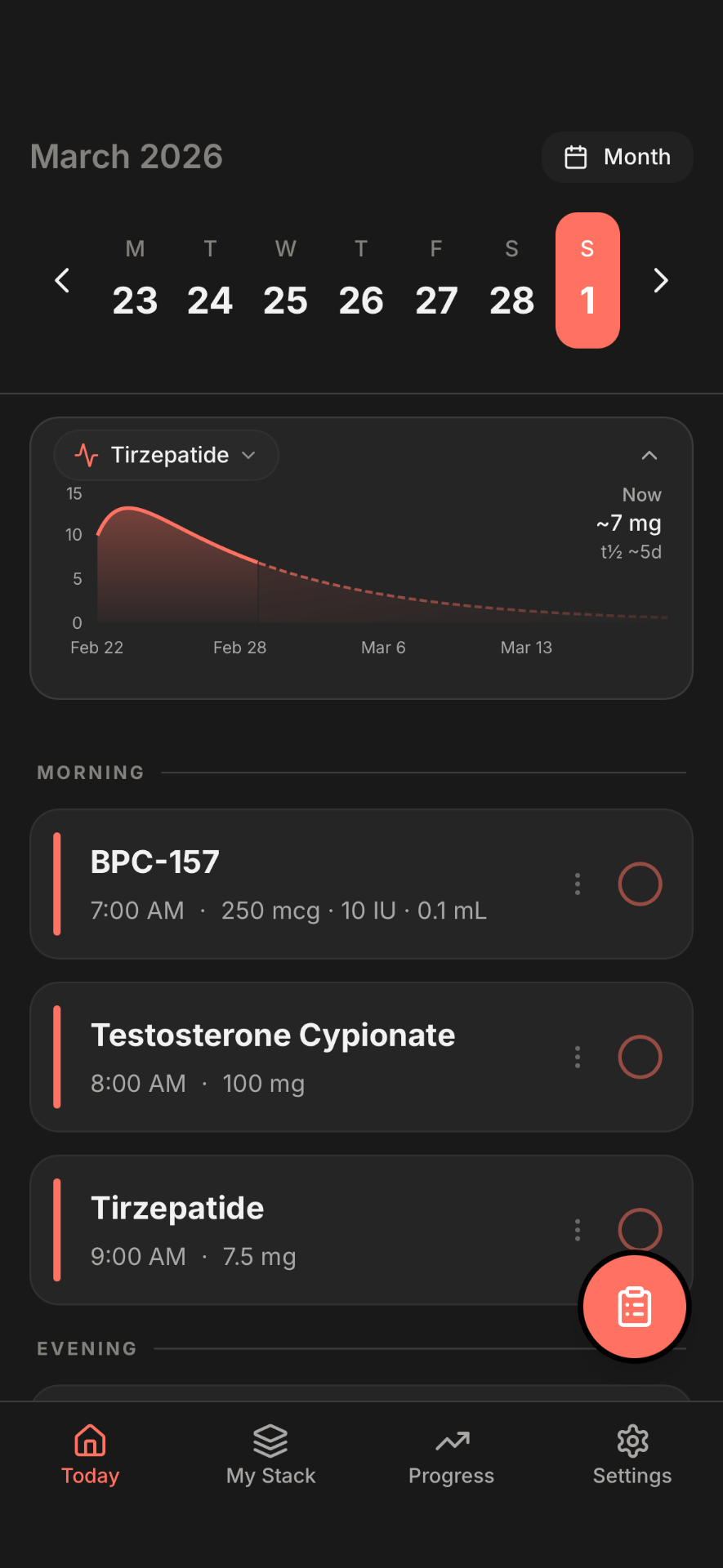
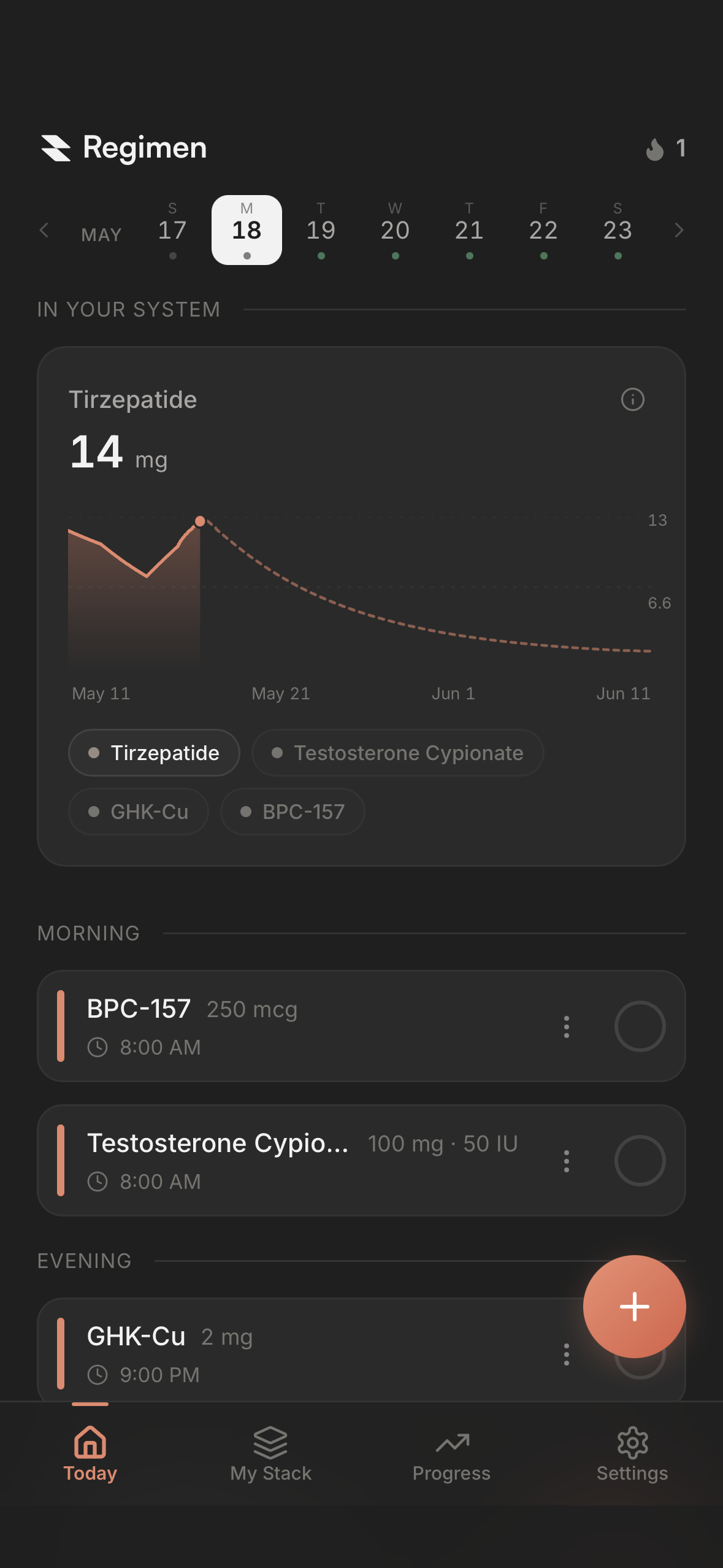
- Medication level curves for every compound
Frequently Asked Questions
What blood work do I need for TRT?
The core panel includes total testosterone, free testosterone, estradiol (sensitive), hematocrit/CBC, and a comprehensive metabolic panel. Add PSA at baseline and annually, LH/FSH at baseline, SHBG as needed, lipids every 6 months, and thyroid at baseline.
When should I get blood work on TRT?
Baseline before starting, 6-8 weeks after starting or changing dose, 12 weeks to confirm stability, then every 3-6 months ongoing. Always draw at trough (morning of injection day, before injecting).
Why draw blood at trough?
Trough levels show the minimum testosterone your body is working with between injections. This is more useful for dose optimization than peak or random levels because it tells you whether you are adequately covered throughout your cycle.
What is a good trough testosterone level on TRT?
Most TRT providers target 600-900 ng/dL at trough. Being at 300-400 at trough suggests the dose is too low or injection frequency needs adjustment.