←Part of TRT, Explained: The Complete Guide
The Bottom Line
Your first TRT injection is anticlimactic - most people feel nothing for the first 1-2 weeks. Real changes start around weeks 3-4 (sleep, mood) and build through weeks 8-12 (energy, libido, body composition). The first 12 weeks are about collecting data, not chasing feelings. Get blood work at 6-8 weeks.
You’ve got your prescription, your vials arrived, and you’re about to inject testosterone for the first time. You probably have a dozen questions running through your head: Will I feel it immediately? What if something goes wrong? When do the benefits actually kick in?
This guide walks you through what to realistically expect - day by day and week by week - from your first injection through your first follow-up labs. No hype, no bro-science, just what most men actually experience.
The Day of Your First Injection
Here’s what actually happens on day one:
- The injection itself - takes about 60 seconds. If you’re doing SubQ with an insulin syringe, it’s a quick pinch. Most men say “that’s it?” afterward. If you’re unsure about technique, see our subcutaneous injection guide.
- Immediately after - you’ll feel… nothing. Maybe a slight injection site tenderness. There’s no rush, no burst of energy, no immediate change. Testosterone esters like cypionate and enanthate are slow-release compounds.
- The rest of the day - completely normal. Go about your routine. Exercise, eat, work - nothing needs to change.
If you feel unusually energized or different within hours of your first injection, that’s likely placebo. Which is fine - it means you’re optimistic about your treatment. But the real physiological changes take time.
Week-by-Week Timeline: What Changes and When
Weeks 1-2: The Quiet Period
Most men feel nothing different during the first two weeks. Your exogenous testosterone is building up in your system, but your body is also shutting down its own production in response. You’re essentially in a transition period.
What to focus on: Getting comfortable with your injection routine. Whether you’re injecting once weekly, twice weekly, or daily, now is the time to build the habit. Learn to prep confidently, inject smoothly, and log your doses. The routine you build now is the one you’ll follow for months or years.
Weeks 3-4: First Subtle Signs
This is when most men notice their first changes - and they’re often subtle:
- Sleep quality - falling asleep faster, sleeping more deeply, or waking up feeling more rested. This is one of the earliest and most consistent improvements.
- Mood - a slight lift in baseline mood. Not euphoria - more like the absence of the low-grade blah that low testosterone creates. Colors might seem slightly brighter. Small tasks feel less draining.
- Morning erections - returning or becoming more consistent. This is a reliable early indicator that your testosterone levels are reaching therapeutic range.
Important
Not everyone notices changes this early. If you’re at week 4 and feeling identical to baseline, that’s within the normal range. Testosterone therapy is a slow burn, not a switch.
Weeks 5-8: Main Changes Emerge
This is the window where most men say “okay, this is working”:
- Energy and motivation - the afternoon energy crashes start to fade. You’re more likely to tackle tasks you’ve been putting off. Workouts feel better, with improved endurance and recovery.
- Libido - usually the most noticeable change in this window. Interest increases, sexual function improves, and many men notice stronger and more reliable erections.
- Workout performance - you might notice you’re recovering faster between sessions, pushing slightly heavier weights, or that muscle pumps feel fuller. Body recomposition hasn’t started yet, but the foundation is being laid.
- Mental clarity - some men describe a “fog lifting” - improved focus, sharper thinking, and better verbal recall.
Weeks 8-12: Dialing In
By now, your testosterone levels have reached steady state (assuming consistent dosing). This is the critical period for:
- Follow-up blood work - the most important labs of your TRT journey. Your provider will check total testosterone, free testosterone, estradiol, hematocrit, and PSA (among others) to determine if your dose needs adjusting.
- Body composition changes - subtle at first, but men often notice clothes fitting differently, slightly fuller muscles, and gradual fat redistribution. Significant visual changes take 3-6 months.
- Dose adjustments - based on your labs and symptoms, your provider may increase, decrease, or maintain your dose. This is normal and expected. Very few men land on their optimal dose on the first try.
Follow-Up Blood Work: What Gets Tested and Why
At your 6-8 week follow-up, expect these key markers to be checked:
| Marker | Why It Matters | Target Range |
|---|---|---|
| Total Testosterone | Primary measure of your TRT effectiveness | 600-1000 ng/dL (trough) |
| Free Testosterone | The biologically active portion - sometimes more meaningful than total T | Provider-specific; varies by lab |
| Estradiol (E2) | Testosterone converts to estrogen; too high causes water retention, mood issues | 20-40 pg/mL (varies) |
| Hematocrit | Testosterone increases red blood cell production; too high raises cardiovascular risk | Below 54% |
| PSA | Prostate health marker; monitored as a safety measure on TRT | Below 4.0 ng/mL |
Timing matters: Get blood drawn on your trough day - the morning of your next scheduled injection, before injecting. This gives the most accurate picture of your lowest testosterone level between doses. For a deeper dive on managing blood work on TRT, see our TRT hematocrit management guide.
Common Side Effects (and What’s Normal vs. What’s Not)
Normal: Acne
Mild acne (back, shoulders, face) is common in the first 1-3 months as your skin’s oil production adjusts to higher androgen levels. Usually resolves or becomes manageable. Keep the area clean and consider a benzoyl peroxide wash if it persists.
Normal: Water retention
Some men gain 3-7 pounds of water weight in the first few weeks. This is not fat gain - it’s your body adjusting to new hormone levels. It usually levels off by week 6-8.
Normal: Injection site reactions
Mild soreness, redness, or a small lump at the injection site is common, especially with IM injections. Rotating injection sites and using proper technique minimizes this.
Worth monitoring: Mood swings
Some emotional fluctuation is normal as levels stabilize. But significant irritability, anxiety, or depression that doesn’t improve by week 6 should be discussed with your provider - it may indicate an estradiol issue or a dose that needs adjusting.
Talk to your doctor: Swelling in feet/ankles
Significant edema (swelling) in the lower extremities is not typical and should be evaluated promptly, especially if you have a history of cardiovascular or kidney issues.
What to Track During Your First 12 Weeks
The men who dial in their TRT fastest are the ones who track consistently. Here’s what matters:
- Every injection - date, time, dose (mg and mL), injection site
- Daily energy - rate 1-5 or just note if it’s notably better or worse
- Sleep quality - duration and how rested you feel
- Mood - baseline check; note significant shifts up or down
- Libido - one of the most sensitive indicators of whether your levels are in range
- Weight - weekly weigh-ins; expect some initial water retention
- Blood pressure - if you have a home monitor, track before and after starting TRT
- Blood work results - when you get labs, log the key values for comparison over time
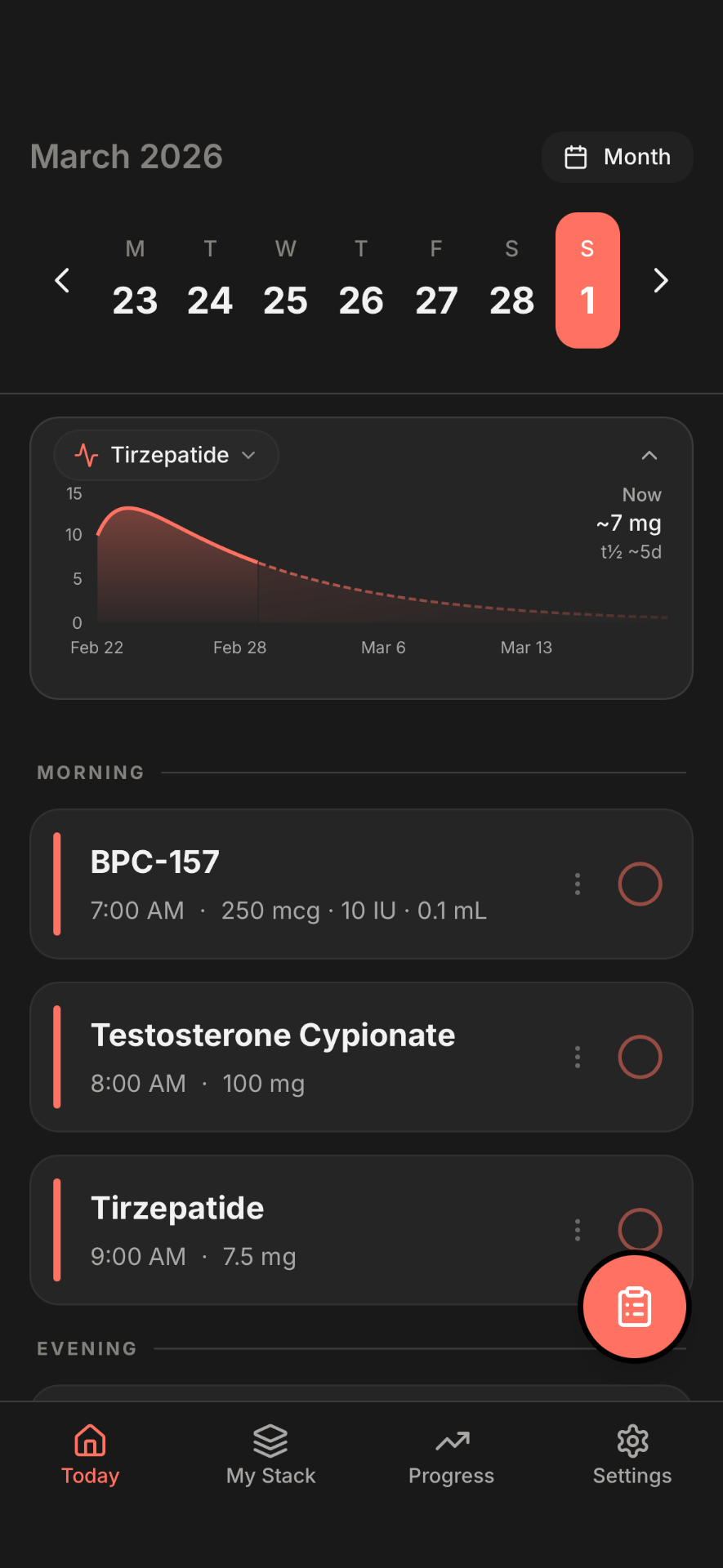
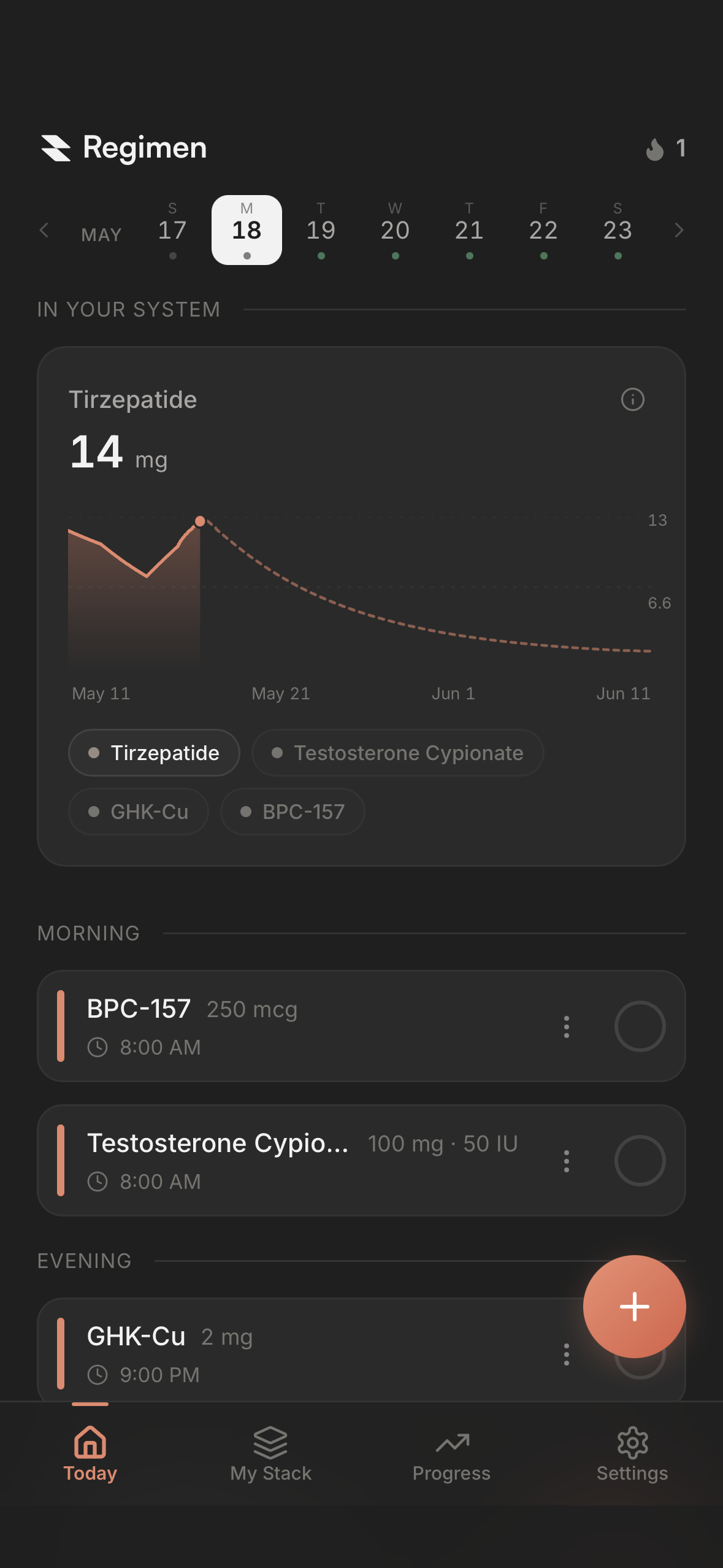
When you walk into your 6-week follow-up with 6 weeks of data - not just “I feel pretty good” - your provider can make much more precise adjustments to your protocol. Correlation between your testosterone levels (via the half-life visualizer) and your daily energy/mood data reveals patterns that subjective memory can’t capture.
When Your Doctor Might Adjust Your Dose
Dose adjustments are normal and expected. Your provider may adjust if:
- Testosterone is too low at trough - below 400-500 ng/dL on trough day usually means the dose needs to go up or the frequency should increase
- Testosterone is too high - above 1200 ng/dL can increase side effect risk; the dose may be reduced
- Estradiol is elevated - above 40-50 pg/mL with symptoms (nipple sensitivity, excessive water retention, mood issues) may warrant adding an aromatase inhibitor or adjusting the dose
- Hematocrit is climbing - approaching or exceeding 54% may require dose reduction, increased injection frequency, or therapeutic phlebotomy
- Symptoms don’t match labs - if your total T looks good but you feel terrible, your provider may check SHBG, free T, and thyroid function
To understand how injection frequency affects your blood levels between doses, check our TRT dose calculator and testosterone cypionate dosage guide.
Frequently Asked Questions
How long does it take to feel TRT working?
Most men notice initial changes (better sleep, subtle mood improvement) around weeks 3-4. More significant changes like improved energy, libido, and body composition typically emerge between weeks 6-12. Full effects can take 3-6 months as your body adjusts to stable testosterone levels.
Will my first TRT injection hurt?
Most people describe the first injection as less painful than expected. If you’re doing subcutaneous injections with an insulin syringe (27-31 gauge), it feels like a quick pinch. Intramuscular injections with a larger needle are slightly more noticeable but still manageable.
What should my testosterone level be on TRT?
Most providers aim for total testosterone between 600-1000 ng/dL on trough day (the day before your next injection). Free testosterone is equally important - your provider will look at both.
Is it normal to feel worse before feeling better on TRT?
Some men experience an adjustment period in the first 2-4 weeks, especially if their body is adapting to the exogenous testosterone while natural production shuts down. Mild mood fluctuations, water retention, or increased anxiety can occur. These usually resolve as levels stabilize.
When should I get my first blood work on TRT?
Most providers schedule the first follow-up labs at 6-8 weeks. This allows enough time for testosterone levels to stabilize. Blood should be drawn on trough day for the most accurate reading.
Ready to track your protocol?
- Smart reminders so you never miss a dose
- Track weight, photos, and progress over time
- Medication level curves for every compound
Can I exercise after my TRT injection?
Yes, you can exercise the same day. Some men prefer to inject after their workout to avoid any injection-site discomfort during training. If you injected intramuscularly in the thigh or glute, you might feel mild soreness at the site during leg exercises, this is normal and not harmful.