The Bottom Line
Clean the injection site with alcohol, pinch the skin at your abdomen or thigh, insert the needle at 45-90°, inject slowly, hold for 5-10 seconds, then withdraw. Rotate sites every injection. The whole process takes under 60 seconds once you’ve done it a few times.
Your first self-injection is intimidating. The needle looks bigger than it needs to be, you’re not sure where to inject, and you’re overthinking the angle. That’s completely normal - and the good news is that subcutaneous injections are one of the simplest medical procedures you can do at home.
Whether you’re starting TRT, peptides like BPC-157 or TB-500, or a GLP-1 medication like semaglutide, the technique is nearly identical. This guide covers everything from equipment selection to injection site rotation - step by step, with no assumptions about what you already know.
Who This Guide Is For
Subcutaneous (SubQ) injections are used across a wide range of protocols:
- TRT (testosterone replacement therapy) - daily or every-other-day microdosing protocols commonly use SubQ with insulin syringes
- Peptides - BPC-157, TB-500, ipamorelin, CJC-1295, and most research peptides are injected subcutaneously
- GLP-1 medications - semaglutide (Ozempic, Wegovy), tirzepatide (tirz) (Mounjaro, Zepbound), and retatrutide (reta) are all SubQ injections
- HCG - often prescribed alongside TRT, injected subcutaneously
The injection technique is the same regardless of what you’re injecting. What changes is the dose, the syringe size, and the frequency - not the method.
Equipment Checklist
Before your first injection, make sure you have everything ready. Gathering supplies beforehand prevents mid-injection scrambling.
| Item | Details |
|---|---|
| Syringe | Insulin syringe (27-31 gauge) for SubQ. 0.5 mL or 1 mL depending on your dose volume. |
| Alcohol swabs | 70% isopropyl alcohol pads. Clean both the vial top and injection site. |
| Sharps container | FDA-cleared container or a thick plastic bottle with a screw lid. |
| Cotton ball or gauze | For gentle pressure after withdrawing the needle. |
| Band-Aid (optional) | Rarely needed, but useful if you see a drop of blood. |
Needle gauge guide: Higher gauge numbers mean thinner needles. A 31-gauge needle is thinner than a 27-gauge. For SubQ injections, 27-31 gauge is the sweet spot - thin enough to be nearly painless, thick enough to draw most medications without excessive waiting. For thick oils like testosterone, some people prefer a separate drawing needle (18-21 gauge) and then swap to a 27-30 gauge for injection.
Step-by-Step: How to Give Yourself a Subcutaneous Injection
Step 1: Wash Your Hands
Wash thoroughly with soap and water for at least 20 seconds. Dry with a clean towel. This is the most basic infection prevention step and the one most often skipped.
Step 2: Prepare Your Medication
If injecting from a vial: clean the rubber stopper with an alcohol swab and let it air dry for a few seconds. Draw air into the syringe equal to your dose volume, push the air into the vial (this equalizes pressure and makes drawing easier), then invert the vial and draw your dose.
Not sure how much to draw? Use our TRT dose calculator or peptide reconstitution calculator to convert your mg dose to syringe units.
Step 3: Remove Air Bubbles
Hold the syringe needle-up and tap the barrel gently to move air bubbles to the top. Push the plunger slowly until a tiny drop appears at the needle tip. Small air bubbles in a SubQ injection won’t harm you, but removing them ensures you get your full dose.
Step 4: Clean the Injection Site
Wipe the area with an alcohol swab in a circular motion, starting from the center and moving outward. Let it air dry completely - injecting through wet alcohol stings.
Step 5: Pinch and Insert
Pinch a fold of skin at your chosen injection site with your non-dominant hand. With your dominant hand, insert the needle smoothly at a 45-90° angle in one steady motion. Don’t hesitate or go slowly - a quick, confident insertion is less painful than a tentative one.
Angle rule of thumb: If you can pinch more than 2 inches of skin, insert at 90° (straight in). If less, use 45° to ensure you stay in the subcutaneous fat layer.
Step 6: Inject Slowly
Push the plunger down slowly and steadily. For most SubQ doses (0.1-0.5 mL), this takes 5-10 seconds. Rushing can cause pain, bruising, or a lump (called a wheal) under the skin. Keep the skin pinched during injection.
Step 7: Wait, Then Withdraw
After injecting the full dose, keep the needle in place for 5-10 seconds. This allows the medication to disperse and reduces the chance of it leaking back out. Then withdraw the needle at the same angle you inserted it and release the skin pinch.
Step 8: Apply Pressure
Press gently with a cotton ball or gauze for a few seconds. Don’t rub - rubbing can push the medication around and increase bruising. If you see a small drop of blood, that’s normal.
Step 9: Dispose of the Needle
Drop the used syringe directly into your sharps container. Never recap a needle - this is the most common way people accidentally stick themselves.
Best Subcutaneous Injection Sites
The best SubQ injection sites have a good layer of subcutaneous fat and are easy to reach. The three most common areas:
Abdomen
The most popular site. Inject at least 2 inches from your belly button, avoiding the waistline. The lower abdomen (below and to the sides of the navel) provides the most consistent fat layer.
Best for: Most medications, easiest to pinch
Outer Thigh
The front/outer area of the thigh, about halfway between the knee and hip. Avoid the inner thigh - it has more nerve endings and blood vessels.
Best for: Testosterone SubQ, larger volumes
Upper Arm
The fatty area on the back of your upper arm, between the shoulder and elbow. This site may require help from someone else unless you have good flexibility.
Best for: GLP-1 pens, smaller doses
Why Site Rotation Matters
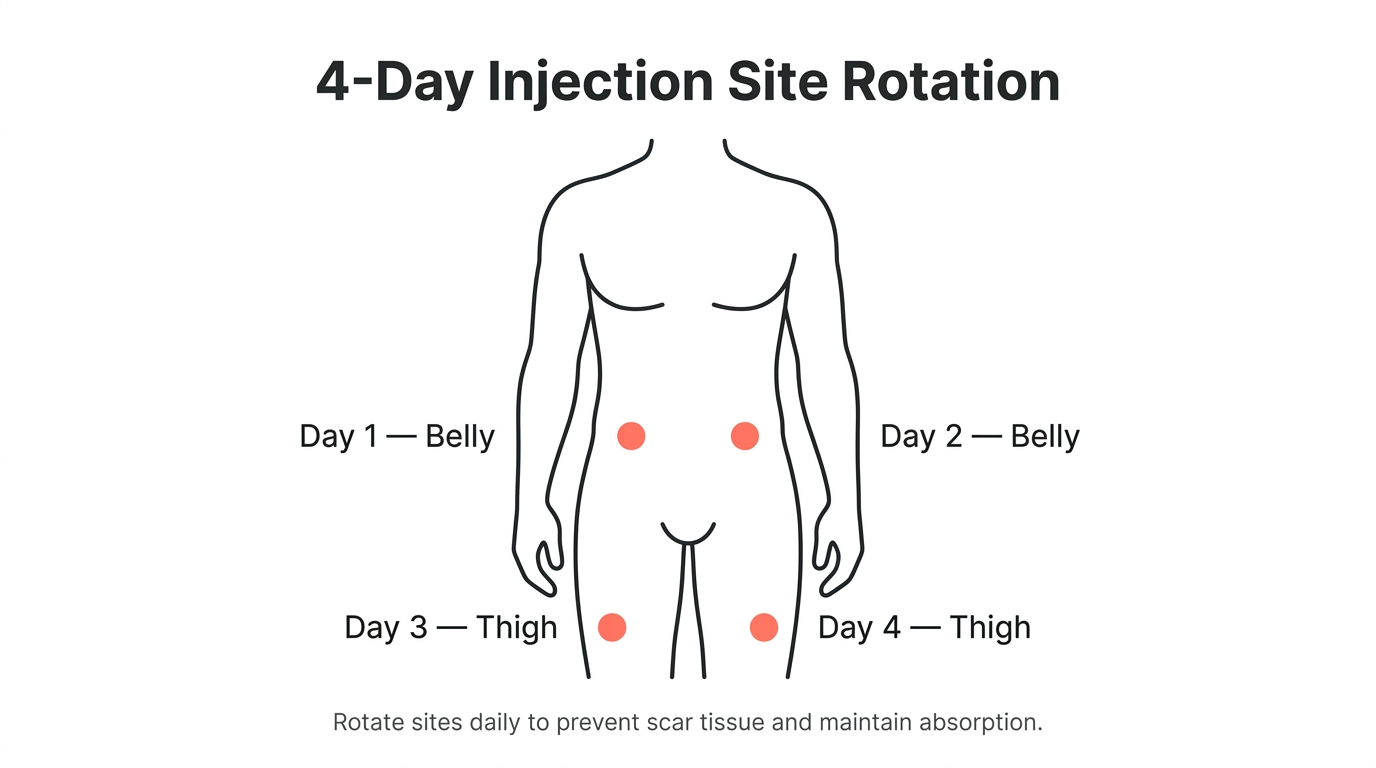
A simple 4-day rotation between belly and thigh sites prevents scar tissue and keeps absorption consistent. Plan your daily microdose with the TRT Dose Calculator.
Injecting in the same spot repeatedly causes lipodystrophy - hardened tissue that doesn’t absorb medication properly. This means inconsistent dosing and visible lumps under the skin. Rotate between at least 4-6 spots, spacing injections at least 1 inch apart within the same general area.
Pain Reduction Tips
- Let alcohol dry completely. Injecting through wet alcohol is the most common cause of stinging.
- Use a thin needle. 29-31 gauge needles are nearly painless for SubQ. There’s no reason to use a thick needle for injection (only for drawing from a vial).
- Inject at room temperature. Cold medication can cause discomfort. If your peptide is refrigerated, let the syringe sit for 2-3 minutes after drawing.
- Go in confidently. A quick, smooth insertion hurts less than a slow, hesitant one. Think of it like removing a band-aid - faster is better.
- Relax the area. Tense muscles and skin make injections more painful. If injecting in the thigh, sit down and let your leg relax completely.
- Apply ice beforehand. For your first few injections, numbing the area with an ice cube for 30-60 seconds can help while you build confidence.
- Inject slowly. Pushing the plunger too fast forces liquid into tissue faster than it can disperse, causing pressure and stinging.
Common Mistakes Beginners Make
Injecting too shallow or too deep
Too shallow (intradermal) causes a visible wheal and poor absorption. Too deep hits muscle, which changes the absorption profile. Pinching the skin and using the right angle for your body type prevents both.
Not rotating injection sites
It’s tempting to always go to the same comfortable spot. But repeated injections damage tissue over time. Build a rotation schedule and track it.
Pulling the needle out too fast
Yanking the needle out immediately can cause the medication to leak back out of the injection site. Hold for 5-10 seconds after injecting, then withdraw smoothly.
Recapping needles
This is how accidental needle sticks happen. Drop used syringes directly into a sharps container. If you must recap (traveling), use the one-hand scoop technique.
Miscalculating the dose
Confusing units with mL, or using the wrong concentration, can lead to significantly wrong doses. Use a syringe reading guide or our calculators to double-check.
What to Do If Something Goes Wrong
You see blood
A drop of blood at the injection site is normal. Apply gentle pressure with a cotton ball. If blood fills the syringe while drawing back (aspiration), remove the needle, apply pressure, and inject at a different spot.
You get a lump
A small lump (wheal) under the skin after SubQ injection is common, especially with larger volumes. It means the medication is sitting in a pocket. It’ll absorb over a few hours. Injecting more slowly and using a proper angle helps prevent this.
You bruise
Bruising happens when you nick a small blood vessel. It’s cosmetic and not medically concerning. Using a thinner needle and applying gentle pressure (not rubbing) after withdrawal minimizes bruising.
You miss a dose
For most protocols, inject as soon as you remember on the same day. If it’s the next day, skip the missed dose and continue your regular schedule. Don’t double up. For GLP-1 medications, consult your prescriber’s specific guidelines for missed doses.
When to Talk to Your Doctor
Most injection-related issues are minor and resolve on their own. Contact your healthcare provider if you experience:
- Redness, swelling, or warmth at the injection site that gets worse after 24-48 hours (possible infection)
- Fever after injecting
- Persistent hard lumps that don’t resolve within a week
- Allergic reaction symptoms (hives, difficulty breathing, swelling of face/throat)
- Numbness or tingling near the injection site that doesn’t go away
Important
This guide covers technique for subcutaneous self-injection. It does not replace medical advice from your prescriber. Always follow your provider’s specific instructions for your medication, including dosage, frequency, and storage requirements.
Frequently Asked Questions
Does a subcutaneous injection hurt?
Most people describe it as a quick pinch or less. Using a 27-31 gauge needle, injecting at room temperature, and choosing a fatty area like the abdomen makes it nearly painless. The anticipation is usually worse than the actual injection.
What angle should I inject subcutaneously?
Insert the needle at a 45-90 degree angle depending on how much subcutaneous fat you have at the injection site. If you can pinch more than 2 inches of skin, go straight in at 90 degrees. If less, use 45 degrees to avoid hitting muscle.
How fast should I push the plunger?
Inject slowly and steadily over 5-10 seconds. Pushing too fast can cause stinging, bruising, or a lump under the skin. There’s no benefit to injecting quickly.
What if I see blood after injecting?
A small amount of blood at the injection site is normal - you may have nicked a small capillary. Apply gentle pressure with a cotton ball or alcohol swab. If blood enters the syringe while drawing back, you’ve hit a blood vessel. Remove the needle, apply pressure, and try a different spot.
Can I inject in the same spot every time?
No. Repeated injections in the same spot can cause lipodystrophy - hardened lumps or indentations under the skin that affect absorption. Rotate between at least 4-6 sites and keep track of where you last injected.
Do I need to aspirate before a subcutaneous injection?
No. The CDC and most clinical guidelines no longer recommend aspiration for subcutaneous injections. There are no major blood vessels in subcutaneous tissue, so aspiration adds discomfort without clinical benefit.
How do I dispose of used needles safely?
Use a FDA-cleared sharps container or a heavy-duty plastic container (like a laundry detergent bottle) with a tight lid. Never throw loose needles in the trash or recycling. Check your local regulations for sharps disposal - many pharmacies accept filled containers.
Ready to track your protocol?
- Smart reminders so you never miss a dose
- Track weight, photos, and progress over time
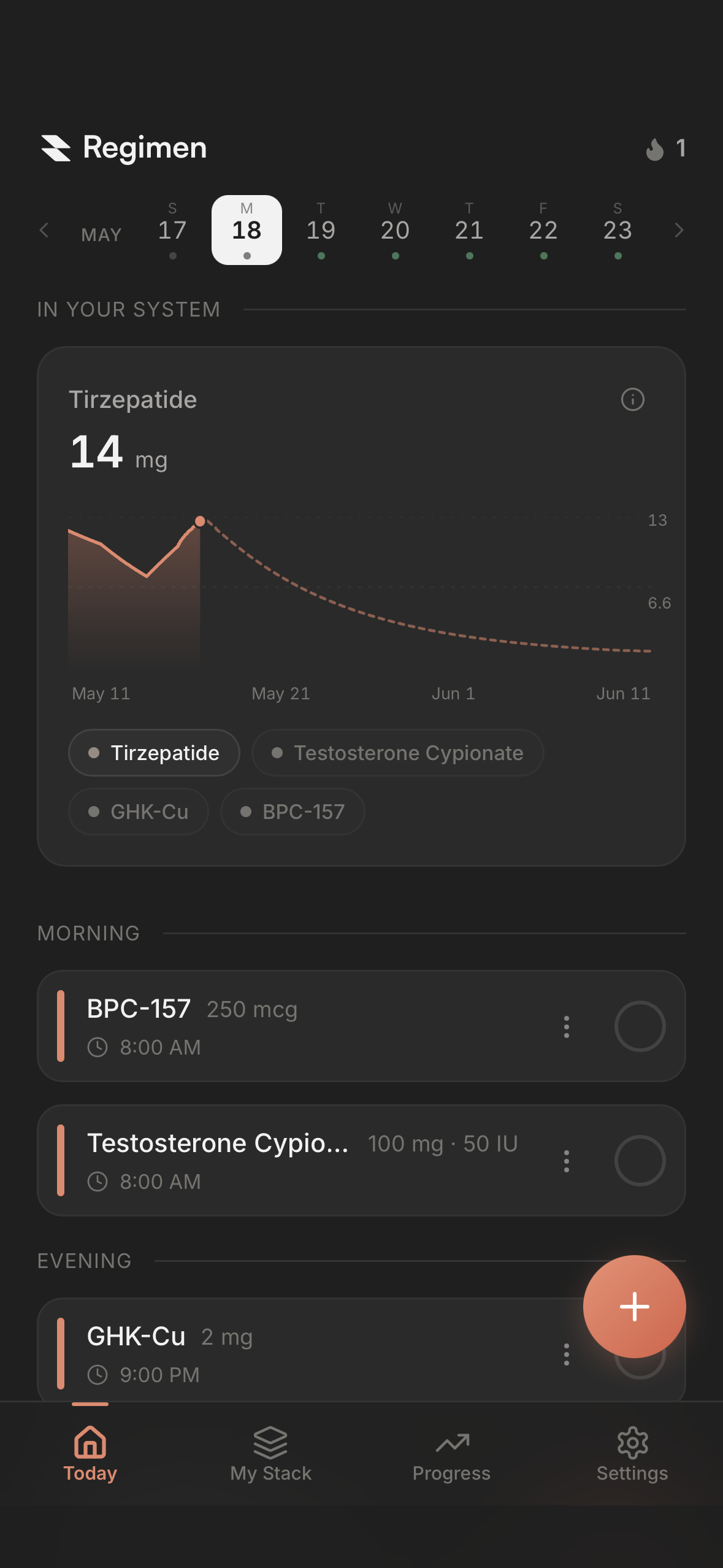
- Medication level curves for every compound