The Bottom Line
Running retatrutide and testosterone together is one of the most common dual-compound protocols in the community right now. The rationale is straightforward: retatrutide drives aggressive fat loss, and testosterone helps preserve muscle while that is happening. For people already on TRT, adding retatrutide does not change their testosterone protocol. They typically continue their TRT protocol unchanged. If you’re switching from tirzepatide, the same gap-week and start-low protocol applies. Track both compounds in Regimen to log doses, weight, side effects, and lab values on a single timeline.
Why People Combine Retatrutide and TRT
Retatrutide drives aggressive fat loss. That means sustained caloric deficits, often deeper and longer than anything most people have run before.
Deep caloric deficits suppress the HPG axis. The HPG axis is basically the command chain from your brain to your testes that regulates testosterone production. When you are in a serious deficit for weeks, the signal weakens and T production drops. For men not on TRT, that is a real concern, especially at doses above 6mg where the appetite suppression is strong enough to cut calories substantially without really trying.
TRT bypasses that entirely. You are not relying on that chain anymore. You are supplying testosterone directly.
There is also the muscle side. Retatrutide cuts fat, but a sustained deficit without adequate testosterone makes it harder to hold onto muscle. TRT keeps protein synthesis running and supports recovery from training while the fat loss is happening. That is why men who were already optimizing their testosterone before starting retatrutide do not change anything about the TRT side when they add it.
For men not on TRT: get baseline labs before you start retatrutide. Then check again at 8-12 weeks, particularly if you are pushing past 6mg. That baseline makes the follow-up result actionable.
Community Insight
The common experience from people running both: the appetite suppression from reta is just as strong on TRT. Some people thought testosterone would fight the GLP-1 suppression. It does not. If anything, TRT just makes the body comp results cleaner because you are not losing muscle along with the fat.
Does Retatrutide Lower Your Testosterone?
Short answer: not directly. Retatrutide does not bind to androgen receptors. It works on the GLP-1, GIP, and glucagon receptors, none of which touch your testosterone or the system that controls it. So it is not lowering your T the way a steroid cycle would.
The indirect pathways matter more. Aggressive caloric restriction, the kind retatrutide enables, can suppress the HPG axis. This is a well-documented response to severe energy deficit and it is not specific to retatrutide.
Weight loss itself also shifts lab markers. As you lose fat, total and free testosterone often move, and SHBG can change too, especially if you are already lean. That is your body composition changing what the lab shows, not the retatrutide suppressing anything.
For men on TRT, this is largely irrelevant. Exogenous testosterone maintains stable therapeutic levels regardless of caloric deficit. For men not on TRT, the risk is real at doses above 6mg where the deficit can be sustained and significant. Check labs at 8-12 weeks. If levels have dropped meaningfully, discuss the result with your provider before the deficit deepens further.
Pro Tip
If you are not on TRT and you are planning a serious retatrutide cut, get a morning testosterone reading before you start. That baseline makes the 8-12 week follow-up check actually useful. Without it, you are comparing to a population average, not to your own baseline.
Watch the trend rather than a single number. If you are switching from tirzepatide to retatrutide while on TRT, the same gap-week and start-low protocol still applies: see the switching guide.
Protocol Considerations
For existing TRT users starting retatrutide
Continue your TRT protocol unchanged. TRT status doesn’t affect where people start retatrutide. The reasoning for starting low is the same regardless. The glucagon receptor agonism in retatrutide is new territory for your body no matter what else you’ve run before. In the Phase 2/3 clinical trials, the starting dose was 2mg. Some people in the community begin at 0.5mg or 1mg, particularly if they’re sensitive to GI side effects. That’s a personal decision, not a TRT-specific one.
As fat loss progresses, some users find they want to refine their TRT protocol. Someone on Sustanon every two weeks might prefer more frequent injections as they get leaner. Those are protocol refinements to discuss with your provider, not changes the addition of retatrutide requires.
Watch the pace of fat loss. Retatrutide moves faster than most other GLP-1 protocols. Tracking that rate alongside your lab values matters.
For retatrutide users who are not on TRT
If labs come back below range after 8-12 weeks on retatrutide, that is a finding worth discussing with your provider. Do not try to self-diagnose based on symptoms alone. Fatigue, mood changes, reduced libido: those overlap completely with the symptoms of aggressive dieting. Labs give you the objective picture. Get them first.
Warning
Don’t rush titration to accelerate fat loss. The glucagon receptor agonism in retatrutide produces GI side effects (nausea, vomiting) that are closely tied to the pace of escalation. Forcing rapid dose increases is the fastest way to make yourself too nauseous to train, which defeats the whole point of running the stack.
Running Them the Same Day (and the Same Syringe Question)
Can you take retatrutide and your testosterone on the same day? Yes, there is no timing conflict. They do not compete: retatrutide is a weekly water-based shot under the skin, and testosterone cypionate or enanthate is a separate oil depot. One does not interfere with the other.
Can you put them in the same syringe? People generally do not, for good reasons. The two are different consistencies (oil vs water), they often call for different needles, and keeping them separate means that if a side effect shows up, you know which compound to blame. Most people just do two shots, different sites, same day if it is convenient.
Reta plus TRT is two schedules and two sets of effects to keep straight. Regimen tracks both on one timeline, so you can see how your weight, energy, and labs respond to the combo without juggling a spreadsheet.
Track your stack in RegimenMonitoring Labs for the Combined Protocol
| Lab | Timing | Why |
|---|---|---|
| Testosterone total | Baseline + every 12 weeks | Confirm TRT is maintaining therapeutic range: 15-30 nmol/L or 430-860 ng/dL |
| Hematocrit | Every 12 weeks | TRT raises hematocrit. Retatrutide-driven weight loss may also affect levels. Keep below 52%. |
| HbA1c + fasting glucose | Every 6 months | Retatrutide strongly improves glycemic markers. TRT also affects insulin sensitivity. Track the combined effect. |
| Lipid panel | Every 6 months | Both compounds affect lipids, typically positively for retatrutide and variably by individual for TRT. |
| Metabolic panel | Every 6 months | Liver and kidney function baseline. |
| LH/FSH | Optional, at baseline | Confirms HPG axis suppression from TRT, which is expected. Also useful for non-TRT users adding retatrutide. |
Running both compounds does not mean you need more labs than either one alone. It means doing the same labs consistently and on the same calendar. The main thing you are watching for is the hematocrit pattern: TRT raises it predictably, and physiological changes from rapid fat loss can move it independently. You can track your labs and body comp in one place to see how the trend lines up with dose changes.
Side Effect Interaction Profile
| Side Effect | Source | Management |
|---|---|---|
| Nausea / reduced appetite combined with increased appetite | Partially opposing effects | Retatrutide usually dominates appetite suppression at therapeutic doses, but TRT users may notice appetite returns faster between retatrutide doses. |
| Hematocrit elevation | TRT-driven, potentially amplified during rapid weight loss | Monitor quarterly. Discuss blood donation or dose adjustment with your provider if consistently above 52%. |
| Mood stability | TRT stabilizes mood. Retatrutide gap-week phases can cause a mood dip as appetite returns. | Align TRT and retatrutide dosing timing if gap-week hunger periods are obvious in your logs. |
| Injection site management | Both compounds require regular injections | Rotate sites aggressively. See the needle gauge guide and injection site guide. |
The most important interaction to watch is hematocrit. Quarterly monitoring removes the guesswork.
Optimizing the Stack for Body Recomposition
Retatrutide plus TRT is primarily a fat loss stack. The goal is to lose fat without losing muscle. Here is how to get the most from it.
- Protein intake: 1.6-2.2g/kg/day. Retatrutide’s appetite suppression makes it easy to under-eat protein without noticing. Track it.
- Resistance training: essential. TRT supports recovery and protein synthesis, but the signal for keeping muscle still comes from training.
- TRT timing: if you are on a weekly protocol, injecting on the same day as or the day before your retatrutide dose aligns peak hormone levels with your most active training window for many users. This is an optimization, not a requirement.
- Titration pace: do not rush dose increases to accelerate fat loss. Forcing rapid escalation increases GI side effects that disrupt training, sleep, and protein intake. The full guide to preserving lean mass while running reta covers training, protein, and tracking.
Tracking Both Compounds in Regimen
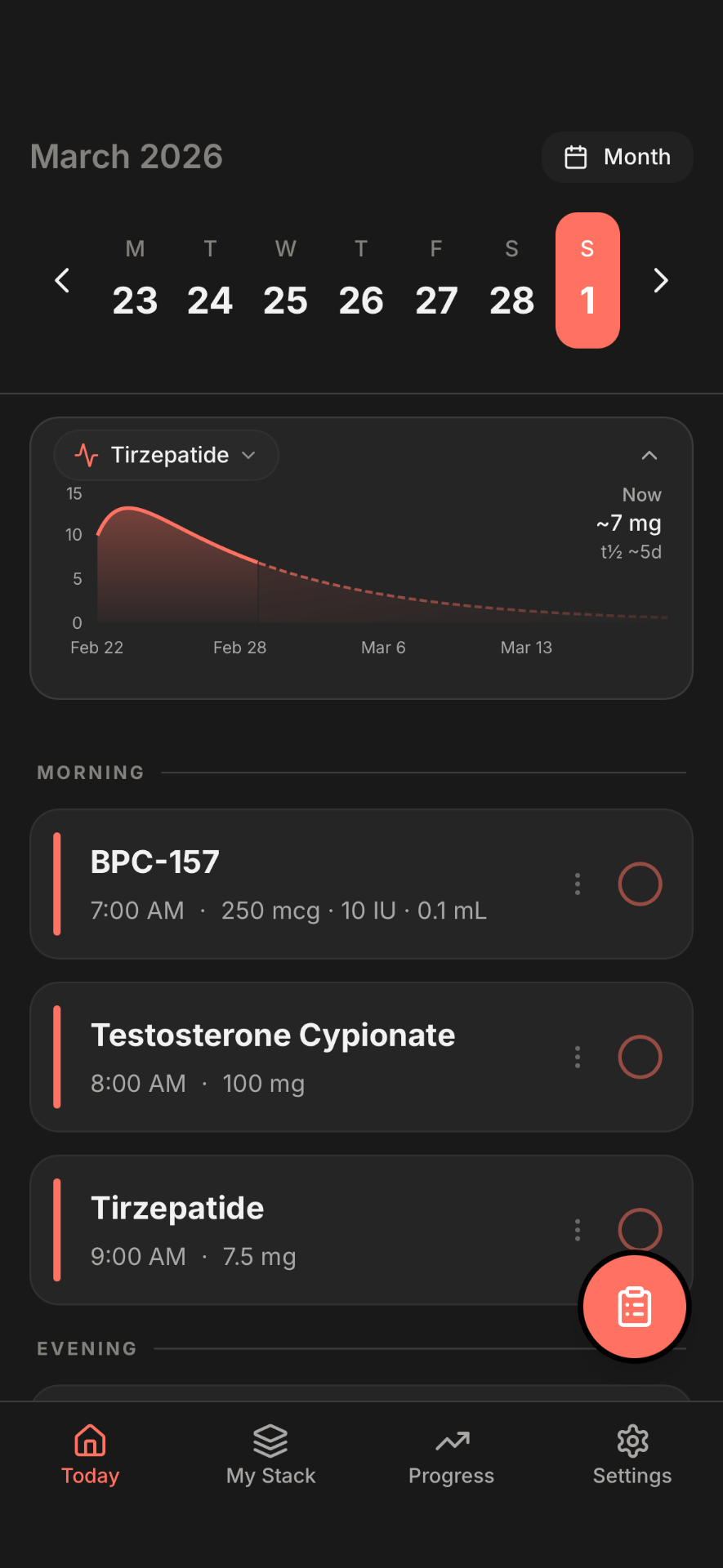
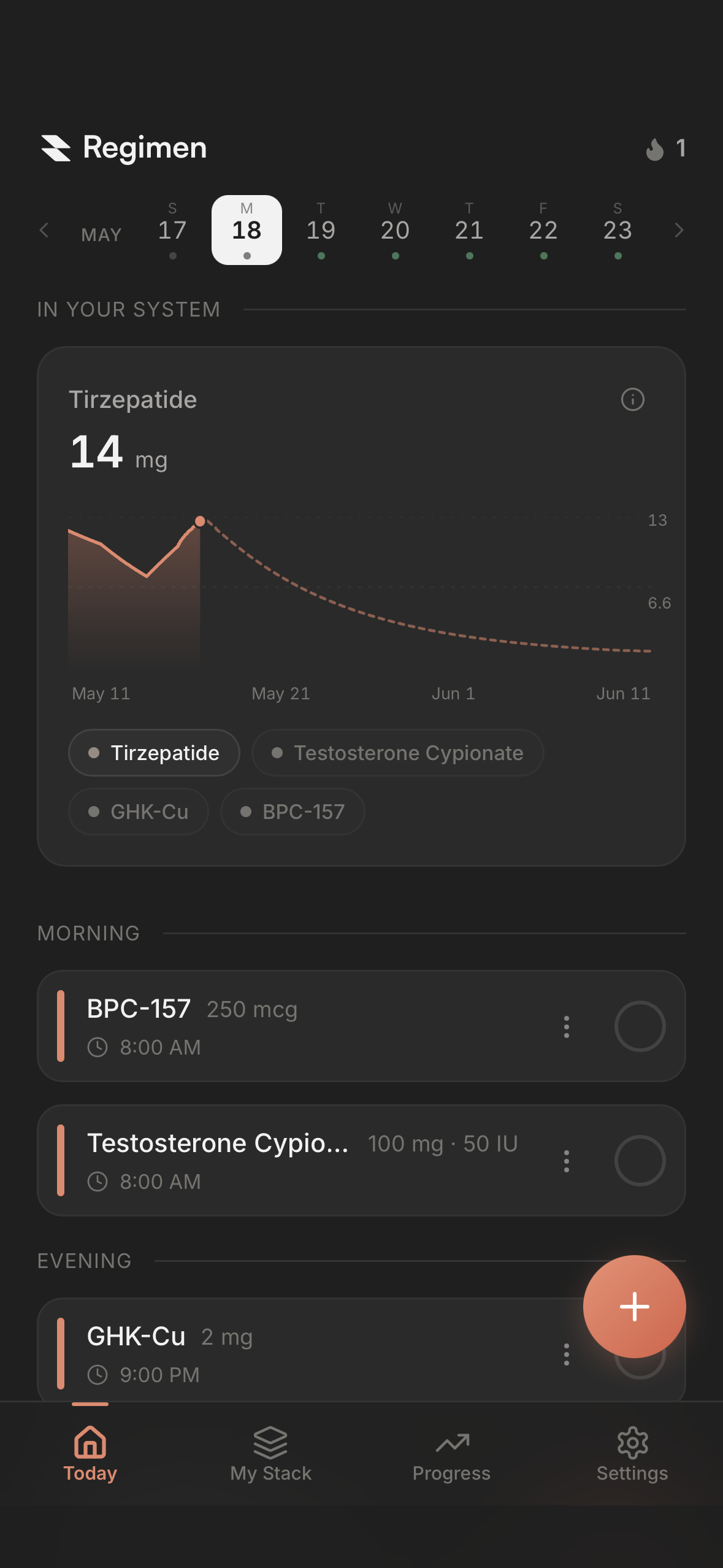
Regimen is built for multi-compound protocols. For the TRT plus retatrutide stack, you can track:
- Weekly retatrutide doses and titration stage
- TRT injection schedule: Sustanon every 1-2 weeks, cypionate or enanthate weekly, Nebido or Androtardyl every 10-14 weeks
- Weight trend across both compounds on a single timeline
- Side effects mapped to specific dose tiers
- Notes for provider visits, with lab values entered against the relevant date
Having both compounds on one timeline makes it possible to see whether a change in how you feel lines up with a TRT injection date, a retatrutide dose increase, or a gap week. That context matters.
Relevant tools: TRT dose calculator and retatrutide tracker.
Retatrutide is currently in Phase 3 clinical trials and has not received FDA approval. The protocols and experiences described in this guide are based on published trial data and community use, not clinical recommendations.
Frequently Asked Questions
Can I start retatrutide if I’m already on TRT?
Yes. Continue your TRT protocol unchanged and add retatrutide at the standard 2mg starting dose. No TRT dose adjustment is needed at initiation.
Will retatrutide lower my testosterone?
Not directly. However, the severe caloric deficit retatrutide facilitates can suppress natural testosterone production via HPG axis suppression. TRT users are protected by exogenous testosterone. Non-TRT users should check labs at 8-12 weeks if dosing above 6mg.
Do I need to tell my doctor I’m running both?
Yes. Hematocrit monitoring is important on TRT, and retatrutide-driven weight loss can affect hematocrit independently. Your provider needs the full picture to monitor safely.
Can women run retatrutide and HRT at the same time?
Yes. HRT is not contraindicated with retatrutide. Lab monitoring and provider supervision apply. The monitoring principles in this guide extend to female HRT contexts.
What’s the best retatrutide dose to start at while on TRT?
Always 2mg. TRT status does not change the retatrutide starting dose. Tolerance to the glucagon receptor agonism must be built from scratch regardless of what else you are running.
Does retatrutide interact with testosterone pharmacokinetically?
No known pharmacokinetic interaction. They use different receptors and metabolic pathways. The interactions in this guide are physiological rather than pharmacokinetic.
Does retatrutide affect hematocrit on TRT?
Not the way TRT does. Testosterone can push your hematocrit and red blood cell count up, which is why TRT users watch it. Retatrutide is not known to raise hematocrit, and the weight loss and blood-pressure improvements that come with it usually help on that front. If you are already checking hematocrit on TRT, keep the same schedule. There is no new reason to worry.
What do people report running retatrutide and TRT together?
The common theme is body recomposition: fat coming off while the TRT helps hold onto muscle better than dieting alone would. People also mention strong appetite control and steadier energy, with the first 8 weeks being the adjustment window. Everyone’s different, and this is community experience, not a guarantee.
Can you inject retatrutide and testosterone in the same shot?
Most people don’t. They’re different consistencies (water-based vs oil) and usually different needles, and keeping them in separate syringes means you can tell which one caused a side effect. Two quick shots beats troubleshooting a mix.
Retatrutide vs TRT: are they alternatives or a stack?
Different jobs, so usually a stack, not an either/or. TRT replaces a hormone you’re low on. Retatrutide drives fat loss. They aren’t doing the same thing, which is exactly why a lot of people run both. If you came here trying to pick one, the real question is usually whether they combine, and they do.
Regimen is a tracking tool, not a medical service. We do not provide medical advice. Always consult your healthcare professional before starting, changing, or stopping any medication protocol.
Ready to track your GLP-1?
- Smart reminders so you never miss a dose
- Track weight, photos, and progress over time
- Medication level curves for every compound