You’ve been using a topical GHK-Cu serum for a few months. The skin improvements are real: texture, firmness, wound healing speed. Then you start wondering: what if it worked everywhere at once, not just where you apply it?
That’s the case for injectable GHK-Cu. Same peptide complex, completely different delivery.
What Injectable GHK-Cu Actually Is
GHK-Cu (glycyl-L-histidyl-L-lysine copper) is a naturally occurring copper-binding peptide found in human plasma. At low concentrations it promotes tissue regeneration and collagen synthesis. At higher concentrations after injury it acts as a tissue remodeling signal.
Injectable GHK-Cu is the lyophilized (freeze-dried) form reconstituted in bacteriostatic water and delivered subcutaneously. Instead of diffusing through your skin barrier, it enters the bloodstream directly and reaches tissues throughout the body.
Injectable vs Topical: When Does It Matter?
Topical GHK-Cu serum works where you put it. If your goal is facial collagen, reduced scarring, or skin quality improvements in a specific area, topical is the right tool and it’s well-studied for that use.
Injectable GHK-Cu is for systemic goals:
- General skin quality improvement body-wide (not just the face)
- Recovery from training injuries or post-surgery healing
- Anti-inflammatory support during high-volume training phases
- Stacking with BPC-157 for enhanced tissue repair coverage
If you’re doing topical and injectable at the same time, you’re not doubling up. You’re addressing different levels.
Where You Can Source It Now
Until early 2026, injectable GHK-Cu sat on the FDA’s Category 2 list, a regulatory designation for substances with safety concerns that restricted compounding pharmacies from preparing them for clinical use.
The FDA removed injectable GHK-Cu from Category 2 in early 2026. That doesn’t make it an FDA-approved drug. But it does mean compounding pharmacies can now legally prepare injectable GHK-Cu for patients with a prescription. If you’ve been sourcing from research chemical vendors, you now have a regulated alternative with pharmaceutical-grade standards, sterility testing, and verified potency.
To access it through a compounding pharmacy: speak with a physician or a peptide-focused telehealth provider. They can write the script, and the pharmacy ships directly.
Note on topical + vitamin C
The concern about vitamin C degrading copper peptides applies to topical skincare formulations, where ascorbic acid (pH 2 to 3.5) can disrupt the copper-peptide bond at the skin surface. This does not apply to injectable GHK-Cu. Oral vitamin C supplementation while using injectable GHK-Cu is fine and may be complementary, as both support collagen synthesis.
Dosing Protocols
There are no published human clinical dose-finding trials for injectable GHK-Cu. These ranges reflect compounding pharmacy protocols and documented community experience. Start at the lower end and observe for two to three weeks before adjusting.
| Protocol | Daily Dose | Frequency | Injection Site | Cycle Length |
|---|---|---|---|---|
| Conservative start | 100mcg | Once daily | SubQ, abdomen | 4 weeks |
| Standard | 200mcg | Once daily | SubQ, abdomen or thigh | 6 to 8 weeks |
| Injury/wound focus | 200 to 300mcg | Once daily | SubQ near affected area | Until resolved |
| Maintenance | 100mcg | 3x per week | SubQ | Ongoing as needed |
SubQ = subcutaneous. Use a 28 to 31 gauge, 0.5 inch needle. Pinch the skin, inject at a 45-degree angle, release.
Reconstitution
Most injectable GHK-Cu comes as lyophilized powder in 2mg or 5mg vials. Always use bacteriostatic water (not sterile water, not saline). Bacteriostatic water contains benzyl alcohol, which prevents bacterial growth over a 30-day period.
For a 2mg vial:
- Add 2mL bacteriostatic water → 1mg/mL (1,000mcg/mL) concentration
- For 200mcg dose: draw 0.2mL
- For 100mcg dose: draw 0.1mL
For a 5mg vial:
- Add 2.5mL bacteriostatic water → 2mg/mL (2,000mcg/mL) concentration
- For 200mcg dose: draw 0.1mL
Inject the water slowly down the side of the vial. Do not spray directly onto the powder. Swirl gently, do not shake. Refrigerate immediately after reconstituting. Use within 30 days.
For other vial sizes or dose targets, use the peptide reconstitution calculator.
Storage
Unreconstituted vials can be kept at room temperature (away from light) for short-term storage, but refrigerate for anything over 2 to 3 weeks. After reconstituting, always refrigerate. Do not freeze reconstituted peptides.
Stacking with BPC-157
GHK-Cu and BPC-157 work through different repair mechanisms and don’t compete. GHK-Cu drives collagen synthesis and anti-inflammatory signaling via copper-mediated pathways. BPC-157 promotes angiogenesis and tissue repair through growth hormone receptor pathways.
Combined, they cover more of the wound healing cascade. This is one of the more commonly used stacks for joint injury recovery, post-surgical healing, or soft tissue repair.
Typical stack:
- 200mcg GHK-Cu once daily
- 250mcg BPC-157 once daily
- Both injected subcutaneously, same time window, separate syringes, separate injection sites
- Cycle: 6 to 8 weeks, then assess
Do not mix both peptides in the same syringe before injecting. Prepare each in its own syringe.
What to Track in Regimen
Injectable GHK-Cu produces changes that are gradual and benefit from consistent logging:
- Injection log: Date, dose, vial number, injection site
- Skin quality: Weekly subjective rating (1 to 10) or photos in consistent lighting
- Recovery: Soreness resolution time after training sessions, rated daily
- Targeted injury: Range of motion, pain scale (0 to 10), functional test (example: squat depth, shoulder rotation) logged weekly
- Mood and energy: GHK-Cu has documented effects on neurotrophic signaling. Note if sleep quality, focus, or baseline energy shifts.
- Bloodwork: If you’re cycling longer than 8 weeks, see the peptide blood work guide for what to monitor.
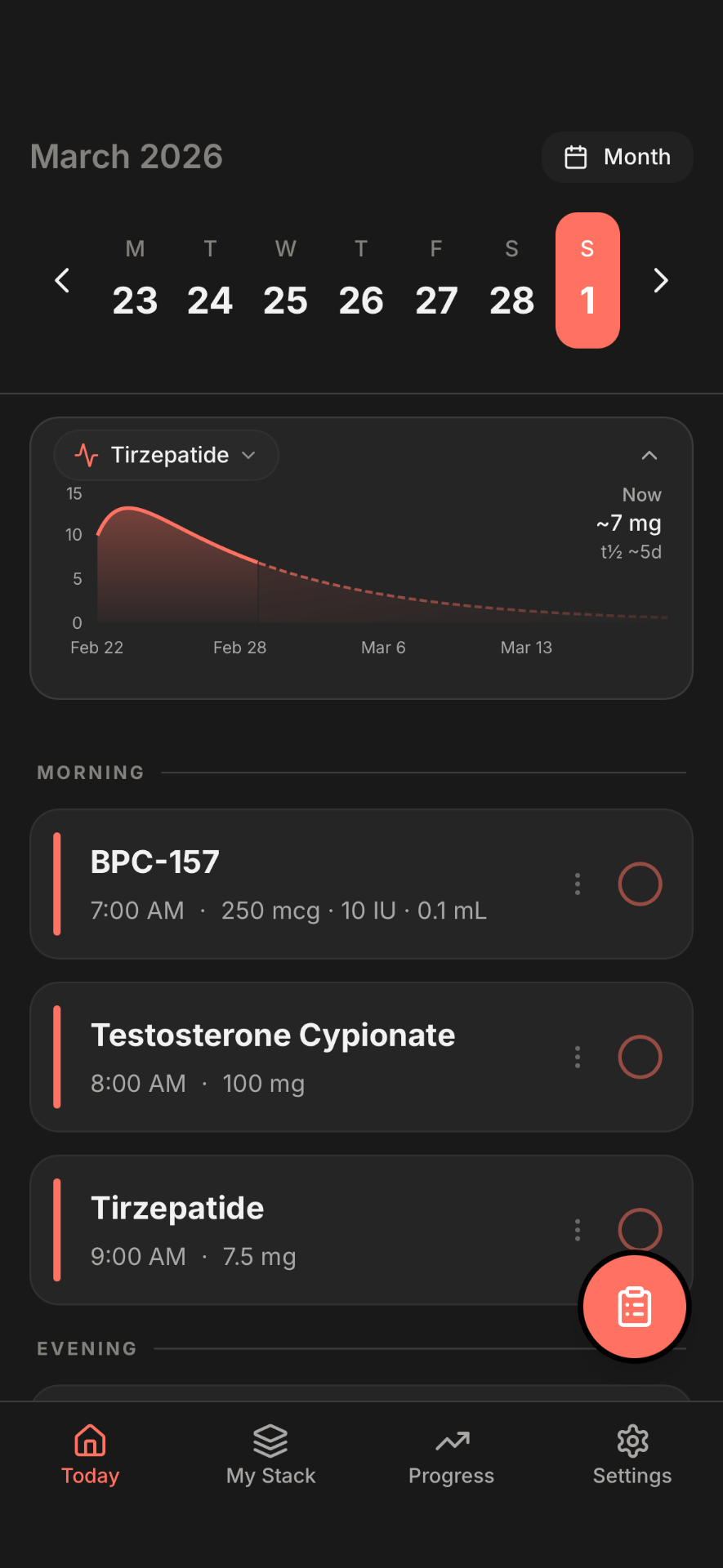
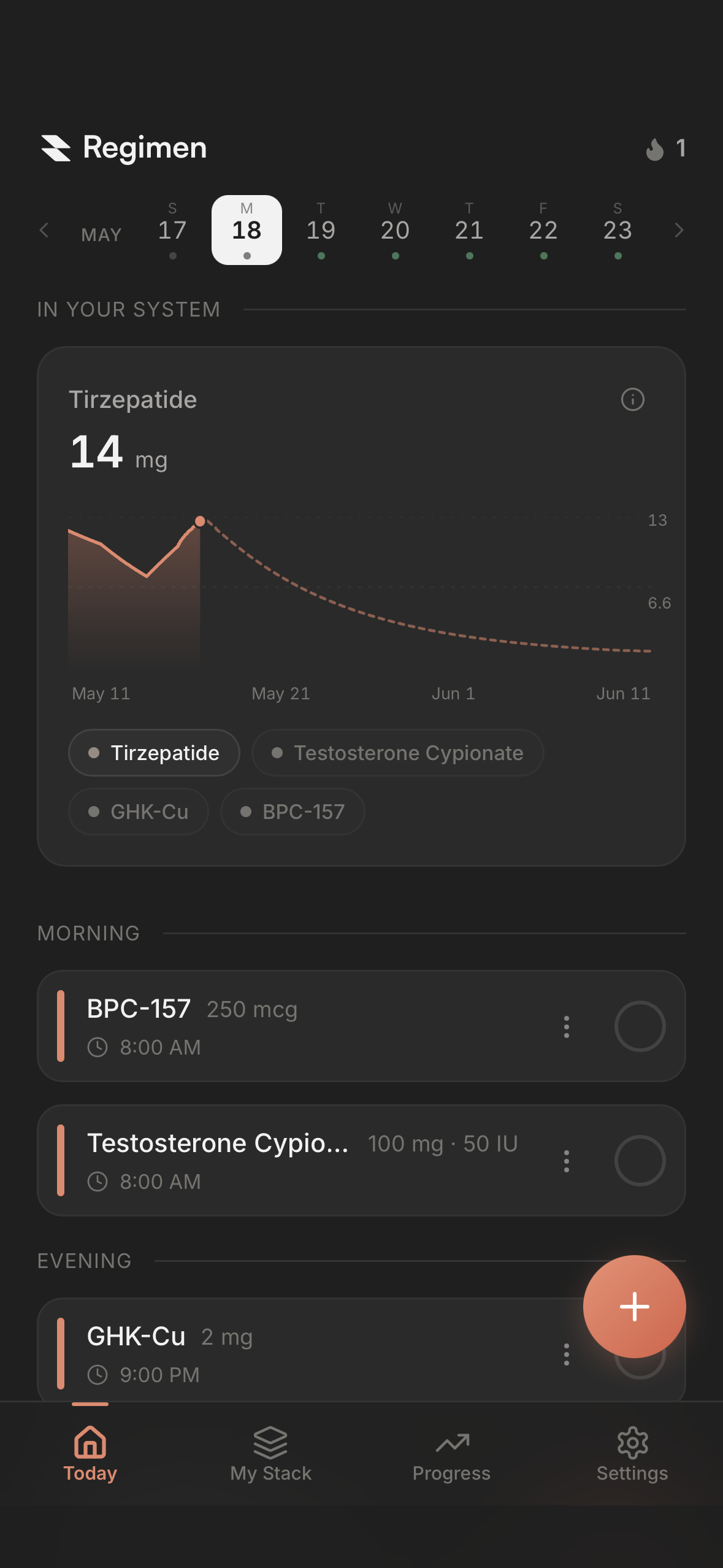
Regimen’s compound tracking lets you log all of this against your injection schedule in one place.
Frequently Asked Questions
Is injectable GHK-Cu FDA approved?
No. GHK-Cu is not FDA-approved as a drug. However, in early 2026 the FDA removed injectable GHK-Cu from its Category 2 list of restricted substances. This means compounding pharmacies can now legally prepare injectable GHK-Cu for patients. You still need a prescription from a licensed physician or telehealth provider.
What is the correct dose for injectable GHK-Cu?
There are no published human clinical dose-finding trials. Compounding pharmacy protocols and community experience suggest 100 to 300mcg per day, injected subcutaneously. Most protocols start at 100mcg daily and adjust to 200mcg after 2 to 3 weeks if tolerated well.
Can you inject GHK-Cu and BPC-157 together?
They can be injected in the same time window but using separate syringes and injection sites is recommended. Mixing peptides in the same syringe before injection has not been studied and risks stability issues. Inject each from its own prepared syringe.
How do you reconstitute injectable GHK-Cu?
Use bacteriostatic water only. For a 2mg vial, add 2mL of bacteriostatic water to get a 1mg/mL (1,000mcg/mL) solution. For a 200mcg dose, draw 0.2mL. Refrigerate after reconstituting and use within 30 days. Do not freeze reconstituted peptides.
Does injectable GHK-Cu interact with vitamin C supplements?
The vitamin C interaction concern applies to topical skincare formulations, where ascorbic acid can degrade copper peptides at the skin surface. It does not apply to injectable GHK-Cu. Oral vitamin C supplementation while using injectable GHK-Cu is generally fine and may support collagen synthesis alongside GHK-Cu.
This article is for informational purposes only and does not constitute medical advice. Discuss all treatment decisions with your healthcare provider.
Ready to track your protocol?
- Smart reminders so you never miss a dose
- Track weight, photos, and progress over time
- Medication level curves for every compound