The Bottom Line
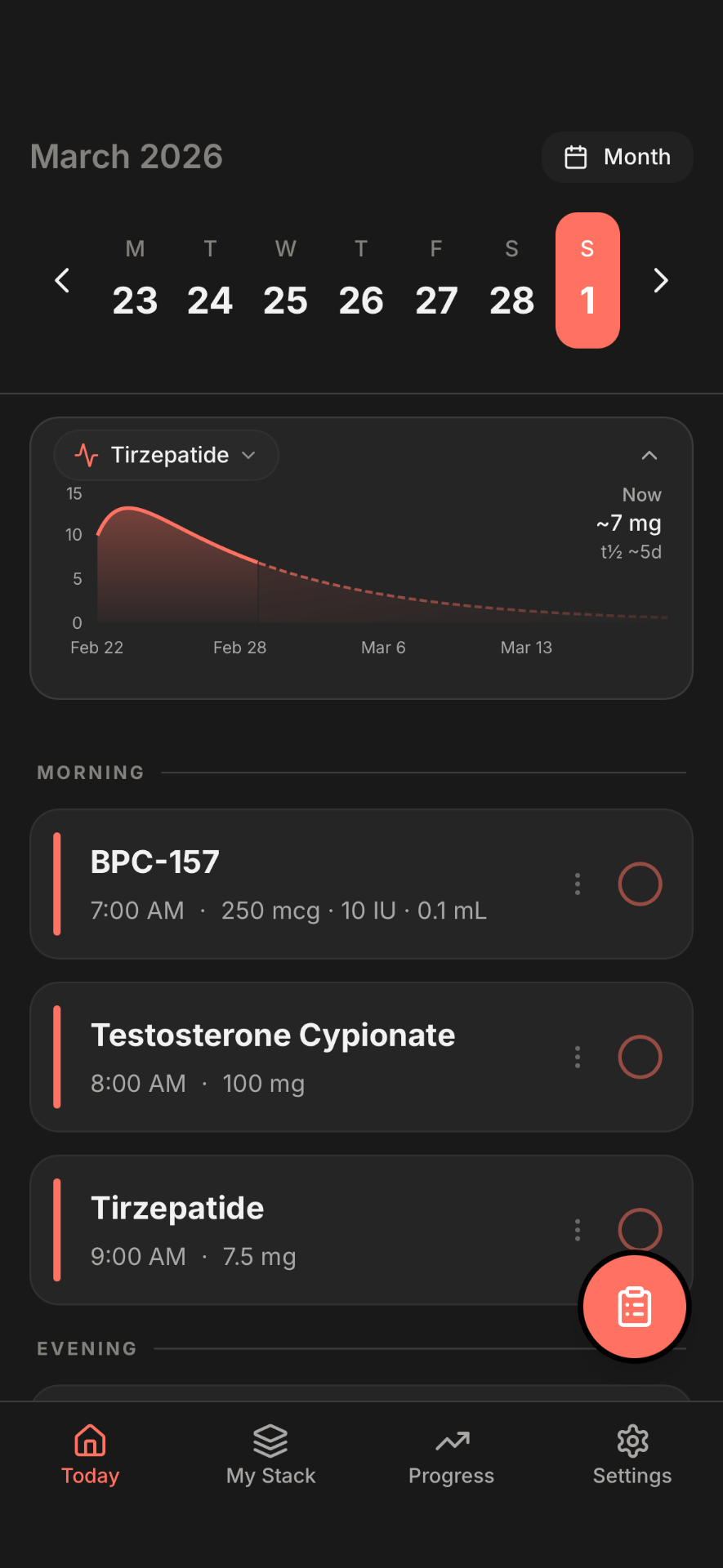
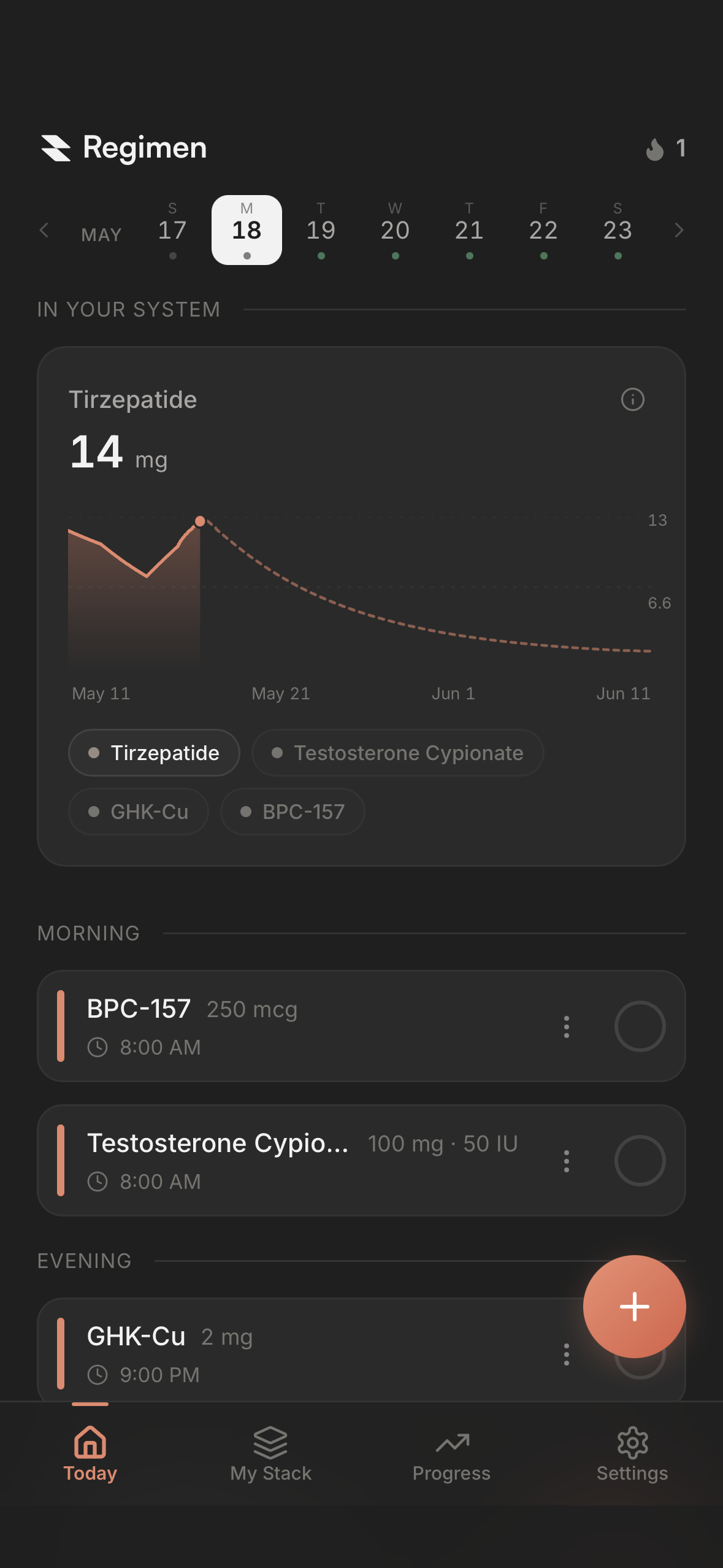
If you’re running any peptide protocol, blood work isn’t optional. It’s the only way to know whether your protocol is actually working, whether your dosing is right, and whether anything is going sideways that you can’t feel yet. The problem is most people either skip labs entirely or order the wrong ones. This guide tells you exactly which tests to get for every major peptide category (TRT, GH peptides, GLP-1s, BPC-157, thymosin alpha 1), when to draw them, and how to read the results without needing a medical degree. Use the Regimen app to log your lab results over time and see how your bloodwork trends correlate with dose changes, protocol adjustments, and how you feel.
In This Guide
- Why Blood Work Matters for Peptide Users
- Baseline Labs: What to Get Before Starting Anything
- Labs by Peptide Category (TRT, GH Peptides, GLP-1s, BPC-157, Thymosin Alpha 1)
- Testing Timing: When to Draw Blood
- How to Read Your Results
- When to Retest
- How to Track Labs Over Time
- Common Mistakes
- Frequently Asked Questions
Why Blood Work Matters for Peptide Users
Here’s the thing about peptides: you can feel great and still have something off in your labs. And you can feel lousy even though your labs look perfect (which means the issue is elsewhere).
Feelings are data. But they’re subjective, inconsistent, and easy to misinterpret. Blood work gives you the objective numbers. It tells you whether that GH peptide is actually raising your IGF-1, whether your TRT dose is putting you in the right range or slowly pushing your hematocrit into dangerous territory, whether the GLP-1 is improving your metabolic markers or quietly stressing your pancreas.
Without labs, you’re guessing. With labs, you’re adjusting based on evidence. That’s the difference between running a protocol and hoping a protocol works.
The other reason labs matter: safety. Most peptides are well-tolerated, but “well-tolerated” doesn’t mean zero risk. Catching a rising hematocrit before it causes a blood clot, spotting elevated liver enzymes before they become a problem, noticing that fasting glucose is climbing when it shouldn’t be. These are things you can’t feel until they become serious. Labs catch them early.
Baseline Labs: What to Get Before Starting Anything
Before you pin, swallow, or spray a single peptide, get a baseline panel. This is your “before” picture in numbers. Without it, you’ll never know what changed because of the peptide versus what was already there.
Baseline panel for any peptide protocol:
| Test | Why |
|---|---|
| CBC (Complete Blood Count) | Baseline red blood cells, white blood cells, platelets, hematocrit |
| CMP (Comprehensive Metabolic Panel) | Liver function (AST, ALT), kidney function (creatinine, BUN, eGFR), electrolytes, glucose |
| Lipid Panel | Total cholesterol, LDL, HDL, triglycerides |
| Fasting Glucose | Metabolic baseline |
| HbA1c | 3-month average blood sugar |
| Thyroid Panel (TSH, Free T4, Free T3) | Rules out thyroid dysfunction that could confuse your results |
| CRP (C-Reactive Protein) | Systemic inflammation marker |
This panel costs about $100-200 through direct-to-consumer lab services like Quest, Labcorp or DiscountedLabs. Some peptide clinics include it in their onboarding. If yours doesn’t, order it yourself.
Get these drawn fasted (12 hours, water only) for the most accurate results.
Pro Tip
Order your baseline labs 1-2 weeks before starting your protocol. This gives you time to get results back and address anything unexpected before adding a new variable. If your liver enzymes are already elevated, you want to know that before attributing it to a peptide later.
Labs by Peptide Category
TRT (Testosterone Replacement Therapy)
TRT requires the most comprehensive and frequent lab monitoring of any peptide protocol. You’re introducing exogenous hormones that affect multiple body systems.
Essential TRT Labs:
| Test | What It Tells You | Target Range |
|---|---|---|
| Total Testosterone | Overall testosterone level | 700-1100 ng/dL (on TRT) |
| Free Testosterone | Bioavailable testosterone | 15-25 pg/mL |
| SHBG | How much T is bound vs free | 20-50 nmol/L |
| Estradiol (Sensitive) | Estrogen level (must be the sensitive assay) | 20-40 pg/mL |
| Hematocrit | Red blood cell concentration | Below 54% (critical threshold) |
| CBC | Full blood count including RBC, hemoglobin | Standard reference ranges |
| CMP | Liver and kidney function | Standard reference ranges |
| Lipid Panel | TRT can affect cholesterol | HDL > 40, LDL < 130 |
| PSA | Prostate health marker | Age-dependent, watch for changes |
| LH / FSH | Confirms suppression (should be near zero on TRT) | Will be suppressed |
| Prolactin | Rule out elevation | 2-18 ng/mL |
Warning
Always order the sensitive estradiol assay (LC/MS/MS method), not the standard immunoassay. The standard test is designed for female reference ranges and gives wildly inaccurate results in men. If your lab report says “Estradiol” without specifying “sensitive” or “LC/MS/MS,” you got the wrong test. This is the single most common lab ordering mistake in TRT.
Why each test matters:
Hematocrit is your most important safety marker on TRT. Testosterone stimulates red blood cell production. If hematocrit climbs above 54%, your blood becomes too thick and your risk of blood clots, stroke, and cardiovascular events increases. This is the number one reason people need to donate blood or reduce their TRT dose.
Estradiol matters because testosterone converts to estrogen via aromatase. Too much estrogen causes water retention, mood issues, and gynecomastia. Too little causes joint pain, low libido, and fatigue. The sensitive assay is the only way to get an accurate reading in men.
SHBG determines how much of your total testosterone is actually available to tissues. High SHBG binds more testosterone, leaving less free T. Low SHBG means more free T per unit of total T. Your injection frequency affects SHBG: more frequent injections (every other day or daily) tend to lower SHBG. See our TRT injection schedule guide.
GH Peptides (Ipamorelin, CJC-1295, Tesamorelin, MK-677)
Growth hormone peptides stimulate your pituitary to release more GH. The primary marker to track is IGF-1, which reflects your average GH output over the preceding weeks.
Essential GH Peptide Labs:
| Test | What It Tells You | Notes |
|---|---|---|
| IGF-1 | Growth hormone output | Target 200-350 ng/mL (varies by age and goals) |
| Fasting Glucose | GH raises blood sugar | Watch for creeping elevation |
| HbA1c | Long-term glucose control | Should stay below 5.7% |
| Fasting Insulin | Insulin resistance check | Below 10 uIU/mL is ideal |
| CMP | Liver and kidney function | Standard ranges |
Why glucose matters with GH peptides: Growth hormone is a counter-regulatory hormone to insulin. It opposes insulin’s action, which means elevated GH tends to raise blood sugar. Most people on reasonable GH peptide doses don’t develop clinical glucose problems, but if you’re pre-diabetic or insulin resistant, GH peptides can push you further in the wrong direction. Monitoring fasting glucose and HbA1c catches this early.
MK-677 special note: MK-677 (ibutamoren) is particularly notorious for increasing appetite and raising blood sugar. If you’re running MK-677, check fasting glucose monthly for the first 3 months, not just quarterly. The glucose impact with MK-677 is more pronounced than with ipamorelin or CJC-1295.
Community Insight
“I ran CJC/Ipamorelin for 4 months before getting labs. My IGF-1 was only 180. Turns out the peptide I was using was underdosed or degraded. If I’d tested at 6 weeks, I would have caught it and either fixed the issue or switched sources. Instead I wasted 4 months.”
GLP-1 Agonists (Semaglutide, Tirzepatide)
GLP-1 monitoring is primarily metabolic. You’re tracking how the drug affects your blood sugar, lipids, and organ function.
Essential GLP-1 Labs:
| Test | What It Tells You | Frequency |
|---|---|---|
| HbA1c | Average blood sugar over 3 months | Every 3 months |
| Fasting Glucose | Current blood sugar status | Every 3 months |
| Lipid Panel | Cholesterol and triglyceride changes | Every 3-6 months |
| ALT, AST | Liver function | Every 6 months |
| Amylase, Lipase | Pancreatic function | Baseline + if symptoms arise |
| BUN, Creatinine, eGFR | Kidney function | Every 6 months |
| CBC | General blood health | Every 6 months |
When to add extra tests: If you experience persistent abdominal pain on a GLP-1, get amylase and lipase checked promptly. Pancreatitis is a rare but serious GLP-1 side effect, and these enzymes are the primary screening tool. Don’t wait for your next scheduled labs.
Liver enzymes (ALT, AST) are worth monitoring because GLP-1s affect liver fat metabolism. In most cases, they actually improve liver enzymes (less liver fat means less inflammation). But occasional elevations occur and are worth tracking. See our GLP-1 side effects guide.
BPC-157 and TB-500
These healing and recovery peptides don’t have direct lab markers. You can’t measure “how much BPC-157 is in my system” via a standard blood test. Instead, you’re monitoring for safety and tracking indirect markers of the response you’re hoping for.
Recommended Labs:
| Test | Why |
|---|---|
| CRP (C-Reactive Protein) | Tracks systemic inflammation changes |
| CBC with Differential | Monitors immune cell changes |
| CMP | Liver and kidney safety check |
| ESR (Erythrocyte Sedimentation Rate) | Another inflammation marker |
If you’re running BPC-157 or TB-500 for injury recovery, getting CRP before and after your protocol gives you at least one objective measure of inflammatory improvement. It’s not perfect (CRP reflects systemic, not local inflammation), but it’s something.
Most people running short BPC-157 or TB-500 protocols (4-8 weeks) don’t need extensive lab monitoring beyond their general baseline panel. These peptides have minimal systemic side effects at standard doses.
Thymosin Alpha 1
Thymosin Alpha 1 is an immune-modulating peptide used for immune support, chronic infections, and post-illness recovery.
Recommended Labs:
| Test | Why |
|---|---|
| CBC with Differential | Tracks white blood cell subpopulations |
| NK Cell Activity | Natural killer cell function |
| CD4/CD8 Ratio | T-cell balance |
| IgG, IgA, IgM | Immunoglobulin levels |
| CRP | Inflammation status |
These immune panels are more specialized and may need to be ordered through specific labs or an immunologist. For most people using Thymosin Alpha 1 for general immune support (not treating a specific condition), a CBC with differential and CRP are sufficient to track response.
Testing Timing: When to Draw Blood
Drawing blood at the wrong time is the most common way to get misleading results.
TRT: Draw blood at trough, meaning right before your next injection. If you inject every Monday morning, get labs drawn Monday morning before you inject. This gives you your lowest testosterone level, which is the clinically meaningful number. Drawing blood 24 hours after injection gives you a falsely high peak level that doesn’t reflect your average state. See our TRT injection schedule guide.
GH Peptides: Draw IGF-1 any time of day (it doesn’t fluctuate acutely). But fasting glucose and insulin must be drawn fasted (12 hours, water only). Wait at least 4-6 weeks after starting or changing your GH peptide dose before testing IGF-1. It takes that long for levels to stabilize.
GLP-1s: All metabolic labs should be drawn fasted. HbA1c can technically be drawn non-fasting (it’s a 3-month average), but do it fasted anyway since you’re drawing glucose and lipids at the same time. Wait 6-8 weeks after a dose change before retesting to see the new dose’s full effect.
General rule: Fasted blood draw, morning (before 10 AM), consistent timing across tests. This controls for daily fluctuations in hormones, glucose, and cortisol, and makes your results comparable over time.
Pro Tip
Book your lab appointments for the same time slot each time (say, 8 AM Tuesday). Consistency in draw timing eliminates a variable that can make your trends look noisy when they’re actually stable. Small thing, big impact on data quality.
How to Read Your Results
Lab results come with reference ranges, and those ranges are both helpful and misleading. Here’s what you need to know.
Reference ranges are population averages, not individual targets. A “normal” total testosterone range of 264-916 ng/dL includes everyone from 18 to 80 years old. Being at 300 ng/dL is technically “normal” but could represent a significant decline from your personal baseline.
Where you fall within the range matters more than whether you’re in range. If your IGF-1 went from 180 to 280 after starting a GH peptide, that’s a meaningful response, even though both numbers are “normal.” If your hematocrit went from 46% to 52%, you’re still “in range” but the trend demands attention.
Trends matter more than any single value. One slightly elevated liver enzyme doesn’t mean much. Three consecutive tests showing it climbing does. A single low IGF-1 might just be a bad draw day. Two low readings means your GH peptide protocol needs adjustment.
This is why tracking labs over time in an app beats looking at each report in isolation. The trajectory tells the story. A single snapshot just tells you where you are today.
Warning
Don’t let a single out-of-range result send you into panic mode. Retest before changing your protocol. Labs have error margins. You might have been slightly dehydrated (which falsely elevates hematocrit), eaten too late the night before (which affects fasting glucose), or drawn blood at the wrong time relative to your injection. One bad reading means retest. Two bad readings means act.
When to Retest
| Protocol | First Retest | Ongoing |
|---|---|---|
| TRT | 6-8 weeks after starting or dose change | Every 3 months for the first year, then every 6 months |
| GH Peptides | 6 weeks after dose stabilization | Every 3-4 months |
| GLP-1s | 8-12 weeks after reaching target dose | Every 3 months for HbA1c/glucose, 6 months for organ function |
| BPC-157 / TB-500 | Post-protocol (if tracking inflammation) | Not required ongoing |
| Thymosin Alpha 1 | 4-6 weeks after starting | Every 2-3 months while running |
The first year of any protocol requires more frequent testing because you’re still dialing things in. Once your doses are stable and labs look good for 2-3 consecutive draws, you can space out to every 6 months.
If you change doses, add a new compound, or experience new symptoms, reset the testing clock. Treat the change like a new protocol start.
How to Track Labs Over Time
A single lab report is a snapshot. A series of labs tracked over time is a trend. The trend is where the real insight lives.
Here’s what tracking over time reveals that single tests don’t:
- Response to dose changes: You dropped your TRT dose from 160mg to 140mg. Did that actually lower your hematocrit and estradiol, or do you need to go lower?
- Seasonal variation: Some markers (vitamin D, testosterone in men not on TRT) vary by season. Without longitudinal data, you might mistake a seasonal dip for a protocol problem.
- Slow creep: Fasting glucose going from 88 to 92 to 97 to 103 over a year. Each individual test is “normal,” but the trend shows developing insulin resistance that needs attention.
The Regimen app lets you log lab results alongside your protocol details (compound, dose, frequency, timing). When you can see IGF-1 plotted against GH peptide dose over 6 months, or hematocrit plotted against TRT dose over a year, patterns become obvious that you’d miss looking at reports one at a time. See GLP-1 tracker. Not committed to one app yet? Compare our full lineup in the best peptide tracking app roundup.
Common Mistakes
Ordering the wrong estradiol test. This one is so common it’s worth repeating. For men on TRT, you need the sensitive estradiol assay (LC/MS/MS). The standard immunoassay is useless for male ranges. Specify this when ordering.
Drawing blood at peak instead of trough. If you get labs the day after your TRT injection, your testosterone will be artificially high and won’t reflect your actual steady state. Always draw at trough.
Not fasting. Glucose, insulin, lipids, and several other markers require a 12-hour fast for accurate results. Even coffee with cream can throw off fasting glucose. Water only.
Testing too early after a dose change. Most hormones and metabolic markers need 6-8 weeks to reach new steady state levels after a dose adjustment. Testing at 3 weeks tells you very little about your new dose.
Ignoring the baseline. Starting a peptide without pre-protocol labs means you’ll never know what changed because of the peptide versus what was already there. Always get a baseline.
Comparing your labs to someone else’s. Your response to 150mg/week TRT is not the same as someone else’s response to 150mg/week. Genetics, body composition, SHBG levels, and metabolic health all affect how you process these compounds. Compare your labs to your own prior labs, not to internet strangers.
Pro Tip
Order labs through a direct-to-consumer service (DiscountedLabs, Quest Direct) if your doctor isn’t familiar with peptide protocols. These services let you pick exactly which tests you want without needing a specific referral. Bring the results to your prescriber for interpretation if needed.
Frequently Asked Questions
What blood tests do I need before starting peptides?
At minimum, get a CBC, CMP (which includes liver and kidney function), lipid panel, fasting glucose, HbA1c, thyroid panel (TSH, Free T3, Free T4), and CRP. Add protocol-specific tests depending on which peptides you’re starting.
How often should I get blood work on TRT?
Every 6-8 weeks for the first 6 months as you dial in your dose. Then every 3 months for the rest of year one. After that, every 6 months if your levels are stable.
What is trough level testing and why does it matter?
Trough is the lowest point in your hormone cycle, right before your next injection. Testing at trough gives you the most clinically meaningful number because it shows your minimum level.
How much does peptide blood work cost?
A full panel through direct-to-consumer lab services typically runs $150-350. A basic TRT panel is about $100-150. IGF-1 alone is about $50-80.
Can I get peptide blood work without a doctor?
Yes. Direct-to-consumer lab services like DiscountedLabs and Quest Direct allow you to order blood work without a physician order.
What does it mean if my IGF-1 is low on GH peptides?
It usually means your peptide is underdosed or degraded, your dose is too low, or your timing is off. Recheck your source and reconstitution first.
What hematocrit level is dangerous on TRT?
Most clinicians consider hematocrit above 54% a threshold requiring intervention. Above 50% warrants monitoring and possibly preventive action.
Should I stop peptides before blood work?
No, unless specifically instructed by your prescriber. The point of monitoring labs is to see how your body responds while on the protocol.
Ready to track your protocol?
- Smart reminders so you never miss a dose
- Track weight, photos, and progress over time
- Medication level curves for every compound