The Bottom Line
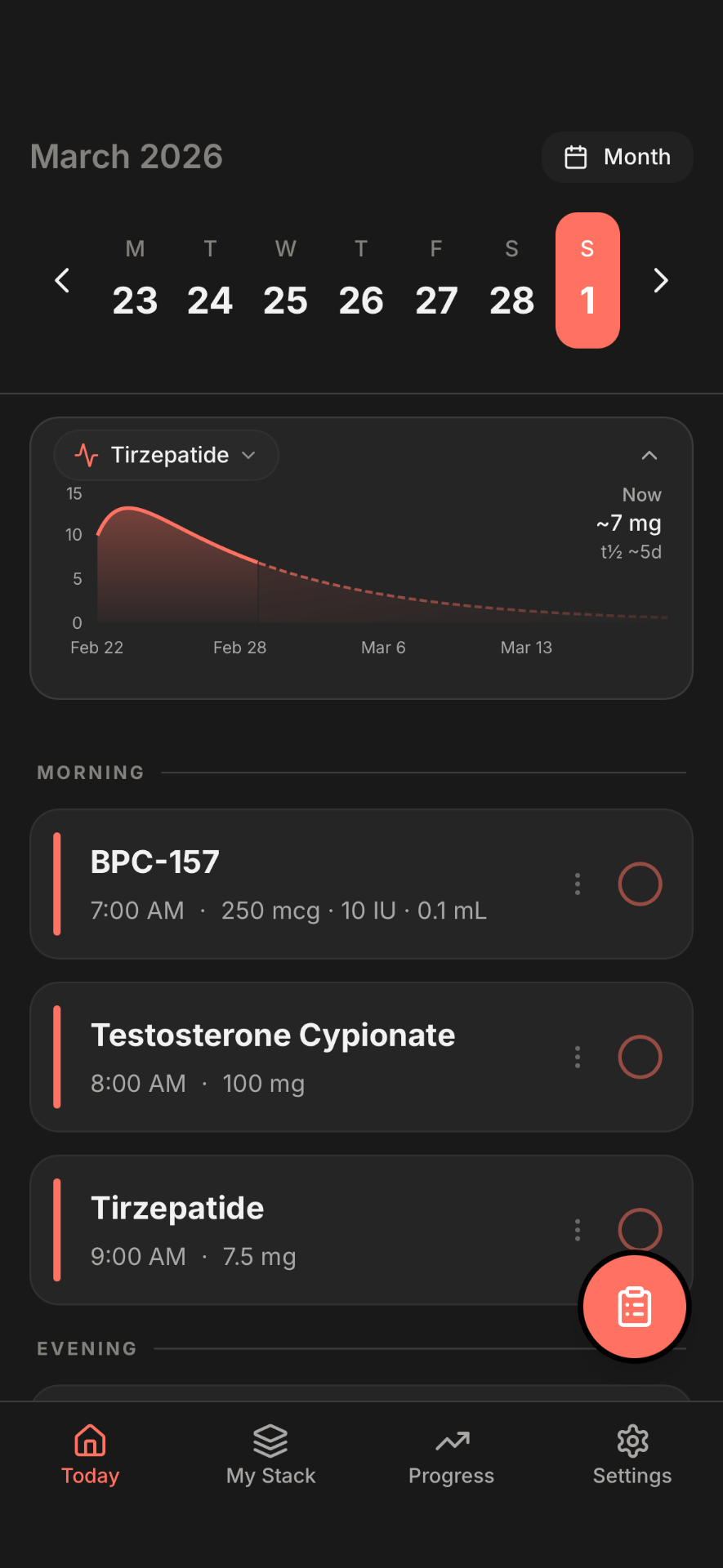
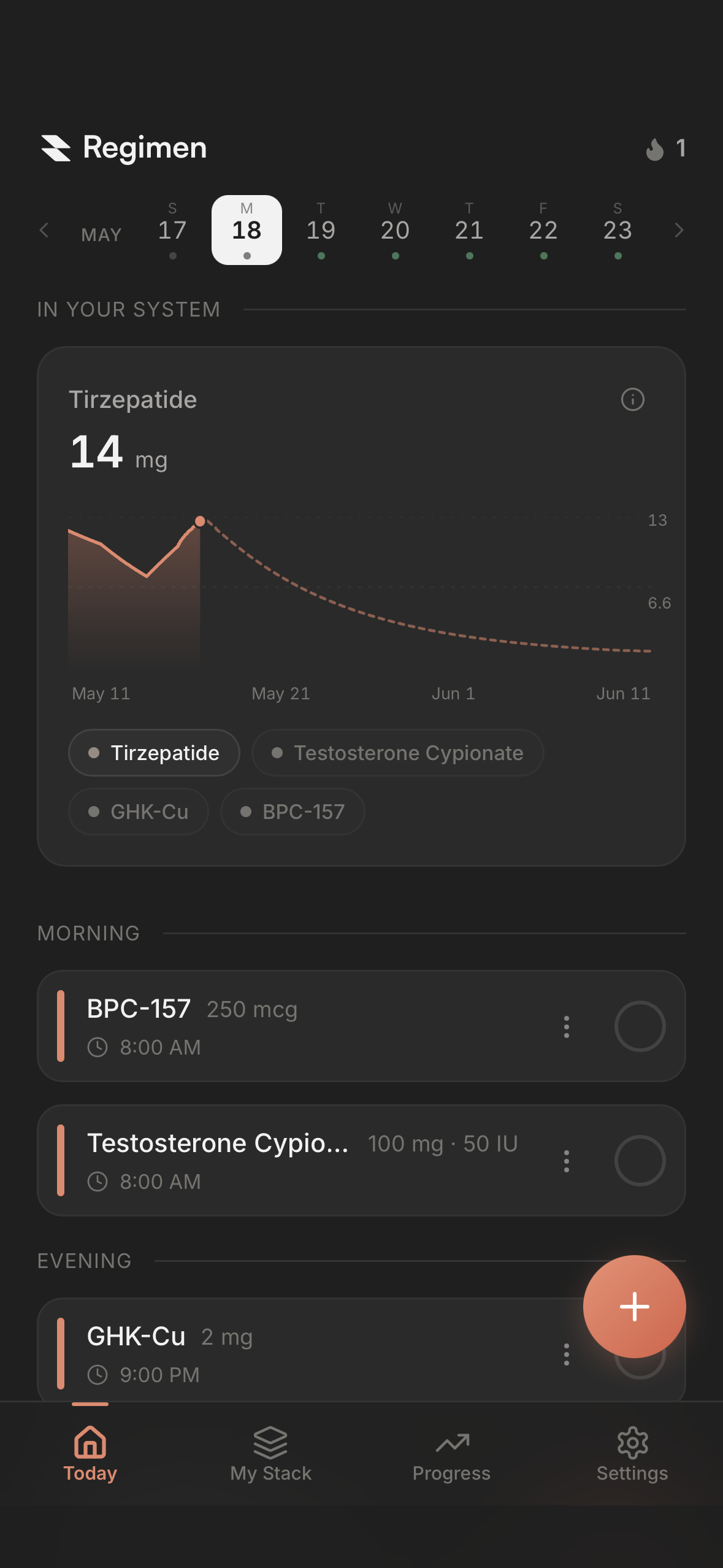
GLP-1 compounds (semaglutide, tirzepatide, retatrutide) work by slowing down your stomach. That’s the feature, not a bug. But if you don’t adjust how and what you eat, food sits in your GI tract too long, starts fermenting, and triggers nausea, bloating, constipation, acid reflux, and sulfur burps. The fix isn’t suffering through it or dropping your dose. It’s restructuring your meals and adding targeted digestive support so your gut can actually process food at its new, slower pace. Track your symptoms and dose timing with our free GLP-1 tracker to spot patterns faster.
What’s Actually Happening in Your Gut on GLP-1s
Here’s the thing most people miss about GLP-1 side effects: the nausea, the bloating, the sulfur burps, the constipation. Those aren’t random. They’re all connected to the same mechanism.
GLP-1 compounds suppress your appetite by activating receptors that slow gastric emptying. That’s the medical term for how fast food leaves your stomach and moves into your small intestine. Normally, a meal clears your stomach in about 2-4 hours. On semaglutide or tirzepatide, that process takes significantly longer.
This is the whole point. Slower gastric emptying means food sits in your stomach longer, you feel full longer, and you eat less. That’s literally the mechanism behind appetite suppression. It’s not a side effect. It’s the primary effect.
The problem starts when you keep eating the same portions, the same meal timing, and the same food choices as before. Food that sits too long in a warm, moist environment starts to break down in ways you don’t want. Bacteria get more time to ferment the food. Gases build up.
Pro Tip
Think of your GI tract like a conveyor belt. GLP-1s turned the speed dial down. If you keep loading the belt at the same rate, everything piles up. The fix isn’t to speed the belt back up (that would undo the weight loss benefit). The fix is to load it differently.
Wondering what is normal? Ozempic side effects by dose has every rate from Novo’s label, including the three warnings most articles skip.
Why It Gets Worse If You Ignore It
Most people treat GI side effects as an annoyance to push through. That’s a mistake.
When food sits in your gut longer than it should, bacteria have more time to multiply. This is called SIBO (small intestinal bacterial overgrowth), and it’s more common on GLP-1s than most people realize. The fermentation from that overgrowth produces those signature sulfur burps, along with persistent bloating and gas.
But the real concern goes deeper. Bacterial overgrowth can damage the intestinal lining over time. When that lining gets compromised, endotoxins and lipopolysaccharides (LPS) start seeping through the intestinal wall into your bloodstream. Your immune system recognizes those compounds as threats and mounts a chronic, low-grade inflammatory response.
The chain: slowed digestion → bacterial overgrowth → damaged gut lining → toxins in bloodstream → chronic inflammation.
Warning
If you’ve had GI symptoms for more than 4-6 weeks on a stable dose, or if symptoms are getting worse rather than better, talk to your provider. Persistent issues may need a clinical workup (hydrogen breath test for SIBO, stool analysis, etc.). The fixes in this guide are for prevention and mild-to-moderate symptoms.
The Fix: 5 Things That Actually Help
These five fixes address the actual root causes, not just the symptoms.
Fix #1: Restructure Your Meals
This is the single most important change and it costs nothing. Your stomach is processing food slower now. Respect that. Stop eating three large meals and switch to 4-5 smaller ones spread throughout the day.
- Cut your typical meal portions by about 40%
- Eat every 3-4 hours instead of every 5-6
- Prioritize protein and vegetables first
- Stop eating when you’re “not hungry anymore,” not when you’re “full”
- Avoid large liquid volumes during meals
Community Insight
The community phrase for this is “eating like a toddler.” Small amounts, frequently, and stopping early. It sounds annoying until you realize the nausea goes away and you still hit your protein targets.
Fix #2: Support Your Stomach Acid
GLP-1s slow gastric emptying, but they can also reduce the signaling that triggers stomach acid production. Less acid means food breaks down slower and bacteria that would normally get killed survive longer.
Betaine HCL: Supplemental hydrochloric acid in capsule form. Take with meals (particularly protein-heavy ones). Start with one capsule per meal.
Apple cider vinegar capsules: A milder alternative. 1-2 capsules before meals.
Warning
Do not take betaine HCL if you have an active stomach ulcer, gastritis, or are on NSAIDs. If you’re on a PPI (omeprazole, pantoprazole), talk to your provider before adding acid support.
Fix #3: Add Digestive Enzymes
Look for a broad-spectrum digestive enzyme supplement that includes:
- Protease (breaks down protein)
- Lipase (breaks down fat)
- Amylase (breaks down carbohydrates)
Take them at the start of each meal. The enzymes need to be present when food arrives.
Pro Tip
If your main issue is protein-related discomfort (feeling like meat “sits like a rock”), prioritize a protease-heavy enzyme blend. If fatty foods are the problem, you need lipase and bile support (next section).
Fix #4: Support Bile Flow for Fat Digestion
This is the fix most people skip. When gastric emptying slows, bile release timing can get thrown off. Fat doesn’t get digested properly.
Ox bile: Supplemental bile salts. Take with meals that contain fat. Especially important if you’ve had your gallbladder removed.
TUDCA (tauroursodeoxycholic acid): Supports bile flow and has protective effects on the liver. Typically 250-500mg daily.
Pro Tip
If you’ve had your gallbladder removed, ox bile is close to non-negotiable on a GLP-1. Without a gallbladder, you have no bile reservoir. Ox bile at every meal with fat content is the fix.
Fix #5: Stop Escalating Your Dose
The standard GLP-1 titration schedule says to increase your dose every 4 weeks. But that schedule assumes your body is tolerating the current dose well. If you’re dealing with nausea, constipation, bloating, or reflux at your current dose and you bump up anyway, you’re layering a stronger effect on top of a system that’s already struggling.
Use our GLP-1 titration planner to map out your schedule, and don’t move to the next tier until GI symptoms have resolved or significantly improved.
Community Insight
The community calls this “earn your next dose.” Stay at each dose level until your body is actually handling it well. Plenty of people get great results at moderate doses by optimizing digestion and meal structure rather than chasing the maximum dose.
Warning
If your provider is pushing dose increases on a fixed schedule regardless of your symptoms, push back. Print or screenshot your symptom logs from the Regimen GLP-1 tracker and bring them to your appointment. Data makes the conversation easier.
What to Buy: The Supplement Cheat Sheet
| Priority | Supplement | What It Does | When | Dose |
|---|---|---|---|---|
| 1 | Digestive enzymes | Breaks down protein, fat, carbs | Start of each meal | 1-2 capsules |
| 2 | Betaine HCL or ACV | Supports stomach acid | With protein meals | 1-2 capsules |
| 3 | Ox bile | Emulsifies dietary fat | With fat-containing meals | 125-500mg |
| 4 | TUDCA | Supports bile flow + liver | With meals | 250-500mg daily |
Pro Tip
Some supplement companies sell “GLP-1 support” bundles that combine enzymes, betaine HCL, and bile salts in one capsule. Check the label to make sure the doses of each ingredient are in the ranges above, not just token amounts.
Side Effects Timeline: When to Expect Improvement
| Timeframe | What to Expect |
|---|---|
| Days 1-3 | Meal restructuring alone often reduces nausea noticeably |
| Week 1 | Digestive enzymes and acid support start making a difference. Bloating and sulfur burps typically improve first |
| Weeks 2-3 | Bile support shows full effect. Fat tolerance improves. Constipation usually resolves |
| Weeks 3-4 | Most people report 70-80% improvement in GI symptoms |
| 6+ weeks | If symptoms persist significantly, see your provider for a clinical workup |
Use the Regimen GLP-1 tracker to log your symptoms daily. Tracking makes patterns obvious. Injection day often brings the worst symptoms since GLP-1 levels peak in the 24-48 hours after your shot.
Not sure which tracker to use? See our pick of the best GLP-1 tracker app for logging side effects against your dose.
Not sure which tracker to use? See our pick of the best GLP-1 tracker app for logging side effects against your dose.
Not sure which tracker to use? See our pick of the best GLP-1 tracker app for logging side effects against your dose.
Not sure which tracker to use? See our pick of the best GLP-1 tracker app for logging side effects against your dose.
Not sure which tracker to use? See our pick of the best GLP-1 tracker app for logging side effects against your dose.
Not sure which tracker to use? See our pick of the best GLP-1 tracker app for logging side effects against your dose.
Frequently Asked Questions
Can I just take an antacid for GLP-1 nausea?
Antacids can provide temporary relief but often make the underlying problem worse. If stomach acid is already low, reducing it further means less food breakdown and more fermentation.
Should I take probiotics on a GLP-1?
Fix digestion first (enzymes, acid, bile support, meal structure), then consider a quality probiotic as maintenance.
Do these side effects go away on their own?
Mild GI symptoms in the first 1-2 weeks of a new dose often improve. Persistent symptoms lasting more than 3-4 weeks at a stable dose usually don’t resolve on their own.
Are GLP-1 side effects worse with retatrutide?
Retatrutide activates three receptors compared to tirzepatide’s two. Phase 2 trials showed broadly similar GI side effect rates, but some users report a different profile.
Related Articles
- GLP-1 Sulfur Burps: Why They Happen and How to Stop Them
- GLP-1 Plateau Guide: Why You Stopped Losing Weight
- GLP-1 Maintenance Guide: Keeping Results Long-Term
- Switching Between Semaglutide and Tirzepatide
- Microdosing GLP-1s: The Low-Dose Approach
Ready to track your GLP-1?
- Smart reminders so you never miss a dose
- Track weight, photos, and progress over time
- Medication level curves for every compound
What about ginger or peppermint for nausea?
Both can help with symptom relief. Ginger has decent evidence for reducing nausea, and peppermint oil capsules can help with bloating and gas. They’re fine as comfort measures alongside the five core fixes.
Does the dose calculator account for GI tolerance?
The GLP-1 dose calculator handles the reconstitution math. For titration scheduling that factors in your tolerance and readiness to increase, use the GLP-1 titration planner.
I’m getting sulfur burps specifically. Is there a separate guide?
Yes. We have a dedicated GLP-1 sulfur burps guide that covers that specific symptom in detail, including the hydrogen sulfide mechanism, specific foods to avoid, and targeted fixes.
Should I stop my GLP-1 if side effects are bad?
Don’t stop cold turkey without talking to your provider. If side effects are severe, the first step is usually dropping back to the previous dose that you tolerated well, implementing the digestive fixes, and then attempting to increase again once things stabilize.
Does exercise help with GLP-1 GI side effects?
Light movement after meals (a 10-15 minute walk) can help with gastric motility and reduce bloating. Avoid intense exercise within an hour of eating on a GLP-1 though.
Are GI side effects a sign the GLP-1 is working?
Not exactly. Some mild appetite suppression and fullness signals are signs the medication is active. But persistent nausea, vomiting, severe constipation, or inability to eat are signs of poor tolerance, not effectiveness.