If you have ever eaten a full meal and spent the next hour thinking about food anyway, you already know what food noise is. The constant low-level pull toward the fridge, the way a craving can derail a perfectly good day: it is not a discipline problem. It is a signal from a dysregulated reward system.
The term spread rapidly on Reddit, TikTok, and patient forums after GLP-1 receptor agonists, semaglutide (Ozempic, Wegovy) and tirzepatide (tirz) (Mounjaro, Zepbound), became widely used. Why? Because many users reported that these medications did something they had never experienced before: they turned the noise off.
What Does Food Noise Actually Feel Like?
People who describe high food noise often report:
- Thinking about their next meal before the current one is finished
- Feeling “pulled” toward food even when not physically hungry
- Difficulty focusing on tasks because food thoughts keep intruding
- A preoccupation with whether they have eaten “correctly” that persists throughout the day
- Feeling like they lack willpower, when they are actually contending with a high-volume cognitive load
This is distinct from hunger, the physiological signal that the body needs calories. Food noise is more like an attentional bias toward food-related stimuli, amplified by reward circuitry in the brain.
The Neurobiology Behind It
Food noise is driven by dopaminergic reward pathways, basically the brain’s “this is worth pursuing” signaling system. When that system is dysregulated, it keeps assigning motivational weight to food cues even when you are not hungry.
The nucleus accumbens, which is where that signal gets processed, does not distinguish between a real need for calories and a habit-driven urge. It just fires. That is why the pull toward food feels so automatic, so hard to reason with. It is not coming from a decision-making part of your brain. It is coming from the part that handles wanting.
Several factors amplify this system:
Insulin resistance and metabolic dysfunction. When cells are resistant to insulin, the brain may receive attenuated satiety signals and overcompensate with food-seeking behavior.
Leptin resistance. Leptin is released by fat cells to signal fullness. It is essentially the “you have had enough” message. In leptin-resistant states, common in obesity, the brain does not register the signal correctly, keeping the reward system in a chronic state of perceived hunger.
Ghrelin dynamics. Ghrelin is the hunger hormone. It rises before meals and falls after eating. In some people, ghrelin suppression after meals is blunted, meaning the stop signal arrives late or weakly. The body chemistry keeps saying “still looking for food” long after the meal is done.
Stress and cortisol. Elevated cortisol reliably increases food-seeking behavior, particularly for high-calorie, high-reward foods. It is one reason stress eating is a real physiological pattern, not just weak willpower.
None of this is a character flaw. It is physiology.
Community Insight
The most common thing people say when GLP-1 medications start working is not about weight. It is “I cannot believe that is what quiet feels like.” The absence of food noise is often more noticeable than the appetite suppression itself. People describe it as suddenly realizing how loud the background noise had been for years.
Why GLP-1 Medications Quiet Food Noise
GLP-1 receptor agonists work on multiple levels at the same time. Their effect on food noise is not just about reducing appetite in the periphery. It is about changing how the brain processes food cues.
Hypothalamic signaling. GLP-1 receptors are expressed in the hypothalamus, the brain’s energy-regulation hub. Activating them increases satiety signaling directly in the brain, reducing the “drive” toward eating at the source.
Dopamine modulation. Emerging research suggests GLP-1 receptor agonists modulate dopaminergic reward signaling in the nucleus accumbens and ventral tegmental area, the exact regions generating that constant “pursue food” signal. This may explain why many users report not just less hunger, but less wanting. The motivational pull toward food is reduced, not just the physical sensation of being empty.
Ghrelin suppression. GLP-1 medications reliably suppress ghrelin, so the hunger signal itself arrives less frequently and with less intensity. The system stops ringing.
Gastric emptying. By slowing gastric emptying, GLP-1s extend the post-meal satiety window. The physical signal that food is still in the system reinforces the neural satiety signal. Both channels are saying “handled.”
The net effect, for many users, is a quiet mind. For people who have spent decades managing high food noise through willpower alone, this can feel disorienting at first, and then transformative.
Pro Tip
Not on a GLP-1 and trying to manage food noise? The approaches with the most evidence behind them: high-protein meals, consistent meal timing, prioritizing sleep, and managing chronic stress. None of these silence food noise the way a GLP-1 does, but they reduce the volume meaningfully for a lot of people.
Not Everyone Experiences Food Noise the Same Way
Food noise varies considerably between individuals. Some people report minimal food noise and find GLP-1 medications primarily useful for appetite suppression. Others describe the silencing of food noise as the most significant change they have ever experienced with any intervention.
Research into GLP-1 response variation is still early, but factors likely to influence food noise response include:
- Baseline dopaminergic tone and reward sensitivity
- Presence of binge-eating patterns or food addiction phenotype
- Metabolic baseline (insulin sensitivity, leptin status)
- Dose and specific medication, since tirzepatide adds GIP receptor activity on top of GLP-1, which may explain stronger appetite effects in some people
Warning
Food noise that becomes obsessive, significantly interferes with daily functioning, or involves distress around eating beyond normal hunger cues may warrant talking to a healthcare provider. Disordered eating patterns and food-related anxiety can look similar to food noise on the surface but have different origins and require different support.
Tracking the Change
The challenge with food noise is that it is subjective and hard to quantify. Standard calorie-tracking apps capture food intake, not the cognitive burden around food.
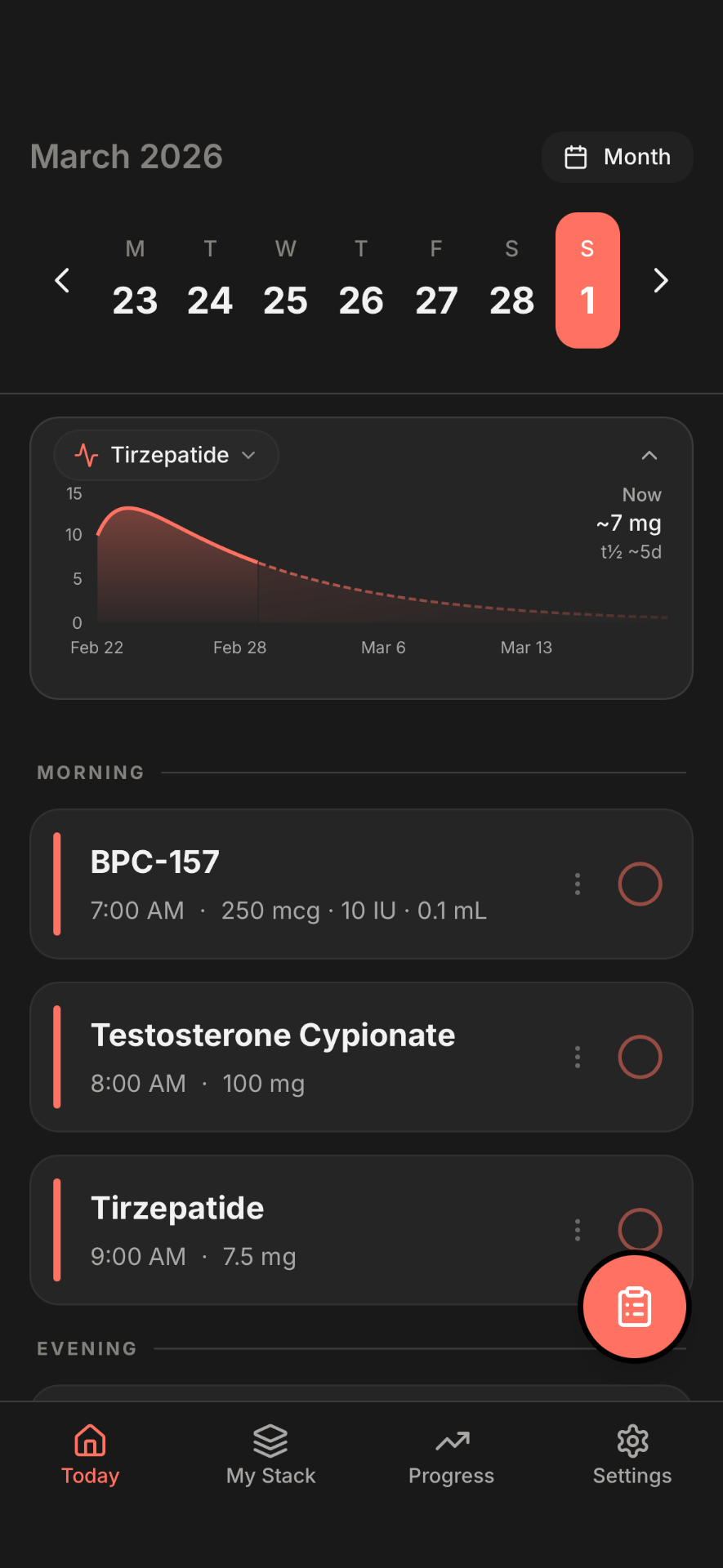
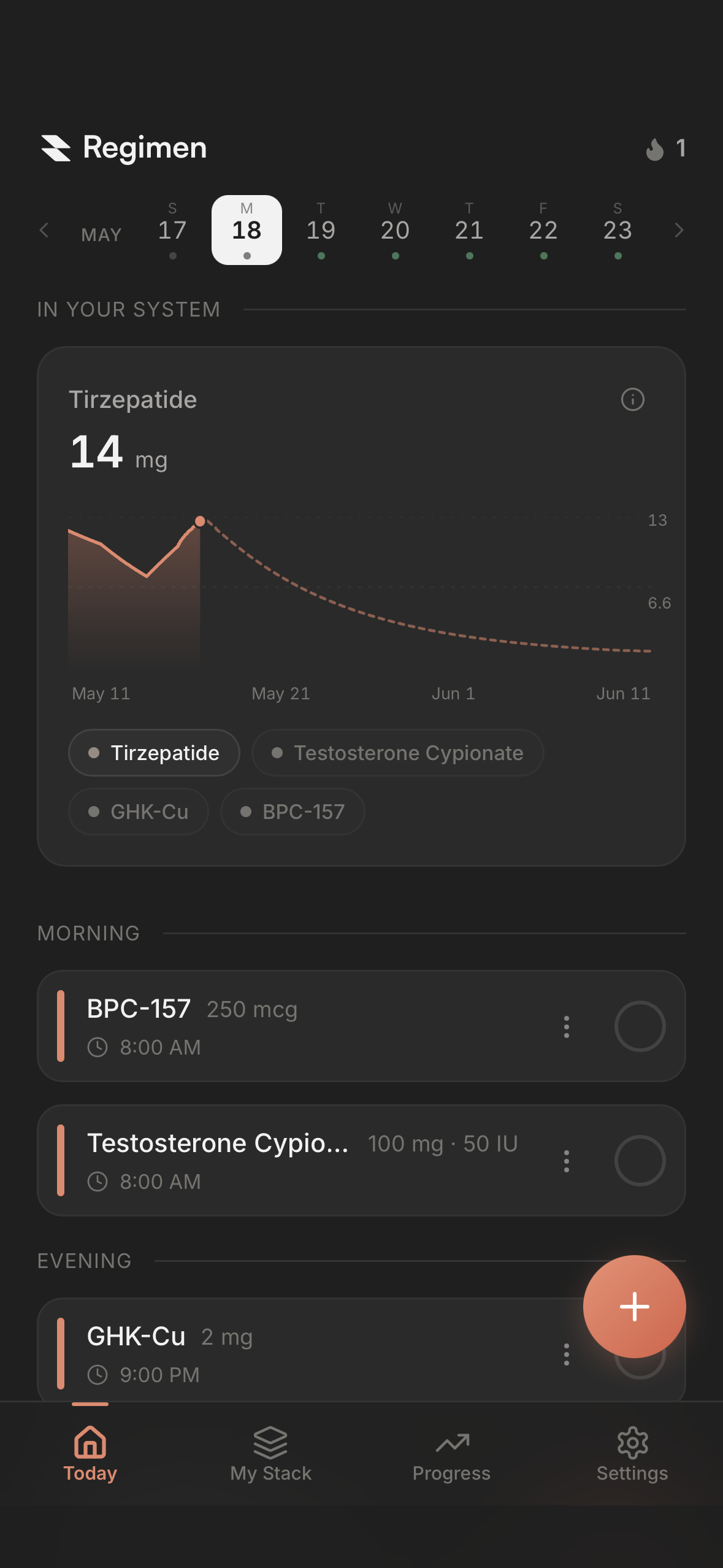
Regimen includes daily marker sliders for hunger, cravings, and nausea, subjective dimensions that sit alongside objective tracking. People on GLP-1 medications often document the transition clearly in their check-in data: not just “I ate less” but “I stopped thinking about food constantly.” That pattern is visible in longitudinal check-in data in a way that a calorie log alone would never capture.
This article is for informational purposes only and does not constitute medical advice. Discuss all treatment decisions with your healthcare provider.
Ready to track your GLP-1?
- Smart reminders so you never miss a dose
- Track weight, photos, and progress over time
- Medication level curves for every compound