If you have been tracking your resting heart rate since starting a GLP-1 medication, semaglutide (Ozempic, Wegovy) or tirzepatide (tirz) (Mounjaro, Zepbound), you may have noticed it trending upward. A rise of 5–10 beats per minute above your pre-medication baseline is commonly reported. For people who associate a higher resting heart rate with poor health, this is alarming. For most people on GLP-1 medications, it is neither alarming nor accidental. It is pharmacology.
Which medication and dose you are on matters for reading that trend. The Wegovy click chart and the Mounjaro dose chart lay out where each weekly stage sits.
GLP-1 Receptors in the Heart
GLP-1 receptors are not exclusive to the pancreas and gut. They are expressed in the sinoatrial node, the heart’s natural pacemaker. When a GLP-1 receptor agonist activates these receptors, chronotropic effects follow: the pacemaker fires more frequently, and resting heart rate rises.
This is a direct, receptor-mediated effect. It is not secondary to weight loss, not caused by dehydration, and not a sign of cardiovascular stress in the way that stress-induced tachycardia would be.
Semaglutide: Commonly reported mean resting heart rate increases of approximately 1–4 bpm, consistent with the prescribing information. Individual increases can be higher.
Tirzepatide: As a dual GIP/GLP-1 agonist, tirzepatide adds GIP receptor activity. GIP receptors are also present in cardiac tissue, and tirzepatide’s heart rate effect tends to be more pronounced than semaglutide’s. Increases of 3–7 bpm are commonly observed in trials, with individual variation extending higher.
Retatrutide (triple agonist: GLP-1, GIP, glucagon) has a larger heart rate effect in early-phase trials, consistent with glucagon receptor activation also driving chronotropic effects. This compound is not yet approved.
Is It a Concern?
For most people, the answer is: not specifically. The same cardiovascular outcome trials that demonstrated GLP-1 medications raise resting heart rate also showed significant reductions in major adverse cardiovascular events (MACE), heart attack, stroke, cardiovascular death, in people at elevated cardiovascular risk. The LEADER trial (liraglutide) and SUSTAIN-6 (semaglutide) both showed meaningful cardiovascular benefit. Tirzepatide’s cardiovascular outcomes trial (SURMOUNT-MMO) is still ongoing and has not yet reported, so its cardiovascular picture isn’t settled the same way.
A higher resting heart rate in isolation is not inherently pathological. Context matters:
- Is the increase modest (5–10 bpm) and stable, or is it large (>15 bpm) and increasing?
- Are there accompanying symptoms: palpitations, chest discomfort, shortness of breath?
- Is there a known underlying cardiac condition?
For most otherwise healthy people on therapeutic doses of GLP-1 medications, a modest stable resting heart rate increase is a known pharmacological effect, not a clinical warning sign. That said: any persistent, large, or symptomatic increase in heart rate should be evaluated by a physician.
Why Some People Notice It More
Medication and dose: Higher doses produce stronger receptor activation. The effect is more pronounced at therapeutic doses than during early titration.
Individual cardiac GLP-1 receptor density: As with all receptor-mediated effects, response varies with receptor expression.
Baseline autonomic tone: People with lower baseline resting heart rate (typically those who are more aerobically fit) may notice the increase more prominently as a relative change, even when the absolute level is well within normal range.
Hydration: GLP-1 medications reduce appetite, which can reduce fluid intake. Mild dehydration elevates heart rate independently. This is worth distinguishing. Increased fluid intake often partially resolves the elevated heart rate.
Caloric deficit and weight loss: Rapid weight loss, independently of the medication mechanism, can transiently affect heart rate. The two effects may be additive.
How to Track It Meaningfully
Resting heart rate is most informative when measured consistently and compared against a stable baseline. The most reliable measurement is upon waking, before getting up, after several minutes of lying still.
If you are picking a tracking app for this, the best GLP-1 tracker apps compares what each one records.
Single-point readings are less meaningful than trends. A resting heart rate that settles 5 bpm higher than your pre-medication baseline and stays stable is a different picture from one that is climbing week over week.
Logging resting heart rate alongside dose, injection day, and subjective energy gives a much clearer picture than isolated readings. The weekly pattern is often visible: slightly elevated heart rate on peak days (1–3 days post-injection), returning toward a slightly-elevated-but-stable trough. This within-cycle variation is medication effect, not a worsening cardiovascular signal.
The Weight Loss Effect on Cardiac Health
Step back for a second, though. The cardiovascular risk factors most strongly associated with poor long-term outcomes, visceral adiposity, insulin resistance, elevated blood pressure, dyslipidemia, chronic inflammation, are all significantly improved by GLP-1-mediated weight loss.
The overall picture is positive. A 5–7 bpm uptick in exchange for meaningful reductions in visceral fat, blood pressure, and long-term cardiovascular risk is a tradeoff most cardiologists would take without hesitating. The outcome trial data backs that up. This does not mean the heart rate increase is irrelevant. It means it should be understood in context.
Warning
A heart rate increase of more than 10–15 bpm from your baseline, or one that comes with palpitations, chest discomfort, or irregular rhythm, is worth flagging with your doctor. The typical GLP-1-related increase is mild and stable, not escalating. If yours is escalating, that’s a different conversation.
Pro Tip
Measure resting heart rate first thing in the morning, before getting out of bed, over 3–5 days and average the readings. A one-off reading after coffee or a walk doesn’t tell you anything useful.
Key Takeaways
- GLP-1 medications raise resting heart rate via direct GLP-1 receptor activation in the sinoatrial node. This is a known, expected pharmacological effect
- Tirzepatide typically produces a larger increase than semaglutide; retatrutide (reta) (not yet approved) is larger still
- A modest, stable increase of 5–10 bpm is not a cardiovascular warning sign for most people
- Large, rapidly increasing, or symptomatic elevations warrant medical evaluation
- The overall cardiovascular risk picture with GLP-1 medications is positive based on major outcome trials
This article is for informational purposes only and does not constitute medical advice. Discuss all treatment decisions with your healthcare provider.
Ready to track your GLP-1?
- Smart reminders so you never miss a dose
- Track weight, photos, and progress over time
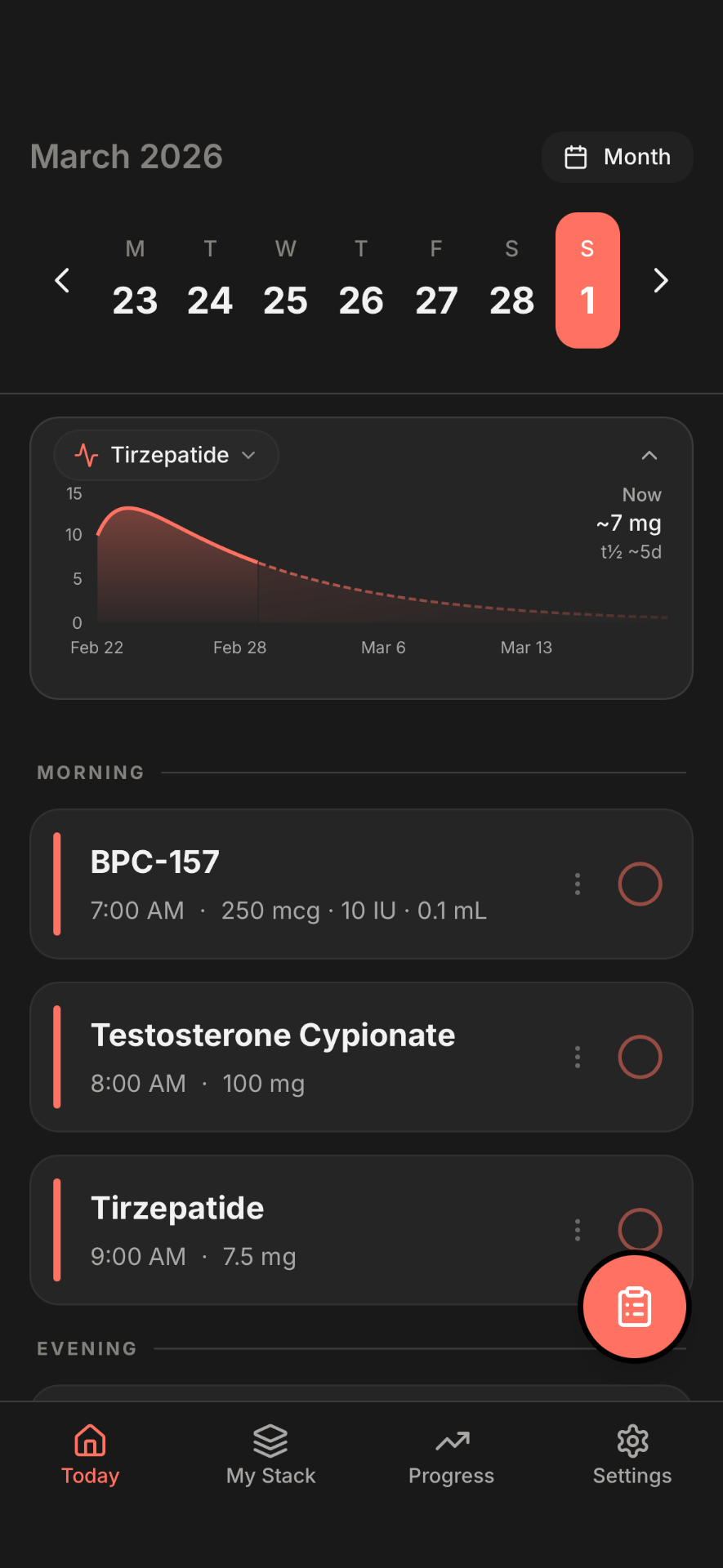
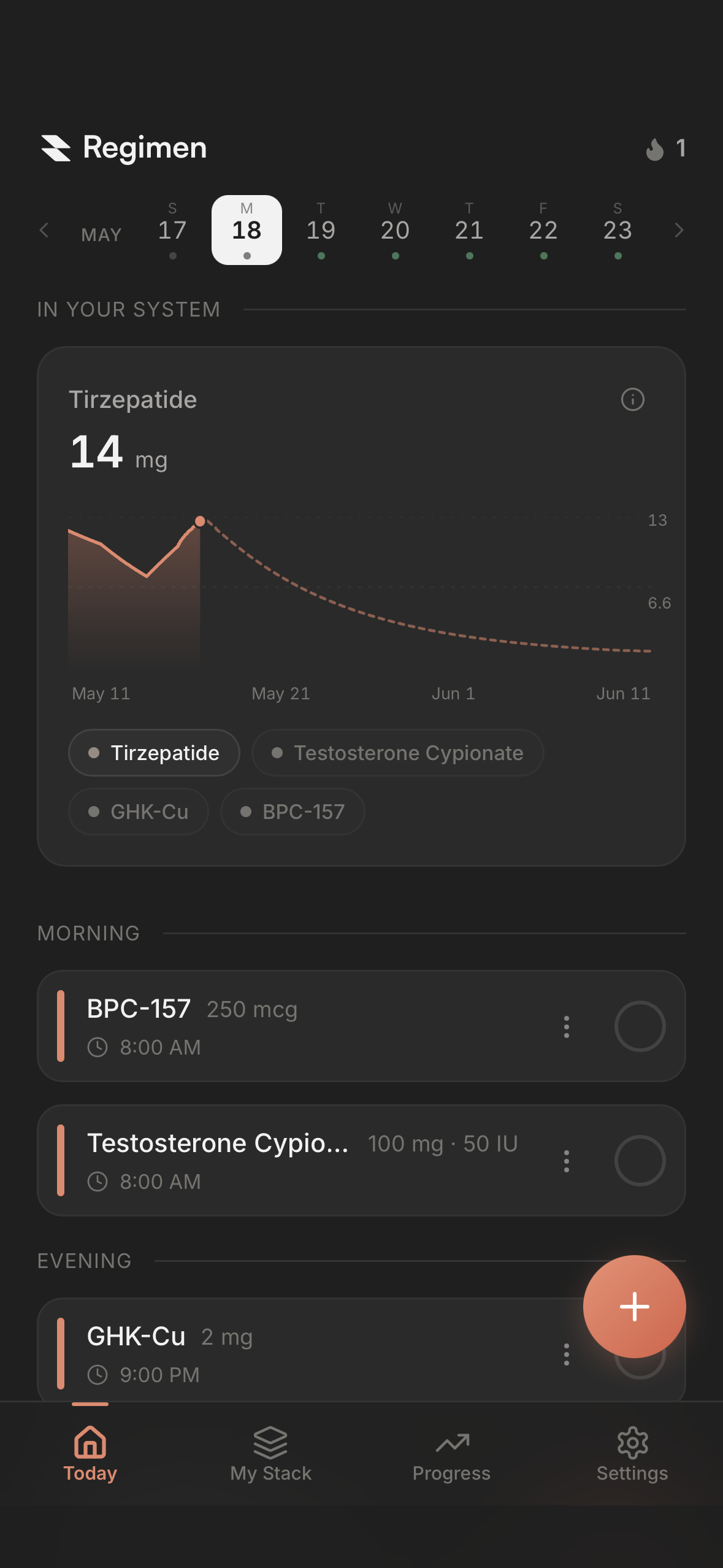
- Medication level curves for every compound