GLP-1 Titration Planner
Map your semaglutide or tirzepatide dose escalation with personalized dates for each step up, from your opening dose through maintenance.
Dose escalation planner
Map your titration timeline with start dates for each step up.
GLP-1 receptor agonist for weight management
Wegovy
Semaglutide
0.25mg
Weeks 1-4
Oct 19
2026
0.5mg
Weeks 5-8
Nov 16
2026
1mg
Weeks 9-12
Dec 14
2026
1.7mg
Weeks 13-16
Jan 11
2027
2.4mg
Week 17+ (Maintenance)
Feb 8
2027
Standard FDA titration schedule. Your provider may adjust it based on your response.
This planner is for informational purposes only, so always double-check your result with a healthcare provider. Retatrutide is investigational and not yet FDA-approved, and the schedules shown are standard escalation paths your prescriber may adjust. We assume no liability for dosing errors.
Last updated September 2026 · Reviewed by the Regimen Team
The tool
How it works, what it tells you, what it doesn't.
The GLP-1 titration planner turns the standard FDA dose-escalation schedule into a personalized calendar. Pick your medication, set the date of your first dose, and it lays out every step up with the exact week range and start date, from your opening dose through maintenance. Titration exists to give your body time to adjust, which is what keeps nausea and other GI side effects manageable. The planner shows the default manufacturer schedule, so treat it as a map, not a prescription. Your provider may move faster or hold you on a step longer based on how you respond.
How to use it
How to Use the Titration Planner
- 01
Select your medication
Choose from Wegovy, Ozempic, Mounjaro, Zepbound, or Retatrutide.
- 02
Enter your start date
The date you started, or plan to start, your first dose.
- 03
View your schedule
See the exact week range and start date for every dose increase.
- 04
Copy or track it
Copy the full schedule, or track each step in the Regimen app.
Titration Schedule Planner
Plan your dose escalation timeline
Wegovy Schedule
Standard FDA titration schedule. Your provider may adjust based on your response.
How the Titration Planner Works
Select your medication
Choose from Wegovy, Ozempic, Mounjaro, Zepbound, or Retatrutide
Enter start date
When you started (or will start) your first dose
View your schedule
See exact dates for each dose increase
Copy or track
Copy schedule or track in the Regimen app
Related GLP-1 Tools
GLP-1 Dose Calculator
Calculate exact syringe units for compounded semaglutide or tirzepatide
Peptide Calculator
Calculate doses for BPC-157, TB-500, and other peptides
Data Sources
This tool uses dosing information from official prescribing information:
- FDA Wegovy Prescribing Information - Official semaglutide (Wegovy) dosing and titration schedule
- FDA Ozempic Prescribing Information - Official semaglutide (Ozempic) dosing and titration schedule
- FDA Mounjaro Prescribing Information - Official tirzepatide (Mounjaro) dosing and titration schedule
- FDA Zepbound Prescribing Information - Official tirzepatide (Zepbound) dosing and titration schedule
- Retatrutide Phase 2 Trial Protocol (NCT04881760) - Investigational triple-agonist titration schedule from clinical trials
Get the app
Track your GLP-1 journey, not just the numbers
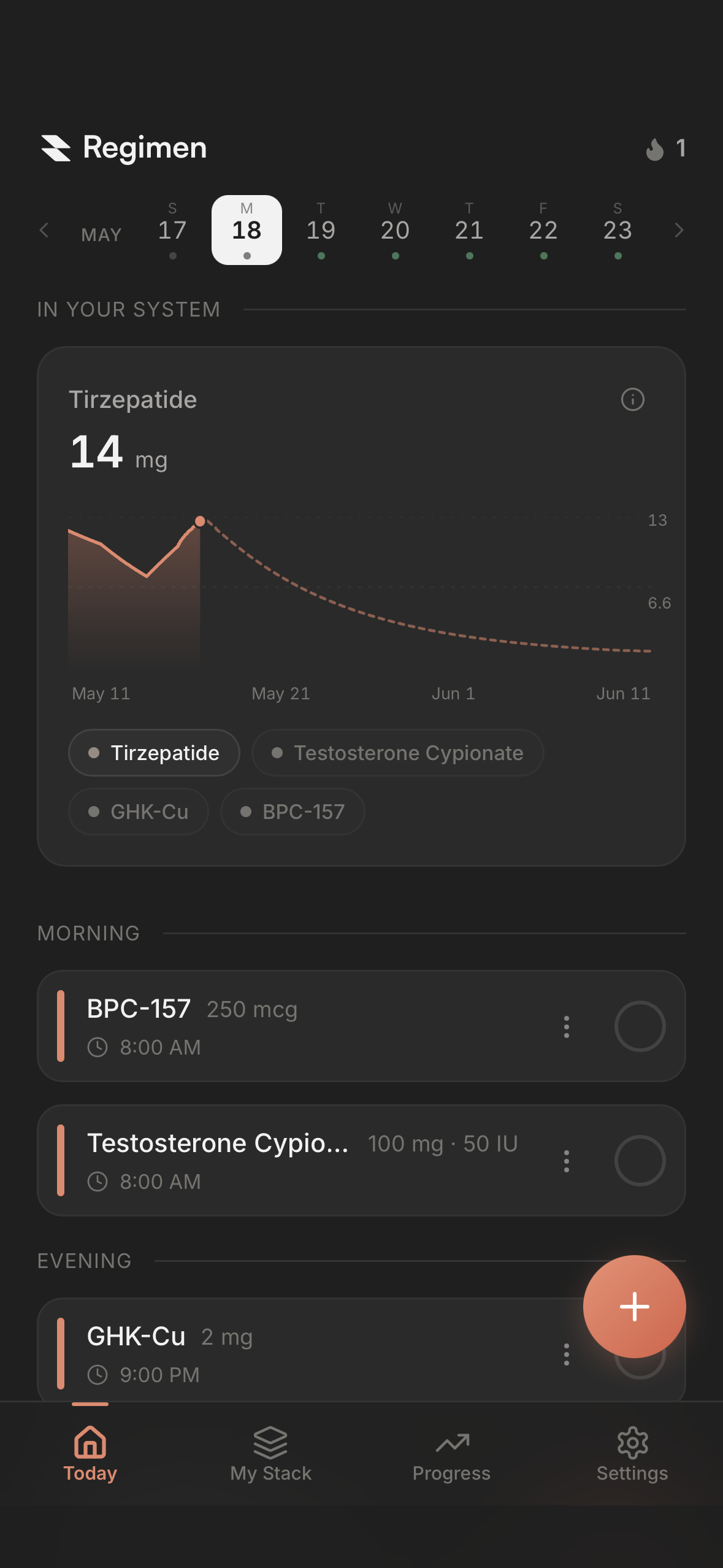
Regimen maps your titration timeline, reminds you when to step up, and logs your weight, side effects, and progress in one place. Free for one compound.
- Visualize titration timeline
- Smart injection reminders
- Log weight, side effects, and progress
- Private, secure health data


Free to download. Free for your first compound.
Questions