The Bottom Line
To switch from semaglutide (Ozempic/Wegovy) to tirzepatide (Mounjaro/Zepbound): wait one week after your last semaglutide injection, then start tirzepatide at 2.5mg regardless of your previous semaglutide dose. Expect a 2-4 week adjustment period with possible GI side effects. To switch the other direction: wait one week, then start semaglutide at 0.25-0.5mg. Always coordinate with your prescriber.
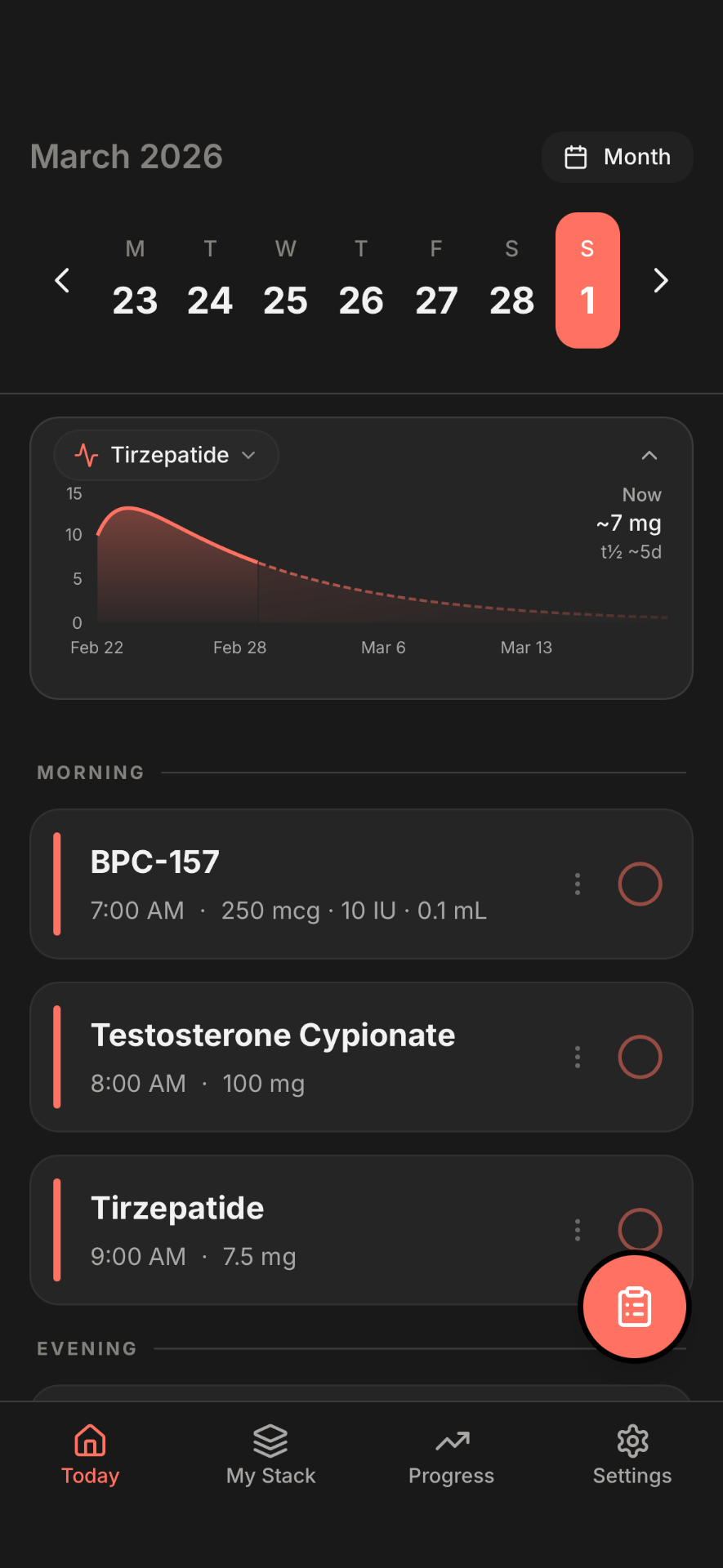
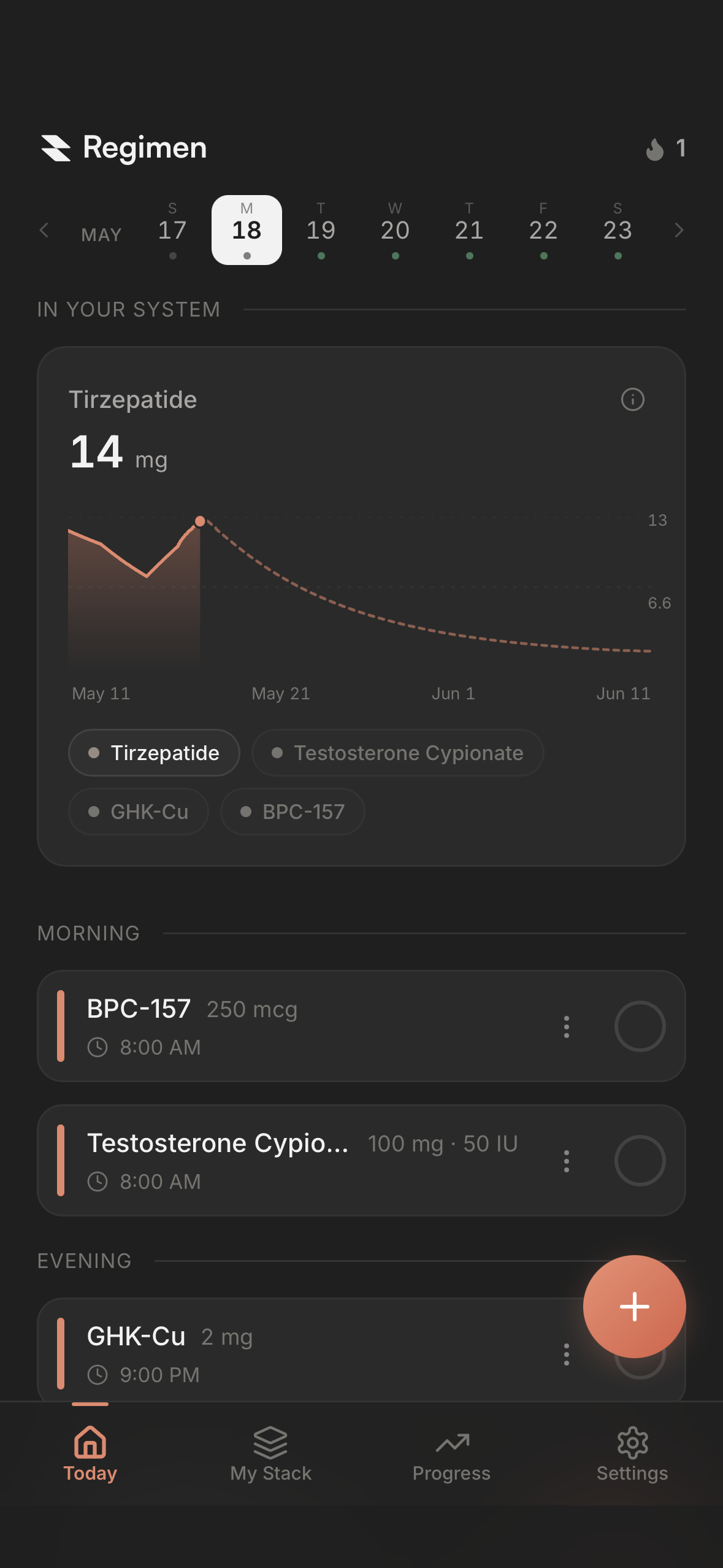
Regimen is a GLP-1 tracker app that keeps your dose history through the switch instead of starting over.
You’ve been on semaglutide for months. Maybe the weight loss has stalled. Maybe the nausea never went away. Maybe your provider suggested trying tirzepatide because of its dual-agonist mechanism. Or maybe you’re going the other direction - switching from Mounjaro to Ozempic because of insurance, cost, or side effects.
Either way, you’re facing the question that thousands of people are asking right now: how do I actually switch? What dose do I start at? Do I need a gap between medications? Will I gain weight during the transition? What should I expect?
This guide covers the practical switching protocols, the dose equivalency that doesn’t exist (but people try anyway), what to expect during the transition period, and how to track the switch so you actually know if the new medication is working better.
Why People Switch (The Real Reasons)
Based on thousands of community discussions, here are the actual reasons people switch between these medications:
Semaglutide → Tirzepatide (Most Common Direction)
- Weight loss plateau: Hit a ceiling on semaglutide even at maximum doses. The dual GIP+GLP-1 mechanism in tirzepatide can break through plateaus for some people
- Persistent nausea: Some people never fully adjust to semaglutide’s GI effects. Tirzepatide’s different receptor profile can produce fewer GI side effects for certain individuals
- Better A1C control: For type 2 diabetics, tirzepatide showed superior glucose-lowering in head-to-head trials (SURPASS-2)
- More weight loss potential: In their respective obesity trials, tirzepatide averaged about 20.9% body-weight reduction (SURMOUNT-1, 72 weeks) and semaglutide about 14.9% (STEP-1, 68 weeks)
Tirzepatide → Semaglutide (Less Common, But Growing)
- Insurance coverage: Ozempic has broader insurance coverage for type 2 diabetes. Mounjaro coverage can be inconsistent
- Cost: Compounded semaglutide is generally cheaper than compounded tirzepatide
- Side effects: Some people experience worse GI symptoms on tirzepatide despite it generally being better tolerated
- Maintenance: After reaching goal weight on tirzepatide, some switch to semaglutide for long-term maintenance at a lower cost
Community Insight
The most common reason for switching isn’t that semaglutide “stopped working” - it’s that weight loss naturally slows as you approach a lower body weight. Your body requires fewer calories, so the same appetite suppression produces less of a deficit. Some people benefit from switching; others would benefit equally from adjusting their current protocol.
Semaglutide vs Tirzepatide: Key Differences
Before switching, it helps to understand what’s actually different between these medications beyond the brand names.
| Semaglutide | Tirzepatide | |
|---|---|---|
| Brand Names | Ozempic (diabetes), Wegovy (weight) | Mounjaro (diabetes), Zepbound (weight) |
| Mechanism | GLP-1 receptor agonist (single) | GIP + GLP-1 dual agonist |
| Half-Life | ~7 days | ~5 days |
| Dose Range | 0.25mg – 2.4mg weekly | 2.5mg – 15mg weekly |
| Titration Steps | 0.25 → 0.5 → 1.0 → 1.7 → 2.4mg | 2.5 → 5 → 7.5 → 10 → 12.5 → 15mg |
| Max Weight Loss (Trials) | ~14.9% (STEP-1, 68 wk) | ~20.9% (SURMOUNT-1, 72 wk) |
| Common GI Effects | Nausea, constipation, diarrhea | Nausea (often less severe), diarrhea, decreased appetite |
| Steady State | ~4-5 weeks | ~4 weeks |
Key takeaway
The half-life difference matters during switching. Semaglutide (~7 days) lingers longer than tirzepatide (~5 days). When switching from semaglutide → tirzepatide, you’ll have overlapping medication for 2-3 weeks. When switching tirzepatide → semaglutide, the gap is shorter.
The Dose Equivalency Problem
Here’s the thing everyone wants to know: “I’m on 1mg of semaglutide - what’s the equivalent tirzepatide dose?”
The honest answer: there isn’t a direct equivalency. These medications work through different mechanisms. Semaglutide activates GLP-1 receptors only. Tirzepatide activates both GIP and GLP-1 receptors. You can’t simply convert doses like you would between testosterone cypionate and enanthate.
That said, the community has developed rough guidelines based on collective experience. These are not clinically validated - they’re patterns observed across thousands of real-world switches:
| Semaglutide Dose | Typical Starting Tirzepatide Dose | Notes |
|---|---|---|
| 0.25 – 0.5mg | 2.5mg | Always start at the bottom |
| 1.0mg | 2.5mg | Still start at 2.5mg; titrate up after 4 weeks if tolerated |
| 1.7mg | 2.5 – 5mg | Some providers start at 5mg if semaglutide was well-tolerated |
| 2.4mg | 2.5 – 5mg | Most conservative approach: start at 2.5mg. Some jump to 5mg |
Important
Most providers and prescribing information recommend starting tirzepatide at 2.5mg regardless of your previous semaglutide dose. This is the safest approach. The GIP component is new to your system and can cause its own side effects. Don’t try to “match” your semaglutide dose - let your body adjust to the new mechanism.
How to Switch: Semaglutide → Tirzepatide
This is the more common switch direction. Here’s the step-by-step protocol most providers follow:
- Take your last semaglutide dose on your regular injection day
Log it in your tracker with a note: “Last semaglutide dose before switch.”
- Wait one week (your normal injection interval)
Semaglutide will still be active in your system during this week. You may not notice any change in appetite or side effects.
- Start tirzepatide at 2.5mg on your next injection day
This effectively replaces your semaglutide day. Same day of the week, new medication.
- Stay at 2.5mg for at least 4 weeks
Your body needs time to clear semaglutide and adjust to tirzepatide. Don’t rush titration.
- Titrate up based on tolerance and results
Follow the standard tirzepatide titration: 2.5mg → 5mg → 7.5mg → 10mg, with 4+ weeks at each level.
What the community reports
Weeks 1-2 after switching often feel “doubled up” because semaglutide hasn’t fully cleared while tirzepatide is building. Appetite suppression may be stronger than expected. GI effects can be more intense during this overlap. This is temporary - it resolves by week 3-4 as semaglutide clears your system.
How to Switch: Tirzepatide → Semaglutide
This direction is less common but increasingly relevant as people optimize for cost or insurance coverage. The process is similar but with some differences:
- Take your last tirzepatide dose
Log it with a note marking it as your final dose before switching.
- Wait one week
Tirzepatide has a shorter half-life (~5 days vs ~7 for semaglutide), so it clears faster. Some providers recommend only waiting 5-7 days.
- Start semaglutide at 0.25mg or 0.5mg
If you previously tolerated semaglutide, some providers start at 0.5mg. If it’s your first time on semaglutide, start at 0.25mg.
- Follow standard semaglutide titration
0.25mg → 0.5mg → 1.0mg → 1.7mg → 2.4mg, with 4+ weeks at each level.
Expect reduced appetite suppression initially
You’re going from a dual-agonist (GIP+GLP-1) to a single-agonist (GLP-1 only) at a low starting dose. The first 4-6 weeks on semaglutide may feel less effective than what you were used to on tirzepatide. This is normal - it improves as you titrate up.
What to Expect: Week-by-Week Transition Timeline
Here’s what most people experience when switching from semaglutide to tirzepatide (the most common direction):
Week 1: The Overlap
Semaglutide is still at ~50% concentration. You take your first tirzepatide dose. Appetite suppression may feel stronger than usual. GI effects (nausea, fullness) can be more pronounced. This is the “doubled up” period.
Week 2-3: Clearing Out
Semaglutide drops to ~25% and then negligible levels. Tirzepatide is building but hasn’t reached steady state. Some people feel a brief “dip” in appetite suppression during this transition. Side effects from the overlap start fading.
Week 4: New Baseline
Tirzepatide reaches steady state at your current dose. This is when you can genuinely compare how you feel on tirzepatide vs semaglutide. Track your appetite, energy, GI effects, and weight at this point.
Week 5-8: First Titration Decision
If 2.5mg isn’t producing results, your provider may increase to 5mg. If you’re tolerating 2.5mg well with good weight loss, there’s no rush to increase. Some people stay at lower doses longer than the standard titration suggests.
Month 3+: True Comparison
By now you’re at a therapeutic dose and can genuinely compare results. Look at your weight trend, side effect profile, appetite suppression quality, and how you feel overall vs your best period on semaglutide.
How to Track Your Switch
Switching medications is one of the times when tracking matters most. Without data, you can’t tell if the new medication is actually better - you’re just guessing based on how you feel right now.
What to Track During a Switch
| Metric | When | Why It Matters |
|---|---|---|
| Weight | Weekly, same day/time | Compare weight trajectory before and after switch |
| Appetite (1-5) | Daily | Shows when the new medication “kicks in” |
| Nausea (1-5) | Daily for first 4 weeks | Identifies overlap period effects vs new medication effects |
| Energy | Daily | Some people report different energy profiles between the two |
| Progress Photos | Weekly | Visual comparison across the transition |
| Dose & Date | Every injection | Creates a clear record for your provider |
The most important comparison point: Look at your data from week 4 on the new medication vs your best 4-week period on the old medication. Compare at the same dose level if possible. Early weeks don’t count - the overlap period makes them unreliable.
Switching With Compounded Versions
If you’re using compounded semaglutide or tirzepatide (from telehealth providers or compounding pharmacies), there are a few additional considerations:
Concentration Differences
Compounded vials come in various concentrations. Don’t assume the syringe units are the same between your semaglutide and tirzepatide vials. Recalculate your dose using the new vial’s concentration. A GLP-1 dose calculator can help with this math.
Reconstitution Timing
If you have leftover reconstituted semaglutide when you switch, it’s fine to keep it refrigerated as backup. Some people save it in case the new medication doesn’t work out. Just note the reconstitution date - reconstituted peptides typically last 4-6 weeks refrigerated.
Cost Comparison
Compounded tirzepatide is generally more expensive than compounded semaglutide ($300-500/month vs $150-350/month, though prices vary widely by provider). Factor this into your decision, especially if the switch is about cost optimization.
What About Retatrutide?
We get this question a lot: “Should I switch to retatrutide (reta) instead?”
Retatrutide is a triple agonist (GIP + GLP-1 + glucagon receptor) currently in Phase 3 clinical trials. Early results are impressive - up to 24.2% body weight reduction in Phase 2 trials, potentially exceeding both semaglutide and tirzepatide.
Important context
Retatrutide is not yet FDA-approved. It’s available through research chemical suppliers, but there are no established switching protocols, no long-term safety data, and no clinical guidance on transitioning from approved GLP-1 medications. We’re not providing switching protocols for retatrutide for this reason.
If you’re curious about retatrutide, our retatrutide tracker page covers what’s currently known about the compound, including clinical trial data and the triple-agonist mechanism. But for now, the evidence-based switching discussion is between semaglutide and tirzepatide - both FDA-approved with years of real-world data.
Frequently Asked Questions
Can I switch from Ozempic to Mounjaro mid-titration?
Yes, but most providers prefer you reach a stable dose on one medication before switching. Switching mid-titration makes it harder to interpret side effects. Stabilize at your current dose for at least 4 weeks first.
Do I need to taper off semaglutide before starting tirzepatide?
No formal taper is needed. Semaglutide has a long half-life (~7 days), so it naturally clears over several weeks. Most providers recommend waiting one week after your last semaglutide injection, then starting tirzepatide at 2.5mg.
Will I gain weight between medications when switching?
The overlap period usually prevents this. Semaglutide’s long half-life means you have active medication for 4-5 weeks after your last dose. If you start tirzepatide within 1-2 weeks, there’s no meaningful gap in appetite suppression.
Is tirzepatide stronger than semaglutide?
In clinical trials, tirzepatide produced more weight loss on average in its obesity trial (about 20.9%, SURMOUNT-1) than semaglutide did in its own (about 14.9%, STEP-1). But individual responses vary significantly. The dual-agonist mechanism (GIP + GLP-1) works differently, not necessarily ‘stronger.‘
Can I switch back to semaglutide if tirzepatide doesn’t work?
Yes. Wait one week after your last tirzepatide injection, then restart semaglutide. Your provider may start you at a higher dose than 0.25mg if you previously tolerated it well.
What dose of tirzepatide equals 1mg semaglutide?
There isn’t a direct equivalency because they work through different mechanisms. Most providers start tirzepatide at 2.5mg regardless of your previous semaglutide dose, then titrate up based on response.
How do I track my switch between GLP-1 medications?
Log your last dose of the outgoing medication, note the gap period, then start logging the new medication. Track weight, side effects, and how you feel daily during the transition. Regimen handles multi-compound tracking so you can see both medications on your timeline.
Can I switch back to semaglutide if tirzepatide doesn’t work for me?
Yes. Switching back is straightforward. Wait one week after your last tirzepatide injection, then restart semaglutide. Your provider may start you at a higher dose than the initial 0.25mg if you were previously tolerating semaglutide well, but this is a clinical decision.
My insurance covers Ozempic but not Mounjaro. What are my options?
Options include: 1) Prior authorization with documented medical necessity for switching, 2) Manufacturer savings cards (Mounjaro has offered co-pay programs), 3) Compounded tirzepatide from telehealth providers (significantly cheaper, but requires self-injection from vials), 4) Staying on semaglutide and optimizing your current protocol.
Related Reading
- Why You Need a GLP-1 Tracker (Even If You’re Just Starting)
- Microdosing Semaglutide and Tirzepatide: Protocols and Dosing Charts
- How to Reconstitute Peptides: BAC Water Calculator + Dosing Chart
Related Trackers
- Ozempic Tracker
- Wegovy Tracker
- Mounjaro Tracker
- Zepbound Tracker
- Semaglutide Tracker
- Tirzepatide Tracker
Disclaimer: This article is for educational purposes only and is not medical advice. Never switch medications without consulting your prescriber. Dose adjustments should always be made under medical supervision. Individual responses to GLP-1 medications vary significantly. Clinical trial results represent averages and may not reflect your personal experience.
Ready to track your GLP-1?
- Smart reminders so you never miss a dose
- Track weight, photos, and progress over time
- Medication level curves for every compound