This article describes what published GLP-1 drug labels and community reports show about headaches on retatrutide. It is educational, not medical advice.
Does retatrutide cause headaches?
Yes, headaches are a common side effect, especially in the first few weeks and right after a dose increase. They are usually mild, and usually tied to what comes with rapid appetite loss (dehydration, lower blood sugar, an accidental drop in caffeine or food) more than the drug acting on your head directly. For most people they fade as the body adjusts. Here is why they happen and what actually helps.
Quick answer
Headaches on retatrutide are reported less often than nausea or fatigue, but they happen and they have predictable causes. The most common ones: dehydration, blood sugar drops, accidental caffeine reduction, sleep disruption, and the body adjusting to rapid weight loss. Most respond to water, salt, regular eating, and protein. Persistent severe headaches, vision changes, or headaches alongside severe abdominal pain are different patterns that warrant prompt medical attention.
You started retatrutide, the side effects you read about were nausea and fatigue, and now your head is killing you. Headache is not always front and center in the discussion, but it shows up on the labels for Wegovy and Mounjaro and it shows up in community discussions for retatrutide. The good news is that almost all of the causes are fixable once you know which one you are dealing with.
How long do reta headaches last?
For most people, reta headaches cluster in the first 1 to 2 weeks after starting and again in the first 1 to 2 weeks after a dose increase. They tend to taper as the body adapts. By week 3 or 4 at a stable dose, most people are either past them entirely or down to occasional ones with an obvious trigger (a day they did not drink enough water, a skipped meal, a missed coffee). Stable-dose headaches that keep coming usually have a fixable cause, not a permanent one. Severe headaches that do not respond to anything, vision changes, or headaches paired with severe abdominal pain are a different pattern and warrant a call.
Headaches are also common when switching from tirzepatide to reta, especially during the gap between your last tirz dose and your first reta dose. The same hydration and electrolyte fixes usually handle it.
Why retatrutide can cause headaches in the first place
Retatrutide does not directly cause headaches in the way it directly slows gastric emptying. The headaches are downstream effects of what the drug does to your body: it suppresses appetite, it changes how fast your stomach empties, and it shifts how your body handles blood sugar. Those changes ripple out into hydration, electrolyte balance, sleep, and caloric intake. The headache is usually one of those ripples, not the direct effect.
That is actually useful. It means you can almost always pin down the specific cause and address it directly.
Dehydration: the most common one
This is the most under-appreciated cause. Retatrutide kills appetite, which means people drink less without realizing it. They are not as hungry, they are not eating as much, food usually comes with fluid, and the cumulative water intake drops fast.
You do not feel thirsty when you are dehydrated on a GLP-1 drug. The thirst signal is muted along with the hunger signal. By the time you actually want water, you are already at a deficit.
What tends to help:
- Set a baseline water target and hit it whether you feel thirsty or not (most people land in the 80 to 120 oz range per day; check with your prescriber for your specific number)
- Carry water visibly so you remember
- Add electrolytes (LMNT, plain salt and water, sugar-free Gatorade type drinks) especially in the first weeks after a dose change
- Watch urine color; pale yellow is the target
Blood sugar drops
Retatrutide’s GLP-1 mechanism includes glucose regulation. People who were running borderline-high blood sugar before retatrutide can experience surprisingly fast drops, especially in the first weeks. Those drops cause headaches, fatigue, irritability, and sometimes lightheadedness.
What tends to help:
- Eat regularly even when you are not hungry (especially protein-containing meals)
- Do not go more than 4 to 5 hours without food during the day in the first weeks
- Skip pure-sugar carbs that spike then crash; complex carbs hold longer
- If you are diabetic and on other glucose-lowering medications, talk to your prescriber about possible adjustments
Accidental caffeine reduction (often missed)
This one catches people off guard. Retatrutide reduces appetite for everything, including the morning coffee, the afternoon espresso, the soda. People drink less caffeine without consciously deciding to. Then they get the classic caffeine withdrawal headache 24 to 48 hours later and have no idea where it came from.
If your coffee intake dropped from three cups a day to one, the headaches are probably partly caffeine withdrawal.
What tends to help:
- Either keep your caffeine intake steady through the first weeks
- Or taper down deliberately, by half a cup a day, instead of crashing it
- Avoid the temptation to compensate with a massive caffeine load on a day you have a headache; it will usually make the next day worse
Sleep disruption
Some people sleep great on retatrutide. Others have sleep that gets weird in the first weeks: vivid dreams, more wake-ups, harder time falling asleep. Disrupted sleep causes headaches the next day.
The sleep effect usually settles by week 3 to 4 at a stable dose. In the meantime:
- Keep a regular sleep schedule
- Watch alcohol intake (alcohol disrupts sleep architecture, and it interacts poorly with appetite-suppression drugs)
- Watch caffeine timing; cutoff at noon if mornings are caffeinated
- Talk to your prescriber if sleep stays disrupted past week 6
The rapid-weight-loss adjustment
Losing weight fast does things to your body that can cause headaches all on their own. Electrolytes shift. Blood pressure can move. Hormone levels rebalance. Some of this is the body adapting; some of it can be intense.
What tends to help:
- Make sure salt is not accidentally too low (low-sodium diet plus appetite suppression plus diuretic effect equals headaches)
- Track blood pressure if you have a cuff at home; if it is dropping fast, that is worth a prescriber conversation
- Do not skip meals, especially when also exercising
What tends to help across the board
Most headaches on retatrutide respond to a small handful of interventions:
| What to try | Why it helps |
|---|---|
| Water with electrolytes, morning and afternoon | Addresses dehydration and electrolyte imbalance simultaneously |
| Regular meals, protein-anchored | Stabilizes blood sugar and prevents the under-eating spiral |
| Consistent caffeine intake (do not crash it) | Prevents caffeine withdrawal headaches |
| Adequate sleep, regular schedule | Reduces tension and sleep-related headaches |
| Light movement (walking, gentle exercise) | Helps with circulation and stress relief |
| Over-the-counter pain relief (Tylenol, ibuprofen) | If headaches are persistent and your prescriber okays it |
Most people find that the first four (water, electrolytes, food, caffeine consistency) address 80% of their headaches without needing medication.
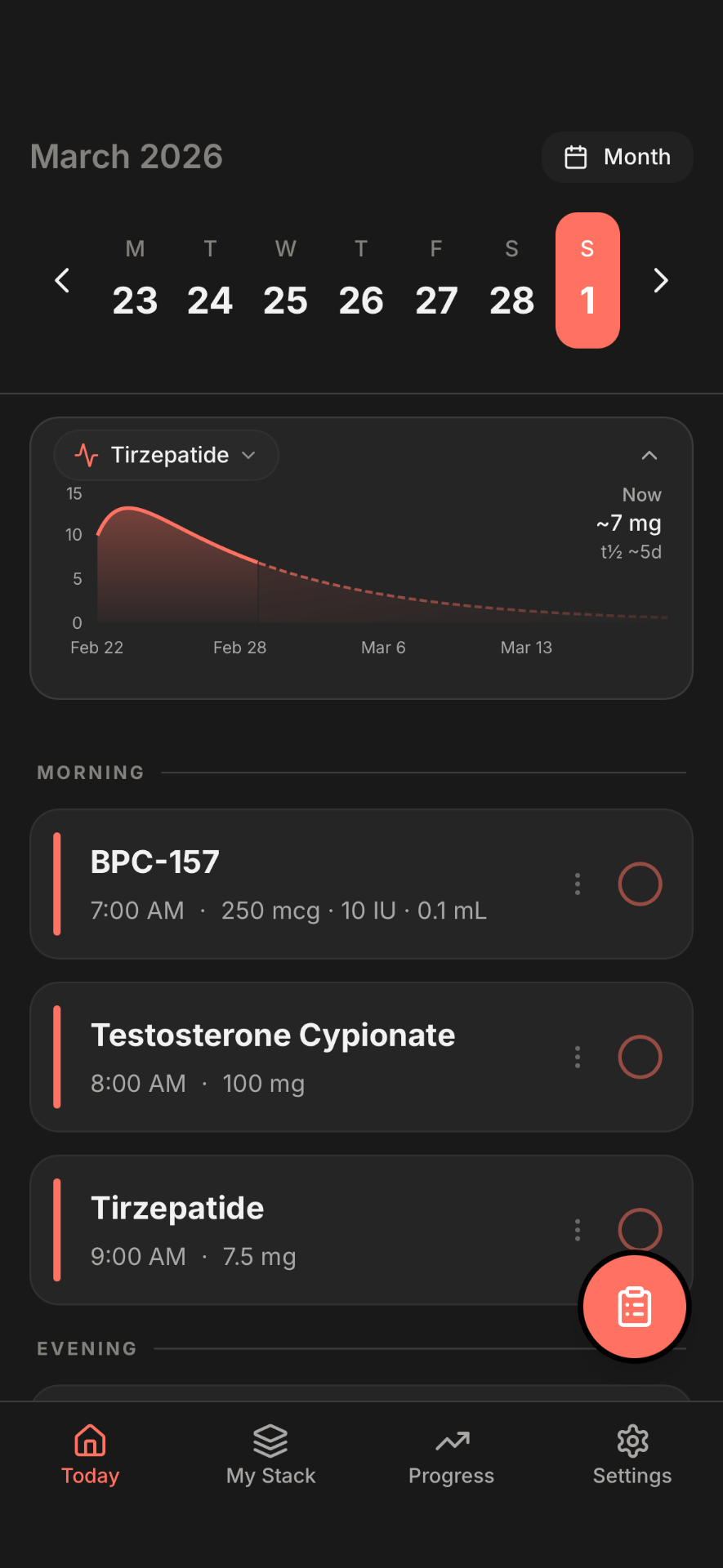
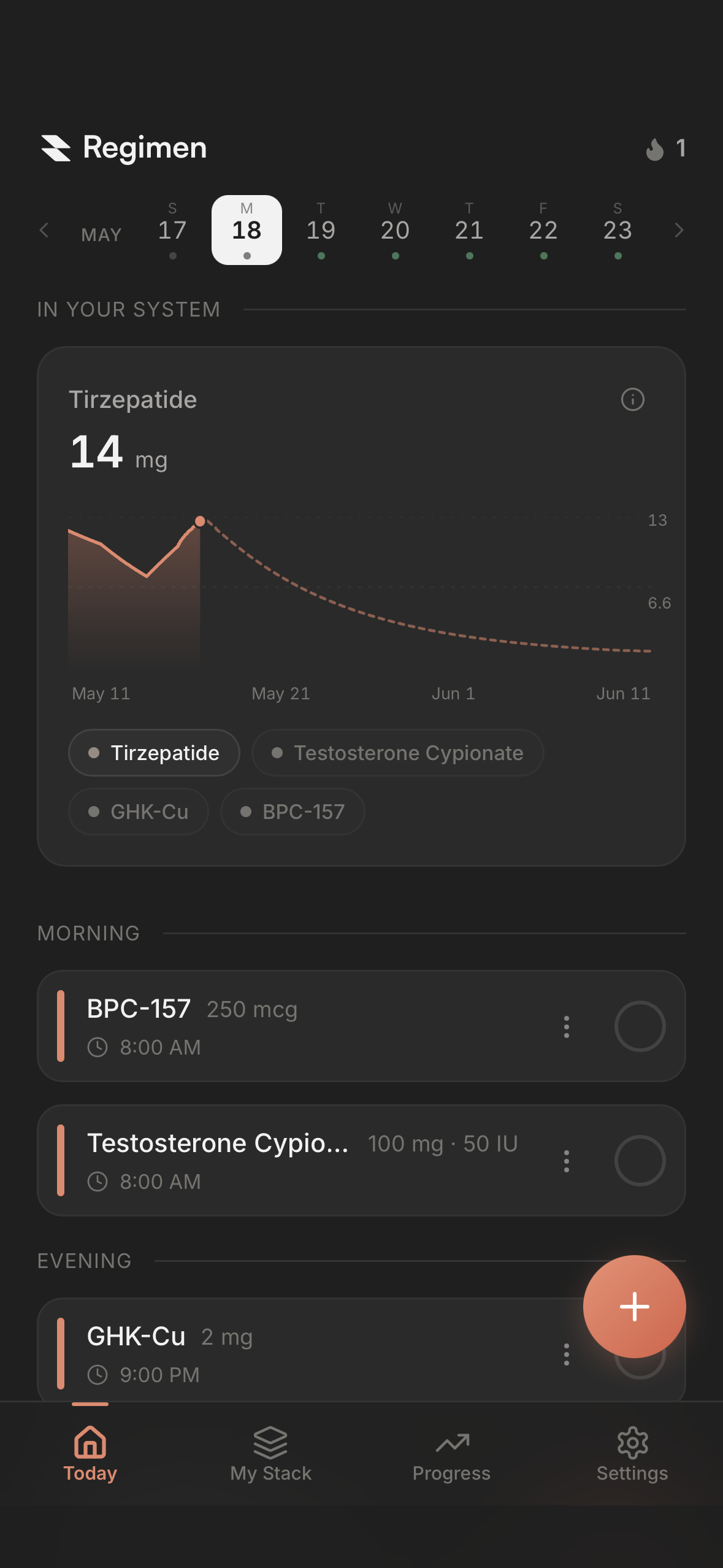
If the headaches keep coming, log them in Regimen against your shot day, dose, and water intake. It’s the quickest way to see whether they line up with your injection or the back half of your week.
Track your symptoms in RegimenWhen headaches warrant a call to your prescriber
Some headache patterns are not the “fix it with water and food” kind. These warrant a prescriber call:
- Severe headache that does not respond to anything you try
- Headache with vision changes (blurred vision, double vision, visual disturbances)
- Headache with severe abdominal pain (rule out pancreatitis)
- Headache with new neurological symptoms (weakness, numbness, slurred speech)
- Sudden onset of the “worst headache of your life”
- Headache that comes with very high or very low blood pressure
- Headache that persists past week 4 to 6 with no clear cause
When in doubt, call. Prescribers would rather hear about a pattern early.
What to track
If you are trying to figure out your own headache pattern on retatrutide, the most useful things to track:
- Headache frequency and intensity (1 to 10)
- Time of day they hit
- What you ate that day (or did not)
- Water intake (rough estimate)
- Caffeine intake compared to baseline
- Sleep quality the night before
- Recent dose changes
Two or three weeks of consistent tracking usually reveals the pattern.
The Regimen retatrutide tracker handles all of this. You can add headache as a daily marker, log meals and water intake, and overlay dose changes so you can see exactly when headaches started and what was different. You can also log your blood work over time so if your prescriber asks how labs have moved, you have a clear visual instead of trying to remember. Free for one compound.
Frequently Asked Questions
Can you take ibuprofen or Tylenol for reta headaches?
Most people use plain acetaminophen (Tylenol) or ibuprofen for the occasional reta headache. A lot of people lean toward acetaminophen because it is easier on the stomach, and reta can already leave you queasy. If you are taking something daily, you are on other medications, or you are reaching for a painkiller just to get through the day, check with your pharmacist or provider first.
Does retatrutide cause headaches?
Yes. Headaches are a common early side effect, especially in the first 1 to 2 weeks and right after a dose increase. They are usually mild and usually tied to dehydration, blood sugar dips, an accidental cut in caffeine or food intake, or disrupted sleep rather than the drug acting directly on the head. Most fade as the body adjusts.
How common are headaches on retatrutide?
They are not in the top 5 most-reported side effects (those are nausea, fatigue, vomiting, constipation, diarrhea), but they are documented in the broader GLP-1 class on drug labels for Wegovy and Mounjaro, and they come up regularly in retatrutide community discussions. Most people who get them can pinpoint a specific cause once they look.
Do retatrutide headaches go away?
For most people, yes. They tend to cluster in the first 1 to 2 weeks after starting or after a dose change, then taper as the body adapts. Stable-dose headaches usually have a fixable cause (dehydration, blood sugar, caffeine, sleep).
Should I take pain medication for retatrutide headaches?
Tylenol or ibuprofen can help if your prescriber okays them. They are not a long-term answer. The bigger lever is addressing whichever underlying cause is driving the headache.
Is dehydration on retatrutide really a thing?
Yes, and it is the single most common cause. Appetite suppression mutes the thirst signal too. Many people are dehydrated on retatrutide without feeling thirsty.
Could low blood sugar be causing my headaches?
Possibly, especially if they hit mid-afternoon or before meals. Regular eating with protein-anchored meals usually fixes this.
When should I call my prescriber about retatrutide headaches?
Severe pain that does not respond to anything, vision changes, neurological symptoms (weakness, numbness, slurred speech), sudden onset “worst headache of your life,” or headaches that persist past week 4 to 6 with no clear cause.
What about retatrutide and migraines?
If you have a history of migraines, retatrutide can sometimes trigger them, especially during dose changes. The dehydration, blood sugar shifts, and sleep disruption are all migraine triggers for susceptible people. Talk to your prescriber if you are prone to migraines and you are starting retatrutide.
Does Regimen track retatrutide side effects?
Yes. The retatrutide tracker handles headache logging plus 50+ other markers. Dose changes overlay on symptoms so you can see exactly which side effects showed up when. Blood work logging is included so your lab trends are visible alongside your dose history. Free for one compound.
Related reading
- Retatrutide Side Effects: What to Expect Week by Week
- Retatrutide GI Side Effects: Nausea, Constipation, What Helps
- Retatrutide Dosing Guide: How to Titrate and When to Move Up
- Retatrutide Tracker
This article describes patterns from published GLP-1 drug labels and community reports. It is not medical advice. Talk to a qualified healthcare provider before starting, changing, or stopping any medication.
Ready to track your GLP-1?
- Smart reminders so you never miss a dose
- Track weight, photos, and progress over time
- Medication level curves for every compound