Titrating retatrutide (reta) means stepping your weekly dose up in stages until you reach one that works. The schedule is the easy part. The hard part is knowing when to take the next step and when to stay put. Here’s how to tell.
The Quick Answer
Here’s when to go up:
- The side effects from your current dose have settled.
- You’ve given the dose a few weeks. The trial waited four.
- Your weight has stalled for a couple of weeks while you’re eating the same.
- Then step up a small amount, often 0.5 to 1 mg.
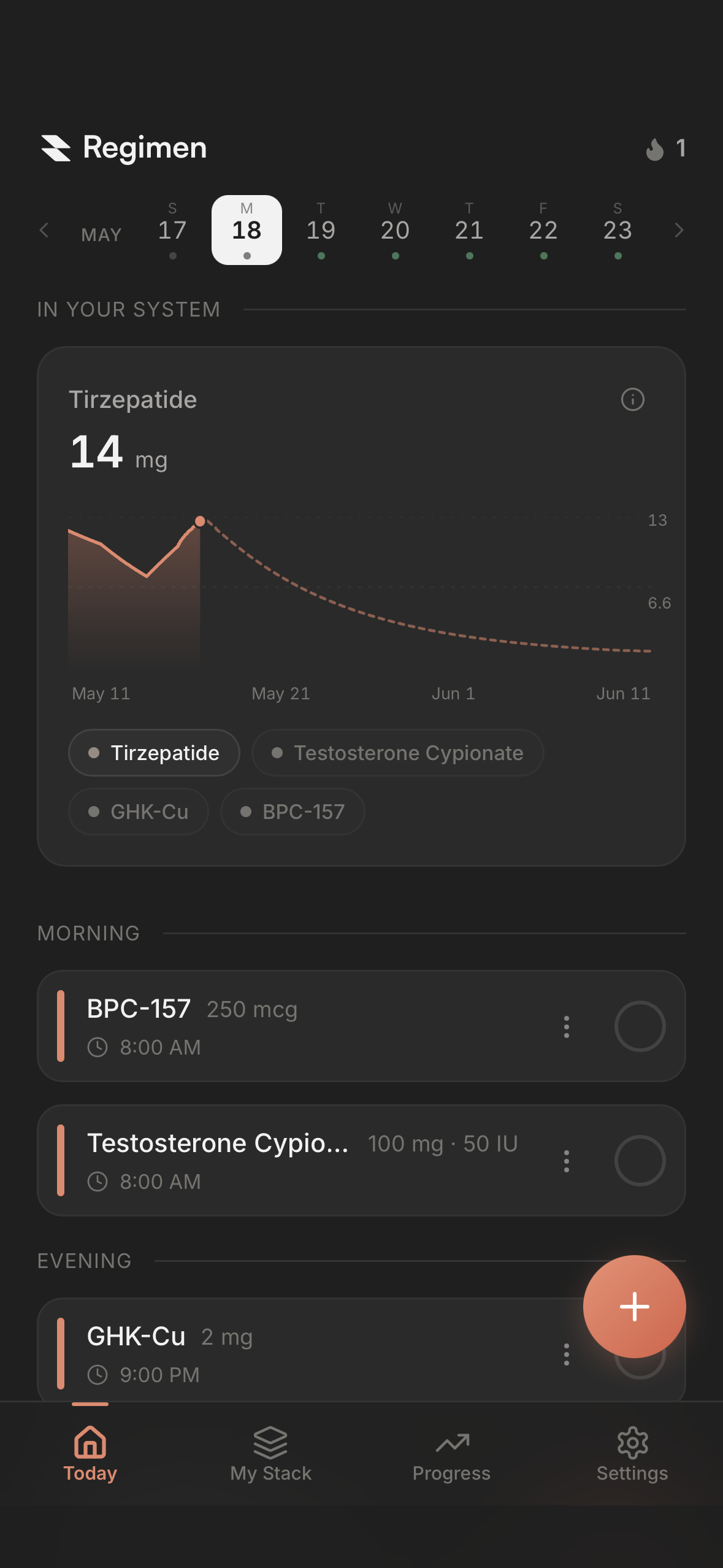
Regimen is a GLP-1 tracker app that logs every retatrutide dose next to your weight and side effects, so you can see when you’re ready for the next step.
When to Go Up
Signs you’re ready for the next dose:
- Side effects have settled. You feel fine day to day on this dose.
- Your weight has stalled. The weekly trend has been flat for a couple of weeks.
- Your eating is steady. You’re not eating more than you were a month ago.
- Life is calm. No travel, surgery or big stress coming up in the next few weeks.
Signs to stay where you are:
- Side effects are still rough after a few weeks on this dose.
- You’re still losing. If the dose is working, there’s no reason to go up yet.
- You’re barely eating. Going up would cut your eating further.
- Your heart rate is up. It rose with the dose in the Phase 2 trial. Check it before you step up.
Each new dose is a new number of units to draw. The retatrutide reconstitution calculator works it out for your vial.
How Big a Step to Take
The trial stepped up every four weeks: 2, 4, 6, 9, then 12 mg. Most people take smaller steps. In Regimen’s app data:
- People who started at 2 mg a week usually stayed there about four weeks. When they moved up, most went to 2.5 or 3 mg next, not straight to 4.
- People who started below 2 mg moved up sooner, six in ten within four weeks, and 0.5 mg was the most common step.
The retatrutide dosage guide has the full trial chart and where people end up.
Is It a Plateau, or Is It You?
The scale stops moving, and the first instinct is to go up. Sometimes that’s right. Two different things look the same on the scale:
- The dose has done what it can. Your eating and activity are the same as last month, and you’ve stopped losing. A step up is the likely next move.
- Your eating crept back up. A slightly bigger dinner, a few more snacks. The drug is still working; the gap between what you eat and what you burn got smaller.
To tell them apart, write down what you eat for two weeks. If your intake went up, fix that first. If it’s steady and you’re still not losing, that’s the pattern that points to the next dose.
When to Hold or Step Back
Holding isn’t failing. It’s how people stay on the drug long enough to benefit. Hold, or go back to your last dose, if:
- Nausea, vomiting or diarrhea hasn’t settled after a few weeks on a dose
- You can’t keep food or fluids down
- You feel your heart racing, or your resting heart rate keeps climbing
- You’re eating so little that your energy, mood or sleep are crashing
Tell your provider about any of these. Stop and get urgent help for severe stomach pain that won’t go away or signs of dehydration.
How to Titrate Down or Come Off Retatrutide
No trial has tested a taper, so there’s no official way. Step down the way you went up, one step at a time.
When you stop, retatrutide clears over about a month (its half-life is about six days), and appetite comes back as it does. Having a plan for eating and activity before you stop makes that easier.
What to Track
- Weight, once a week, same time and conditions
- Side effects, especially in the days after a step up
- Resting heart rate
- What you eat, especially during a plateau
- Energy, sleep and mood
For which labs to get and when, the peptide blood work guide covers the panels people use.
Know what each dose is doing. Log every retatrutide dose next to your weight and side effects in Regimen, so the decision to go up is based on your own trend, not a guess.
Track your retatrutide dosesHow to Set Up a Titration Schedule in Regimen
- Add retatrutide in Regimen and turn on Dose titration.
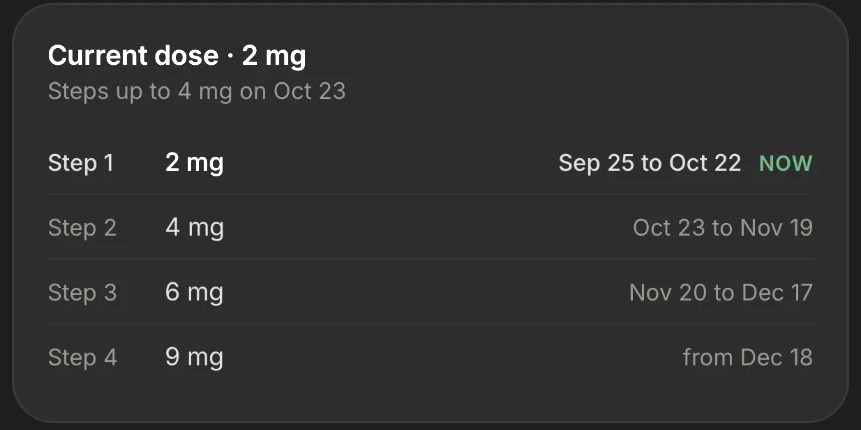
- Enter each step: the dose and how many weeks you’ll stay on it. For example, 2 mg for 4 weeks, 4 mg for 4 weeks, 6 mg for 4 weeks, then 9 mg to maintain.
- Already started? Tap “I’m on this step” next to the step you’re on.
Regimen then shows your current dose and when the next step starts, and your doses update on their own when each step begins.
Frequently Asked Questions
When should I move up to the next dose?
When the side effects from your current dose have settled, you’ve given it a few weeks (the trial waited four), and your weight has stalled for a couple of weeks while you’re eating the same. If side effects haven’t settled, hold.
How long does it take side effects to settle after a dose change?
It varies. Side effects tend to be strongest in the first days after a step up and ease over the following weeks. If they’re still rough after a few weeks on a dose, the step was too big or too fast: hold, or go back down.
Do I have to follow the Phase 2 trial schedule?
No. The trials stepped up every four weeks, and most people take smaller steps. In Regimen’s app data, most 2 mg weekly starters who moved up went to 2.5 or 3 mg next rather than 4.
Is a plateau a sign I need to go up?
Sometimes. Track what you eat for two weeks first. If your eating crept up, fix that before changing the dose. If your eating is steady and the scale hasn’t moved for a couple of weeks, that’s the pattern that points to the next step.
Should I push to 12 mg?
Not necessarily. 12 mg lost the most weight in the trial, and side effects rose with the dose. Plenty of people settle lower: in Regimen’s app data, the typical weekly dose at 24 weeks was about 4 mg.
When should I get labs?
Get a baseline before starting, then repeat the same panel a couple of months in and before big dose changes: HbA1c, fasting glucose, a lipid panel, and hematocrit if you’re also on testosterone. Using the same panel each time makes the trend easy to read.
Is daily weighing really a problem?
Not a problem, just noisy. Water, salt and sleep move daily weight by a pound or two. Look at the weekly trend, weighed at the same time and in the same conditions.
How do I titrate down or come off retatrutide?
No trial has tested a taper, so there’s no official way. Step down the way you went up, one step at a time. When you stop, retatrutide clears over about a month (its half-life is about six days), and appetite comes back as it does.
How long should I stay on retatrutide?
Nobody knows yet. The main Phase 3 trial ran up to two years, and there’s no long-term safety record. It’s a decision for you and your prescriber, based on your goal and your plan for keeping the weight off.
Does Regimen handle retatrutide tracking?
Yes. Regimen logs every retatrutide dose and step up, including split weeks, next to your weight, side effects and labs, so you can see how each dose is going before you decide to move.
Sources
- Jastreboff AM et al. Triple-hormone-receptor agonist retatrutide for obesity: a phase 2 trial. N Engl J Med 2023. pubmed.ncbi.nlm.nih.gov/37366315
- Eli Lilly, TRIUMPH-1 topline results, May 21, 2026: retatrutide 4, 9 and 12 mg over 80 weeks. prnewswire.com
- Urva S et al. Retatrutide pharmacokinetics (half-life about 6 days). Lancet 2022. pubmed.ncbi.nlm.nih.gov/36354040
- Regimen app data, September 2026: step-ups by starting dose and weekly doses over time, reported as percentages and typical values.