Quick answer
Semaglutide has the gentlest side effect profile but slower weight loss. Tirzepatide produces more weight loss with moderate side effects. Retatrutide produces the most weight loss but has the most aggressive titration phase and tends to cause the most nausea and fatigue early on. All three settle at maintenance doses for most users.
This article compares published trial data and community-reported patterns. It is not medical advice. Talk to a licensed prescriber before starting, switching, or stopping any of these medications.
The Three-Way Comparison Most Articles Don’t Make
You are not picking between these three drugs casually. You are picking because one of them is not enough, or because the one you tried is too rough on you, or because the one you can actually get is the one that has to work. The question is rarely “which is the best” in the abstract. It is “which set of side effects am I most willing to live with for the weight loss I am trying to get.”
The honest answer: side effect profiles are not identical, and the differences matter more than most blogs admit.
Side-by-Side Side Effect Table at Maintenance Dose
| Side effect | Semaglutide | Tirzepatide | Retatrutide |
|---|---|---|---|
| Nausea (titration) | Moderate | Moderate to high | High |
| Nausea (maintenance) | Low | Low to moderate | Moderate |
| Constipation | Moderate | High | High |
| Fatigue | Low to moderate | Moderate | High |
| Heart rate increase | +3 to 5 bpm | +5 to 8 bpm | +5 to 10 bpm |
| Injection site reactions | Low | Low to moderate | Low to moderate |
| Sulfur burps | Uncommon | Common | Common |
| Headache | Low | Low to moderate | Moderate |
| Weight loss (12 mo) | ~15% | ~21% | ~24% |
| Settles by week | 6 to 8 | 8 to 10 | 10 to 12 |
Nausea: Where the Three Drugs Differ Most
Semaglutide is the gentlest on nausea, especially during titration. Tirzepatide adds GIP receptor activity, which produces stronger appetite suppression but also more pronounced GI effects at equivalent weight-loss exposure. Retatrutide adds the glucagon receptor on top of that, and the early titration phase consistently produces the sharpest nausea. The pattern users describe is: “sema felt like nothing, tirz felt like something, reta felt like a lot for the first month.”
Fatigue: Retatrutide’s Distinctive Pattern
Fatigue on retatrutide is its own thing. The glucagon receptor activation increases resting metabolic rate, which on top of a calorie deficit and slowed digestion can leave you flat for a few weeks at each dose jump. Tirzepatide and semaglutide produce some fatigue, but it is almost always traceable to under-eating. With retatrutide, even when you are eating well, the first two weeks at a new tier can feel like a head cold without the head cold.
Heart Rate: Clinical Trial Data Compared
Average resting heart rate increase from the published trials: semaglutide +3 to 5 bpm, tirzepatide +2 to 5 bpm (with some users at +8 to 10), retatrutide +5 to 10 bpm at maintenance doses. None of these are clinically alarming for most healthy adults, but if your pre-treatment resting heart rate is already elevated or you have a cardiac history, the rank order matters.
Injection Site Reactions: GLP-1 vs GLP-1/GIP vs Triple Agonist
Injection site reactions (redness, itching, mild swelling) are mostly a function of injection volume and excipients, not the active molecule. All three are tolerated well by most users. Retatrutide and tirzepatide show slightly higher reaction rates in trials, partly because higher doses use larger volumes. Rotating sites and letting peptide come to room temperature before injecting reduces reactions across all three.
GI Side Effects: The Real-World Pattern
Across all three drugs, the GI hit (nausea, constipation, sulfur burps, occasional diarrhea or reflux) is heaviest in the first week after a dose increase, then improves. The order of severity: retatrutide, then tirzepatide, then semaglutide. The order of how long it takes to fully settle: retatrutide (10 to 12 weeks), tirzepatide (8 to 10), semaglutide (6 to 8).
Titration Phase vs Maintenance: When Side Effects Peak for Each
For all three, side effects peak in titration, not maintenance. Semaglutide users often describe the entire experience as “mild bumps.” Tirzepatide users tend to point to the 10 mg and 15 mg jumps as the hardest. Retatrutide users consistently flag the 6 mg to 8 mg jump as the single hardest moment in any of these protocols. Once you reach a stable dose and stay there for a month, all three become surprisingly quiet day to day.
Which to Pick If You Can’t Tolerate Nausea
Start with semaglutide. Titrate slowly. Inject in the evening. If semaglutide gives you minimal nausea but stalls your weight loss, you can switch to tirzepatide with a reasonable expectation that nausea will be moderate, not extreme. Retatrutide is the wrong starting point for someone who cannot tolerate nausea; reserve it for users who have already adapted to a GLP-1 and want more weight loss.
Tracking Side Effects Across a Switch in Regimen
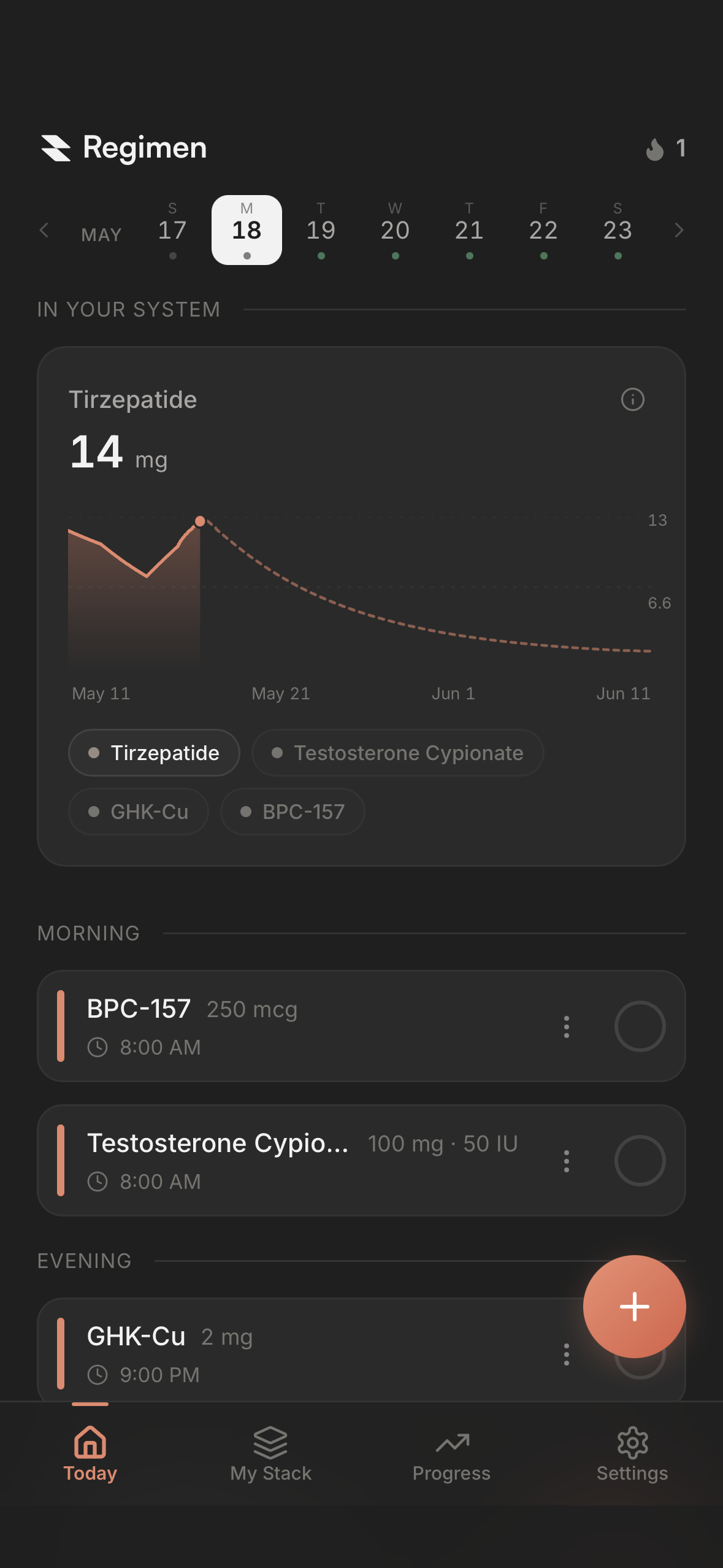
If you switch from one of these to another, the most useful thing you can do is log the same daily markers across both protocols. Nausea (1 to 10), bowel function, energy, resting heart rate, weight, and injection site reactions are the six that matter. Regimen’s built-in pattern detection connects those markers to dose and timing, so when you switch, you can see whether the new compound is actually easier or just different. For more on the switch itself, see the tirzepatide to retatrutide switching guide, the retatrutide side effects guide, and the full three-way comparison. Doing the math on a new dose? The GLP-1 dose calculator covers all three compounds.
Frequently Asked Questions
Which GLP-1 has the fewest side effects?
Semaglutide. At equivalent therapeutic doses it produces the mildest nausea, lowest fatigue, and the smallest heart rate increase. The tradeoff is less weight loss than tirzepatide or retatrutide. For someone who values tolerability over maximum loss, semaglutide is the most defensible first choice.
Is retatrutide harder to tolerate than tirzepatide?
For most users, yes, during titration. Retatrutide’s triple receptor mechanism (GLP-1, GIP, glucagon) produces more aggressive early nausea, fatigue, and body heat than tirzepatide. By the maintenance dose, the gap narrows significantly. Many users who tolerated tirzepatide at 15 mg find retatrutide manageable once they get past the 6 mg to 8 mg transition.
Do side effects get better when switching from tirzepatide to retatrutide?
No, they usually get worse for a few weeks before they normalize. The glucagon receptor is new to your body even if you have been on tirzepatide for a year. Plan for 4 to 6 weeks of titration-phase symptoms when you switch, then a stable maintenance phase.
Which GLP-1 causes the most weight loss?
Retatrutide, in trial data. The Phase 3 TRIUMPH-1 trial showed about 28.3% average body weight loss at the 12mg dose over 80 weeks (up to ~30.3% at 104 weeks for high-BMI continuers). Tirzepatide produces around 21 to 22% in SURMOUNT-1. Semaglutide produces around 15% in STEP-1. Real-world results vary widely with adherence, diet, and dose.
Do all GLP-1s cause sulfur burps?
Tirzepatide and retatrutide produce sulfur burps more often than semaglutide, because the slowing of gastric emptying is more pronounced. They are not dangerous, just unpleasant, and they tend to track injection timing. Reducing high-sulfur foods (eggs, broccoli, red meat) around your injection day usually helps.
How long until side effects settle on each drug?
Semaglutide: most users feel stable by weeks 6 to 8. Tirzepatide: weeks 8 to 10. Retatrutide: weeks 10 to 12. These are for users titrating gradually. If you skip a tier or rush titration, expect the timeline to stretch by a few weeks.
Which GLP-1 is safest for someone with high resting heart rate?
Semaglutide produces the smallest average heart rate increase. If your baseline is already elevated, talk to your prescriber before starting any GLP-1. None of the three are contraindicated for healthy adults with a slightly fast pulse, but the rank order (semaglutide, tirzepatide, retatrutide) matters when the margin is thin.
Ready to track your GLP-1?
- Smart reminders so you never miss a dose
- Track weight, photos, and progress over time
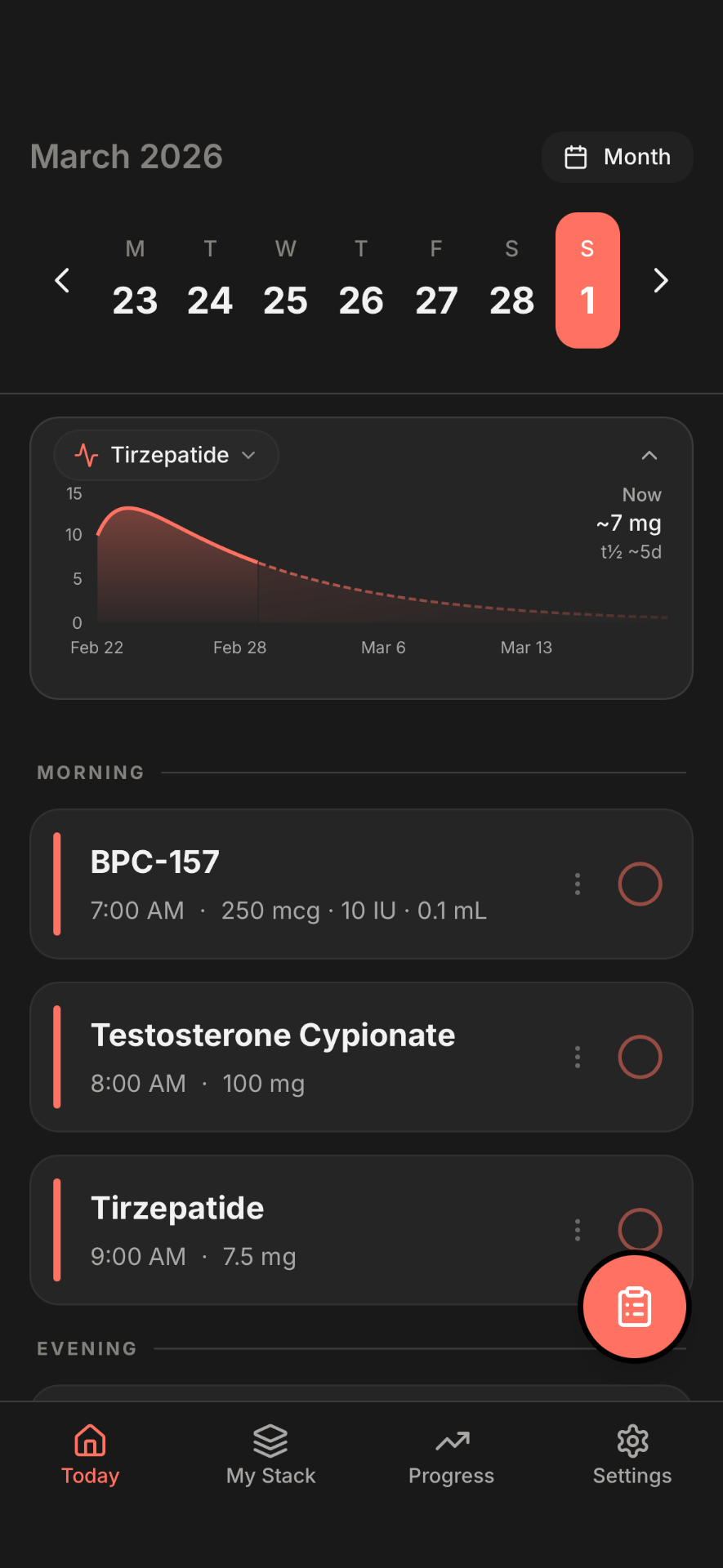
- Medication level curves for every compound