This article is educational and not medical advice. Every compound here is either investigational or approved only outside your likely region. It does not include dosing guidance. Your provider sets any treatment plan.
For a while, retatrutide felt like the top of the mountain. It hits three receptors at once. The weight-loss numbers in trials were the biggest anyone had seen. If you had been following this space, reta looked like the ceiling. The final boss. Where else was there to even go?
Turns out, a lot of places. There is a whole next wave already moving through trials, and it is not just “reta but slightly stronger.” These are different combinations of receptors, different mechanisms, some with a genuinely new trick like a once-a-month shot or a version you swallow instead of inject.
Here is the honest part up front: almost none of this is something you can get right now. Most of it is still investigational, meaning it is being studied and has not been approved. One of them is approved, but only in China. So this is not a shopping list. It is a map of what is coming, so you are not blindsided when these names start showing up everywhere.
Among Regimen users, retatrutide is the most-tracked GLP-1 compound, ahead of tirzepatide and semaglutide.
Quick answer: what is actually coming after reta?
Four names worth knowing, plus one honorable mention. Survodutide and mazdutide are both GLP-1 + glucagon drugs. MariTide (Amgen) does something backwards on purpose, and its headline feature is a once-a-month shot. Zenagamtide (Novo Nordisk’s amycretin) pairs GLP-1 with amylin, and comes in both an injection and a pill. CagriSema is the honorable mention, the most advanced amylin combo in the pipeline. Reta itself is the reference point here, not a “next” item.
One quick myth to kill: these compounds do not all work the same way. People lump every new obesity drug into one bucket called “GLP-1,” but the whole point of this next wave is that they are mixing in different second and third receptors. That is what makes them worth talking about separately.
First, a 30-second refresher on why “which receptors” matters
Your body has a few different switches that affect hunger, blood sugar, and how you burn energy. The new drugs are basically different combinations of which switches they flip.
- GLP-1 is the appetite one you already know. Curbs hunger, slows the stomach, steadies blood sugar. This is Ozempic, Wegovy, the whole first generation.
- GIP is a second gut hormone. Tirzepatide (Mounjaro) added this one on top of GLP-1.
- Glucagon is the energy-burn one. It nudges your body to spend more energy and pull fat out of the liver.
- Amylin is another fullness signal, working through a separate pathway than GLP-1.
Retatrutide’s whole thing is that it hits three at once: GLP-1, GIP, and glucagon. The triple threat. So when you look at the next wave, the useful question is not “is it stronger?” It is “which switches does it flip, and what does that combo actually do?”
The next wave, one by one
Survodutide (GLP-1 + glucagon)
Survodutide flips two switches: GLP-1 for appetite, and glucagon for energy burn. Here is why the glucagon arm is a big deal. GLP-1 mostly works by making you eat less. Glucagon comes at it from the other side: it raises how much energy your body spends and specifically goes after fat stored in the liver. So you are getting less-in and more-out at the same time, plus a real effect on liver fat that has the researchers excited.
Where it stands: Investigational. It just finished its big Phase 3 program (called SYNCHRONIZE), with results published in mid-2026, and it is headed toward asking regulators for approval. Not approved anywhere yet.
The headline number: Up to about 16.6% average weight loss at 76 weeks at the top dose, versus roughly 3% on placebo, in adults with obesity who did not have type 2 diabetes. The liver-fat results were the standout: liver fat dropped by up to around 63% in a sub-study.
Who is making it: Zealand Pharma and Boehringer Ingelheim, together.
Mazdutide (GLP-1 + glucagon)
Same broad idea as survodutide: GLP-1 for appetite, glucagon for burn. Different company, different part of the world.
Where it stands: This is the one exception to “you cannot get any of these.” Mazdutide is approved in China, for weight management (2025) and for type 2 diabetes. It is the first GLP-1 + glucagon drug to get approved anywhere in the world. Outside China, though, it is still investigational. Not FDA or EMA approved.
The headline number: In its Phase 3 trial in Chinese adults, the 6 mg dose hit about 14.8% weight loss at 48 weeks, versus basically nothing on placebo. Roughly half the 6 mg group lost at least 15% of their body weight. A higher 9 mg dose in a later study pushed that up toward 20%.
Who is making it: Innovent Biologics, using a molecule that originally came from Eli Lilly. Innovent holds the China rights.
One thing to sit with: “approved in China” is not the same as “approved where you live.” It is a real milestone for the class, but it does not mean your doctor can write for it.
MariTide (GIP-blocker + GLP-1)
MariTide does something that sounds like a typo but is not. Tirzepatide activates the GIP switch. MariTide blocks it. Opposite direction, same target. How can turning a switch on (tirzepatide) and turning it off (MariTide) both help with weight? That is genuinely one of the odder puzzles in this field, and researchers are still working out the full why. What matters for you is that in trials, blocking GIP alongside GLP-1 produced serious weight loss.
The differentiator: MariTide is built to be a once-a-month shot, not once a week. That is the real story here. If weekly injections are the thing standing between you and staying consistent, a monthly option changes the whole experience. The trial even tested dosing as spread out as once every three months.
Where it stands: Investigational. Phase 2 wrapped and published in 2025, and the bigger Phase 3 program is running now, including studies in heart conditions and sleep apnea, not just weight.
The headline number: Up to about 20% average weight loss at 52 weeks in people with obesity and no type 2 diabetes, versus under 3% on placebo. Up to about 17% in people who did have type 2 diabetes. Notably, the weight loss had not flattened out yet at the one-year mark.
Who is making it: Amgen.
Zenagamtide (GLP-1 + amylin)
Quick heads-up, because this one causes confusion. “Zenagamtide” is the new official name for the compound a lot of people have been calling amycretin. Same drug. If you have read about Novo Nordisk’s amycretin, this is it.
And it is a different animal than the three above. No glucagon here. Zenagamtide pairs GLP-1 with amylin, which is a separate fullness signal. Think of it as two different “I am full” pathways working together instead of a burn-more-energy approach.
The differentiator: It comes in both an injection and a pill. A once-daily pill version of this class is a big deal for anyone who would rather not inject at all.
Where it stands: Investigational. It moved into Phase 3 (the AMAZE program) in 2026, including a head-to-head against semaglutide. Analysts are floating a possible approval somewhere around 2028 to 2029 if the Phase 3 trials hold up, so this is more of a “watch this space” than a “coming next year.”
The headline number, with an important asterisk: In a Phase 2 study, the top injected dose reached up to about 14.6% weight loss at 36 weeks, along with strong blood-sugar improvements. The asterisk: those numbers are from people with type 2 diabetes, and diabetes trials almost always show smaller weight loss than pure-obesity trials. So do not line up zenagamtide’s 14.6% against MariTide’s 20% and call it a loss. Different populations. The obesity numbers, when they come, will likely land higher.
Who is making it: Novo Nordisk.
The honorable mention: CagriSema
CagriSema (from Novo Nordisk) belongs in this conversation, but it is a slightly different category, so it gets its own spot. It is not a brand-new single molecule. It is two drugs combined into one shot: cagrilintide (an amylin drug) plus semaglutide (the Ozempic ingredient). A combo, not a from-scratch design.
It earns a mention because it is the furthest-along amylin combination in the pipeline, sitting in Phase 3 and under regulatory review, with weight-loss results in roughly the 15 to 22% range depending on the trial and how consistently people stuck with it.
If you want to go deeper on the amylin side of this, we have a separate cagrilintide guide that breaks down that half of the equation on its own.
Where each one stands
Here is the whole picture in one place. “Investigational” means it is still in trials and you cannot get it.
| Compound | What it hits | Who makes it | Status (mid-2026) | Headline weight loss | Trial |
|---|---|---|---|---|---|
| Survodutide | GLP-1 + glucagon | Zealand / Boehringer | Investigational, Phase 3 done, heading for submission | ~16.6% at 76 wks | SYNCHRONIZE-1 |
| Mazdutide | GLP-1 + glucagon | Innovent (from Lilly) | Approved in China only; investigational elsewhere | ~14.8% at 48 wks (6 mg) | GLORY-1 |
| MariTide | GIP-blocker + GLP-1 | Amgen | Investigational, Phase 3 running | ~20% at 52 wks | Phase 2 |
| Zenagamtide | GLP-1 + amylin | Novo Nordisk | Investigational, Phase 3 (AMAZE) | ~14.6% at 36 wks (diabetes group) | Phase 2b |
| CagriSema | GLP-1 + amylin (combo) | Novo Nordisk | Investigational, Phase 3 / under review | ~15 to 22% (varies) | REDEFINE |
A few honest caveats to read that table with:
The weight-loss numbers are not apples-to-apples. Different trials, different lengths, different populations. Some are obesity groups, some are diabetes groups, and diabetes groups almost always show smaller numbers. Treat these as rough sizing, not a leaderboard.
And “investigational” is doing a lot of work in that table. Four of these five are not available to you right now, anywhere, no matter what a website tries to sell you. The fifth is available in exactly one country.
What this actually means for you
If you are on reta now, or eyeing it, none of this should make you feel like you are already behind. Reta is the most advanced triple agonist there is, and it is here. This next wave is years out for most people.
What the pipeline does tell you is the direction things are heading: more precise combinations of receptors, options that go easier on your schedule (monthly shots, daily pills), and a real focus on stuff beyond the scale, like liver fat and heart health.
The other quiet takeaway: this space moves fast. The name that felt like the ceiling a year ago is already the reference point for the next five. Whatever you are on, the smartest thing you can do is keep good records of how your own body responds, because the moment something new becomes available, your own history is what makes the conversation with your provider actually useful.
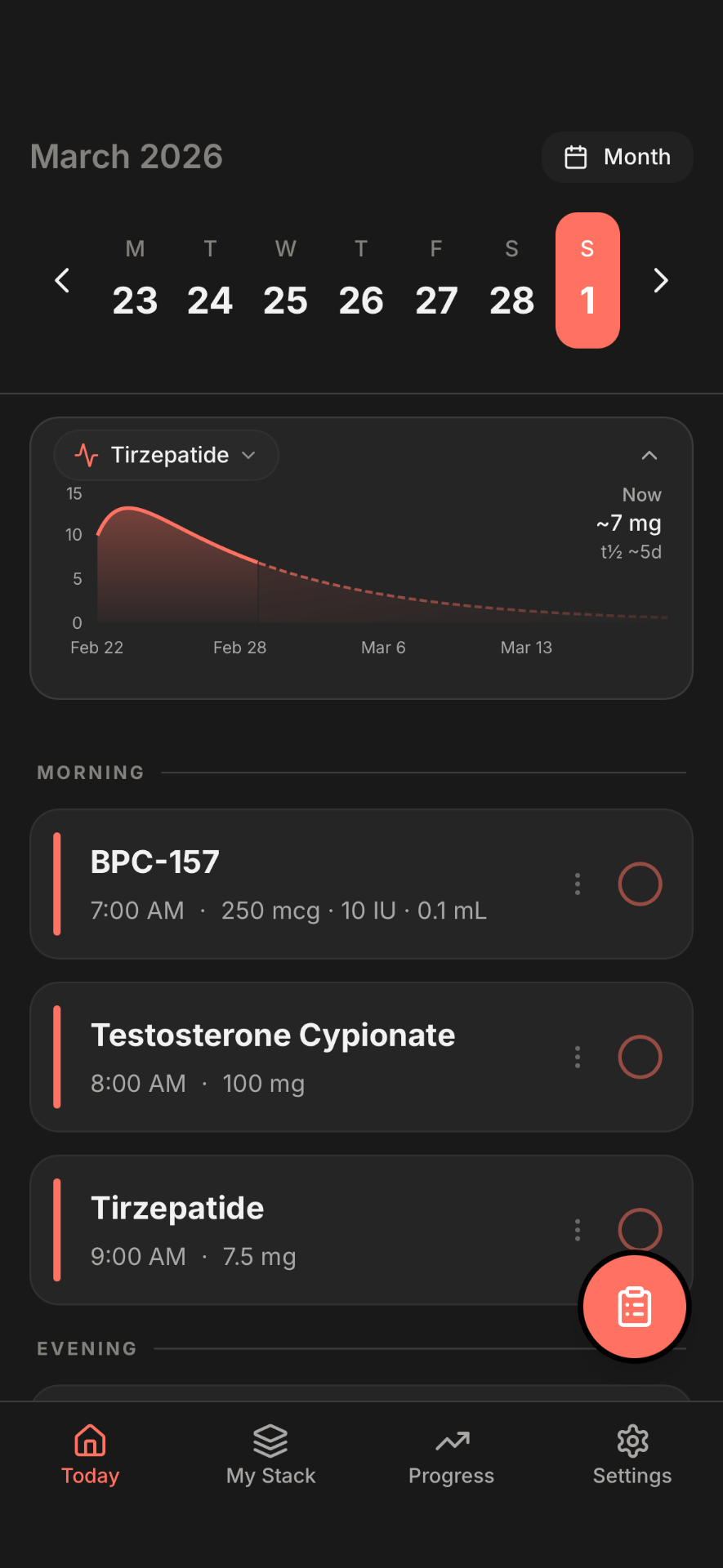
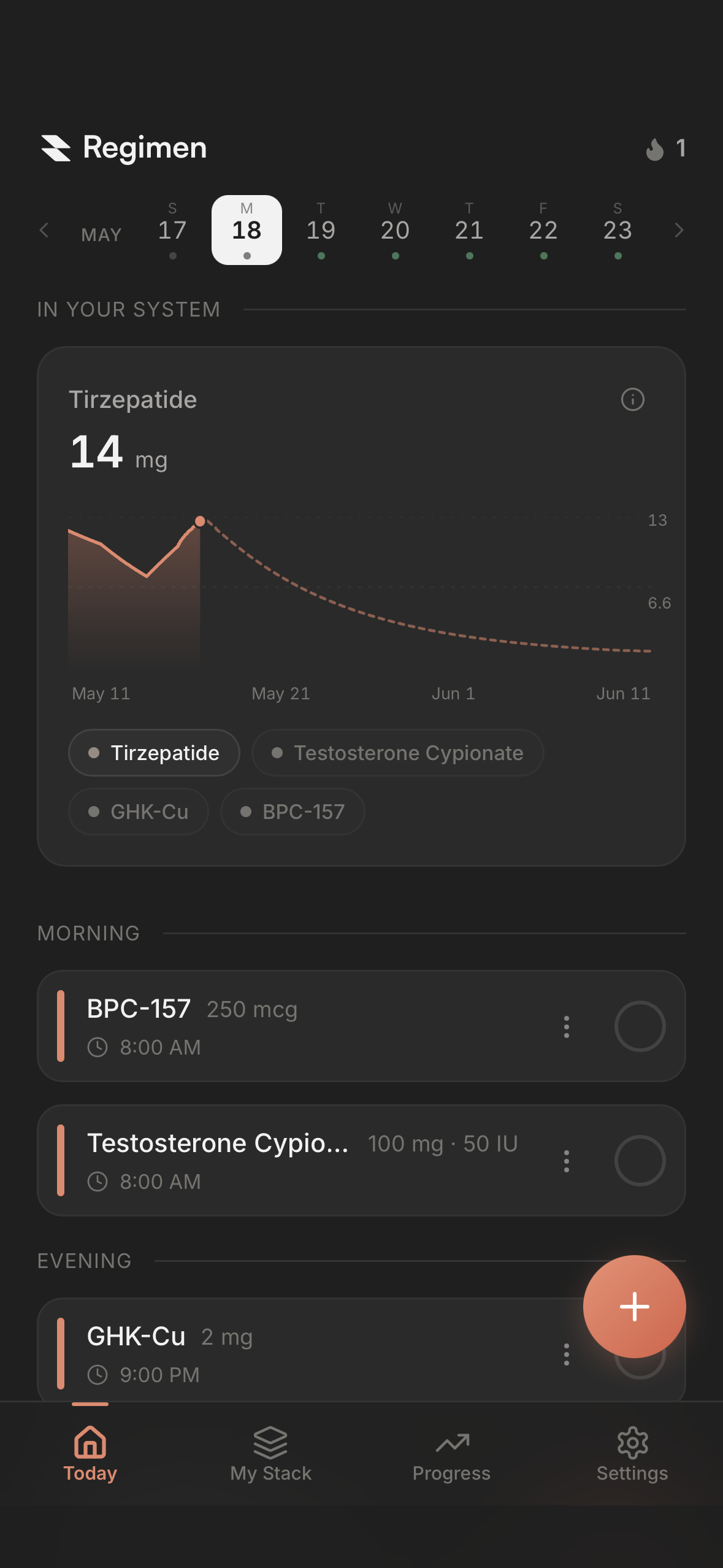
That is the part we can help with. Regimen tracks whatever compound you are on, logs your labs and body-comp changes over time, and captures your daily markers, so if you ever switch to something newer, you are not starting the story from scratch. You have the whole timeline.
Frequently Asked Questions
Which one is stronger than retatrutide?
Nobody can say cleanly yet, because none of them have been tested head-to-head against retatrutide. MariTide’s roughly 20% obesity number at 52 weeks is the eye-catching one, but that is not the same as beating reta in a fair fight. The trial designs and populations are all different.
Is zenagamtide the same as amycretin?
Yes. Zenagamtide is the official nonproprietary name for Novo Nordisk’s amycretin. Same compound. Novo started using the new name in 2026 materials.
Is any of this actually available yet?
Only mazdutide, and only in China. Everything else here (survodutide, MariTide, zenagamtide, CagriSema) is investigational, which means it is still in clinical trials and not approved for you to get. Be skeptical of any site claiming to sell these.
Which one is “stronger” than retatrutide?
Nobody can say that cleanly yet, because none of them have been tested head-to-head against reta in the same trial. The weight-loss numbers you see come from separate studies with different people and different lengths, so comparing them directly is guesswork. MariTide’s roughly 20% obesity number is the eye-catching one, but that is not the same as beating reta in a fair fight.
What is the difference between all these and just taking tirzepatide or reta?
It comes down to which receptors each one hits. Tirzepatide is GLP-1 + GIP. Reta adds glucagon for a triple. The new wave mixes it up: survodutide and mazdutide swap in glucagon, MariTide blocks GIP instead of activating it, and zenagamtide brings in amylin. Different combos, different effects.
Why does MariTide block GIP when tirzepatide activates it?
Honestly, that is one of the open questions in the field. Both turning GIP on and turning it off seem to help with weight loss when paired with GLP-1, and researchers are still untangling exactly why. What is clear from the trials is that MariTide’s approach worked, and it comes with a once-a-month dosing schedule as a bonus.
Is zenagamtide the same as amycretin?
Yes. “Zenagamtide” is the official nonproprietary name for the drug that has been called amycretin. Novo Nordisk started using the new name in its 2026 materials. Same compound.
When could any of these actually launch?
Survodutide and MariTide are the furthest along and could reach regulators soonest, though there is no guaranteed date. Zenagamtide is more of a 2028-to-2029 story if its Phase 3 trials pan out. Timelines slip, so treat all of these as “coming, eventually” rather than penciled-in.
Should I wait for one of these instead of starting something now?
That is a conversation for you and your provider, not something to decide off a blog. But keep in mind these are mostly years away and cannot be counted on. Deciding your health plan around a drug that is not approved yet is a shaky bet.
This article is educational and not medical advice. Every compound here is either investigational or approved only outside your likely region. It does not include dosing guidance. Your provider sets any treatment plan.
Ready to track your GLP-1?
- Smart reminders so you never miss a dose
- Track weight, photos, and progress over time
- Medication level curves for every compound