This article is educational and not medical advice. Talk to a licensed healthcare provider before starting, stopping, or switching any medication.
Finally. A GLP-1 you don’t have to inject.
If you’ve been curious about Ozempic or Wegovy but the needle was the dealbreaker, this is the news you’ve been waiting for. There’s now a GLP-1 you swallow. It’s a real pill, FDA-approved, and you take it once a day like any other tablet.
It’s called Foundayo. The drug inside it is orforglipron. And the part that makes people do a double-take: you can take it any time of day, with food or without, no big glass of water, no waiting around before breakfast. Just take the pill and get on with your morning.
Let’s get into what it actually is, what to expect, and the honest trade-offs versus the shots.
Quick answer
Foundayo (orforglipron) is the first GLP-1 weight-loss pill from Eli Lilly, FDA-approved in April 2026. You take one tablet a day, any time, with or without food. In its main trial, people on the highest dose lost about 12% of their body weight (roughly 27 pounds) over 72 weeks. The catch: it works a little less than the top injectables like tirzepatide (Zepbound). The upside: no needles, no refrigeration, and none of the annoying food-and-water rules that the other GLP-1 pill makes you follow. Your provider decides if it’s right for you and sets your dose.
What is Foundayo, exactly?
Foundayo is the brand name. Orforglipron is the actual drug (that’s the part that does the work). Same relationship as Wegovy and semaglutide, or Zepbound and tirzepatide: one is the name on the box, the other is the molecule inside.
Here’s the interesting part. Every GLP-1 you’ve heard of until now, the Ozempics and Wegovys and Mounjaros, is a peptide. Peptides are fragile. Your stomach acid tears them apart, which is why they’ve almost always been shots. Orforglipron isn’t a peptide. It’s a small-molecule drug, built from the ground up to survive your digestive system and still get into your blood.
That’s the whole breakthrough in one sentence: they made a GLP-1 tough enough to be a pill.
And because it’s not a peptide, it doesn’t need to be refrigerated. No fridge shelf next to your eggs, no cooler when you travel. Room temperature, in your bag, done.
How it works
GLP-1 is a hormone your gut already makes after you eat. Its job is basically to tell your brain and stomach “okay, we’re fed now.” It does three things: it makes you feel full sooner, it slows down how fast your stomach empties (so you stay full longer), and it helps steady your blood sugar.
The problem is your natural GLP-1 burns off in minutes. It sends the signal and disappears.
Orforglipron walks up to the same GLP-1 receptors your natural hormone uses and presses the button, except it sticks around way longer. So instead of a quick “we’re fed” flicker, you get a steady, all-day version of that signal.
What that feels like in real life: you’re not as hungry, you fill up faster at meals, and the constant background chatter about food (a lot of people call this “food noise”) quiets down. You eat less without white-knuckling it. That’s the mechanism, and it’s the same reason the shots work. Orforglipron just delivers it in a tablet.
How you take it
This is where Foundayo actually pulls ahead, so it’s worth being clear about.
You take one tablet, once a day. Any time of day you want. With food or on an empty stomach, doesn’t matter. Regular sip of water, not a measured amount. Swallow it whole (don’t crush or chew it) and go live your life.
Compare that to the other pill on the market. Oral semaglutide, sold as the Wegovy pill or Rybelsus, has a strict routine: take it first thing in the morning, on a completely empty stomach, with no more than about four ounces of water, then wait 30 minutes before you eat, drink, or take anything else. Miss the window and it doesn’t absorb right.
Foundayo has none of that. For anyone who knows their real morning is a scramble of coffee and getting out the door, “take it whenever” is a genuinely big deal. The best medication is the one you actually remember to take, and Foundayo is built to be easy to remember.
One thing to expect: you don’t start at the full dose. Everyone starts low and steps up slowly over the first few months. That’s on purpose, and it’s the single biggest thing you can do to keep the side effects manageable. More on that next.
A note on doses: your provider sets your dose and your step-up schedule, full stop. We’re not going to hand you a number, because the right one depends on you and your doctor, and the official schedule lives in the FDA label. If you saw older figures floating around online from the early studies, ignore them. The trial versions and the actual approved tablet aren’t the same thing, and the only ones that matter are the ones your prescriber works from.
What to expect: side effects
If you know anyone on a GLP-1, you can probably guess the side effects, because they run in the family. Orforglipron is no exception.
The most common ones are stomach stuff: nausea, diarrhea, constipation, vomiting, indigestion, and some bloating or belly discomfort. Nausea is the big one. In the main trial, somewhere around a third of people felt it. Some also reported headache, tiredness, burping, heartburn, gas, and hair thinning.
Here’s the good news, and the reason the slow start matters. These effects are worst in the beginning, while your dose is climbing. For most people they fade as the body adjusts. That’s exactly why nobody jumps to the top dose on day one. Going slow trades a few extra weeks for a much smoother ride.
There’s also a boxed warning worth knowing about. In animal studies, some drugs in this class were linked to a rare thyroid tumor (medullary thyroid carcinoma). Interestingly, orforglipron itself didn’t trigger that in the animal tests, but the warning applies to the whole class as a precaution. If you or a close family member has a history of medullary thyroid cancer or a condition called MEN 2, this drug isn’t for you. It’s also not for kids, and you shouldn’t stack it with another GLP-1.
None of this replaces a conversation with your provider. It’s just so you walk into that conversation knowing what to ask.
Who it’s for (and who it’s not)
Foundayo is approved for adults with obesity, or adults who are overweight and also have at least one weight-related health issue (think high blood pressure, high cholesterol, that kind of thing). It’s meant to go alongside eating better and moving more, not to replace them.
It’s a strong fit if the needle was your main hesitation, if you travel a lot and don’t want to babysit a refrigerated pen, or if the strict food-and-water routine of the other pill sounds like a recipe for forgetting doses.
It’s not for you if you have a personal or family history of medullary thyroid cancer or MEN 2, if you’re under 18, or if you’re already on another GLP-1. And like anything in this category, your provider makes the final call on whether it fits your health picture.
The honest comparison: pill vs. the shots
Time for the trade-off, because there is one, and you deserve the straight version.
The injectables still win on raw weight loss. Tirzepatide (Zepbound and Mounjaro) is the heavyweight, with trial results up around 20% of body weight. Injectable semaglutide (Wegovy) lands around 15%. Foundayo comes in around 11 to 12% at the top dose.
So yes, if the only thing you care about is the biggest possible number on the scale, a high-dose injectable is likely to get you further. That gap is real, it’s a few percentage points, and pretending otherwise would be doing you a disservice.
But weight loss isn’t the only column that matters, and this is where the pill earns its place:
| Foundayo (pill) | Injectable GLP-1 (Wegovy, Zepbound) | |
|---|---|---|
| Weight loss | ~11-12% | ~15-20%+ |
| How you take it | Swallow a tablet | Weekly injection |
| Food/water rules | None | None |
| Refrigeration | Not needed | Usually needed |
| Travel | Easy, room temp | Needs planning |
| Needles | None | Yes |
The best GLP-1 isn’t the one with the highest trial number. It’s the one you’ll actually stick with for a year or more. If a weekly shot is a non-starter for you, then a pill you’ll genuinely take beats a shot sitting unused in the fridge. A slightly smaller number you can live with beats a bigger number you quit.
That’s the real decision, and it’s worth talking through with your provider honestly, including the coverage and cost side, which can swing the answer either way. We break the full comparison down in our GLP-1 pill vs injection guide. And if you’re already on a shot and thinking about making the swap, read our switching guide first.
How to track it (so you actually know if it’s working)
Whichever GLP-1 you land on, the same thing trips people up: three months in, they can’t remember when they stepped up their dose, whether that rough week lined up with a change, or if their labs actually moved.
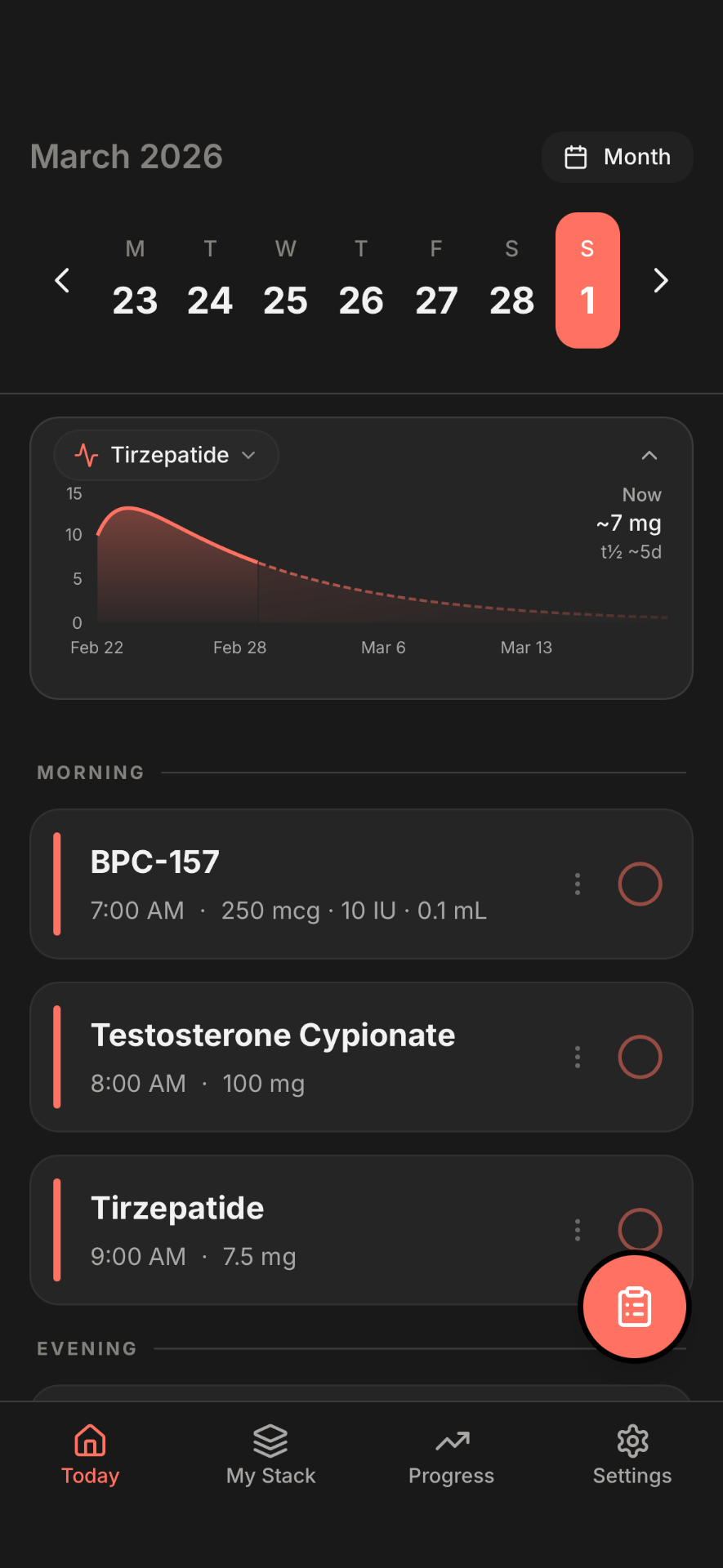
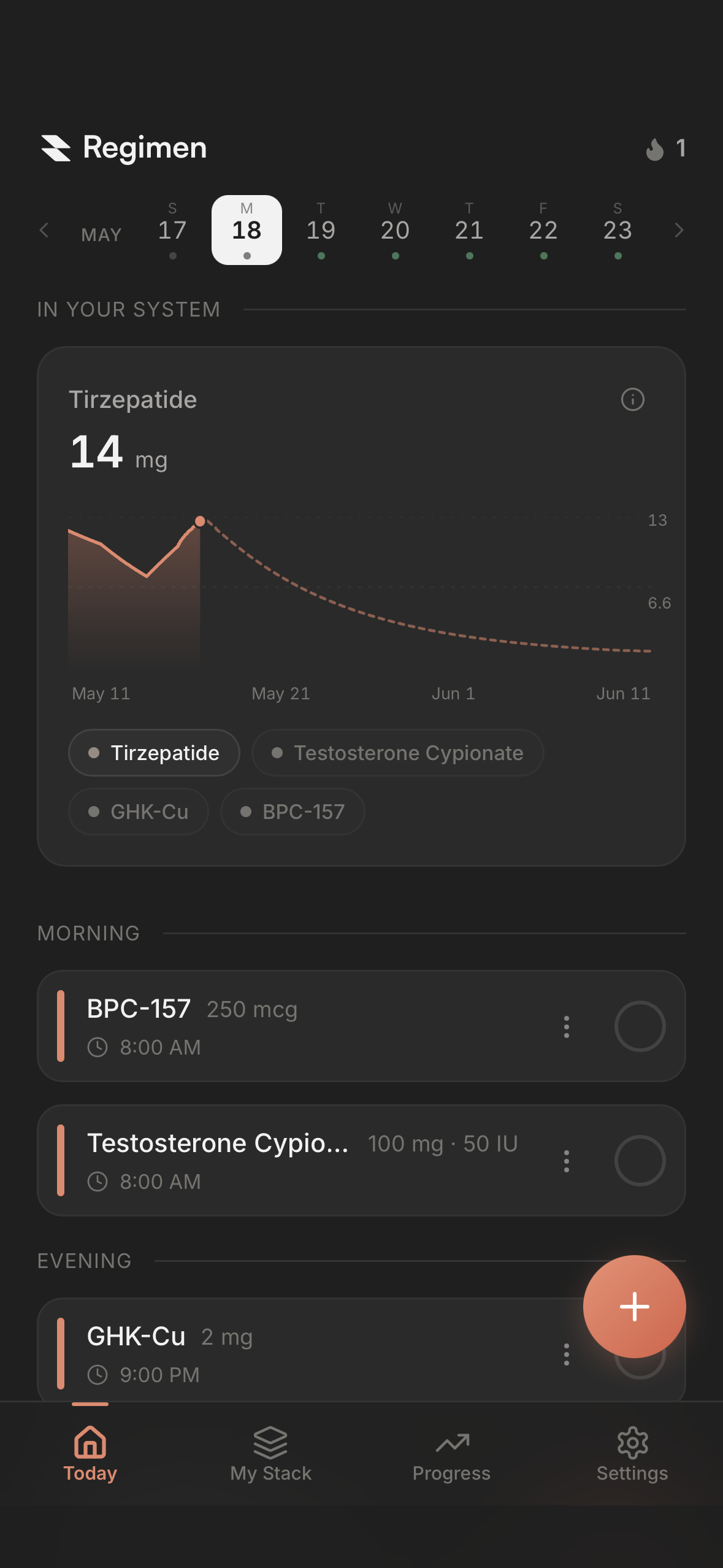
That’s the whole reason we built Regimen. It tracks oral GLP-1 pills like Foundayo (and the injections, if you ever switch), plus your weight, your labs, and a quick daily marker on how you’re feeling. So when your provider asks how the past month went, you have the real answer instead of a guess.
If you’re starting Foundayo, track it in Regimen from day one. Future-you, sitting in that follow-up appointment, will be glad you did.
Frequently Asked Questions
Is Foundayo the same as Ozempic?
No. Ozempic is a weekly injection (the drug is semaglutide). Foundayo is a daily pill (the drug is orforglipron). Both are GLP-1s and work in a similar way, but Foundayo is swallowed and Ozempic is injected.
Is orforglipron FDA-approved?
Yes. The FDA approved it in April 2026 under the brand name Foundayo, for adults with obesity, or overweight adults with a weight-related health condition.
Is Foundayo a peptide?
No, and that’s the key. It’s a small-molecule drug, not a peptide, which is exactly why it survives your digestive system and can be a pill instead of a shot.
Do I have to take Foundayo on an empty stomach?
No. You can take it any time of day, with food or without, and you don’t need to measure your water or wait before eating. That’s the opposite of the Wegovy pill (oral semaglutide), which does require an empty stomach and a 30-minute wait.
How much weight can you lose on Foundayo?
In its main trial, people on the highest dose lost about 12% of their body weight (roughly 27 pounds) over 72 weeks. Your results depend on your dose, your body, and sticking with it alongside diet and activity changes. Your provider sets the dose.
Does Foundayo work as well as Ozempic or Zepbound?
Honestly, a little less on weight loss. The top injectables (especially tirzepatide/Zepbound) tend to produce more weight loss in trials. Foundayo’s advantage is convenience: no needles, no refrigeration, no food or water rules. The best choice is the one you’ll actually keep taking.
What are the most common side effects?
Mostly stomach-related: nausea, diarrhea, constipation, and vomiting. They’re usually worst early on while your dose is stepping up, and tend to ease as your body adjusts.
Does Foundayo need to be refrigerated?
No. Because it’s not a peptide, it’s stable at room temperature. You can keep it in your bag and travel with it without a cooler.
How much does Foundayo cost?
Self-pay starts around $149 a month for the lowest dose. With commercial insurance and a savings card it can be as low as $25 a month, and Medicare Part D coverage is expected around July 2026. Check your specific plan, since coverage varies.
Can I take Foundayo with another GLP-1?
No. It’s not meant to be combined with other GLP-1 medications. If you’re switching from a shot to the pill, your provider will guide the change.
This article is educational and not medical advice. Talk to a licensed healthcare provider before starting, stopping, or switching any medication.
Ready to track your GLP-1?
- Smart reminders so you never miss a dose
- Track weight, photos, and progress over time
- Medication level curves for every compound
When will orforglipron be available?
FDA approval is expected in Q2-Q3 2026. If approved on that timeline, initial availability would likely follow in Q3-Q4 2026. Supply constraints could limit widespread availability in the first few months after launch, similar to what happened with Wegovy and Mounjaro.
Is orforglipron better than Ozempic?
Not in terms of pure weight loss or glucose control. Semaglutide at therapeutic doses produces more weight loss than orforglipron in head-to-head comparisons. Orforglipron’s advantage is convenience: it’s a daily pill with no injections, no fasting requirements, and no cold storage needed. For people who won’t or can’t inject, orforglipron is the better option because it’s the option they’ll actually use.
How much weight can you lose on orforglipron?
Clinical trials showed approximately 9-14% body weight loss at the highest doses over 36 weeks. For a 220 lb person, that’s roughly 20-31 lbs. Longer treatment durations may produce additional weight loss. These results are less than injectable semaglutide (15-17%) or tirzepatide (20-26%) but significant by any clinical standard.
Does orforglipron need to be taken on an empty stomach?
No. This is one of orforglipron’s biggest advantages over oral semaglutide (Rybelsus), which requires fasting and strict dosing protocols. Orforglipron can be taken with or without food, at any time of day, with normal fluid intake.
What are orforglipron’s side effects?
The most common side effects are nausea, vomiting, diarrhea, constipation, and decreased appetite. These are the same GI side effects seen with all GLP-1 receptor agonists. Because orforglipron is taken daily (creating more stable drug levels), the side effect onset may be more gradual than with weekly injectables.
Will orforglipron be cheaper than Ozempic or Mounjaro?
Possibly. Orforglipron is a small molecule, which is cheaper to manufacture than peptide-based drugs. However, pharmaceutical pricing isn’t driven by manufacturing cost alone. Analysts expect it to be competitive with existing GLP-1s, which currently run $900-1,300/month without insurance.
Can you switch from Ozempic to orforglipron?
There’s no published data yet on switching protocols from injectable GLP-1s to orforglipron. Once it’s approved, clinicians will likely develop transition guidelines. The principle would be similar to any GLP-1 switch: start the new medication at a low dose and titrate up.
Is orforglipron a GLP-1 and GIP dual agonist like Mounjaro?
No. Orforglipron is a GLP-1 receptor agonist only. Tirzepatide (Mounjaro/Zepbound) activates both GLP-1 and GIP receptors, which is part of why it produces more weight loss. Eli Lilly is separately developing oral dual agonists, but orforglipron targets GLP-1 alone.