BPC-157 is the most-discussed peptide in the recovery space because it does something the standard sports medicine playbook can’t: it appears to accelerate the repair of tendons, ligaments, and gut tissue in animal models, and the community traction reports back the same thing in humans. The human clinical evidence is still thin. The community use is enormous. This guide covers the injectable protocol most lifters actually run, what the evidence supports and where it stops, and how to know whether it’s working on you.
Quick Answer
BPC-157 (Body Protective Compound) is a 15-amino-acid peptide derived from a protein in gastric juice. The community uses it for tendinopathy, ligament and joint issues, post-injury rehab, and gut healing. The most common injectable protocol is 250-500mcg subcutaneously daily, often injected near the injury site, in 4-6 week blocks. Preclinical evidence is strong and consistent. Human clinical evidence is limited to small case series and self-reports. FDA Category 2 status, with a July 23-24, 2026 PCAC review that could change sourcing.
What BPC-157 is and what it actually does
BPC-157 stands for Body Protective Compound 157. It’s a 15-amino-acid synthetic peptide derived from a larger protein found in human gastric juice. The body’s natural version is part of how the stomach lining protects and repairs itself, which is where the “body protective” name comes from. The synthetic version was developed in the 1990s as a research tool for studying gut repair.
The mechanism story has three parts, and all three matter for what users are trying to get out of it.
Angiogenesis. BPC-157 promotes the formation of new blood vessels in injured tissue. In tendon injury models specifically, this matters because tendons have notoriously poor blood supply, and the slow blood supply is part of why tendon injuries take so long to heal. More blood supply means more oxygen, more nutrients, and more delivery of repair signals to the injury site.
Growth factor signaling. BPC-157 modulates several growth factor pathways involved in tissue repair, including VEGF (vascular endothelial growth factor) and FGF (fibroblast growth factor). These are the same pathways the body uses to coordinate normal wound healing. The compound appears to amplify what’s already happening rather than introduce a foreign signal.
Nitric oxide pathway modulation. BPC-157 interacts with the nitric oxide system, which regulates blood vessel dilation and tissue perfusion. This is part of why some users report effects beyond pure tissue repair (better gut motility, reduced inflammation, faster muscle recovery during heavy blocks).
None of these mechanisms are unique to BPC-157. What’s notable is that the compound seems to coordinate all three at once in injured tissue, which is closer to how natural healing actually works than a single-target intervention.
The evidence picture, honestly
The preclinical evidence for BPC-157 is genuinely strong. Animal studies (mostly in rats) have shown accelerated healing across a wide range of injury types: Achilles tendon transection, medial collateral ligament tears, muscle crush injuries, colitis, gastric ulcers, and segmental bone defects. The findings are consistent across multiple research groups and multiple injury models, which is a higher bar than a single lab producing one favorable result.
The human evidence is much thinner. There are small case series and observational reports, but no large randomized controlled trials on lifters or athletes. Most of what’s “known” about BPC-157 in humans comes from self-reported community use: forum threads, biohacker conventions, clinic case logs from physicians who use it off-label. That’s not nothing, but it’s not the same as published clinical data either.
The popularity-evidence gap is the most honest way to describe where BPC-157 sits. The compound is one of the most-used recovery peptides in the gray market. The community consensus, based on consistent anecdotal reports, is that it helps a meaningful fraction of users with stubborn connective tissue issues that didn’t respond to PT, rest, or NSAIDs alone. That consensus is real and worth taking seriously. It’s also not the same thing as a Phase 3 trial result.
Where the evidence is strongest: gut healing (the original use case, with the most mechanism backing) and tendon repair (the use case with the most consistent animal data). Where the evidence is weakest: claims about systemic effects, anti-aging properties, neuroprotection, and recovery from non-orthopedic conditions. Those are extrapolations from mechanism, not findings from data.
Evidence tier: strong preclinical, limited human clinical, large community consensus. Treat it accordingly when you’re deciding whether to run it.
The injectable protocol the community actually runs
The injectable route is the default in the lifter and biohacker community because it bypasses the bioavailability issues that affect oral and nasal routes. Subcutaneous injection puts the compound directly into circulation, where it can reach the target tissue at known concentrations.
Typical community dose: 250-500mcg subcutaneously per day. Some users split the daily dose into two injections (morning and evening) on the theory that the peptide’s short half-life favors more frequent administration. Most users run a single daily injection for convenience.
Typical community duration: 4-6 weeks per block. Longer continuous use is less common because most users find that benefits plateau after the initial repair window. The typical pattern is to run a block during an active injury or rehab phase, then come off, then run another block if needed.
Local versus systemic injection. This is the choice that matters most for tendon and joint injuries. Local injection means injecting the peptide subcutaneously close to the injury site (e.g., into the subcutaneous tissue near a sore elbow or knee, not into the joint itself). Systemic injection means injecting anywhere convenient (typically the abdomen, the standard subcutaneous injection site). The community split:
- For specific tendon, ligament, or joint injuries, most users inject locally. The theory is that local concentration matters for the angiogenesis effect, even though systemic delivery should reach the site too.
- For general recovery support, gut issues, or systemic effects, most users inject in the abdomen and let the compound distribute systemically.
- Some users do both: local during the first 1-2 weeks for the targeted injury, then abdominal for the remainder of the block.
There’s no controlled human trial settling whether local actually outperforms systemic for orthopedic use. The community preference for local is mechanistic reasoning plus anecdote, not proven head-to-head.
Reconstitution. BPC-157 is sold as a lyophilized (freeze-dried) powder, typically in 5mg or 10mg vials. The standard reconstitution is with bacteriostatic water, with the dilution chosen so a single injection draws a convenient volume. A common community ratio: 5mg vial reconstituted with 2mL of bacteriostatic water gives 2,500mcg/mL, so a 250mcg dose draws 0.1mL on an insulin syringe. Run your own numbers in the BPC-157 dose calculator (preset for 5mg and 10mg vials) or the general peptide reconstitution calculator. Reconstituted BPC-157 is generally stored refrigerated and used within 30 days, though stability data is limited.
Injection technique. Insulin syringes (28-31 gauge, 0.5mL or 1mL) are the community standard. Subcutaneous injection in the abdomen (1-2 inches from the navel), thigh, or upper arm. Local injection follows the same technique but at the target site. Rotate sites if running multiple weeks to avoid local irritation.
A note on sourcing
BPC-157 is not FDA-approved. It currently lives on the FDA’s Category 2 list, which flags it as carrying significant safety risks or insufficient data for compounding. Some compounding pharmacies have offered it under varying interpretations of that status; research peptide vendors serve the rest in a regulatory gray zone with “not for human use” labeling. Public testing of gray-market peptide product has found wide variability in purity and concentration. Mislabeled products are a documented problem. The July 23-24, 2026 PCAC meeting will revisit BPC-157’s compounding status and could shift availability significantly.
How long until you know if it’s working
This is the question that determines whether you stay on the protocol or pull the plug. The answer depends on what you’re treating.
For acute injury rehab (recent tendon strain, ligament tweak, post-surgical recovery): Most community reports of meaningful benefit show up within 2-4 weeks of starting the protocol. Pain scores drop, range of motion improves, the affected tissue tolerates loading better. If you’re 3 weeks in with no movement on any of those signals, the protocol is probably not doing what you hoped for your specific issue.
For chronic tendinopathy (months or years of nagging elbow, shoulder, or knee pain): The timeline is longer. Most users who get benefit report it during weeks 3-6 of the first block, with continued improvement after they come off. Chronic tendinopathy is a different beast from acute injury; the tissue remodeling needed is more extensive. If you’re running a block specifically for chronic tendinopathy, plan on 6 weeks before evaluating.
For gut issues (GERD, IBD-adjacent symptoms, gastritis): Many users report changes within the first week, particularly for upper-GI symptoms. The oral route (capsules) is often used here rather than injectable, on the theory that direct contact with gut tissue matters for local effect. If you’re injecting for gut issues and not seeing change at 2 weeks, switching to the oral form is a reasonable next move.
For general recovery support during heavy training blocks: Subjective signals only. Slightly faster return to baseline soreness, slightly easier high-intensity sessions back to back. Hard to measure precisely, but most users who include BPC in a heavy training block report noticing the difference within 1-2 weeks of starting.
The key signal across all use cases: pain and function move together. If pain is dropping but function isn’t improving (you still can’t load the joint, you still can’t do the lift), be skeptical. BPC-157 has documented analgesic effects that can mask underlying tissue issues; pain reduction without functional gain is the warning sign that you’re feeling better without actually healing better.
Who actually uses BPC-157 (and for what)
The community use cases cluster into four buckets. Knowing which bucket you fit in helps you decide whether the compound is likely to fit your situation.
Bucket 1: Lifters rehabbing a specific orthopedic injury. Probably the largest community. Elbow tendinopathy, rotator cuff issues, patellar tendon pain, meniscal injury, post-surgical recovery. The use case is “PT and conservative treatment haven’t moved this and I want another tool.” Local injection near the injury site, 4-6 week block, often combined with continued PT rather than as a replacement for it.
Bucket 2: Serious lifters running heavy training blocks. Use BPC as a general recovery support during demanding phases, not for a specific injury. Often paired with TB-500 (the Wolverine pair). Abdominal injection, 4-6 week blocks coinciding with the heaviest part of a training cycle.
Bucket 3: Anti-aging and longevity clinic patients. Older users running BPC for joint maintenance, connective tissue support, and general recovery. Often part of a broader peptide protocol that includes GHK-Cu, thymosin alpha-1, and GH-axis compounds. Prescribed (in some clinics) through compounding pharmacies under varying interpretations of Category 2 status.
Bucket 4: Users targeting gut issues. GERD, gastritis, IBD-adjacent symptoms, ulcer history. Often run the oral form (capsules) rather than injectable, sometimes both. This is the use case closest to the original research origin of the compound.
The first and fourth buckets have the most consistent community reports of benefit. The second is real but subjective. The third is the longest-running use pattern but the least controlled in terms of evaluating outcomes.
Stack logic: what BPC-157 actually pairs with
BPC-157 is rarely run in isolation. The community runs it in a few specific combinations, each with its own logic.
BPC-157 + TB-500 (the Wolverine pair). The most common recovery stack. BPC handles local, daily, injury-specific repair work. TB-500 handles systemic, weekly, whole-body recovery support through different mechanisms (cell migration, actin dynamics, broader tissue effects). The pair covers different axes of how soft tissue actually heals. Most lifters who run BPC for more than a few weeks end up adding TB-500 to the stack. See the BPC-157 + TB-500 stack guide for the full protocol.
What we see in Regimen data
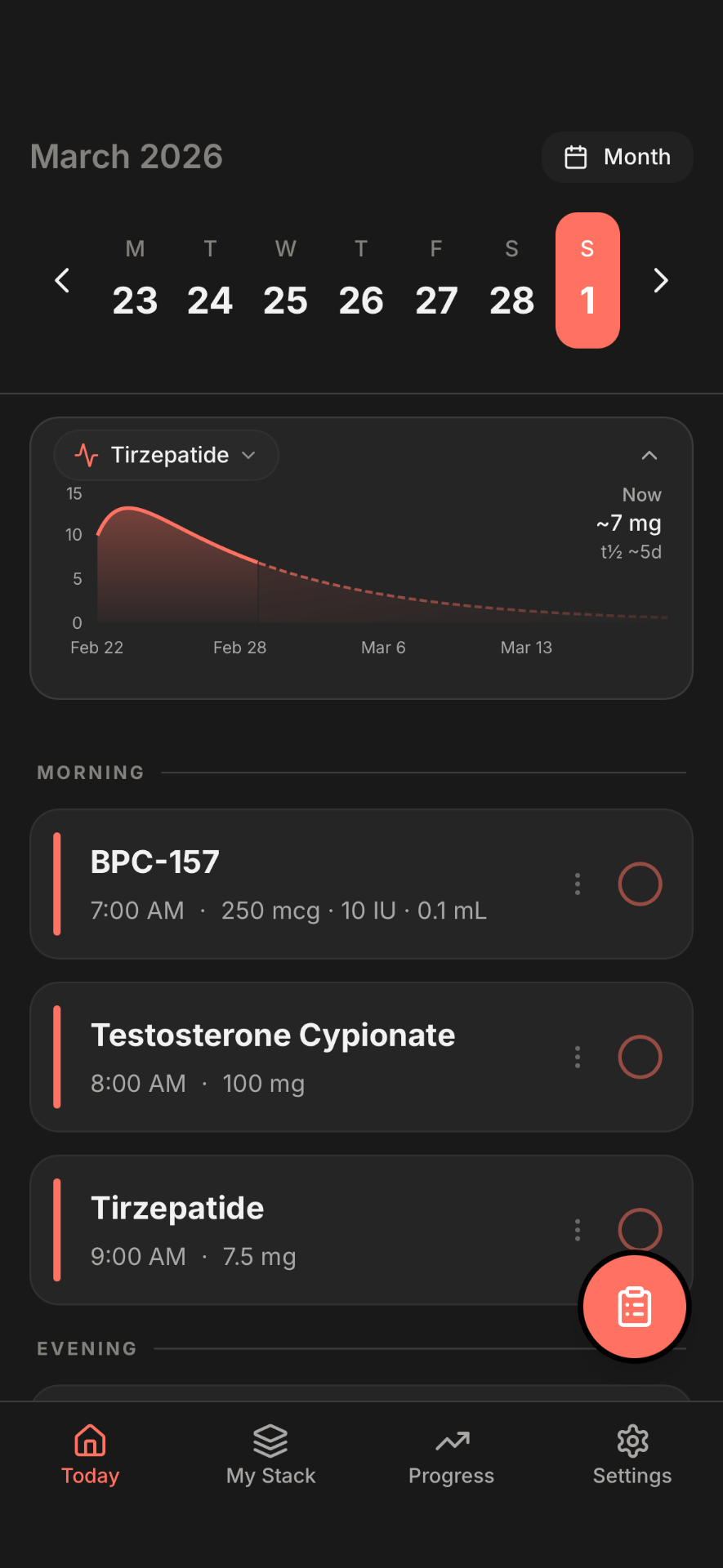
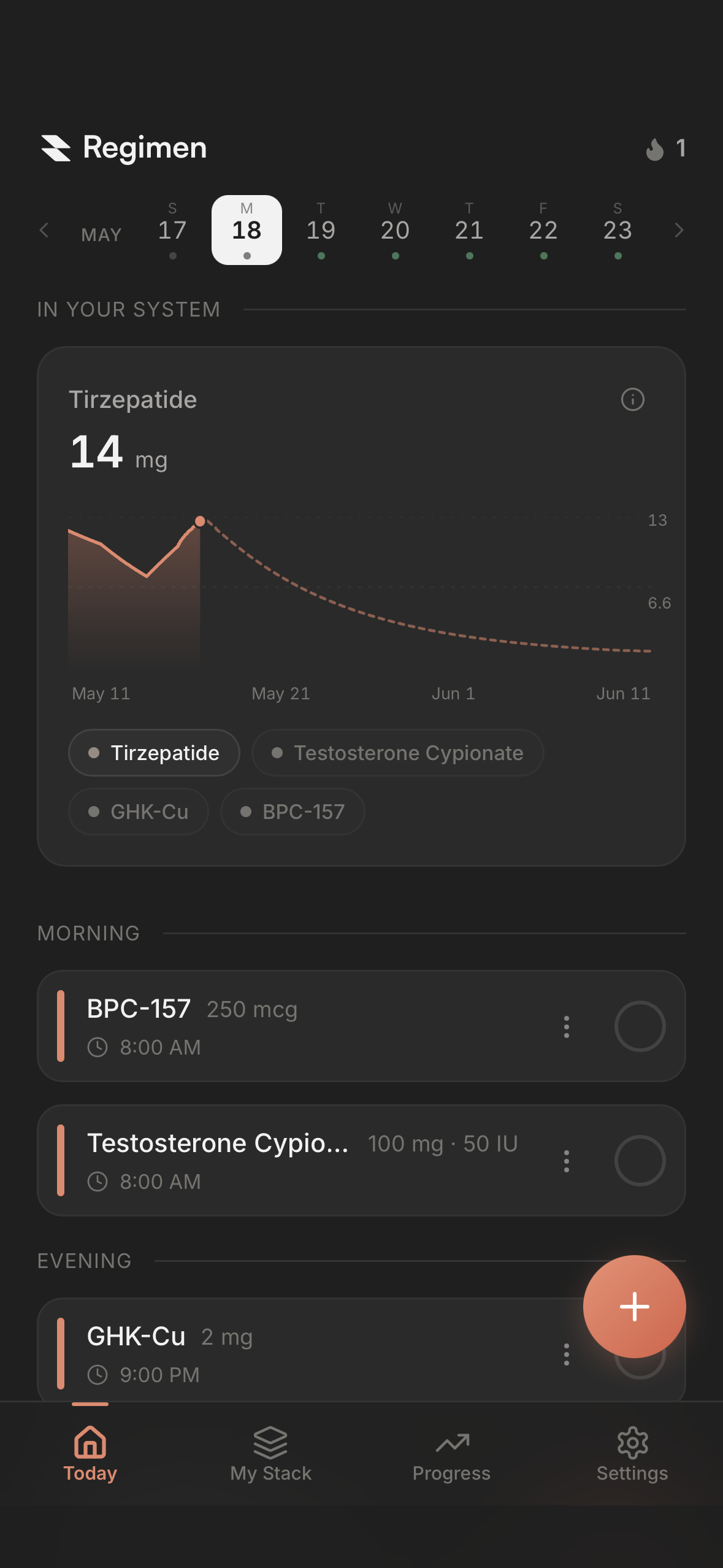
About 1 in 4 users tracking BPC-157 on the platform also track TB-500, making it the most common recovery pairing in our data, well ahead of BPC-157 plus GHK-Cu (the next most common recovery pairing). The Wolverine stack (BPC-157 + TB-500 + GHK-Cu + cyanocobalamin) has grown over 170% in new user adoption on the platform over the last 30 days, confirming that the named-stack pattern is no longer just a Reddit phrase but a real and growing protocol.
BPC-157 + GHK-Cu. Used when connective tissue, skin, and collagen synthesis are also priorities. GHK-Cu is a copper-binding tripeptide with documented effects on collagen and wound healing. The pair is common in longevity and recovery clinic protocols, and shows up in the four-compound version of the Wolverine stack (BPC + TB-500 + GHK-Cu + B12).
BPC-157 + a GH-axis peptide (CJC-1295 + ipamorelin, or tesamorelin). Used by lifters who want both recovery support and GH-axis amplification during the same block. The compounds operate on different pathways and don’t conflict mechanically. The bloodwork to watch is IGF-1 (driven by the GH-axis compound, not by BPC). See the CJC-1295 + ipamorelin guide for the GH-axis layer.
BPC-157 + KPV. A newer combination, used by people with both orthopedic and gut inflammation issues. KPV is a small anti-inflammatory peptide with thinner evidence than BPC. Both compounds are on the July 2026 PCAC review list, which makes this stack particularly exposed to regulatory shifts.
BPC-157 + TRT. Common in the over-35 lifter demographic. TRT handles the anabolic and recovery baseline; BPC layers on for specific injury or training-block support. No mechanical conflict.
The stacking principle worth knowing: BPC’s job in any stack is the local repair work. Whatever else is in the stack should be solving a different problem, not duplicating BPC’s role.
Side effects, risks, and what the safety data actually shows
The human safety data on BPC-157 is thin. Most of what’s known comes from gastric juice (the body’s natural version is part of normal physiology) and from rat studies (where BPC-157 has shown a wide safety margin, including at doses far above what the community uses). That’s reassuring but it’s not the same as a Phase 3 trial in humans.
Side effects reported in community use are generally mild and uncommon:
- Injection site irritation. Mild redness, soreness, or temporary swelling at the injection site, especially with local injection. Usually resolves within a day.
- Mild GI changes. Some users report increased gut motility, looser stools, or changes in appetite in the first week. Often resolves as the body adjusts.
- Headache or fatigue. Reported occasionally in the first few days. Mechanism unclear, but the symptom is usually mild and self-limiting.
- No documented major adverse events in the available data, but the data is thin enough that absence of reports doesn’t equal absence of risk.
Theoretical concerns worth knowing about:
- Angiogenesis and tumor concerns. The same blood vessel formation that helps tendon repair could theoretically support tumor growth in someone with an active malignancy. There’s no human data showing this happens, but the mechanism is reason to avoid BPC if you have active or suspected cancer.
- Long-term safety unknown. Most community use is in 4-6 week blocks. There’s no human data on continuous use over years, and no reason to assume it would be problem-free.
- Sourcing risk. The biggest practical safety issue isn’t the molecule itself; it’s that the product you bought might not be what the label says. Mislabeled, underdosed, or contaminated gray-market product is a documented problem and is the most likely source of an unexpected reaction.
Who shouldn’t use BPC-157:
- Anyone with active or suspected malignancy or unexplained masses.
- Anyone currently pregnant or breastfeeding.
- Competitive athletes governed by anti-doping rules. BPC-157 is on the WADA prohibited list, and it can be detected in testing.
- Anyone with known severe allergies to peptide products.
- Anyone using it as a substitute for actual rehab (load management, PT, sleep, nutrition) on a real injury.
The sourcing reality in 2026
This is the part that matters most for whether the protocol actually works for you, and it’s the part most BPC guides skip.
Compounding pharmacy access. Some compounding pharmacies have offered BPC-157 under varying interpretations of its Category 2 status. The interpretations have shifted over the last 2-3 years, with some pharmacies stopping production after FDA enforcement actions and others continuing under different reasoning. As of mid-2026, compounding access exists but is inconsistent, and the July 2026 PCAC review may either expand or restrict it further.
Research peptide vendor access. Most community sourcing happens through research peptide vendors that sell the compound labeled “not for human use, for research purposes only.” Possession is generally not criminalized at the federal level for these compounds, but the vendors operate in a regulatory gray zone and the product quality varies dramatically across sellers.
The quality control problem. Public testing of gray-market peptide product has documented wide variability in impurity and concentration for compounds like BPC-157, CJC-1295, and TB-500. A vial labeled “5mg BPC-157” may contain anywhere from significantly less to (rarely) more than that, and may contain bacterial endotoxins, residual solvents, or other contaminants. This is why community reports of “BPC-157 didn’t work for me” are noisy: some of those reports are about underdosed or contaminated product, not about the compound itself.
The July 2026 PCAC meeting. The FDA’s Pharmacy Compounding Advisory Committee is scheduled to evaluate BPC-157 (along with KPV, TB-500, MOTS-c, DSIP, Semax, and Epitalon) for possible 503A bulk-list treatment on July 23-24, 2026. The possible outcomes:
- Favorable outcome: Compounding pharmacies gain clearer legal authority to compound BPC-157 under the 503A pathway, which would likely improve quality control and access through legitimate pharmacy channels.
- Unfavorable outcome: The committee recommends against bulk-list inclusion, which would tighten restrictions on compounding pharmacy access and push more users toward research-vendor sourcing with its quality issues.
- No-decision outcome: The committee defers the decision pending more data, leaving the current ambiguous status in place.
If you’re planning to start BPC-157 in the second half of 2026, the meeting outcome is worth tracking before placing orders.
Which protocol fits your situation
The community uses BPC-157 in a few distinct patterns, each suited to a different situation. The decision tree below maps the most common cases to the protocol most commonly used.
Match the protocol to the problem
Specific tendon, ligament, or joint injury (acute or chronic): Community pattern is 250-500mcg subcutaneously daily, injected locally near the injury site, for 4-6 weeks. Continue PT and rehab work in parallel.
General recovery support during a heavy training block: Community pattern is 250mcg subcutaneously daily in the abdomen, often paired with TB-500 (5mg loading dose, then 2-5mg weekly), for the duration of the block (4-6 weeks).
Chronic gut issues (GERD, gastritis, IBD-adjacent symptoms): The oral form (capsules) is more common for this use case than injectable. See the BPC-157 nasal spray guide for the alternative routes.
Anti-aging and joint maintenance for older lifters: Lower dose (250mcg daily) for 4-week blocks, often run a few times per year coinciding with heavier training or seasonal changes. Frequently part of a broader peptide protocol coordinated through a longevity clinic.
Post-surgical recovery: Local injection near the surgical site, 250-500mcg daily, starting after the immediate post-op window (when the surgeon clears injections in the area). Typically run for 4-6 weeks during the active rehabilitation phase.
None of these patterns are prescriptive. They’re descriptions of what the community actually does. Whether any of them are appropriate for your specific situation is a question to take to a qualified healthcare provider who knows your history.
How to track if it’s working
The metrics that confirm BPC-157 is doing something for you are different from the metrics for GH-axis peptides. The right things to track:
Pain score on the target issue. If you’re running BPC for elbow tendinopathy, rate the pain weekly on a 0-10 scale. Track the score for the specific movement that triggers it (e.g., supinated curls, push-ups, hammer grip). If the score isn’t moving by week 3-4, the protocol probably isn’t doing what you hoped.
Functional capacity. Can you do the lifts the injury was limiting? Can you load more this week than last? These are the practical signals that real tissue remodeling is happening, as opposed to just pain masking. Watch for the pattern where pain drops but function doesn’t improve, which suggests analgesic effect without underlying repair.
Range of motion. For joint or tendon issues, measure ROM at the same point each week (overhead reach for shoulder, full squat depth for knee, full extension and flexion for elbow). Improvements in ROM are harder to fake than pain scores.
Sleep quality. Many users report better sleep on BPC, possibly due to reduced pain and inflammation. Lower-priority signal but worth tracking, particularly if you’re running BPC during a heavy training block where sleep is already taxed.
Injection site reaction patterns. First-week mild irritation is normal. Persistent or worsening reactions over weeks 2-4 are a warning sign about product quality or technique, not a normal response to the compound.
No bloodwork is specifically required for BPC-157. Unlike the GH-axis compounds, BPC doesn’t have a single biomarker that moves predictably with dose. Baseline labs (CBC, CMP) before starting are reasonable for general safety monitoring, but there’s no “BPC-1” you can run to confirm the compound is working.
If at least two of the above signals are moving in the right direction within 4-6 weeks, the protocol is working for your situation. If nothing is moving, the most likely causes are product quality (sourcing problem), the underlying issue isn’t tissue repair (in which case BPC was the wrong tool), or you needed more rehab work in parallel that the BPC isn’t substituting for.
Common mistakes
The same disappointment and misuse patterns show up across community reports. Most are about expectations or technique, not about the compound itself.
Using BPC as pain relief instead of rehab. BPC has documented analgesic effects. If you stop hurting and decide that means you can train through the original injury at full load, you’re using the compound to mask a problem that still needs load management, mobility work, or actual rest. The pain reduction is a tool to make rehab tolerable, not a green light to skip the rehab.
Running it too short to evaluate. Most users who quit BPC at week 2 “because nothing’s happening” are quitting before the compound has had time to produce visible repair signals. For tendon and ligament issues, 4-6 weeks is the minimum honest evaluation window.
Running it too long without breaks. Continuous use beyond 6-8 weeks isn’t well-supported by the available data, and most users find benefits plateau after the initial repair window. Long continuous runs are also more exposure to whatever quality issues exist in the product source.
Sourcing without thinking about quality. “I got the cheapest one on the research vendor list” is the most common reason for “BPC didn’t work for me” reports. Underdosed or contaminated product produces no result and damages trust in the compound.
Treating it as a substitute for the basic recovery inputs. Sleep, nutrition, training programming, and PT all matter more than any peptide. BPC at the back end of a recovery protocol that already has those four locked in produces noticeable signal. BPC layered on top of bad sleep and skipped rehab produces nothing.
Local injection too aggressively. Local injection means subcutaneous tissue near the injury site, not intra-joint or intramuscular at the injury. Injecting directly into a joint, into an inflamed tendon, or into actively damaged tissue can cause more irritation than benefit and is not what the community local-injection protocol actually means.
Frequently Asked Questions
What does BPC-157 actually do?
BPC-157 is a 15-amino-acid synthetic peptide derived from a protein in gastric juice. In animal studies, it accelerates the repair of tendons, ligaments, gut tissue, and other soft tissues through three mechanisms: angiogenesis (new blood vessel formation), growth factor signaling, and modulation of the nitric oxide system. Human community use centers on the same applications. Human clinical evidence is limited to small case series and self-reports.
How long does BPC-157 take to work?
For acute orthopedic injuries, most community reports of benefit show up within 2-4 weeks. For chronic tendinopathy, the timeline is longer (weeks 3-6 of the first block, with continued improvement after coming off). For gut issues, some users report changes within the first week. For general training-block recovery support, subjective signals usually appear within 1-2 weeks. If nothing has moved by week 4-6, the protocol likely isn’t working for your specific situation.
Is BPC-157 legal?
BPC-157 is not FDA-approved as a drug and currently sits on the FDA Category 2 list. Some compounding pharmacies have offered it under varying interpretations of that status. Most community sourcing happens through research peptide vendors labeled “not for human use.” Possession is generally not criminalized at the federal level, but the sourcing channels exist in a regulatory gray zone. BPC-157 is on the WADA prohibited list for competitive athletes.
What’s the difference between injectable and oral BPC-157?
Injectable BPC-157 is the community default for orthopedic and recovery use because subcutaneous injection bypasses bioavailability issues. Oral BPC-157 (capsules) has lower systemic bioavailability but direct contact with gut tissue, which is why it’s often preferred for gut-related use cases (GERD, gastritis, IBD-adjacent symptoms). Both forms exist in community use; the choice depends on what you’re treating. Nasal sprays exist as a third option for users who want to avoid injection altogether but have somewhat unpredictable absorption.
Should I inject BPC-157 locally or systemically?
For specific tendon, ligament, or joint injuries, most community users inject locally (subcutaneously near the injury site) on the theory that local concentration matters for the angiogenesis effect. For general recovery support, gut issues, or systemic effects, most users inject in the abdomen and let the compound distribute systemically. There’s no controlled human trial settling whether local outperforms systemic for orthopedic use.
Can I stack BPC-157 with TB-500?
Yes, and this is the most common recovery stack. BPC handles local, daily, injury-specific repair work; TB-500 handles systemic, weekly, whole-body recovery through different mechanisms. The combination is often called the “Wolverine pair.” Most lifters who run BPC for more than a short block end up adding TB-500 to the stack. The full Wolverine stack adds GHK-Cu and B12 for the connective tissue and skin layer.
Does BPC-157 have side effects?
The human safety data is thin, but reported side effects in community use are generally mild and uncommon: injection site irritation, mild GI changes (often resolving within the first week), occasional headache or fatigue in the first few days. No major adverse event signals exist in the available data, but absence of reports isn’t the same as absence of risk. Theoretical concerns include angiogenesis effects in the context of active malignancy (avoid in that scenario) and unknown long-term safety with continuous use.
Will BPC-157 show up on a drug test?
BPC-157 is on the WADA prohibited list and can be detected in anti-doping testing. If you compete in a tested sport (USADA, NCAA, IOC, USA Powerlifting, etc.), running BPC-157 puts you at risk for a positive test and the associated suspension. Standard pre-employment or workplace drug screens typically do not test for BPC-157.
What’s the FDA going to do in July 2026?
The FDA Pharmacy Compounding Advisory Committee (PCAC) is scheduled to evaluate BPC-157 (along with KPV, TB-500, MOTS-c, DSIP, Semax, and Epitalon) for possible 503A bulk-list treatment on July 23-24, 2026. The outcome could expand compounding pharmacy access (favorable for legitimate sourcing), restrict it further (pushing users toward research-vendor channels with quality issues), or defer the decision. Anyone planning to start BPC-157 in the second half of 2026 should track the meeting outcome before placing large orders.
How do I store reconstituted BPC-157?
Reconstituted BPC-157 is generally stored refrigerated (2-8 degrees Celsius / 36-46 degrees Fahrenheit) and used within roughly 30 days, though formal stability data is limited. The lyophilized (freeze-dried) powder before reconstitution is stable at room temperature for longer periods but is also typically refrigerated for best longevity. Avoid freezing reconstituted product, and avoid leaving it at room temperature for extended periods.
Can I use BPC-157 for surgical recovery?
Many users do, often starting after the surgeon clears subcutaneous injections in the area (typically a few days post-op). The community pattern is 250-500mcg subcutaneously daily, locally near the surgical site, for 4-6 weeks during the active rehabilitation phase. This is a decision to take to your surgeon, particularly because angiogenesis effects in fresh surgical sites haven’t been studied in controlled human trials.
Related reading
- BPC-157 Tracker
- Best Peptides for Muscle Building in 2026: The Field Guide
- Body Recomposition with Peptides: The Complete 2026 Stack Guide
- BPC-157 Nasal Spray Guide
- BPC-157 + TB-500 Recovery Stack Guide
- TB-500 Reconstitution and Dosing Guide
- CJC-1295 + Ipamorelin Guide
- Multi-Compound Protocol Tracking Guide
This article is for educational purposes only. It is not medical advice, a prescription, or a recommendation to use any compound. BPC-157 is not FDA-approved, and the FDA has flagged it as carrying significant safety risks or insufficient data for compounding. The July 2026 PCAC meeting may affect its availability. The protocols and community patterns described above describe what the community does, not what you should do. Always consult a qualified healthcare provider before starting, stopping, or changing any medication or health protocol.
Ready to track your protocol?
- Smart reminders so you never miss a dose
- Track weight, photos, and progress over time
- Medication level curves for every compound