Most peptides marketed for muscle building don’t build muscle directly. They modulate the GH/IGF axis so your training and nutrition produce a bigger response, or they accelerate recovery so you can train harder without breaking down. Understanding that distinction is the difference between picking a stack that moves the needle for a trained lifter and burning money on compounds that won’t do what you expect. This guide covers the two real markets in muscle peptides, what the evidence actually supports, what the community runs, and how to figure out which compounds fit your situation.
Quick answer
Muscle peptides split into two lanes. The GH/IGF axis lane (tesamorelin, CJC-1295 with ipamorelin, MK-677, HGH, sermorelin, IGF-1 LR3) amplifies growth hormone signaling for body composition and recovery. The recovery and tissue-repair lane (BPC-157, TB-500, GHK-Cu, KPV, thymosin alpha-1) keeps tendons, joints, and soft tissue healthy under heavy training. For most trained lifters, the highest-impact starting points are tesamorelin or CJC-1295 with ipamorelin on the growth side, and BPC-157 plus TB-500 (the “Wolverine stack”) on the recovery side. None of these replace the work. They make the work pay better.
Peptides amplify training, they don’t replace it
This is the first thing to get straight. The peptides in this article aren’t steroids. They don’t push you past your genetic ceiling the way AAS do. What they do is raise the ceiling on what your current training, nutrition, and sleep can produce, and they speed up the recovery curve between sessions.
For a lifter who’s been in the gym 6 years, that distinction matters. If you’re still leaving meaningful volume, intensity, protein, or sleep on the table, no peptide stack is going to fix what behavior changes would fix faster and cheaper. The honest math is: peptides give you maybe a few extra pounds of lean tissue per year on top of what you’d already get from optimized fundamentals, plus better recovery that lets you push volume harder.
The lifters who get the most out of these compounds aren’t the ones running the most aggressive stacks. They’re the ones whose training is dialed in, whose protein floor is automatic, whose sleep is protected, and who layer in one or two peptides for a specific job (visceral fat, GH pulse support, tendon repair). The rest of this article maps the compound landscape under that assumption: you already lift, you already eat, you already sleep. Now we’re talking about what to add.
The two markets in muscle peptides
The “best peptides for muscle building” conversation is really two different markets wearing one label. Almost every page that ranks for the query blurs them together, which is why most readers walk away confused about why CJC-1295 and BPC-157 keep getting recommended together when they do completely different things.
Lane 1: The GH/IGF axis. Compounds that raise growth hormone or IGF-1 levels. This is where the body composition work happens: visceral fat loss, modest lean mass gains, recovery support, better sleep depth. Examples: tesamorelin, CJC-1295, ipamorelin, MK-677, sermorelin, HGH, IGF-1 LR3, GHRP-2, GHRP-6, hexarelin.
Lane 2: Recovery and tissue repair. Compounds that accelerate healing in tendons, ligaments, joints, soft tissue, and gut tissue. This is where the training-continuity work happens: tendinopathy that won’t quit, post-injury rehab, keeping your joints viable during a heavy block. Examples: BPC-157, TB-500, GHK-Cu, KPV, thymosin alpha-1.
The two lanes are often run together because most lifters want both effects. But they’re solving different problems and the evidence picture is very different for each lane. Treat them as separate decisions: which growth-axis compound (if any), and which recovery compound (if any). The rest of this guide is organized that way.
A note on the FDA and where this category sits in 2026
Most peptides discussed below are not FDA-approved for muscle building. Tesamorelin is approved (for HIV-associated lipodystrophy), HGH is approved (for adult GH deficiency and other narrow indications), and mecasermin (recombinant IGF-1) is approved (for severe primary IGF-1 deficiency). Everything else lives in some combination of compounding pharmacy, research peptide vendor, or unregulated gray market.
The FDA’s Category 2 list flags compounds like BPC-157, CJC-1295, ipamorelin, MK-677, GHRP-2, GHRP-6, GHK-Cu, KPV, PEG-MGF, TB-500, AOD-9604, and others as carrying significant safety risks or insufficient data for compounding. The agency has scheduled a July 23-24, 2026 Pharmacy Compounding Advisory Committee (PCAC) meeting to evaluate BPC-157, KPV, TB-500, MOTS-c, DSIP, Semax, and Epitalon for possible 503A bulk-list treatment. That meeting could shift sourcing for several popular compounds, and it’s worth knowing the outcome before placing large orders.
A note on sourcing
Most peptides in this article are not available through traditional pharmacies. Compounding pharmacies serve some of them under varying interpretations of Category 2 status, and research peptide vendors serve the rest in a regulatory gray zone. Quality control varies dramatically. Public testing of gray-market product has found wide variability in purity and concentration for compounds like CJC-1295, TB-500, and BPC-157. The July 2026 PCAC meeting may further restrict availability for several of these. This article is not a sourcing guide.
The GH/IGF axis lane
These compounds raise growth hormone, IGF-1, or both. They don’t add muscle the way exogenous testosterone or trenbolone do. They make your existing training stimulus produce a slightly larger growth response, improve body composition (especially visceral fat), and support recovery through deeper sleep and faster tissue turnover.
Tesamorelin (the strongest human evidence in the lane)
Tesamorelin is a GHRH analog. It tells your pituitary to release more of your own growth hormone in the natural pulsing pattern your body already uses, rather than dumping in exogenous GH. The downstream effects on body composition come from elevated IGF-1, not from the peptide itself.
The pivotal trial: 404 HIV-positive adults with central fat accumulation, 2mg subcutaneously daily, around 11% reduction in visceral adipose tissue at 6 months and around 18% at 12 months, with elevated IGF-1 and no significant glucose disruption in that population. That’s not a bodybuilding study, but it’s strong evidence that the compound moves the GH/IGF system and body composition in real humans.
For a trained lifter, tesamorelin is the cleanest pick in the GH-axis lane for two reasons: it has the best human evidence, and it specifically targets visceral fat (the deep abdominal fat that won’t move with diet alone). It’s the closest thing in this category to a “recomp-specific” peptide. The trade-offs: it’s expensive, it’s a daily injection, and IGF-1 elevation needs to be monitored on bloodwork.
Typical community protocol: 1mg to 2mg subcutaneously daily for 12-16 weeks, often run during a cut or as a standalone visceral-fat block. Evidence tier: strong human data for the approved indication, applicable mechanism for body composition more broadly. See the tesamorelin results timeline for what to expect week by week. For the full mechanism, evidence, sourcing, and stacking breakdown, see the tesamorelin guide.
CJC-1295 + ipamorelin (the canonical community stack)
The classic GH-axis pair. CJC-1295 is a GHRH analog (same family as tesamorelin); ipamorelin is a selective ghrelin receptor agonist that triggers a GH pulse. Combined, they hit two different parts of the GH-release machinery, which produces larger pulses than either alone.
With DAC vs without DAC: CJC-1295 comes in two versions and the choice matters. The “DAC” (Drug Affinity Complex) modification extends the half-life from around 30 minutes to several days, which means weekly-style dosing instead of nightly. Convenient, but it produces a continuous GH “bleed” rather than discrete pulses. Some users find this drives more side effects (water retention, puffiness, fasting glucose creep) and argue it’s less physiological. Without DAC (also called Mod GRF 1-29) has the short half-life, requires nightly dosing on an empty stomach, and produces clean pulses that stack cleanly with ipamorelin’s pulse. Most community users running CJC + ipamorelin pick the no-DAC version specifically because the pulsatile pattern matches what your body would do naturally. Pick with-DAC if convenience matters most; pick no-DAC if you want the cleaner physiological pattern.
The community-favorite version is CJC-1295 without DAC plus ipamorelin, nightly, on an empty stomach (food blunts the GH pulse). A representative protocol that shows up across forums: 100mcg CJC plus 100mcg ipamorelin nightly for 8-12 weeks, then a 4-week break.
Why this combination is popular: it’s affordable, accessible through multiple channels, and avoids some of the side-effect burden of older GHRPs (GHRP-2, GHRP-6, hexarelin) which tend to bump cortisol, prolactin, and hunger. Ipamorelin’s selling point is selectivity: it raises GH without much of that endocrine noise.
The evidence picture is thinner than tesamorelin’s. There are real endocrine studies showing the compounds do what they claim mechanistically, but no large body-composition trials. Most users running CJC plus ipamorelin report subjective benefits (better sleep, faster recovery, modest body composition changes over months) without dramatic visible results. Evidence tier: mechanistic plus some human endocrine data, with community traction filling in the rest.
MK-677 / ibutamoren (the oral option)
MK-677 is the only oral compound in this lane. It’s a non-peptide ghrelin receptor agonist that raises GH and IGF-1 around the clock. Daily oral dosing, typically 20-25mg, with sustained GH and IGF-1 elevation backed by real human clinical data (not just forum logs).
Why lifters use it: no needles, real evidence base, appetite increase that helps hardgainers hit a caloric surplus, and improved sleep depth for many people. Why lifters quit it: water retention, lethargy that often arrives before the visible body composition changes do, elevated fasting glucose, and puffy joints. The typical pattern is “20-25mg gave me appetite to bulk but the lethargy got intolerable by week 6.”
MK-677 sits in its own bucket because it’s not really a “muscle” compound in the way tesamorelin or CJC are. It’s a bulk-enabler: it raises appetite enough to make a caloric surplus easy, and the GH/IGF effects support the lean tissue side of that surplus. If your problem is “I can’t eat enough to grow,” this is the obvious tool. If your problem is “I’m trying to recomp,” MK-677’s appetite effect works against you. Evidence tier: real human data, but the use case is more “bulk enabler” than “hypertrophy compound.”
HGH / somatropin (the most clinically real, highest risk)
Exogenous growth hormone itself. Highest clinical legitimacy of any compound in this article: it’s a real prescription medicine with decades of use, well-characterized pharmacology, and real evidence for the body composition effects that everyone else’s GH-axis peptides are trying to indirectly produce. It’s also the most expensive, the most heavily regulated, and the most flagged for sport (banned by WADA).
The trade-offs are real. Long-term supraphysiologic HGH carries risks including insulin resistance, acromegaly-like features at high doses, joint puffiness, and theoretical tumor-promotion concerns at very high IGF-1. Most lifters who run HGH do so at clinic doses (around 1-2 IU per day) rather than the higher bodybuilding doses (4-8+ IU per day) that carry most of the side effects.
For most readers of this article, HGH is more of a context compound than a practical recommendation. The GHRH analogs (tesamorelin, CJC, sermorelin) exist specifically to produce HGH-like effects without the cost, risk, and access friction of HGH itself. Evidence tier: strongest in class, with the highest risk profile to match.
Sermorelin (the milder GHRH option)
Sermorelin is a shorter GHRH analog (the first 29 amino acids of GHRH). It was FDA-approved decades ago and then quietly discontinued commercially in the US, but it’s still available through compounding pharmacies and clinic channels. It works the same way tesamorelin does (telling the pituitary to release more endogenous GH), just at a lower potency and shorter duration.
The practical positioning: sermorelin is the “milder” GHRH option. People run it through anti-aging clinics for general GH support, lighter body composition effects, and sleep quality. For a trained lifter chasing measurable physique changes, tesamorelin or CJC-1295 with ipamorelin will move the needle more. For someone in their 40s+ who wants modest GH support without a strong push, sermorelin is reasonable. Evidence tier: real but weaker than tesamorelin, with a longer history of clinical use through compounding channels.
IGF-1 LR3 and IGF-1 DES (the growth factor lane)
These are modified versions of IGF-1 itself, designed to last longer in the bloodstream (LR3) or act more locally and briefly (DES). Unlike the GHRH and GHRP compounds above, these bypass the pituitary entirely and inject the downstream signal directly.
Community use centers on perceived “size” effects, perimuscle injection theories, and peri-cycle adjuncts. The evidence is thinner than the GHRH and ghrelin-mimetic compounds: most of what gets reported is forum lore and self-experimentation rather than clinical data on trained lifters. The sourcing is also the most unreliable in this category, with widespread counterfeit and concentration variability concerns.
For most readers, IGF-1 analogs are a deeper-end-of-the-pool option after you’ve exhausted the GHRH and ghrelin-mimetic options and know what you’re doing with injection technique and bloodwork monitoring. They’re not a starter compound. Evidence tier: mechanistic plus community use, with sourcing risk as a significant practical issue.
GHRP-2, GHRP-6, hexarelin (the older generation context)
These are older-generation ghrelin receptor agonists that ipamorelin largely displaced in modern community use. They produce stronger GH pulses than ipamorelin but with more endocrine spillover: GHRP-6 in particular drives strong hunger and modest cortisol bumps; GHRP-2 has a cleaner side-effect profile than GHRP-6 but is less selective than ipamorelin; hexarelin is the strongest pulse-producer of the three but also the most likely to bump prolactin and cortisol.
Editorial use: worth knowing about because forum discussions still reference them, but for a lifter starting fresh in 2026, ipamorelin is the better choice in the ghrelin-mimetic position of a stack. The exception is GHRP-6 for serious hardgainers who specifically want the hunger drive. Evidence tier: real but older clinical use, displaced by ipamorelin for most modern applications.
The recovery and tissue-repair lane
This is where the second market lives. These compounds don’t change body composition or modulate the GH axis. They accelerate the repair of tendons, ligaments, joints, soft tissue, and gut tissue, which lets you train harder, rehab faster, and stay in the gym during blocks that would otherwise break you down. The evidence picture for this lane is dramatically different from the GH-axis lane: heavy preclinical and animal data, mainstream community traction, and a thin layer of human clinical evidence on top.
BPC-157 (the most popular gray-market peptide, biggest evidence gap)
BPC-157 is a fragment of a protein found in gastric juice. The preclinical mechanism story is genuinely interesting: it promotes angiogenesis (new blood vessel formation) in injured tissue, stimulates tendon cell migration and survival, and shows up consistently in animal models of tendon, ligament, and gut healing. The human evidence is much thinner: small case series, anecdote, and self-reported forum data. No large randomized trials.
What this means in practice: BPC-157 is the most popular recovery peptide in the gray market. Lifters use it for tendinopathy, post-surgical recovery, gut issues, and general joint health. The community consensus, with weak controlled-trial backing but consistent anecdotal reports, is that it helps a meaningful fraction of users with stubborn connective tissue issues that didn’t respond to PT or NSAIDs alone.
Typical community protocol: 250-500mcg subcutaneously daily, often injected near the injury site, for 2-6 weeks. The FDA Category 2 designation reflects the agency’s view that there’s not enough safety data to know whether compounded BPC-157 causes harm in humans. The July 2026 PCAC meeting will revisit that. Evidence tier: preclinical and community-validated, with limited human clinical data.
TB-500 (systemic recovery, the BPC pairing)
TB-500 is the active fragment of thymosin beta-4, a protein involved in cell migration and wound healing. Where BPC-157 gets used for local or injury-specific work, TB-500 is positioned as the more systemic recovery peptide: broader effects across multiple tissue types, less injection-site dependent, typically dosed weekly rather than daily.
Typical community protocol: 2-5mg per week, often front-loaded (e.g., 5mg in week 1, then 2-2.5mg per week thereafter for 4-6 weeks). FDA’s safety-risk summary specifically flags TB-500 as lacking human-exposure information. See the TB-500 reconstitution and dosing guide for the dose math.
The default recovery stack pairs BPC-157 with TB-500. The logic is straightforward: BPC for local, daily, injury-specific work, TB-500 for systemic, weekly, whole-body recovery support. Together they cover both axes of how soft tissue actually heals. Most lifters who get serious about recovery peptides end up running both. Evidence tier: preclinical and community-validated, with very thin human data.
The Wolverine Stack (BPC-157 + TB-500 + GHK-Cu + cyanocobalamin)
“Wolverine stack” started as forum shorthand for BPC-157 + TB-500 and has expanded in mainstream coverage and clinic use to a four-compound recovery blend: BPC-157, TB-500, GHK-Cu (a copper-binding tripeptide with collagen and angiogenic effects), and cyanocobalamin (B12). The name comes from the X-Men character Wolverine’s healing factor. ELLE and Men’s Health have both written about the stack by name, which is a useful signal that the phrase has crossed from obscure forum culture into broader awareness.
The full four-compound version targets every layer of soft tissue repair: BPC for local repair, TB-500 for systemic recovery, GHK-Cu for collagen and connective tissue, B12 for general support. Some users run all four; most run BPC + TB-500 as the core and add GHK-Cu when skin, hair, or scar tissue are also priorities. See the BPC-157 + TB-500 stack guide for the protocol-level breakdown.
What we see in Regimen data
The Wolverine stack (BPC-157 + TB-500 + GHK-Cu + cyanocobalamin) has grown over 170% in new user adoption on the platform over the last 30 days, confirming that the named-stack pattern is no longer just a Reddit phrase but a real and growing protocol. About 1 in 4 Regimen users tracking BPC-157 also track TB-500, making it the most common recovery pairing in our data, well ahead of BPC-157 plus GHK-Cu (the next most common recovery pairing).
Evidence tier: the individual compounds are preclinical and community-validated; the stack itself is a community construct with no formal clinical trials.
GHK-Cu (skin, connective tissue, beauty crossover)
GHK-Cu is a copper-binding tripeptide with documented effects on collagen synthesis, wound healing, and anti-inflammatory signaling. It crosses into beauty and longevity content heavily because of the skin and hair effects, but it’s also a real player in the recovery stack conversation for connective tissue work.
Routes vary: topical creams, subcutaneous injection, intramuscular injection, and in some Wolverine-style blends. Subcutaneous protocols typically run several times per week for 4-8 weeks, often alongside BPC-157 and TB-500 during heavy training blocks or rehab phases. The evidence base is older than BPC’s, with more cell biology and wound-healing literature behind it, though large human trials in trained lifters specifically are still missing. Evidence tier: stronger mechanistic and wound-healing data than BPC, less specific to athletic recovery.
KPV (gut, inflammation adjunct)
KPV is a small anti-inflammatory peptide derived from alpha-MSH. Used mostly as an adjunct for gut inflammation, IBD-adjacent symptoms, and general inflammatory load reduction rather than as a primary recovery compound. Community traction is thinner than BPC or TB, but it’s on the FDA’s July 2026 PCAC list, which makes it editorially relevant. Evidence tier: very thin human data, mostly mechanistic and self-reported community use.
Thymosin alpha-1 (immune support, recovery context)
Thymosin alpha-1 is an immune-modulating thymic peptide. It’s not really a muscle or recovery compound in the direct sense; it shows up in stacks during illness, heavy stress, or recovery phases as an immune support adjunct. Better-known in integrative medicine than in bodybuilding, but it appears in peptide stacks often enough to be worth knowing about. Evidence tier: real clinical use in immune-related applications, less specific evidence for athletic recovery.
Named community stacks worth knowing
A few stack names show up enough in the community vocabulary that you’ll see them used as shorthand. Knowing what they actually contain saves time when you’re reading forum threads or vendor copy.
Wolverine stack: BPC-157 + TB-500 (the minimal version), or BPC-157 + TB-500 + GHK-Cu + cyanocobalamin (the full version). Recovery-focused. Covered in detail above.
Classic GH stack: CJC-1295 (with or without DAC) + ipamorelin. The default GH-axis stack. Nightly dosing on empty stomach if running the no-DAC version.
KLOW stack: KPV + GHK-Cu + BPC-157 + TB-500. The same base as GLOW (below) with KPV added for the anti-inflammatory and gut/immune angle. Used by people who want broader systemic repair support, not just the recovery-and-skin work GLOW covers.
GLOW stack: GHK-Cu + BPC-157 + TB-500. The recovery-and-skin blend. GHK-Cu anchors the skin and connective tissue support, BPC-157 and TB-500 add the systemic recovery angle. Relevant to anyone running a heavy training block who also cares about skin and hair quality, though pure muscle builders may not need the GHK-Cu component.
Building your stack: which peptide for which problem
The right compound for you depends on which specific problem you’re trying to solve. The decision tree below maps the most common situations to a starting point.
Pick your starting point based on your biggest problem
If your training is going well but progress has slowed and you want a body composition assist: Tesamorelin solo for 12-16 weeks. Best evidence in the GH-axis lane, specifically targets visceral fat, and won’t blow up your appetite.
If you want GH-axis support but tesamorelin’s cost is prohibitive: CJC-1295 without DAC plus ipamorelin, 100/100mcg nightly on empty stomach, 8-12 weeks on then 4 weeks off. The canonical community stack at a fraction of the cost.
If you’re a hardgainer who can’t eat enough to gain weight: MK-677, 20-25mg orally daily. Plan around the lethargy and water retention; titrate up from 12.5mg if needed.
If you’re rehabbing a specific tendon, ligament, or joint issue that won’t quit: BPC-157, 250-500mcg subcutaneously daily, near the injury site if possible, for 4-6 weeks.
If your whole body is beat up from a heavy training block and you want broader recovery support: BPC-157 + TB-500 (the Wolverine pair). BPC daily local, TB-500 weekly systemic. 4-6 weeks.
If you’re on TRT and want to add a recovery layer without piling on the GH side: Wolverine pair during heavy blocks, no GH-axis peptide. The TRT is already handling the anabolic side.
Smart stacking principles that apply across the board:
- Add one compound at a time. If you start three peptides simultaneously and something feels off, you can’t isolate which one caused it. Layer in over weeks.
- Give each addition at least 4-6 weeks before evaluating. Most of these compounds need that long to produce changes above the noise of normal training variation.
- Run bloodwork before, during, and after. Baseline lipid panel, fasting glucose, HbA1c, and IGF-1 before starting. Repeat at 8-12 weeks if running anything in the GH-axis lane. IGF-1 is the key marker if you’re on tesamorelin, CJC/ipamorelin, MK-677, or HGH.
- Cycle the GH-axis compounds. Continuous use of tesamorelin, CJC/ipamorelin, MK-677, or HGH tends to blunt response over time and push IGF-1 higher than is useful. The default community pattern is 8-16 weeks on, 4-8 weeks off.
- Recovery peptides are short cycles, not continuous use. BPC-157, TB-500, GHK-Cu are typically run in 4-6 week blocks during specific training or rehab phases, not held year-round.
What we see in Regimen data
Tesamorelin tracking has more than doubled in the past 30 days versus the prior trailing average, the fastest growth of any GH-axis peptide on the platform. About 1 in 3 users running CJC-1295 plus ipamorelin cycle their protocol on and off rather than running it continuously, consistent with the community consensus that GH-axis compounds benefit from periodic breaks.
The fundamentals that make peptides actually work
This is the section most lifters want to skip because they think they already have it locked in. Some do. Many don’t. Before spending serious money on peptides, audit the four below honestly. If any are weak, fix them first. The compounds amplify what you’re already doing; if you’re skipping the basics, they amplify “not much.”
Training volume and intensity. For a trained lifter, hypertrophy comes from progressive overload, sufficient weekly volume per muscle group (most research lands around 10-20 hard sets per muscle per week as the productive range), and mechanical tension at proximity to failure. If you’ve been running the same program at the same weights for 6 months, your stall is a programming problem, not a peptide problem. No GH-axis compound will fix an undertrained physique.
Protein, around 0.8-1g per pound of bodyweight. This is the macronutrient that decides whether the work in the gym becomes muscle. For a 200lb lifter, that’s 160-200g daily. Spread across 4-5 meals, with enough leucine per meal to trigger maximal MPS (around 30-40g of complete protein per feeding). This isn’t news to anyone reading this article; what’s news is how many lifters quietly drift below their floor when work or travel gets busy.
Sleep, 7-9 hours. Sleep is when most of your natural GH release happens, when MPS peaks, and when your nervous system actually recovers between sessions. Six hours of sleep undercuts the GH-axis peptides you’re considering paying for. If your sleep is broken, fix the sleep first. It’s the cheapest highest-impact intervention in the muscle-building equation, and it’s free.
Caloric intake aligned with the goal. For lean gaining, a modest surplus (200-500 calories above maintenance). For recomping or maintenance, around maintenance. For a cut, a modest deficit (300-500 below). Pushing past those bands in either direction breaks down the math: aggressive surpluses add too much fat for the muscle gain you’re getting; aggressive deficits drop strength and lean mass faster than the fat loss is worth.
Get those four right and the peptides do what they’re capable of. Skip them and you’re paying for amplification of a signal that isn’t there.
How to know if it’s actually working
GH-axis peptides and recovery peptides produce different kinds of signal, and the metrics that confirm “it’s working” are different for each lane.
For GH-axis compounds (tesamorelin, CJC/ipamorelin, MK-677, HGH):
- IGF-1 on bloodwork. The most objective marker. Baseline before starting, repeat at 8-12 weeks. If your IGF-1 is moving up into the upper third of the normal range and your dose is moderate, the compound is doing its biological job. If IGF-1 isn’t moving, either the dose is too low or the product is suspect.
- Body composition changes over weeks, not days. Waist measurement (especially for tesamorelin and the visceral fat angle), photos every 2-4 weeks, lift numbers holding or progressing. The visible changes are slow and additive.
- Sleep depth. Most GH-axis users report deeper sleep and longer time in slow-wave sleep within the first few weeks. Subjective, but consistent across users.
- Recovery between sessions. Slightly faster return to baseline soreness, slightly easier high-RPE sessions back to back. Hard to measure precisely, but trackable subjectively.
- Side effect monitoring. Fasting glucose, HbA1c at 8-12 weeks. GH-axis compounds can nudge glucose; catch it on labs, not on symptoms.
For recovery compounds (BPC-157, TB-500, GHK-Cu):
- Pain score on the target issue. If you’re running BPC-157 for elbow tendinopathy, rate the pain weekly on a 0-10 scale. If it’s not moving by week 3-4, the compound isn’t doing what you hoped (or the underlying issue isn’t tendinopathy and needs different treatment).
- Range of motion and function. Can you do the lifts that the injury was limiting? Can you load more this week than last? These are the practical signals that recovery is happening.
- Sleep quality. Recovery peptides often improve sleep quality indirectly by reducing pain and inflammation. Lower-priority signal but worth tracking.
If two or more signals are moving in the right direction within 4-6 weeks, the protocol is working. If nothing is moving, either the dose is wrong, the product is suspect, or the compound isn’t right for your situation. Don’t keep paying for a protocol that’s producing nothing.
Common reasons “peptides didn’t work for me”
The same disappointment patterns show up over and over. Most aren’t about the compounds. They’re about mismatched expectations or skipped fundamentals.
Expectations vs mechanism. The most common cause of “peptides didn’t work.” If you expected steroid-like changes from GH-axis compounds that mainly modulate sleep, appetite, body composition, and recovery indirectly, the comparison will always disappoint. GH-axis peptides give you maybe a few extra pounds of lean tissue per year on top of optimized fundamentals. They’re not a substitute for AAS.
MK-677 lethargy hit before the visible changes did. For a lot of users, the side effects (lethargy, water retention, puffiness) arrive at week 2-4, while the visible body composition changes need 8-12+ weeks. Most people quit during the side-effect window, before the upside shows up. If you’re going to run MK-677, plan for the awkward middle.
BPC-157 used as pain relief instead of rehab. BPC can reduce pain perception during a rehab block, which can fool you into training through an injury that still needs load management. The pain reduction is a tool, not a green light to skip the rehab work that actually fixes the tissue.
Purity problems. Public testing of gray-market peptide product has found wide variability in impurity and concentration across vendors. If your bloodwork shows no IGF-1 movement on tesamorelin or CJC/ipamorelin at a reasonable dose, the product is one possible cause. The other possible causes are dose too low or expectation too high, but bad product is real.
Insufficient time on the protocol. Most GH-axis compounds need 8-12 weeks minimum to produce visible changes. Recovery compounds need 4-6 weeks. Quitting at week 3 because “nothing’s happening” is quitting before the compound has had a chance to work.
Fundamentals weren’t actually in place. If your training is inconsistent, your protein is hit-or-miss, your sleep is six hours, no peptide is going to compensate. The amplifier amplifies what’s there. If nothing is there to amplify, the math doesn’t change.
Who these compounds aren’t for
The honest contraindication list across the GH-axis and recovery lanes:
- Anyone with active or suspected malignancy or unexplained masses. GH-axis compounds elevate IGF-1, which is implicated in tumor growth signaling. Not the right time to be running them.
- Anyone with poor glucose control, prediabetes, or diabetes. GH-axis compounds can worsen insulin sensitivity. MK-677 is the most consistent offender. Tesamorelin’s pivotal trial population didn’t see significant glucose disruption, but that was in a specific clinical population.
- Anyone with cardiovascular fragility or edema-prone states. GH-axis compounds can drive water retention. MK-677 specifically.
- Anyone pregnant, breastfeeding, or still growing. Not the population to be experimenting with GH-axis compounds.
- Competitive athletes governed by anti-doping rules. GH, IGFs, MGF, GH secretagogues, BPC-157, MOTS-c, and others are on the WADA prohibited list.
- Anyone with active acromegaly or pituitary tumors. GH-axis compounds compound the underlying issue.
If you’re in any of those groups, the answer isn’t “find a way to use these anyway.” The answer is to address the underlying issue first or to skip this category entirely.
The performance compound question (briefly)
Most advanced muscle-building protocols don’t stop at peptides. Many serious lifters layer in performance compounds (testosterone for those medically indicated or running an enhanced protocol, plus the broader toolkit) alongside the recovery peptides above. That’s a separate conversation, with a different evidence picture, different risk profile, and different harm reduction priorities. If you’re already on TRT for verified low T (confirmed bloodwork plus symptoms), that’s a separate clinical decision and the TRT microdosing guide is the right starting point. None of those compounds are covered in this peptide-focused article by design.
Frequently Asked Questions
What is the best peptide for muscle building?
There is no single best peptide because muscle building combines several jobs: growth-axis support, recovery, and tissue repair. For a trained lifter looking for a body composition assist, tesamorelin has the strongest human evidence in the GH-axis lane and specifically targets visceral fat. For the most popular GH-axis stack at a lower cost, CJC-1295 without DAC plus ipamorelin nightly is the canonical pick. For recovery and connective tissue work, BPC-157 plus TB-500 (the Wolverine pair) is the most-used recovery stack. The right peptide depends on which problem you are solving.
What is the difference between BPC-157 and TB-500?
BPC-157 is the local, injury-specific recovery peptide: daily dosing, often injected near the injury site, used for tendons, ligaments, joints, and gut tissue. TB-500 is the more systemic recovery peptide: weekly dosing, broader effects across multiple tissue types, used for whole-body recovery during heavy training blocks. The two are often stacked together (the Wolverine pair) because they cover different axes of how soft tissue actually heals.
Is MK-677 a SARM?
No. MK-677 is a ghrelin receptor agonist (it activates the same receptor your hunger hormone ghrelin does, which is why it raises appetite and GH). It is not a selective androgen receptor modulator. It is commonly grouped with SARMs in vendor catalogs because it is an oral non-injectable performance compound, but mechanistically it is in a different category.
Are these peptides legal?
Mixed picture. Tesamorelin, HGH, and mecasermin are prescription medications and legal with a prescription for their FDA-approved indications. CJC-1295, ipamorelin, MK-677, BPC-157, TB-500, GHK-Cu, KPV, and most others are not FDA-approved as drugs and are typically sold either through compounding pharmacies (with varying interpretations of Category 2 status) or research peptide vendors as not for human use. Possession is generally not criminalized at the federal level, but the sourcing channels exist in a regulatory gray zone. WADA bans most of them for competitive athletes.
What’s the best peptide for muscle building?
There’s no single best peptide because “muscle building” combines several jobs: growth-axis support, recovery, and tissue repair. For a trained lifter looking for a body composition assist, tesamorelin has the strongest human evidence in the GH-axis lane and specifically targets visceral fat. For the most popular GH-axis stack at a lower cost, CJC-1295 without DAC plus ipamorelin nightly is the canonical pick. For recovery and connective tissue work, BPC-157 plus TB-500 (the Wolverine pair) is the most-used recovery stack. The right peptide depends on which problem you’re solving.
What’s the difference between BPC-157 and TB-500?
BPC-157 is positioned as the local, injury-specific recovery peptide: daily dosing, often injected near the injury site, used for tendons, ligaments, joints, and gut tissue. TB-500 is the more systemic recovery peptide: weekly dosing, broader effects across multiple tissue types, used for whole-body recovery during heavy training blocks. The two are often stacked together (the Wolverine pair) because they cover different axes of how soft tissue actually heals. BPC has stronger preclinical tendon and gut data; TB-500 has broader cell-migration and wound-healing literature behind it.
CJC-1295 with DAC or without DAC?
Without DAC (also called Mod GRF 1-29) is the community default for stacking with ipamorelin. It has a shorter half-life, which matches the pulsatile pattern that pairs cleanly with ipamorelin’s GH pulse. You dose nightly on an empty stomach. With DAC, the half-life is much longer (days), which lets you dose weekly or twice-weekly instead of nightly. Convenient, but you lose the pulsatile pattern, and some users find the longer-duration GH elevation produces more side effects (water retention, puffiness, fasting glucose changes). Most lifters who run CJC plus ipamorelin run the no-DAC version.
Is MK-677 a SARM?
No, but it’s commonly grouped with SARMs because it’s an oral non-injectable performance compound. MK-677 is a ghrelin receptor agonist (it activates the same receptor your hunger hormone ghrelin does, which is why it raises appetite and GH). It’s not a selective androgen receptor modulator. The grouping in vendor catalogs is about how it’s sold, not about how it works.
How long does it take to see results from peptides?
GH-axis peptides typically need 8-12 weeks minimum for visible body composition changes, with IGF-1 movement on bloodwork showing up earlier (4-6 weeks). Recovery peptides like BPC-157 and TB-500 typically show effects within 2-4 weeks if they’re going to work for your specific issue. If you’re not seeing any movement after 4-6 weeks on a recovery compound or 8-12 weeks on a GH-axis compound, either the dose is wrong, the product is suspect, or the compound isn’t right for your situation.
Do I need to cycle peptides?
GH-axis peptides yes. Tesamorelin, CJC-1295 plus ipamorelin, MK-677, and HGH are typically cycled (8-16 weeks on, 4-8 weeks off) because continuous use blunts response and pushes IGF-1 higher than is useful. Recovery peptides (BPC-157, TB-500, GHK-Cu) are typically run in short 4-6 week blocks during specific training or rehab phases rather than year-round. The general rule: hormone modulators cycle, recovery compounds run in blocks.
Can I stack peptides with TRT?
Yes, and many lifters do. TRT handles the anabolic and recovery baseline; peptides layer on top for specific jobs (visceral fat with tesamorelin, recovery with the Wolverine pair, GH-axis support with CJC plus ipamorelin). The combination of TRT plus a recovery peptide is among the most common protocols for serious lifters in their 30s and 40s. Bloodwork matters more on a stacked protocol because the interactions on IGF-1, glucose, hematocrit, and lipids need to be monitored together.
Are these peptides legal?
Mixed picture. Tesamorelin (Egrifta SV), HGH (somatropin), and mecasermin (Increlex) are prescription medications and legal with a prescription for their FDA-approved indications. CJC-1295, ipamorelin, MK-677, BPC-157, TB-500, GHK-Cu, KPV, and most others are not FDA-approved as drugs and are typically sold either through compounding pharmacies (with varying interpretations of Category 2 status) or research peptide vendors as “not for human use.” Possession is generally not criminalized at the federal level for these compounds, but the sourcing channels exist in a regulatory gray zone. WADA bans most of them for competitive athletes.
What’s the FDA going to do in July 2026?
The FDA’s Pharmacy Compounding Advisory Committee (PCAC) is meeting July 23-24, 2026 to evaluate BPC-157, KPV, TB-500, MOTS-c, DSIP, Semax, and Epitalon for possible 503A bulk-list treatment. Depending on the outcome, compounding pharmacies may either gain clearer authority to compound these peptides under the 503A pathway, or face tighter restrictions on doing so. Either way, the meeting is worth tracking before placing large orders on any of those compounds.
Will peptides shut down my natural GH?
GHRH analogs (tesamorelin, CJC-1295, sermorelin) and ghrelin mimetics (ipamorelin, MK-677, GHRP-2, GHRP-6) work with your pituitary’s natural pulse pattern rather than replacing it. They don’t suppress natural GH the way exogenous HGH eventually does. Exogenous HGH (somatropin) does suppress natural GH production over long-term use because it removes the pituitary’s reason to release its own. That’s one of the reasons community lifters often prefer the secretagogue approach over straight HGH for long-running protocols.
Should I take creatine alongside peptides?
Yes. Creatine monohydrate, 3-5g daily, indefinitely. It’s the most well-evidenced supplement in the entire fitness space for strength and lean mass support. Cheap, safe, works. Not a peptide and not a substitute for any of the compounds in this article, but it belongs in every serious lifter’s routine.
What is the FDA going to do in July 2026?
The FDA’s Pharmacy Compounding Advisory Committee (PCAC) is meeting July 23-24, 2026 to evaluate BPC-157, KPV, TB-500, MOTS-c, DSIP, Semax, and Epitalon for possible 503A bulk-list treatment. Depending on the outcome, compounding pharmacies may either gain clearer authority to compound these peptides under the 503A pathway, or face tighter restrictions on doing so. The meeting is worth tracking before placing large orders on any of those compounds.
Related reading
- Body Recomposition with Peptides: The Complete 2026 Stack Guide
- Best Peptides for Fat Loss in 2026: The Complete Guide
- Tesamorelin Results Timeline
- TB-500 Reconstitution and Dosing Guide
- BPC-157 + TB-500 Recovery Stack Guide
- Ipamorelin vs MK-677
- CJC-1295 + Ipamorelin Guide
- BPC-157 Guide: Injectable Protocol, Evidence, Sourcing
- TB-500 Guide: What It Is, How It Works, How People Use It
- MOTS-c Guide: Mitochondrial Peptide, Evidence, Protocols
- NAD+ Injection Guide: At-Home Subcutaneous Protocol
- TRT Microdosing Guide
- Multi-Compound Protocol Tracking Guide
This article is for educational purposes only. It is not medical advice, a prescription, or a recommendation to use any compound. Most peptides discussed (CJC-1295, ipamorelin, MK-677, BPC-157, TB-500, GHK-Cu, KPV, IGF-1 LR3, IGF-1 DES, sermorelin in current commercial status, GHRP-2, GHRP-6, hexarelin) are not FDA-approved, and the FDA has flagged several as carrying significant safety risks or insufficient data for compounding. The July 2026 PCAC meeting may affect availability for several of them. Always consult a qualified healthcare provider before starting, stopping, or changing any medication or health protocol.
Ready to track your protocol?
- Smart reminders so you never miss a dose
- Track weight, photos, and progress over time
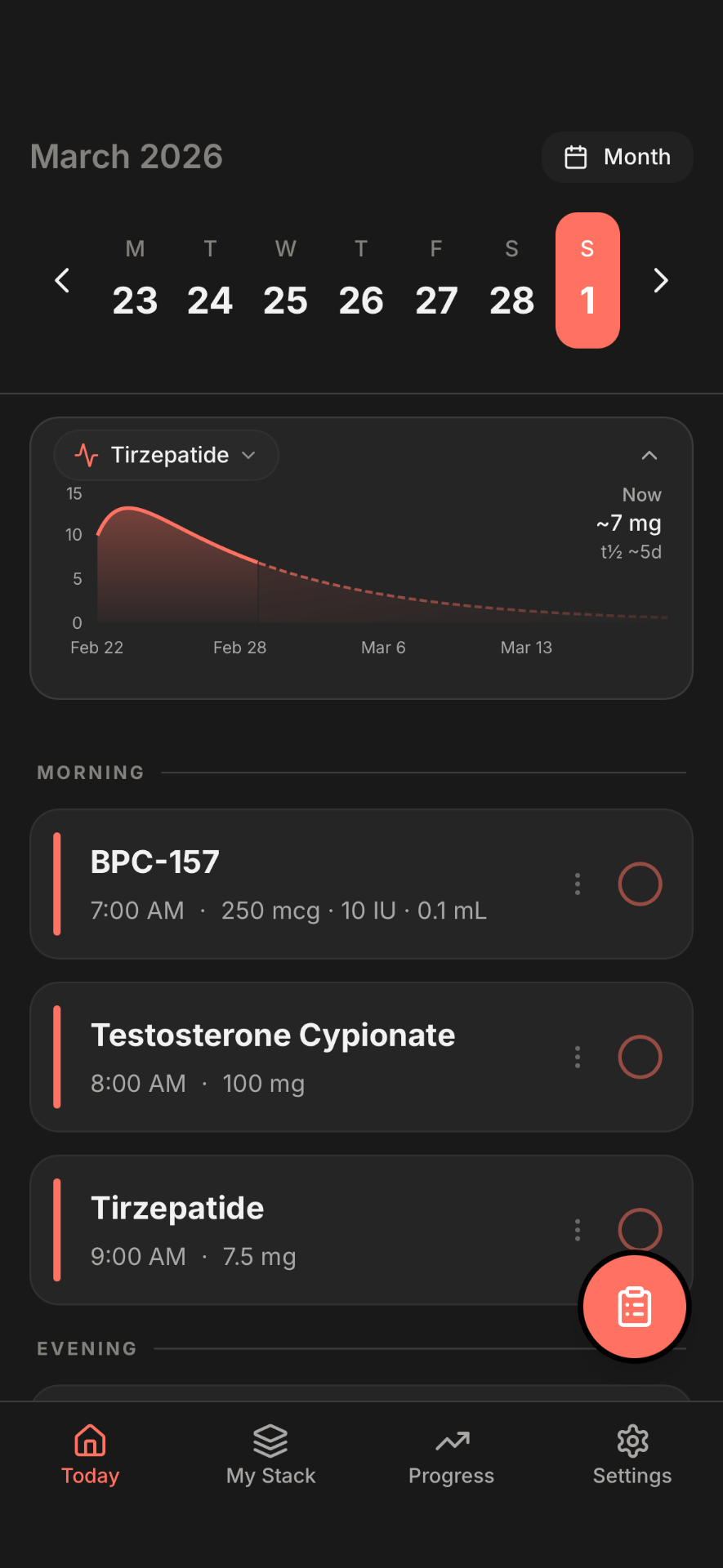
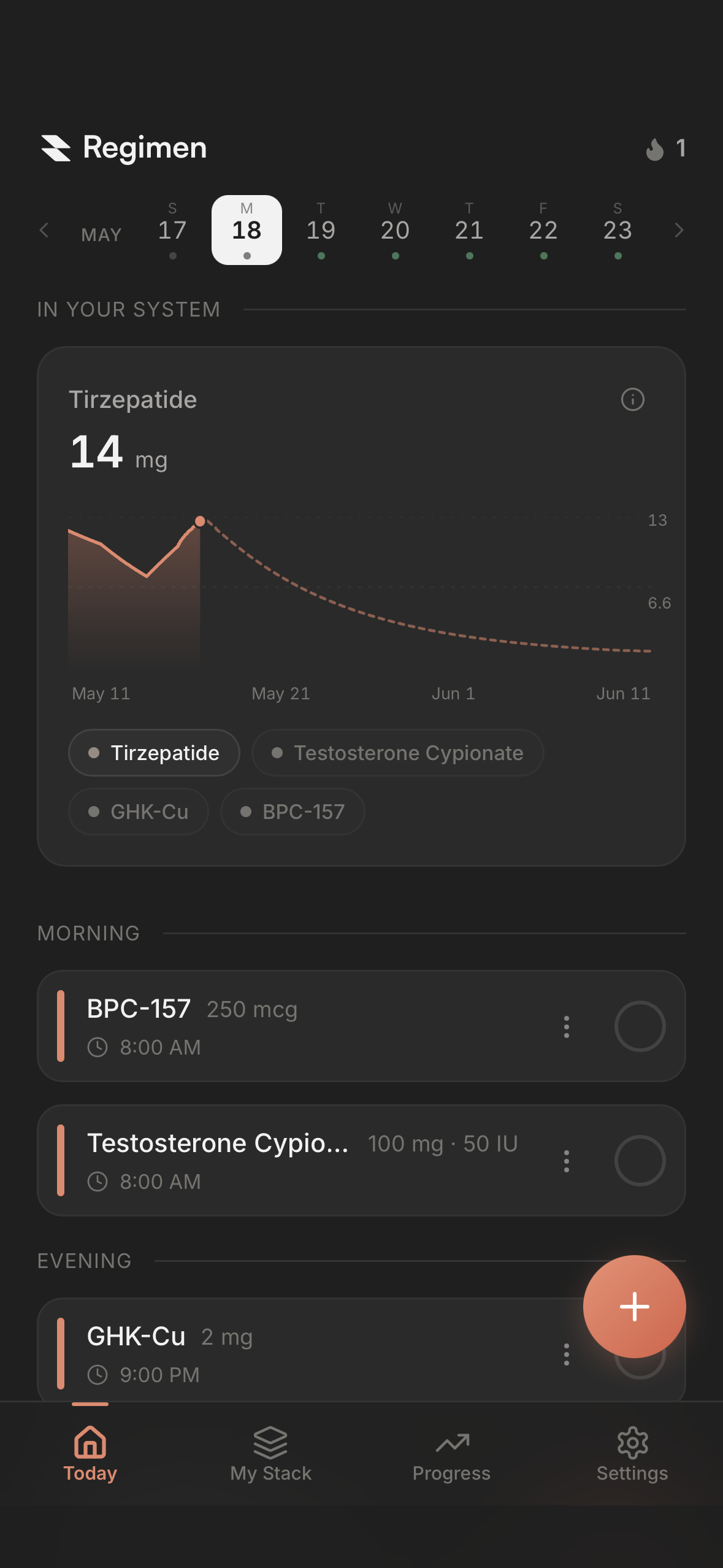
- Medication level curves for every compound