If you’re in Denmark and researching peptides, the landscape looks similar to Norway and Sweden: more regulated than the UK, but not a closed door. Here’s what the rules actually mean and what your options are.
The Danish Regulatory Framework
Denmark’s Lægemiddelloven (Danish Medicines Act) classifies any substance with pharmacological activity intended for human use as a medicine requiring authorization. This is the framework that governs peptides in Denmark.
Most research peptides (BPC-157, TB-500, GHK-Cu, Semax) are not registered as medicines in Denmark. That means they cannot legally be sold or imported for human use without authorization from the Danish Medicines Agency (Lægemiddelstyrelsen).
This is medicine regulation, not drug law. Unregistered peptides are not narcotic-controlled substances in Denmark. There is no criminal possession charge for personal amounts. The enforcement mechanism is customs seizure, not prosecution.
What that means practically: importing peptides from international research chemical suppliers carries real seizure risk at Danish Customs (Toldstyrelsen). Packages from known UK or US peptide suppliers are a known target. Your package may arrive. It may not.
The Compounding Pharmacy Route
The legitimate access pathway in Denmark is through a compounding pharmacy (apotek) with a physician prescription. Danish apoteker can compound certain peptide preparations when a licensed physician writes the prescription.
The process:
- Find a private functional medicine doctor or sports medicine physician in Copenhagen who is familiar with peptide protocols. These exist, primarily within the clinic ecosystem that already handles TRT and performance medicine.
- The physician writes a prescription for the specific peptide, dose, and formulation.
- A compounding-capable apotek prepares the compound.
- You collect directly from the pharmacy.
This route takes more effort upfront than ordering from a UK supplier. It is also entirely above-board.
The challenge is finding the right physician. Copenhagen’s functional medicine and sports medicine community is small but real. Clinics that already manage TRT protocols are your best starting point for finding a prescriber familiar with peptides.
Popular Peptides in the Danish Context
Denmark has a strong sports culture centered on handball, football, and cycling. BPC-157 for musculoskeletal injury recovery is the peptide that generates the most practical interest in this community, for obvious reasons.
BPC-157: The most commonly discussed peptide in Danish sports and fitness circles. Injury recovery, tendon and ligament healing, gut health. Protocols are typically 4 to 8 weeks. Through the compounding pharmacy route, subcutaneous or intramuscular injection are both available.
TB-500: Often stacked with BPC-157 for injury recovery protocols. Similar regulatory status in Denmark: unregistered medicine, compounding pharmacy route is the clean path.
GHK-Cu: Topical use for skin health and wound healing is well within the scope of Danish cosmetic medicine and dermatology. Topical GHK-Cu preparations are the most accessible application in Denmark, as they overlap with established compounding pharmacy work in dermatology.
Semax: Interest from Denmark’s tech and biohacking community (Copenhagen has an active biohacking scene). Intranasal formulations are of particular interest. The Intranasal Calculator can help you calculate volumes for intranasal peptide protocols.
Use the Peptide Calculator to calculate per-dose volumes from reconstituted vials for any injection-based protocol.
Honest Framing: What to Expect
The Danish peptide landscape is navigable, not closed. The two realistic paths are:
Grey market import: Packages from UK or EU research chemical suppliers do arrive in Denmark. Some don’t. The customs risk is real and not theoretical. There is no reliable way to predict which packages get pulled. If you go this route, you accept the risk.
Compounding pharmacy: Slower to set up. Requires finding the right prescriber. Once established, it’s clean, consistent, and legal. The initial friction is the investment.
Many people in Denmark who are serious about long-term peptide protocols end up moving toward the compounding pharmacy route once they experience a customs seizure or two.
Anti-Doping Note
Danish anti-doping is enforced through Anti Doping Danmark. If you compete in any tested sport in Denmark, several peptides (BPC-157, TB-500, growth hormone peptides) are prohibited under the WADA code. This does not affect recreational users or non-competing fitness practitioners. Know which category you’re in before starting.
Related Denmark Guides
For TRT access in Denmark, see our full Denmark TRT Guide. For GLP-1 medications in Denmark including Ozempic and Wegovy, see the Denmark GLP-1 Guide.
Frequently Asked Questions
Are peptides legal in Denmark?
Peptides are regulated as medicines under Lægemiddelloven if intended for human use. They are not narcotic-controlled substances. Importing unregistered peptides carries customs seizure risk under Danish medicine import regulations. The legal route is through a compounding apotek with a physician prescription.
Can I import peptides from the UK into Denmark?
Unregistered medicines cannot be legally imported for human use without authorization. Toldstyrelsen (Danish Customs) enforces this. Packages from UK peptide suppliers are a known seizure target. Personal import of small quantities sometimes passes through, but the risk is real.
What’s the compounding pharmacy route in Denmark?
What is the compounding pharmacy route for peptides in Denmark?
A licensed physician writes a prescription for the peptide and formulation. A compounding-capable Danish apotek prepares the compound. You collect from the pharmacy. This is the legally clean access path in Denmark and requires finding a physician familiar with peptide protocols, primarily in Copenhagen.
Which peptides are most commonly used in Denmark?
BPC-157 for injury recovery is the most discussed, driven by Denmark’s handball and sports culture. TB-500 is commonly stacked with BPC-157. GHK-Cu topical for skin health overlaps with mainstream Danish cosmetic medicine. Semax is of interest in the biohacking community.
Do I need a prescription for peptides in Denmark?
To access peptides through the legal compounding pharmacy route, yes: a physician prescription is required. Research chemical purchases online do not require a prescription, but importing them carries customs seizure risk under Danish medicines regulations.
This article is for informational purposes only and does not constitute medical advice. Discuss all treatment decisions with your healthcare provider.
Ready to track your protocol?
- Smart reminders so you never miss a dose
- Track weight, photos, and progress over time
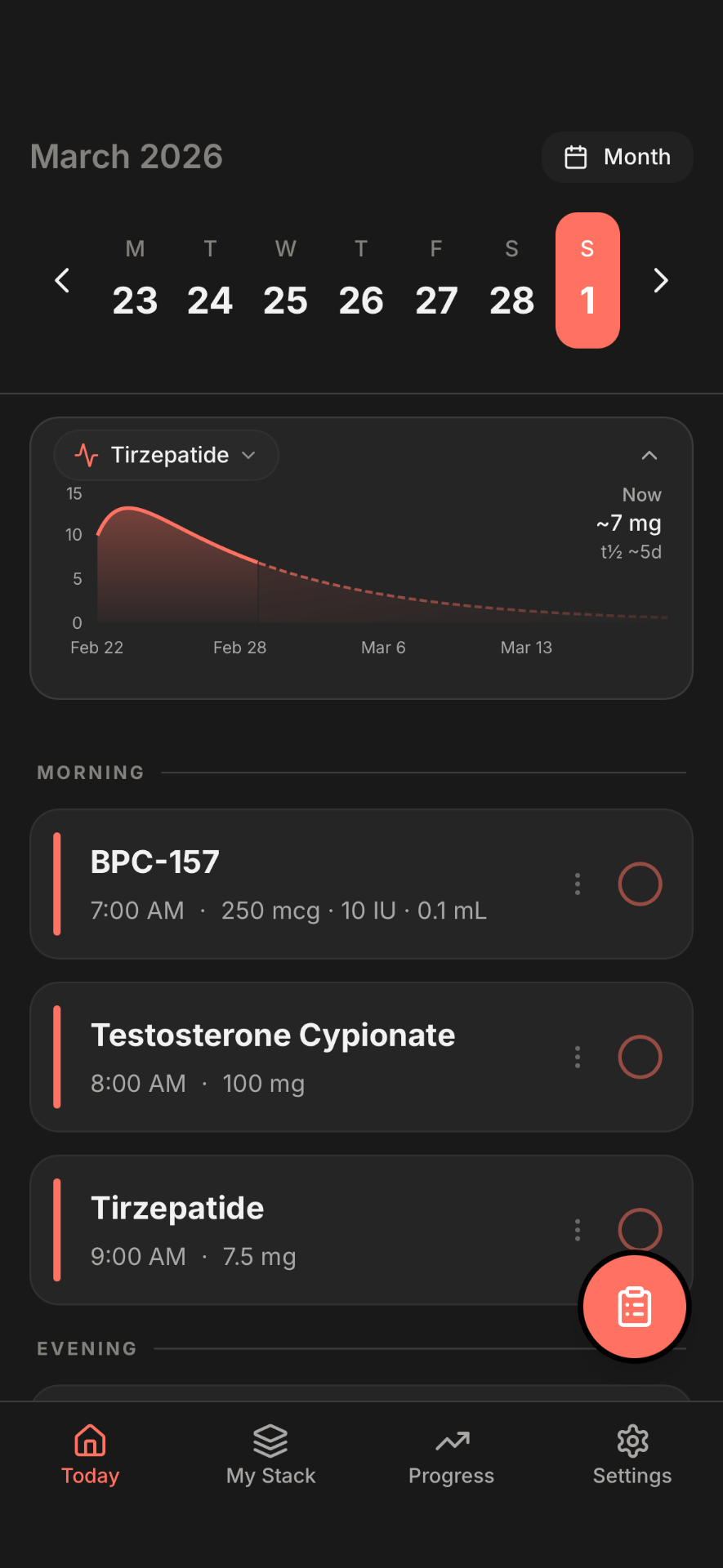
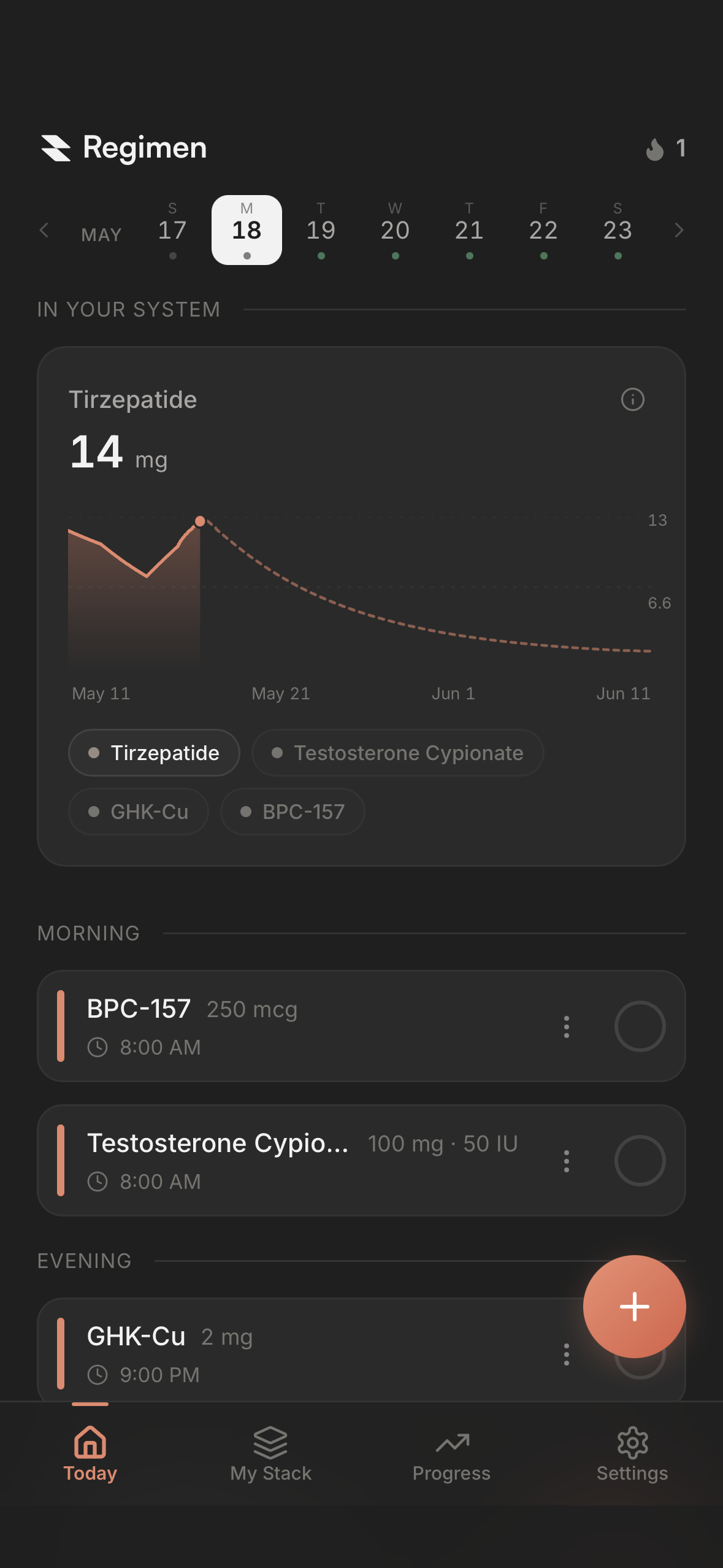
- Medication level curves for every compound