Quick answer
The most common side effects of Mounjaro are nausea, diarrhoea, vomiting, constipation and stomach pain. In the UK product information they are very common, affecting more than 1 in 10 people, and most are mild or moderate. They are worst in the days after each dose increase and ease at a steady dose.
What are the side effects of Mounjaro?
Mostly digestive: nausea, diarrhoea, vomiting, constipation and stomach pain, strongest after each step-up. Indigestion, burping, wind, reflux, tiredness, dizziness, hair loss and injection site reactions are common too. Serious side effects such as pancreatitis are uncommon.
Mounjaro is tirzepatide, a once-weekly injection in a KwikPen, used in the UK for weight management and type 2 diabetes. The figures on this page come from Lilly’s UK Summary of Product Characteristics (SmPC, revised 29 August 2026), mostly from the pooled SURMOUNT weight-loss trials at the 5, 10 and 15 mg maintenance doses.
Mounjaro Side Effects List
How often each one happens, in the SmPC’s own groups:
- Very common (more than 1 in 10): nausea, diarrhoea, vomiting, constipation, stomach pain
- Common (up to 1 in 10): indigestion, bloating, burping, wind, acid reflux, tiredness, dizziness, low blood pressure, hair loss, injection site reactions, allergic reactions (mostly rash), gallstones
- Uncommon (up to 1 in 100): gallbladder inflammation, acute pancreatitis, slowed stomach emptying, a change in taste, changes in skin sensation, a faster heart rate
- Rare (up to 1 in 1,000): severe allergic reactions (anaphylaxis, swelling of the face and throat)
In the weight-loss trials, 55.6 to 55.8 percent of people had a digestive side effect at any dose, against 29.7 percent on placebo. The total barely changed between 5, 10 and 15 mg. Nausea affected 24.6, 29.0 and 28.0 percent by dose (8.5 percent on placebo) and diarrhoea 18.7, 20.8 and 22.5 percent (7.8 percent on placebo). Of those digestive side effects, 61 percent were mild and 34.4 percent moderate.
Headache is not in the SmPC’s list. Dehydration and eating very little can both cause one.
When Do Mounjaro Side Effects Start?
Usually in the first few days after a pen dose, and again after each dose increase. Everyone starts on 2.5 mg for four weeks, then 5 mg, with any further 2.5 mg steps at least four weeks apart. Blood levels peak 8 to 72 hours after a dose, so any nausea tends to appear over the next day or two.
How Long Do Mounjaro Side Effects Last?
The SmPC does not give a number of days. It says nausea, vomiting and diarrhoea were more common during dose escalation and decreased over time. So for most people the side effects follow the dose steps: a few rough days after each increase, then easier weeks at a steady dose.
In the weight-loss trials, 1.9, 3.3 and 4.3 percent of people stopped Mounjaro because of digestive side effects at 5, 10 and 15 mg, against 0.5 percent on placebo. If side effects don’t settle, staying on the current dose for longer, or a lower maintenance dose, is something to discuss with your prescriber.
Mounjaro Side Effects in Women
The side effect list is the same for women and men. What is specific to women:
- The pill: Mounjaro slows how fast the stomach empties, which can make oral contraceptives less reliable. The SmPC advises switching to a non-oral method, or adding a barrier method such as condoms, for 4 weeks after starting and for 4 weeks after each dose increase.
- Pregnancy: Mounjaro should not be used in pregnancy. Stop it at least 1 month before a planned pregnancy, because it takes time to leave the body.
- Hair loss: reported more often by women. In Lilly’s US trial data, 7.1 percent of women and 0.5 percent of men reported it.
Mounjaro and Hair Loss
In the SURMOUNT-1, -2 and -3 trials, 4.9 percent of people on Mounjaro reported hair loss against 1 percent on placebo. It was mostly mild, most people recovered while staying on treatment, and no one stopped Mounjaro because of it. Shedding a few months into fast weight loss is common with any kind of rapid weight loss. Our GLP-1 hair loss guide covers what helps.
Tiredness, Dizziness and Feeling Faint
Tiredness (including weakness and low energy) is common. Dizziness and low blood pressure are common in the weight-loss trials, and 94 percent of the low blood pressure events were mild to moderate. Eating far less than before, too little fluid and too little salt make all three worse. Stand up slowly, drink more on the days after a dose increase, and tell your prescriber if you take blood pressure medicine and are losing weight quickly.
Mounjaro Long-Term Side Effects
These are the longer-term risks the SmPC warns about:
- Gallbladder: gallbladder inflammation in 0.6 percent against 0.2 percent on placebo, gallstones 1.1 against 1.0 percent. Linked to weight loss. Pain in the upper right of the stomach, fever or yellowing skin are the signs.
- Pancreatitis: uncommon, but serious cases, including fatal ones, have been reported since launch. Persistent, severe stomach pain is the sign. Mounjaro has not been studied in people who have had pancreatitis before.
- Kidneys: vomiting and diarrhoea can cause dehydration, which can affect the kidneys. Older people are more at risk.
- Eyes, in type 2 diabetes: a fast improvement in blood sugar can temporarily worsen diabetic retinopathy.
- Heart rate: up about 3 beats per minute on average, against under 1 on placebo.
- Anaesthesia: food can stay in the stomach longer, so tell the team before any operation or procedure under sedation that you take Mounjaro.
Does Mounjaro Cause Cancer?
There is no evidence that it does in people. In a two-year study in rats, tirzepatide increased thyroid C-cell tumours at all doses tested, and the SmPC says the relevance to humans is unknown. A six-month study in mice found no increase. The UK product information carries no boxed warning; the US label does, and there Mounjaro is not used by anyone with a personal or family history of medullary thyroid cancer or MEN 2.
Low Blood Sugar
Mostly a risk for people with type 2 diabetes who also take a sulphonylurea (such as gliclazide) or insulin. In SURMOUNT-2, a weight-loss trial in people with type 2 diabetes, clinically significant low blood sugar affected 4.2 percent on Mounjaro against 1.3 percent on placebo, and the risk was higher with a sulphonylurea. Shakiness, sweating, confusion and a fast heartbeat are the signs.
The KwikPen and Benzyl Alcohol
The multi-dose KwikPen contains 5.4 mg of benzyl alcohol in each 0.6 ml dose as a preservative. It can cause allergic reactions, and people with liver or kidney problems should know it can build up over time. Injection site reactions (mainly redness and itching) affected 8.0 percent of people in the weight-loss trials against 1.8 percent on placebo. Across all trials, 91 percent were mild. Rotating between the stomach, thigh and upper arm helps.
How to Ease the Common Side Effects
- Nausea: smaller meals, less fatty or fried food in the two days after a dose, and stop when you feel full.
- Constipation: water, fibre and a daily walk. Ask a pharmacist before taking a laxative.
- Diarrhoea and vomiting: replace fluids and salts. Rehydration sachets from a pharmacy help.
- Burping and reflux: smaller portions and not eating late in the evening.
When to Get Help
Call 111, or your GP or prescriber, straight away if you have:
- Severe stomach pain that won’t go away, sometimes spreading to your back
- Vomiting or diarrhoea that stops you keeping fluids down
- Pain in the upper right of your stomach, fever, or yellowing skin or eyes
- Shakiness, sweating or confusion if you also take insulin or a sulphonylurea
- Changes in your vision, if you have type 2 diabetes
Call 999 for swelling of the face, lips or throat, or trouble breathing. You can report a side effect to the MHRA through the Yellow Card scheme.
Tracking Mounjaro Side Effects
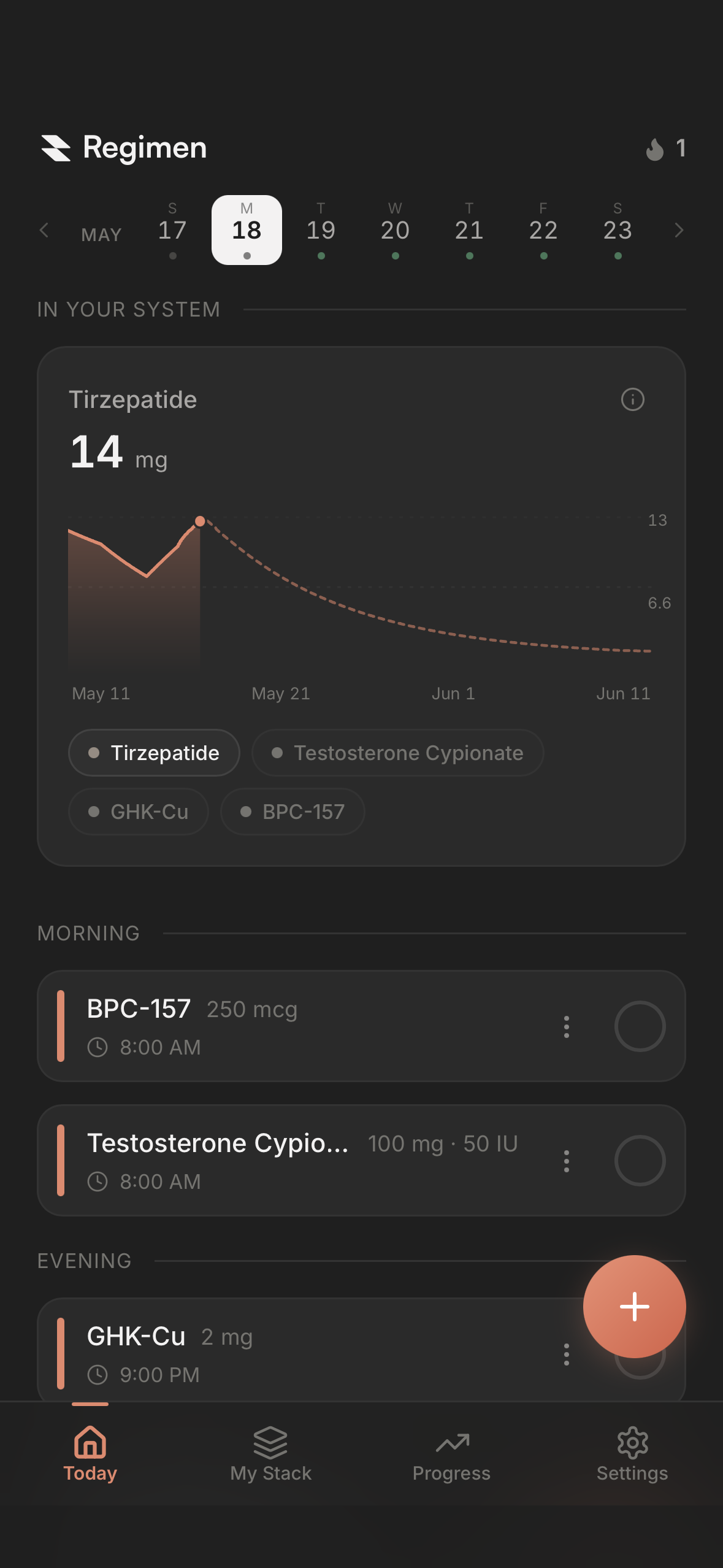
Side effects follow the dose steps, so they are easier to manage when you can see them against your doses. In Regimen you log each KwikPen dose, rate side effects and 50+ daily markers, and track weight alongside. Built-in pattern detection shows which ones line up with your dose increases. It is a free Mounjaro tracker for one medication, on iPhone and Android.
Frequently Asked Questions
What are the most common side effects of Mounjaro?
Nausea, diarrhoea, vomiting, constipation and stomach pain. They are listed as very common (more than 1 in 10 people) in the UK product information. In the weight-loss trials, nausea affected 25 to 29 percent of people depending on the dose, against 8.5 percent on placebo.
How long do Mounjaro side effects last?
The product information does not give a number of days. It says nausea, vomiting and diarrhoea were more common while the dose was being increased and decreased over time. Most people feel the rough days after each step-up, then settle at a steady dose.
What are the long-term side effects of Mounjaro?
The listed long-term risks are gallbladder problems (gallstones and gallbladder inflammation), pancreatitis, kidney problems from dehydration, and temporary worsening of diabetic eye disease in people with type 2 diabetes. In rats, tirzepatide caused thyroid tumours; whether that applies to people is unknown.
Does Mounjaro cause cancer?
There is no evidence that it does in people. In a two-year rat study, tirzepatide increased thyroid C-cell tumours, and the product information says the relevance to humans is unknown. A study in mice found no increase.
What are the side effects of Mounjaro in women?
The side effects are largely the same for women and men. Two things matter specifically: Mounjaro can make the contraceptive pill less reliable for 4 weeks after starting and after each dose increase, and it should be stopped at least 1 month before a planned pregnancy. Hair loss was also reported far more often by women in the trials.
Does Mounjaro make you lose hair?
Some people. In the weight-loss trials, 4.9 percent of people on Mounjaro reported hair loss against 1 percent on placebo. It was mostly mild, most people recovered while staying on treatment, and no one stopped Mounjaro because of it.
When should I call 111 or a doctor about Mounjaro side effects?
Get help straight away for severe stomach pain that won’t go away (sometimes spreading to your back), vomiting or diarrhoea you can’t keep fluids down through, signs of an allergic reaction such as swelling of the face or throat, or yellowing skin or eyes. In an emergency call 999.
Sources: Mounjaro KwikPen Summary of Product Characteristics, Eli Lilly (electronic medicines compendium, revised 29 August 2026); Zepbound prescribing information, US FDA (revised August 2026), for the hair loss split by sex.
This guide is informational. Mounjaro is a prescription medicine. Talk to your prescriber or pharmacist about any new symptoms or dose changes.