Quick answer
Tirzepatide side effects are usually worst in week 1 after a dose increase. Nausea, constipation, fatigue, and burping are most common. Splitting your weekly dose into smaller daily injections (1/7 of weekly) flattens peak/trough swings and noticeably reduces nausea for most users. Side effects typically settle within 2 to 3 weeks at a stable dose.
This guide is informational. Tirzepatide is a prescription medication. Work with a licensed healthcare provider for any dose changes or new symptoms.
What Most Tirzepatide Users Don’t Get Told About Side Effects
The first injection feels like nothing. That part rarely gets mentioned. You sit there waiting for something dramatic, and instead you go to bed and wake up and the day is ordinary. Then around hour 36, the appetite shift hits, and a day or two after that the nausea creeps in if it’s going to. That sequence (quiet, then appetite shift, then GI) is the actual pattern most people experience, and almost no clinic handout describes it that way.
The other thing nobody tells you: side effects don’t track the dose number, they track the dose change. Week 1 at 2.5mg can feel worse than week 4 at 5mg, because your body is reacting to the jump, not the absolute level. Once you internalize that, the whole timeline makes more sense.
Side Effects by Week: The Honest Timeline
| Phase | Week 1 after dose change | Week 2 | Week 3+ |
|---|---|---|---|
| 2.5 mg start | Mild nausea day 2 to 4, early satiety, light fatigue | Most symptoms fade, appetite suppression steady | Baseline; this dose is for tolerance, not weight loss |
| 5 mg | Sharper nausea peak 24 to 48 hours post-dose, sulfur burps may appear | Constipation more common than nausea | Stable; real weight loss usually starts here |
| 7.5 / 10 mg | Nausea and fatigue spike, brain fog common, food aversion | GI settles, energy returns | Steady; many users plateau here as their long-term dose |
| 12.5 / 15 mg | Strongest GI hit, reflux possible, heart rate noticeably up | Improvement but slower than lower tiers | Steady; this is where dose splitting helps most |
Nausea: Why It Happens and How Daily Microdosing Helps
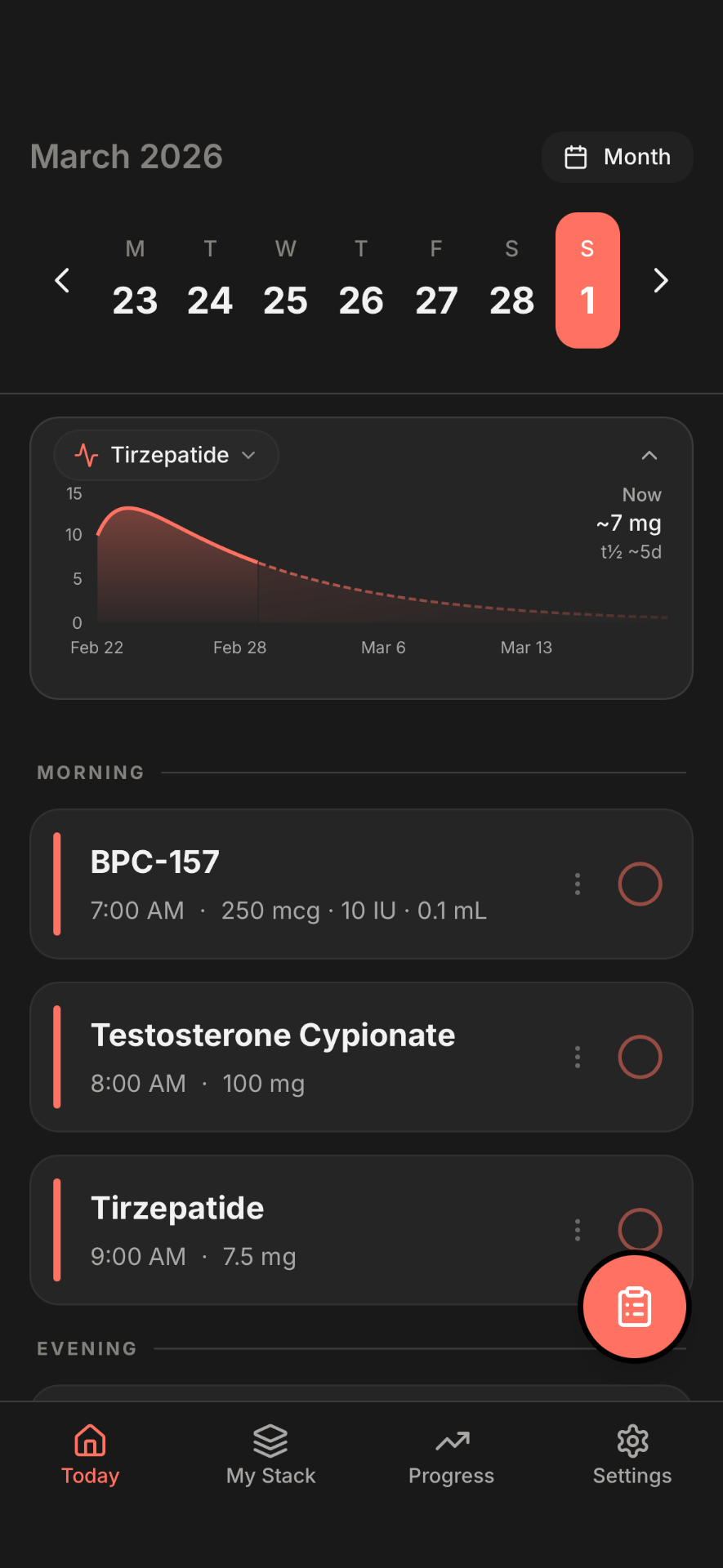
Tirzepatide has a half-life of around 5 days. When you inject the full weekly dose at once, blood levels spike for the first 24 to 48 hours, then taper. That spike is what triggers the nausea response in the brainstem and the slowed gastric emptying that makes food feel like it’s just sitting there.
Splitting your weekly dose into 7 daily injections (roughly 1/7 of the weekly dose per day) flattens that curve. You still get the therapeutic exposure, but without the post-injection peak. Most users who switch to daily microdosing report nausea drops within one to two weeks. The catch: you need to draw very small volumes accurately, which is where an insulin-syringe split-dose calculator helps.
Constipation: The One People Don’t Talk About
Slowed gastric emptying does not stop at the stomach. The whole GI tract slows down on tirzepatide, and the most common downstream effect is constipation. For many users it is more disruptive than nausea, because it lingers.
- Water: aim for clear urine. Most people are under-hydrated on GLP-1s without knowing it.
- Soluble fiber: psyllium husk, 5 to 10 g per day, taken with a full glass of water.
- Magnesium: 200 to 400 mg magnesium citrate or glycinate in the evening.
- Movement: a 20-minute walk after meals does more than most people expect.
Fatigue and “Tirzepatide Brain Fog”
Fatigue on tirzepatide is rarely the drug itself. It is almost always under-eating, dehydration, or low electrolytes. When appetite drops by 40 percent and you do not consciously eat enough protein and salt, energy crashes within a week. The fix is usually boring: 1.2 to 1.6 g of protein per kg of body weight per day, sodium with meals, and water.
Sulfur Burps: The Weird One
That rotten-egg burp is hydrogen sulfide produced when slowed digestion lets sulfur-containing proteins ferment longer than normal. It is not dangerous. It tends to spike 24 to 48 hours after a dose, especially after high-sulfur foods (eggs, broccoli, garlic, red meat). Reducing sulfur-heavy meals around your injection window, eating smaller portions, and chewing thoroughly helps. So does spacing protein across the day instead of one big meal.
Heart Rate Increase: When to Worry
Tirzepatide is commonly reported to raise resting heart rate by about 2 to 4 bpm, consistent with the prescribing information. Most users will not notice it. If you wear a watch and your resting heart rate has crept up by 8 to 10 bpm, that is the dose talking and usually stabilizes within a few weeks. A persistent increase over 15 bpm from your pre-tirzepatide baseline is worth flagging with your prescriber, especially if you have a cardiac history.
Injection Site Reactions and Rotation
Tirzepatide goes subcutaneously: abdomen (avoiding a 2-inch radius around the navel), upper outer thigh, or back of the upper arm. Mild redness or a small bump for 24 to 48 hours is normal. Rotate sites with each injection. A simple pattern: alternate left and right abdomen for the first two weeks, switch to thighs for the next two. If you split into daily doses, use a seven-site rotation so each spot gets a week to recover.
Daily vs Weekly Injection Schedule: Side Effect Comparison
| Effect | Weekly bolus | Daily microdose (1/7 weekly) |
|---|---|---|
| Nausea peak | Sharp, 24 to 48 hours post-dose | Much lower, often gone |
| Appetite suppression | Strong early week, weakens by day 5 to 7 | Steady across the week |
| Constipation | Same total burden | Similar; not noticeably different |
| Sulfur burps | Cluster around the bolus | Rare |
| Injection burden | 1 per week | 7 per week, tiny volumes |
| Late-week hunger | Common days 5 to 7 | Largely eliminated |
What to Track: The Markers That Actually Tell You What’s Working
If you are going to bother tracking, track the things that move with tirzepatide. The Regimen app includes 50+ daily markers built specifically for this. The ones that matter most on tirzepatide:
- Nausea (1 to 10): log daily, watch the pattern around dose timing
- Bowel function: frequency and consistency, since constipation is the dominant GI complaint
- Energy: separately from mood, because they do not always move together
- Resting heart rate: pulls from Apple Health or Health Connect automatically
- Weight: daily, fasted, same time
- Injection site reactions: Regimen logs site and reaction per shot
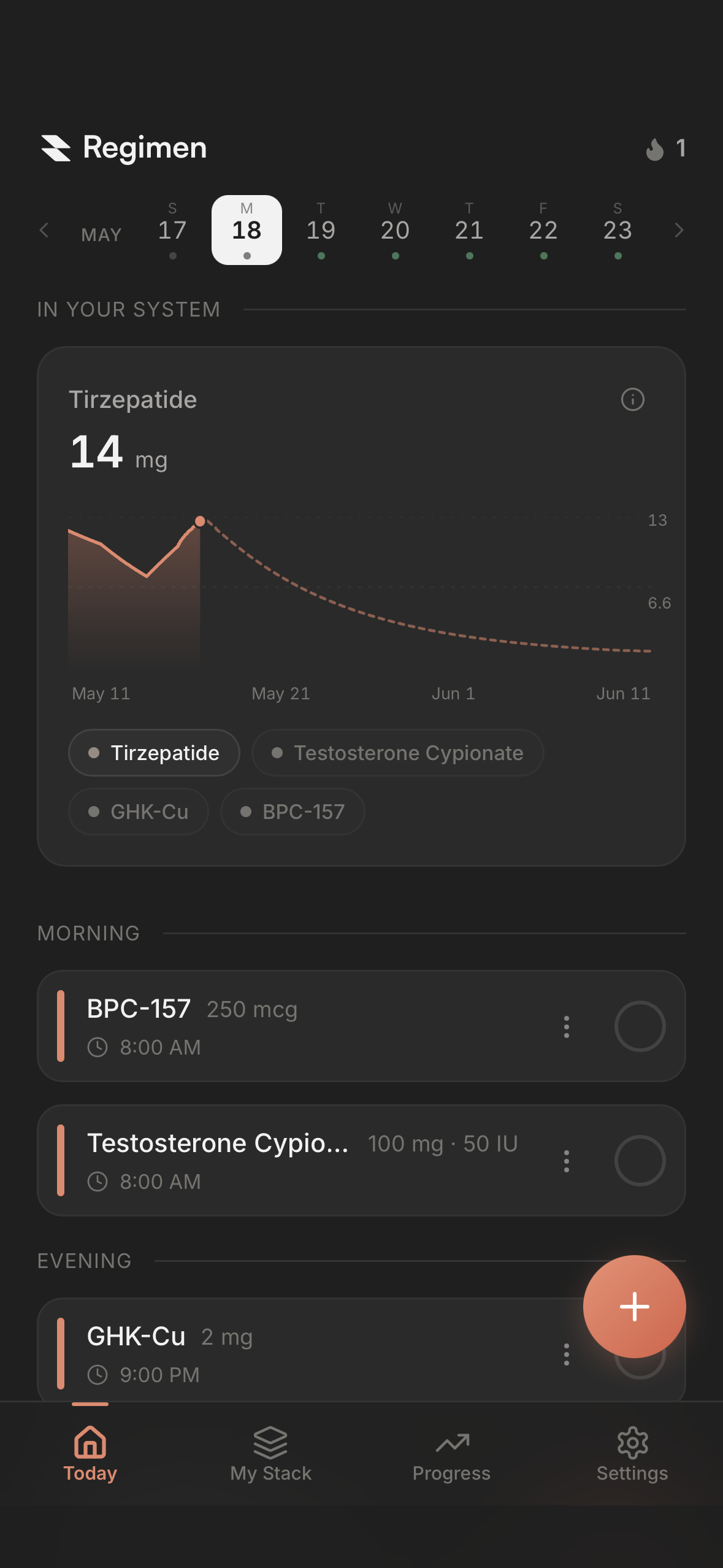
Then Regimen’s built-in pattern detection connects those markers to your dose schedule and shows you which ones are tracking with which doses. That is the loop that tells you whether your protocol is working without guessing. For a deeper view of what to log day-to-day, see our peptide tracker app comparison, and if you are considering a switch up, the tirzepatide to retatrutide switching guide covers what changes when you change compounds.
Frequently Asked Questions
What are the most common tirzepatide side effects?
Nausea, constipation, fatigue, decreased appetite, and burping (sometimes sulfur-flavored) are the most common. Most are mild and concentrated in the first week after a dose increase. Less common but worth knowing about: injection site reactions, mild heart rate elevation, and reflux at higher doses.
How long do tirzepatide side effects last?
For most users, acute side effects after a dose increase improve within 1 to 2 weeks and largely settle by week 3. Once you are on a stable dose for a month or more, ongoing side effects are usually limited to reduced appetite and mild constipation that responds to fiber and water.
Does splitting tirzepatide into daily injections reduce side effects?
Yes, for nausea and late-week hunger especially. Splitting the weekly dose into 7 daily microdoses flattens the post-injection spike that drives most acute nausea. It does not change constipation much, since that tracks total exposure. The tradeoff is 7 small injections per week instead of 1.
What helps with tirzepatide nausea?
Inject in the evening so you sleep through the peak. Keep meals smaller and lower in fat for the first 48 hours after a dose. Ginger (tea or chews) helps some users. Hydration matters more than people expect. If nausea is severe and persistent, splitting into daily doses or stepping back to the previous dose tier are the two most effective fixes.
Why am I so tired on tirzepatide?
Almost always under-eating, dehydration, or low electrolytes. Aim for 1.2 to 1.6 g of protein per kg of body weight, salt your food, and check your water intake. If you are eating under 1,000 calories most days, fatigue is the predictable result. The drug itself rarely causes lasting tiredness once the first week settles.
Are sulfur burps a sign of liver damage on tirzepatide?
No. Sulfur burps are caused by slowed digestion allowing sulfur-containing food proteins to ferment longer in the stomach. They are uncomfortable but harmless and tend to settle on a stable dose. Lowering sulfur-heavy foods around your injection day usually reduces them.
Should I be worried about my heart rate on tirzepatide?
A small resting heart rate increase (2 to 5 bpm on average, occasionally up to 8 to 10 bpm) is expected and usually stabilizes. A persistent increase over 15 bpm from your pre-tirzepatide baseline, or a resting rate consistently over 100, is worth raising with your prescriber, especially if you have a cardiac history.
Ready to track your GLP-1?
- Smart reminders so you never miss a dose
- Track weight, photos, and progress over time
- Medication level curves for every compound