←Part of TRT, Explained: The Complete Guide
The Bottom Line
Low testosterone is associated with higher rates of depression, anxiety, and cognitive decline. TRT can meaningfully improve mood, energy, and mental clarity in men with confirmed hypogonadism - but it is not a substitute for mental health treatment. The timeline for mental health improvements is typically 3-6 weeks for mood and energy, with cognitive benefits continuing over months.
The Testosterone-Mood Connection
Testosterone receptors are densely concentrated in brain regions involved in mood regulation, including the amygdala, hippocampus, and prefrontal cortex. When testosterone levels drop below the normal range, these areas receive less activation, which can manifest as:
- Persistent low mood or irritability
- Loss of motivation and drive
- Difficulty concentrating (“brain fog”)
- Increased anxiety or rumination
- Reduced sense of well-being
- Social withdrawal
These symptoms overlap significantly with clinical depression, which is why low testosterone is frequently misdiagnosed as depression alone. Many men spend years on antidepressants before someone checks their testosterone levels.
What Research Shows About TRT and Depression
A 2019 meta-analysis published in JAMA Psychiatry analyzed 27 randomized controlled trials and found that testosterone therapy significantly reduced depressive symptoms in men with hypogonadism. The effect was strongest in men with confirmed low testosterone levels (below 300 ng/dL) who were not already on antidepressants.
Key findings from the research:
- TRT reduced depressive symptoms with a moderate-to-large effect size in hypogonadal men.
- The antidepressant effect was dose-dependent - higher doses within the therapeutic range produced greater mood improvement.
- Men with both low T and mild-to-moderate depression showed the most improvement.
- TRT was less effective for men with normal testosterone levels experiencing depression (not a universal antidepressant).
TRT and Anxiety
The relationship between testosterone and anxiety is more nuanced. Low testosterone is associated with increased anxiety in many men, and restoring levels to the normal range often reduces anxiety symptoms. However:
- Some men experience increased anxiety initially as their body adjusts to rising testosterone and estradiol levels. This typically resolves within 4-6 weeks.
- Estradiol management matters. If estrogen rises too high from aromatization, it can worsen anxiety. Splitting doses into more frequent injections often resolves this without needing an aromatase inhibitor.
- Stable levels reduce anxiety. Men on once-weekly injections with large peaks and troughs often report more mood variability than men on more frequent protocols. See the microdosing TRT guide.
Brain Fog and Cognitive Function
“Brain fog” is one of the most common complaints from men with low testosterone. It presents as difficulty concentrating, poor short-term memory, feeling mentally “slow,” and reduced verbal fluency.
Testosterone supports cognitive function through multiple mechanisms: neurotransmitter regulation (dopamine, serotonin), neuroprotection, and cerebral blood flow. Most men on TRT report noticeable cognitive improvement within 4-8 weeks, with continued gains over 3-6 months.
Timeline for Mental Health Improvements on TRT
| Timeframe | What Improves |
|---|---|
| Week 1-2 | Some men notice slightly improved sleep and subtle energy shifts. Most notice nothing yet. |
| Week 3-4 | Energy improvement, reduced afternoon fatigue, slightly better mood baseline. |
| Month 2 | Noticeable mood improvement. Reduced irritability. Better motivation and drive. |
| Month 3-4 | Cognitive clarity improves. Brain fog lifts. Verbal fluency and focus sharpen. |
| Month 6+ | Sustained improvement. Mood stabilizes at new baseline. Confidence and social engagement increase. |
What to Track Between Appointments
Mental health improvements are subjective and easy to forget. A daily 30-second check-in capturing mood (1-5), energy (1-5), sleep quality, and a brief note gives you and your doctor objective data to evaluate whether your protocol is working.
This is especially important during the first 3 months when your provider is optimizing your dose. “I feel a bit better” is less useful than “my average mood score went from 2.3 to 3.8 over the last 6 weeks.”
When TRT Is Not Enough
TRT addresses one piece of the mental health puzzle. Other factors that significantly affect mood and cognition include:
- Sleep quality: Sleep apnea is common in men with low T. If your sleep does not improve on TRT, get a sleep study.
- Thyroid function: Hypothyroidism mimics many low T symptoms. Check TSH, free T3, and free T4.
- Vitamin D and B12: Deficiencies are common and affect mood independently of testosterone.
- Exercise: The antidepressant effect of regular exercise is well-established and synergistic with TRT.
- Professional support: Therapy (CBT, in particular) is effective for depression and anxiety regardless of testosterone status.
Important: TRT Is Not a Substitute for Mental Health Treatment
If you are experiencing suicidal thoughts, severe depression, or debilitating anxiety, seek professional help immediately. TRT may help with mood over weeks to months, but it is not an acute intervention. Continue any prescribed psychiatric medications and therapy while exploring whether low testosterone is contributing to your symptoms.
TRT and Antidepressants — Can You Do Both?
This is one of the most common questions men ask when they are considering TRT, and one that too many online forums get wrong. The short answer is yes.
Can you take TRT and SSRIs/SNRIs at the same time? Yes. There are no major pharmacological interactions between testosterone cypionate (or enanthate) and common antidepressants including sertraline (Zoloft), escitalopram (Lexapro), fluoxetine (Prozac), duloxetine (Cymbalta), venlafaxine (Effexor), or bupropion (Wellbutrin). Your doctor should always review your full medication list, but from a drug interaction standpoint, combining TRT and antidepressants is generally safe.
The potential benefit most men do not expect: One of the most frustrating side effects of SSRIs is sexual dysfunction (low libido, difficulty achieving or maintaining erections, and delayed or absent orgasm). These side effects affect 40-60% of men on SSRIs and are a leading reason men stop their antidepressants. TRT can meaningfully improve SSRI-induced sexual side effects. By restoring testosterone to optimal levels, many men find their libido returns and erectile function improves, even while still taking their SSRI.
Can you reduce your antidepressant dose after starting TRT? Some men find that TRT stabilizes their mood enough that their doctor is comfortable gradually reducing their antidepressant dose. However, never reduce or stop an SSRI on your own. Abruptly discontinuing SSRIs can cause withdrawal syndrome (dizziness, nausea, brain zaps, mood instability, flu-like symptoms). Any dose changes must be gradual, supervised by your prescribing physician, and based on clinical assessment.
Recommended timeline:
- Start TRT and keep your current antidepressant dose unchanged
- Give TRT 3-6 months to reach full effect on mood (testosterone’s mood benefits take longer than the physical effects)
- At your 6-month follow-up, discuss mood stability with both your TRT provider and your psychiatrist/prescriber
- If both agree, a gradual taper can be considered. Emphasis on gradual.
- Continue monitoring for several months after any dose reduction
The key message: Starting TRT does not mean stopping your antidepressant. These are complementary treatments, not competing ones. TRT addresses a hormonal deficiency. Antidepressants address neurotransmitter imbalances. Many men benefit from both simultaneously, and there is no shame or contradiction in using both tools.
The Estradiol-Mood Connection
If you are on TRT and your mood is off (anxious, irritable, weepy, flat, or just not right), the first thing to investigate is your estradiol (E2) level. This is the single most overlooked cause of mood problems in men on testosterone therapy.
Why E2 matters so much: When you inject testosterone, a portion of it converts to estradiol through an enzyme called aromatase. Estradiol is essential (men need it for bone health, cardiovascular function, libido, and brain function), but too much or too little causes problems. The symptoms mimic other conditions so closely that men (and sometimes their doctors) look everywhere except the E2 line on their lab work.
High E2 symptoms:
- Irritability and emotional reactivity (snapping at people, overreacting to small things)
- Crying more easily than usual
- Anxiety that feels physical (racing heart, tight chest, sense of dread)
- Water retention (puffy face, swollen fingers)
- Insomnia or disrupted sleep
- Nipple sensitivity or tenderness
- Decreased libido (yes, high E2 kills libido just like low T does)
Low E2 symptoms (often from excessive AI use):
- Flat, emotionless mood (not depressed exactly, but unable to feel joy or connection)
- Joint pain and stiffness (estradiol protects joints)
- Dry skin and eyes
- Low libido and poor erectile quality
- Fatigue that does not improve with sleep
- Feelings of depression or hopelessness
The critical insight: There is no universal “perfect” E2 number. Some men feel great at 25 pg/mL. Others feel great at 45 pg/mL. The optimal range for most men on TRT is roughly 20-50 pg/mL, but your sweet spot within that range is individual.
The pattern to watch for: If you felt amazing during weeks 3-5 of TRT but your mood deteriorated at weeks 6-10, E2 is the prime suspect. As testosterone builds up in your system, E2 rises with it and can overshoot before stabilizing. Many men who conclude “TRT made my anxiety worse” actually have an estradiol management issue that is fixable.
What to do:
- Track your mood daily alongside your injection schedule. Note energy, anxiety, irritability, and overall well-being. A simple 1-10 rating for each works.
- Get E2 (sensitive assay, the standard E2 test is unreliable for men) checked at every blood draw.
- Correlate your mood log with your lab results. Over 2-3 lab cycles, you will start to see which E2 range corresponds to your best mood.
- Share this data with your provider. “I feel best when my E2 is between 25 and 35” is infinitely more useful than “I do not feel right.”
The TRT Honeymoon Phase — And Why It Ends
Almost every man on TRT experiences this, and almost nobody warns them about it.
Weeks 3-6: The Honeymoon
Your testosterone levels are climbing. For the first time in months or years, your body has adequate (or above-adequate) testosterone. The effect is dramatic:
- Energy surges. You feel like you did 10 years ago.
- Mood lifts significantly. Colors seem brighter. You are optimistic.
- Libido comes roaring back. You feel like a teenager.
- Motivation and drive increase. You start projects, hit the gym harder, engage with life.
- Sleep improves. You wake up feeling rested.
You think: “This is incredible. Why did I not do this sooner? I am never going back.”
Weeks 6-10: The Comedown
Then it shifts. Gradually or suddenly, the magic fades:
- Energy normalizes (still better than pre-TRT, but the euphoria is gone)
- Mood may dip. Some men feel worse than pre-TRT temporarily.
- Libido levels off or seems to disappear
- Motivation is not as electric
- Anxiety or irritability may increase
- Sleep might become disrupted
You think: “It stopped working. Something is wrong. I need to increase my dose.”
What Is Actually Happening
Several things are changing simultaneously during this period:
- Initial supraphysiological levels: When you first start TRT, you may briefly achieve testosterone levels above your eventual steady state. This creates a temporary “enhanced” feeling.
- Estradiol is catching up. Aromatization takes time to ramp up. During the honeymoon, your T is high but your E2 has not risen proportionally yet. By week 6-8, E2 has caught up and may overshoot.
- SHBG adjusts. Sex hormone-binding globulin often decreases on TRT, changing the ratio of total to free testosterone. This takes weeks to stabilize.
- Receptor sensitivity normalizes. Your androgen receptors were starved for adequate signaling. The initial flood of testosterone creates a heightened response. As receptors adapt to the new normal, the subjective experience becomes less dramatic.
- Psychological adjustment. The contrast between “low T fog” and “adequate testosterone” is stark. Once adequate testosterone becomes your baseline, you lose the contrast effect.
What to Do (and What NOT to Do)
- Do not increase your dose. This is the most common mistake. Increasing your dose raises T and E2 further, creating a new cycle of highs and crashes. It is a chase that never ends.
- Do not panic. The honeymoon ending is not TRT failing. It is TRT normalizing.
- Get bloodwork at weeks 8-10. See where your testosterone, free testosterone, and estradiol have settled. These numbers, combined with how you feel, guide any protocol adjustments.
- Assess at month 3-6, not week 8. The real, sustainable benefits of TRT (stable energy, consistent mood, healthy libido, better body composition, improved sleep) emerge gradually over months 3-6. They are less dramatic than the honeymoon but far more reliable.
The honeymoon is a preview, not the product. The real product is waking up every day feeling consistently good instead of cycling between terrible and okay. That takes time to appreciate, especially after the intensity of those first few weeks.
Related Guides
- TRT Blood Work Guide — what labs to get and when
- TRT Side Effects Guide
- First TRT Injection: What to Expect
- Free Testosterone Calculator
- Low Testosterone Screening Quiz
This guide is for educational purposes only and is not medical advice. Depression, anxiety, and cognitive issues have many potential causes beyond testosterone levels. Always work with qualified healthcare providers - including mental health professionals - when addressing these concerns.
Ready to track your protocol?
- Smart reminders so you never miss a dose
- Track weight, photos, and progress over time
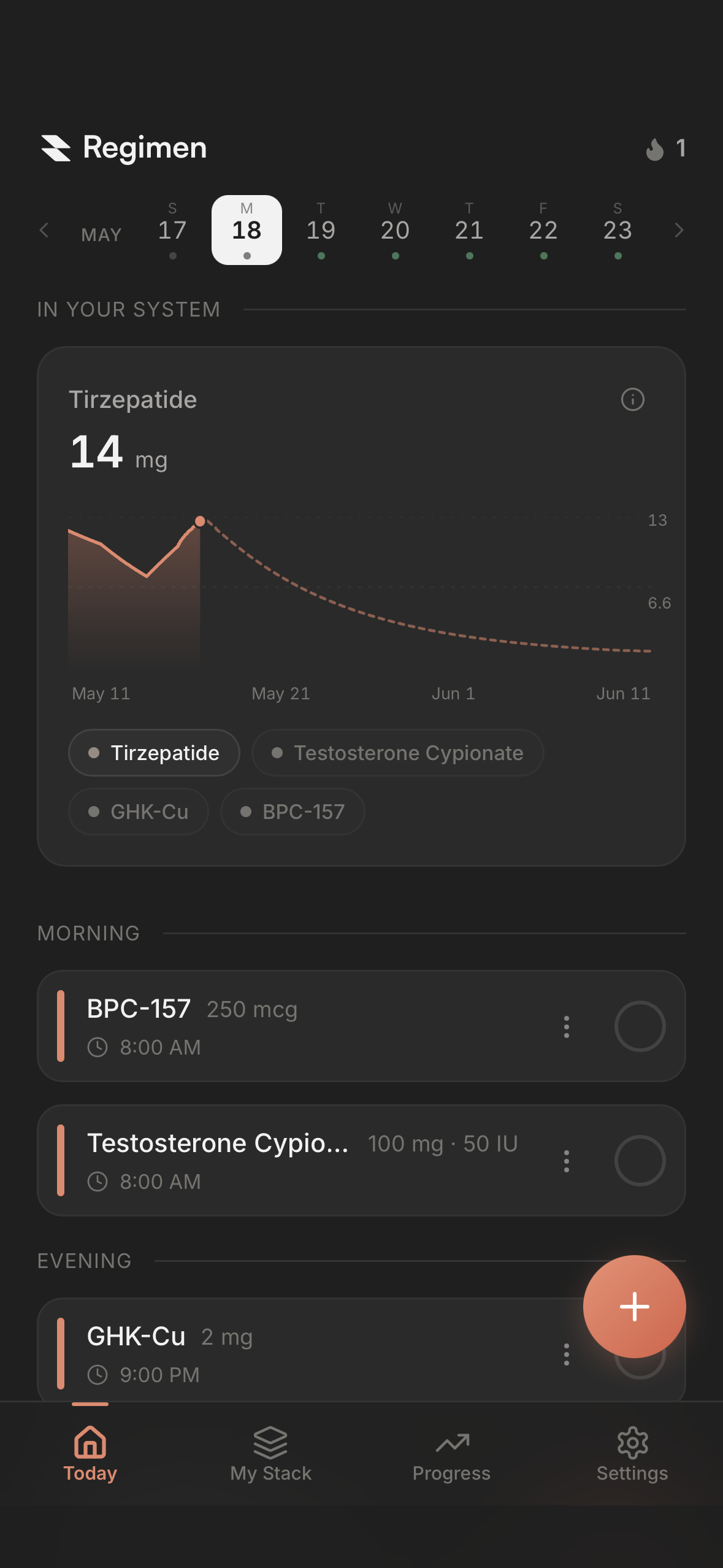
- Medication level curves for every compound
Frequently Asked Questions
Can TRT help with depression?
Research shows TRT significantly reduces depressive symptoms in men with confirmed low testosterone. A 2019 meta-analysis in JAMA Psychiatry found moderate-to-large effect sizes. The benefit is strongest in men with total T below 300 ng/dL who are not already on antidepressants.
Does TRT cause anxiety?
Some men experience temporary anxiety during the first 4-6 weeks as hormone levels adjust. This typically resolves. Long-term, most men with low T report reduced anxiety on TRT. Stable blood levels (via more frequent injections) tend to minimize mood fluctuations.
How long does it take for TRT to improve mood?
Most men notice mood improvement within 3-6 weeks. Energy typically improves first (weeks 2-4), followed by mood and motivation (month 2). Cognitive clarity and brain fog relief continue improving through months 3-4.
Can low testosterone cause brain fog?
Yes. Testosterone receptors are concentrated in brain regions involved in cognition. Low T is associated with poor concentration, reduced short-term memory, and decreased verbal fluency. Most men on TRT report noticeable cognitive improvement within 4-8 weeks.