The Bottom Line
Most TRT side effects are manageable and often preventable with proper dosing, injection frequency, and monitoring. The key is catching them early through consistent tracking and regular blood work. This guide covers every common side effect, why it happens, how common it is, and what to do about it.
Why Side Effects Happen on TRT
Testosterone replacement therapy introduces exogenous testosterone into your body, which triggers downstream hormonal changes. Three mechanisms cause most side effects:
- Aromatization: Your body converts some testosterone into estradiol (estrogen) via the aromatase enzyme. Higher testosterone peaks = more conversion = more estrogen-related side effects.
- Supraphysiological peaks: Injecting a large dose infrequently creates spikes well above natural levels, amplifying both aromatization and DHT conversion.
- Individual variation: Genetics determine how aggressively you aromatize, how sensitive your hair follicles are to DHT, and how your body handles red blood cell production.
Common TRT Side Effects and How to Manage Them
| Side Effect | Why It Happens | How Common | Management |
|---|---|---|---|
| High estradiol (E2) | Aromatization of testosterone to estrogen | Very common | Dose splitting, body fat reduction, AI only if needed |
| Elevated hematocrit | Testosterone stimulates red blood cell production | Common | Hydration, therapeutic phlebotomy, dose reduction |
| Acne | DHT increases sebum production | Common | Skincare routine, dose management, stable levels |
| Hair thinning/loss | DHT sensitivity (genetic) | Moderate | Discuss finasteride with doctor, dose adjustment |
| Water retention | Estrogen + sodium retention | Common early on | Usually resolves with stable levels, manage E2 |
| Testicular atrophy | LH/FSH suppression from exogenous T | Expected | hCG protocol if fertility or size is a concern |
| Mood changes | Hormonal fluctuation between doses | Variable | More frequent injections, consistent timing |
| Sleep apnea | Can worsen existing sleep apnea | Less common | Weight management, CPAP if needed, sleep study |
High Estradiol (E2)
Elevated estrogen is the most common side effect complaint on TRT. Symptoms include water retention, mood swings, sensitive nipples, and decreased libido. The modern approach is to manage E2 through injection frequency rather than reaching for an aromatase inhibitor (AI) first.
Splitting your weekly dose into 2-3 injections (or daily microdosing) reduces peak testosterone levels, which directly reduces aromatization. Many men who had E2 issues on weekly injections find they resolve completely on an every-other-day or daily protocol. See the microdosing TRT guide for dosing charts.
Elevated Hematocrit
Testosterone stimulates erythropoiesis (red blood cell production). Hematocrit above 52% warrants attention; above 54% requires intervention. This is the primary safety concern on long-term TRT. See the hematocrit management guide for a deep dive.
Acne and Oily Skin
DHT-driven sebum production is the culprit. This is most common in the first few months as your body adjusts. Keeping testosterone levels stable (through frequent injections) helps more than any topical treatment alone. A consistent skincare routine with salicylic acid or benzoyl peroxide addresses the symptoms while your levels stabilize.
Hair Loss
If you are genetically predisposed to male pattern baldness, TRT can accelerate it. This is a DHT-mediated effect and is largely determined by your genetics, not your dose. Some men discuss finasteride or dutasteride with their provider to mitigate this. Others accept it as a trade-off.
How Injection Frequency Reduces Side Effects
The single most effective strategy for reducing TRT side effects is increasing injection frequency. Weekly injections create a hormonal rollercoaster: high peaks that drive aromatization, followed by low troughs that cause fatigue and mood dips.
Splitting the same weekly dose into 2, 3, or even 7 injections flattens the curve:
- Lower peaks = less aromatization = lower E2
- Higher troughs = more stable energy and mood
- More consistent DHT levels = less acne
Use the split dose calculator to see exact volumes, or read the complete microdosing guide.
What to Track to Catch Side Effects Early
Most TRT side effects develop gradually. By the time they are obvious, they have been building for weeks. Daily tracking for 30 seconds catches patterns that a lab draw every 3 months cannot:
- Mood and energy trends (dipping on certain days of the week)
- Sleep quality changes
- Skin changes (oiliness, breakouts)
- Libido fluctuations
- Water retention (sudden weight changes)
When to Call Your Doctor
These situations require prompt medical attention:
- Hematocrit consistently above 54%
- Severe headaches, dizziness, or visual changes (possible polycythemia complications)
- Chest pain or shortness of breath
- Significant breast tissue growth (gynecomastia)
- Difficulty urinating or changes in urinary patterns
- Severe mood changes, depression, or anxiety that does not resolve
Related Guides
- TRT Hematocrit Management Guide
- Testosterone Cypionate Dosage Guide
- Microdosing TRT Guide
- TRT Blood Work Guide
- TRT Dose Calculator
This guide is for educational purposes only and is not medical advice. TRT side effect management should always be discussed with your prescribing provider. Do not change your dose, add medications, or stop TRT based solely on information in this article.
Ready to track your protocol?
- Smart reminders so you never miss a dose
- Track weight, photos, and progress over time
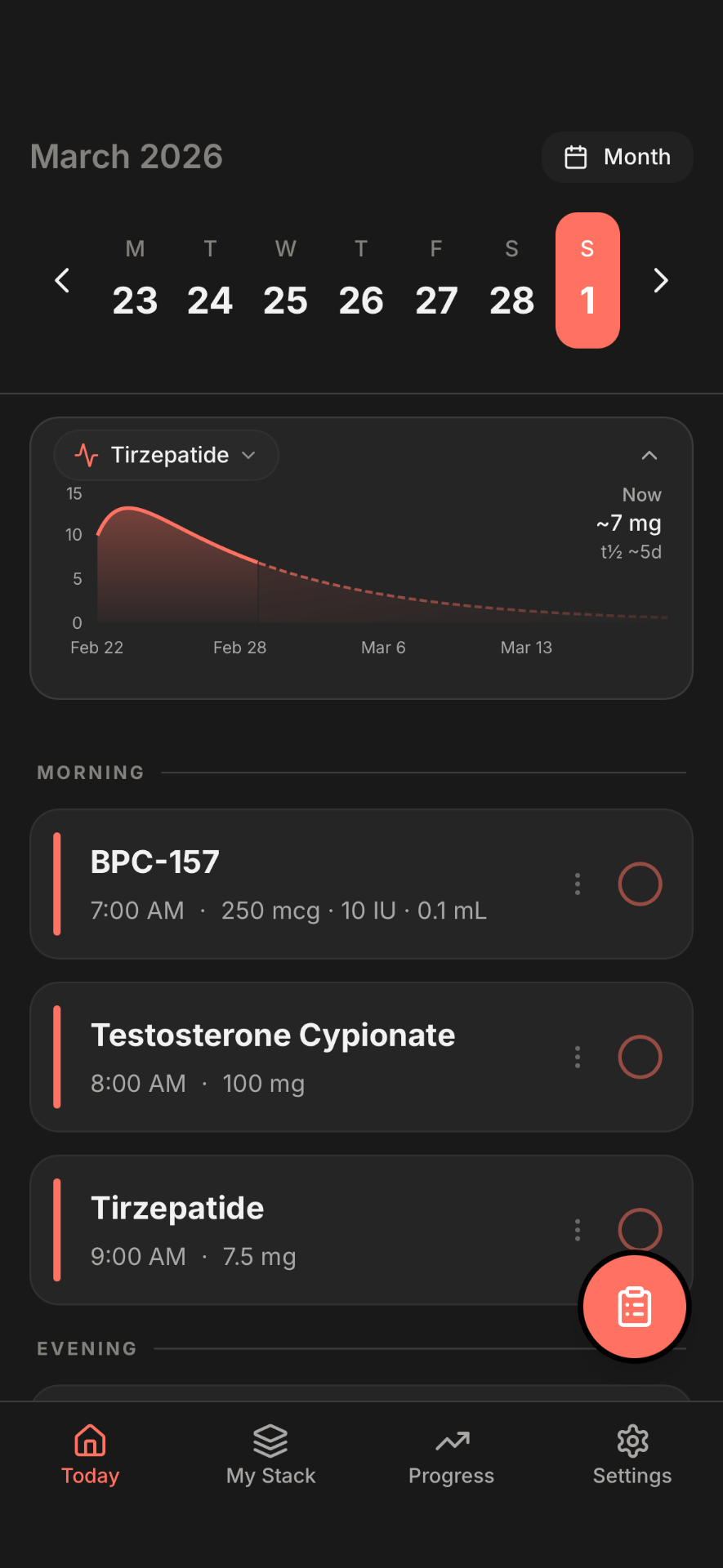
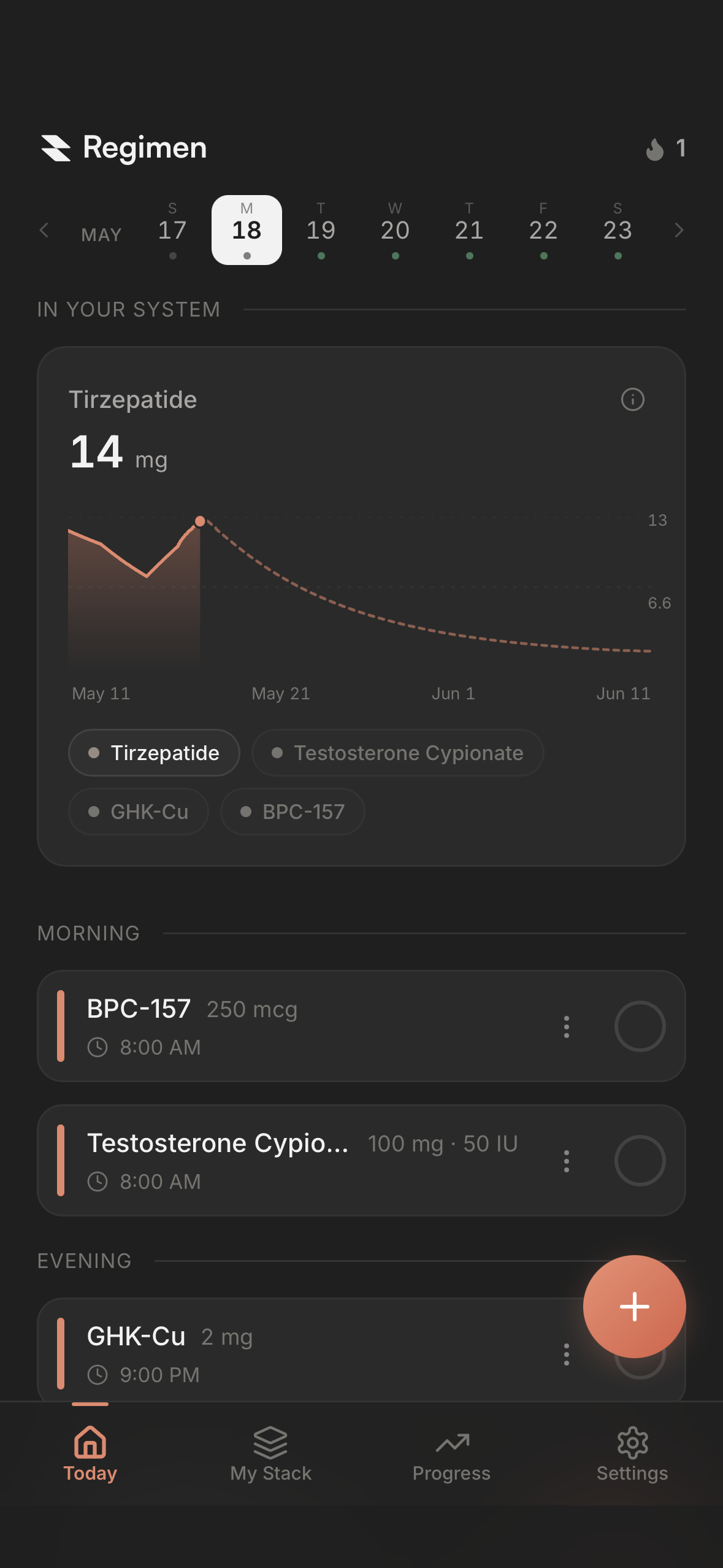
- Medication level curves for every compound
Frequently Asked Questions
What are the most common TRT side effects?
Elevated estradiol (from aromatization), increased hematocrit (red blood cell count), acne, water retention, and testicular atrophy are the most common. Most are manageable through dose adjustment and injection frequency changes.
How do you lower estrogen on TRT without an AI?
Split your weekly dose into more frequent injections (twice weekly, every other day, or daily). Lower peaks mean less aromatization. Reducing body fat also decreases aromatase enzyme activity.
Does TRT cause hair loss?
TRT can accelerate male pattern baldness in men who are genetically predisposed. This is a DHT-mediated effect determined primarily by your genetics, not your dose. Some men discuss finasteride with their provider to mitigate this.
When should I worry about hematocrit on TRT?
Hematocrit above 52% warrants monitoring and lifestyle adjustments (hydration, frequent blood donation). Above 54% requires medical intervention such as dose reduction or therapeutic phlebotomy.