Retatrutide is investigational and not FDA-approved. This article summarizes published trial data and community reports. It is educational, not medical advice.
Does retatrutide make you tired?
Yes, it can make you tired or sleepy, and it is a real but secondary side effect. In trials it showed up in roughly 10% of people at the higher doses (versus about 4% on placebo), and it tracks with dose. It is almost never the reason people stop. It is most likely a mix of eating far less, rapid weight loss, and GI symptoms, not a unique reta toxicity. Here is how to tell it apart from something you should get checked, and what actually helps.
If you started reta and your energy tanked, you are not imagining it, and you are not doing it wrong. Here is what the trials actually show and what usually helps.
How common is fatigue on retatrutide?
Does reta make you tired? For roughly one in ten people in the trials, yes, two to three times the placebo rate. In the phase 2 obesity trial (Jastreboff, NEJM 2023, Tier A), fatigue ran about 4% on placebo up to 10 to 12% on reta, higher at higher doses. In phase 3 TRIUMPH-1 (Tier B, ADA 2026 symposium) it was 7.4% at 4 mg, 10.6% at 9 mg, and 10.1% at 12 mg, versus 3.6% on placebo. So: common enough to be normal, dose-related, and rarely severe. Fatigue caused very few people to quit.
Why retatrutide makes you tired
So why can retatrutide make you tired? No reta trial has published a clean breakdown of why, so anyone claiming one exact cause is guessing. The realistic picture, based on how these drugs work: you are eating a lot less (so fewer calories and often fewer carbs), you may be losing weight fast, and if you have nausea or loose stools you can get mildly dehydrated. Any one of those will flatten your energy. Stack them and it adds up.
The glucagon arm may also matter. Reta pushes energy expenditure up, and a body that is burning more while eating less has less spare capacity, especially for training. That is not toxicity, it is math.
Is it the reta, or something else?
Worth ruling out the usual suspects, because they are fixable and common in people losing weight fast:
- Low iron or ferritin (very common in women losing weight quickly)
- Thyroid drift (a labs check, not a guess)
- Low B12
- Simple under-eating of protein (aim for a floor, not a ceiling)
- Elevated resting heart rate that reads as tiredness (see the reta cardio write-up)
If your fatigue is dramatic, keeps getting worse, or comes with other symptoms (breathlessness, dizziness, low mood that will not lift), that is a labs conversation, not a “push through it” situation.
What actually helps
Protein and fluids first, because both slip when appetite drops. A rough starting floor: 0.7 to 1.0 g of protein per pound of goal bodyweight, plus visible water throughout the day (thirst is muted on GLP-1 drugs, so do not wait for the cue).
Do not out-run your titration. Fatigue and GI symptoms both cluster during dose increases, so holding a dose longer often smooths it. The reta titration guide covers when to hold versus move up.
Other things people find useful:
- Electrolytes (sodium, potassium, magnesium) if you have had GI symptoms
- Track fatigue against your dose changes so you can see the pattern instead of guessing
- If you train, drop volume a step for the first 2 weeks after each dose bump; add it back once energy stabilizes
- Sleep protection matters more when you are eating less, not less
What the community reports (and why your dose matters)
The trial fatigue rates above are from 8 to 12 mg. Most real-world users microdose (0.5 mg twice weekly is a common pattern), and they generally report less of everything, fatigue included, at those doses. The most consistent community theme is that tiredness clusters around dose increases and eases once you settle, and that going slower or splitting the dose helps. Anecdote, not evidence, but it matches the trial finding that side effects concentrate during titration.
Fatigue rate by dose
| Dose | Phase 2 (obesity) | Phase 3 TRIUMPH-1 |
|---|---|---|
| Placebo | ~4% | 3.6% |
| 4 mg | - | 7.4% |
| 8 mg | ~10% | - |
| 9 mg | - | 10.6% |
| 12 mg | ~12% | 10.1% |
Dose-related, but the ceiling is around 10 to 12% even at the highest arms. Common enough to plan for, not common enough to expect.
Frequently Asked Questions
Does retatrutide cause fatigue?
Yes. Roughly 10% of people at higher doses reported it in trials, versus about 4% on placebo. It is dose-related and usually mild.
Does retatrutide fatigue go away, and how long does it last?
For most people, yes. Reta fatigue clusters in the first 1 to 2 weeks after starting and again for 1 to 2 weeks after each dose increase, then eases as the body adapts. Stable-dose fatigue that lingers usually has a fixable cause (protein, hydration, sleep, or a labs issue like iron or thyroid).
Is tiredness on retatrutide dangerous?
On its own, no. Fatigue with breathlessness, dizziness, chest pain, or a mood drop that will not lift is a different pattern and warrants a prescriber call and labs.
Why am I so tired on retatrutide?
Usually a stack of small things: fewer calories, especially fewer carbs, mild dehydration if you have had GI symptoms, and rapid weight loss. Trials have not published a single mechanistic cause, so anyone giving you one exact answer is guessing.
Should I lower my dose if I am exhausted?
Not first. First: protein floor, fluids, electrolytes, and holding the current dose longer instead of stepping up. If exhaustion is meaningfully interfering with life at a stable dose after two to three weeks, that is a prescriber conversation about slowing the titration or dropping back a tier.
Can training help or make it worse?
Both. Light movement (walking, easy cardio) usually helps. Heavy volume during the first 2 weeks after a dose bump often makes it worse. Drop training volume a notch during titration, add it back once energy stabilizes.
What to track
Two to three weeks of consistent logging usually reveals the pattern. Useful markers:
- Daily energy (1 to 10)
- Protein intake (rough grams)
- Water intake
- Dose and dose changes with dates
- Sleep quality
- Any GI symptoms (they steal energy quietly)
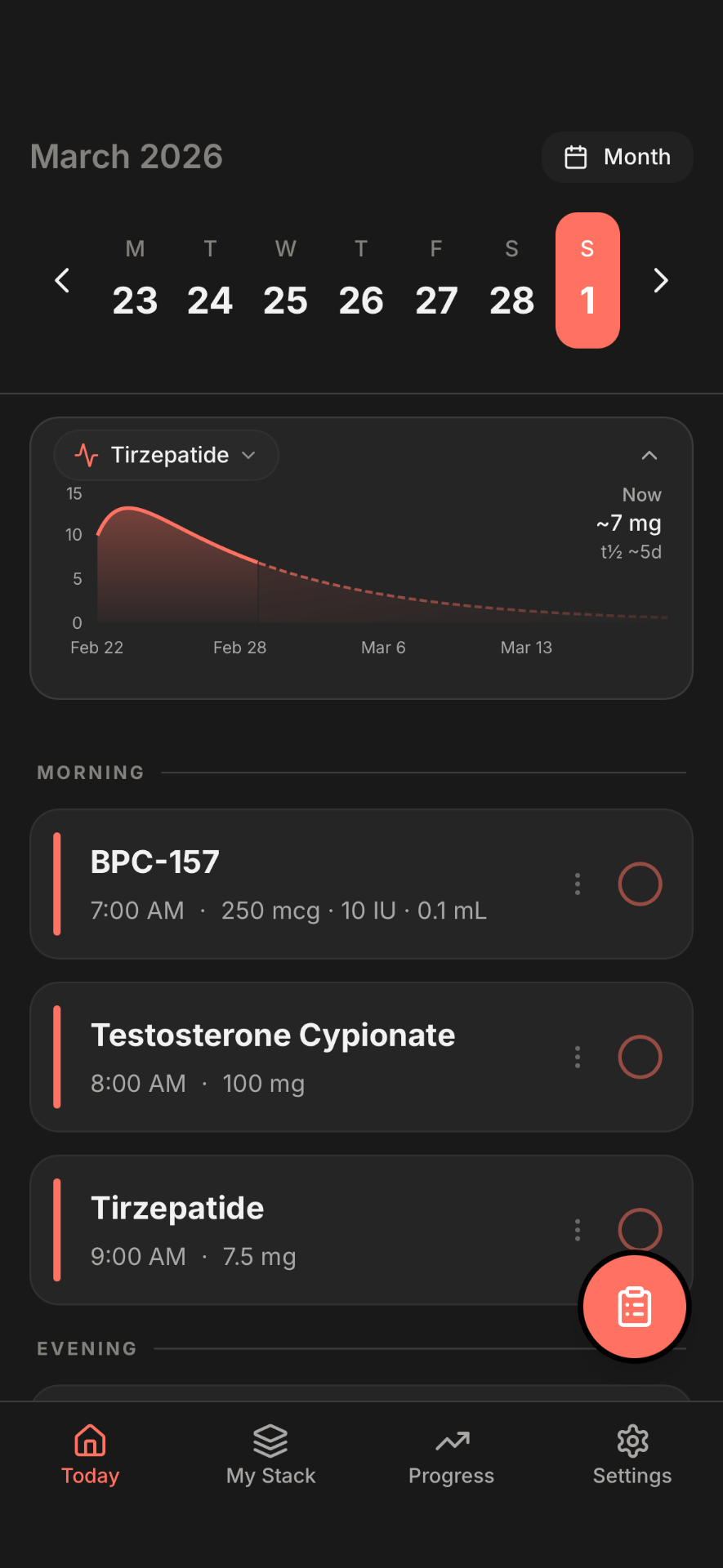
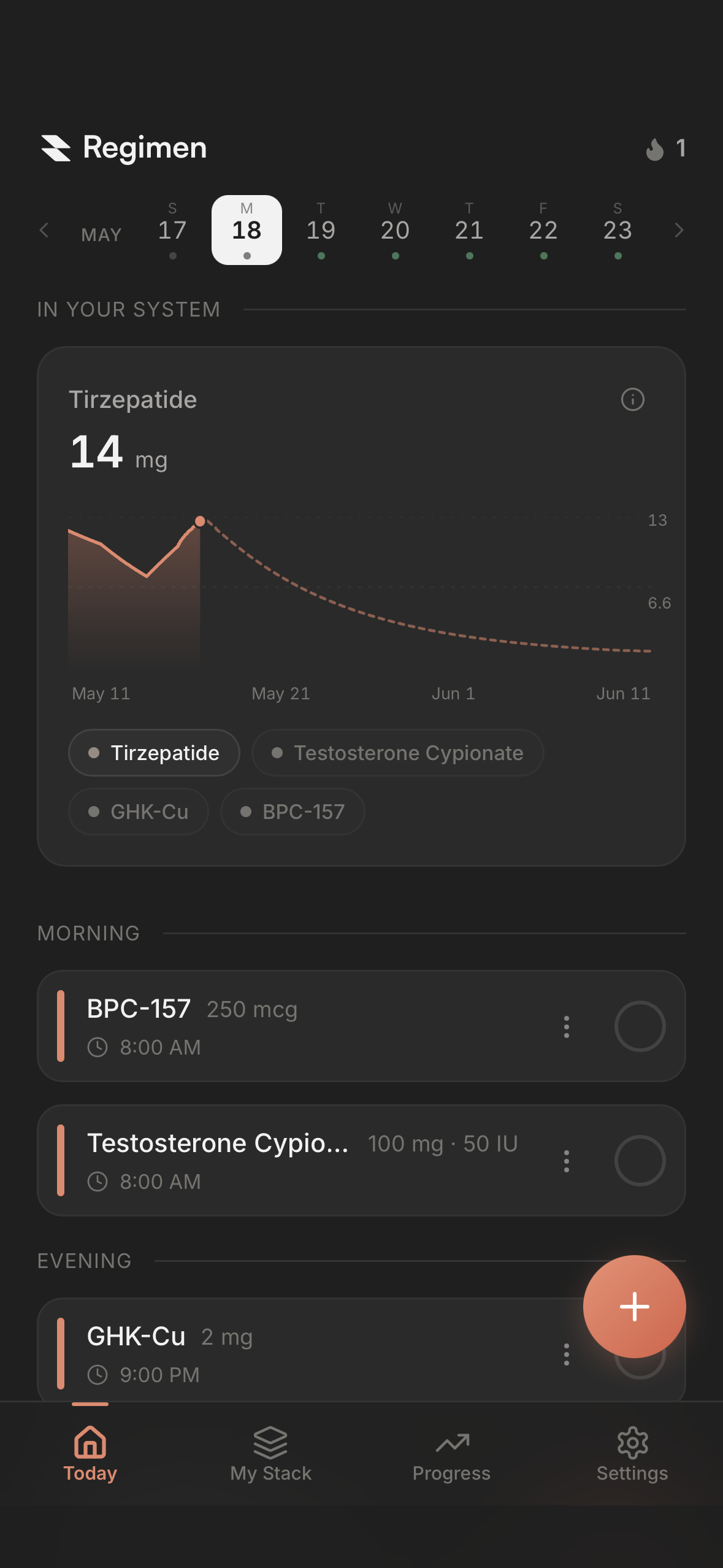
The Regimen retatrutide tracker handles all of this in one place, with dose changes overlaid on symptoms so patterns pop instead of hiding in memory. Free for one compound. If you suspect the fatigue is nutrient-driven, our GLP-1 nutrient deficiencies guide covers what to ask your provider to check.
Related reading
- Retatrutide Side Effects: What to Expect, Start to Finish (the hub)
- Retatrutide and Heart Rate: The Cardiovascular Data
- Retatrutide Dosing Guide: How to Titrate
- Retatrutide Tracker
This article summarizes published trial data (phase 2 NEJM 2023 and phase 3 TRIUMPH-1 symposium data) and community reports. It is not medical advice. Retatrutide is investigational; talk to a licensed provider before starting, changing, or stopping any medication.
Ready to track your GLP-1?
- Smart reminders so you never miss a dose
- Track weight, photos, and progress over time
- Medication level curves for every compound