Eating a lot less on a GLP-1 raises a fair question: what might you be missing? The short version is that the biggest risk isn’t a vitamin at all, it’s muscle, and a few nutrients (B12, iron, vitamin D) are worth keeping an eye on. Here’s what matters and the labs worth asking for.
Start with the good news about how these drugs work. GLP-1s like semaglutide and tirzepatide (tirz) don’t block your gut from absorbing nutrients. They’re not doing anything sneaky to your intestines. You’re just eating a fraction of what you used to, which is the entire point, and a smaller plate means a smaller daily dose of the vitamins, minerals, and protein your body still runs on. Studies put the drop in total calories somewhere between 16 and 39 percent. Fewer calories coming in means fewer of everything else too.
So this isn’t a reason to second-guess the medication. It’s a short list of what to watch, so you get the weight loss and keep the strength that makes it worth it.
The Bottom Line
Eating way less on a GLP-1 can leave you short on a few key things: protein, which protects muscle, plus B12, folate, iron, and vitamin D. In one study of GLP-1 users with type 2 diabetes, about 1 in 5 picked up a diagnosable nutrient deficiency within a year. The move isn’t to panic-buy supplements. Get a baseline lab panel early, re-check in a few months, and make protein and hydration a daily habit. Everything below is what to ask your provider about, not what to prescribe yourself.
Why this happens
There’s a mental model doctors borrow when they think about GLP-1s and nutrition, and it’s a useful one for you too.
They look at sleeve gastrectomy, the bariatric surgery where they make the stomach smaller. Not the kind that reroutes your plumbing, just the kind that shrinks how much you can eat. Why that one? Because the nutrient risk there comes from the same place yours does: reduced intake. You’re simply taking in less food.
That tells you where the risk isn’t. Your gut is still absorbing nutrients normally. The gap, when there is one, is on the input side.
A couple of other things pile on. Digestion slows down on these drugs (that’s the delayed gastric emptying you may have read about), your appetite tanks, and your gut bacteria shift a bit. All of that can nudge how well a few nutrients get taken up. But the main driver, over and over in the research, is just that you’re eating less.
One honest note. There are no official GLP-1 nutrient monitoring guidelines yet. The drugs are newer than the rulebooks, so clinicians borrow the bariatric playbook until better guidance exists. Keep that in mind when you talk to your provider.
How common is this, really?
Common enough to check for. Not common enough to lose sleep over.
In a retrospective study of adults with type 2 diabetes taking GLP-1 medications, here’s what showed up:
-
12.7% were diagnosed with a nutrient deficiency within 6 months
-
22.4% (about 1 in 5) within 12 months
-
Vitamin D led the pack: 7.5% at 6 months, rising to 13.6% at a year
-
Iron-deficiency anemia turned up in 3.2%
-
Dehydration in 3.5%, muscle loss in roughly 3%
One caveat worth saying out loud: that study looked specifically at people with type 2 diabetes, tracked through medical billing codes. It’s not a general weight-loss group. So read the “1 in 5” as a real signal, not a guarantee for everyone. It tells you this is worth watching, which is the whole point.
Protein and muscle: the one that matters most
If you take one thing from this article, make it this.
When the scale goes down on a GLP-1, not all of that is fat. A chunk of it is muscle. Mayo Clinic puts the muscle share of weight lost at 25 to 40 percent. Other sources land closer to 20 to 30. Either way, a meaningful piece of what you’re losing is lean mass, not just the fat you’re trying to drop.
Muscle isn’t a vanity thing here. It’s your metabolism, your strength on the stairs, your grip, your ability to keep the weight off after you’re done. Losing too much of it is the fastest way to feel weak and flat even while the number on the scale is going the right direction.
Why does it hit so hard on these drugs specifically? Two reasons.
Your appetite is gone, so hitting a real protein target feels like a chore. Most people on GLP-1s simply don’t eat enough protein to hold onto their muscle. The research is blunt about that.
The timing matters more than people expect. A 2025 study (SEMALEAN) found that lean mass dropped early, around 3 kg by the seven-month mark, and then stabilized. Most of the muscle loss is front-loaded. It happens in the first stretch, which means the first few months are exactly when your habits matter most. Waiting until month eight to start being good about protein misses the window.
So what protects muscle? Two things, and they work together.
Enough protein. Mayo Clinic points people toward 1.2 to 1.6 grams of protein per kilogram of body weight per day, versus the 0.8 g/kg that’s standard for the average person. The broader literature cites a range up to about 2.0 g/kg for muscle preservation. You don’t need to hit a perfect number. You need to stop under-eating protein, which is the default trap on these drugs.
Lifting something heavy-ish. This is the part people skip, and it’s half the equation. Studies keep showing that people who pair a GLP-1 with resistance training hold onto more muscle than diet and drug alone. It doesn’t have to be a gym membership and a program. Mayo suggests starting with bodyweight moves (squats, wall push-ups) or resistance bands, and their line is “consistency over intensity.” Twice a week beats zero.
On supplements, the two with real evidence behind them for muscle are creatine monohydrate and HMB (studies use around 3 g/day of HMB). Talk to your provider before adding either, but those are the ones with actual support, not hype.
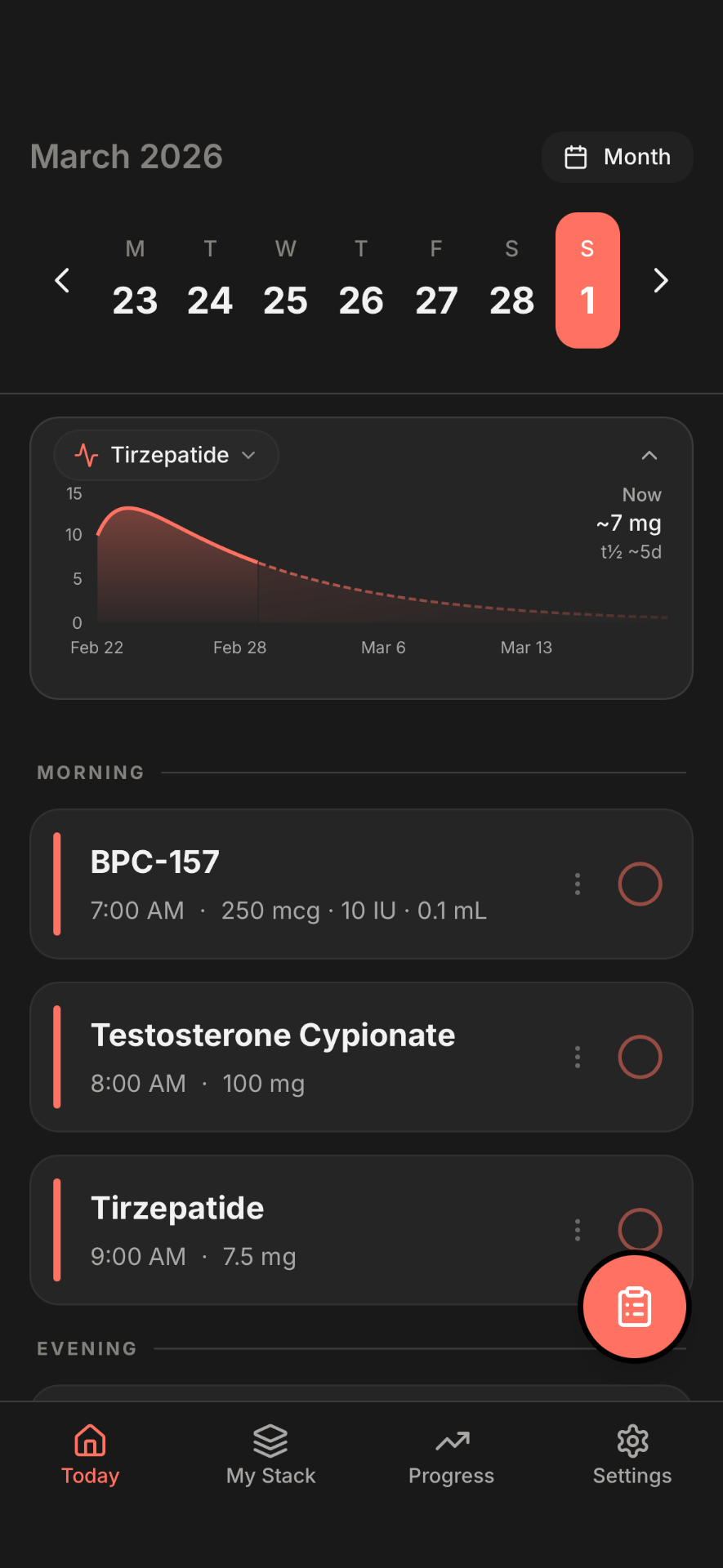
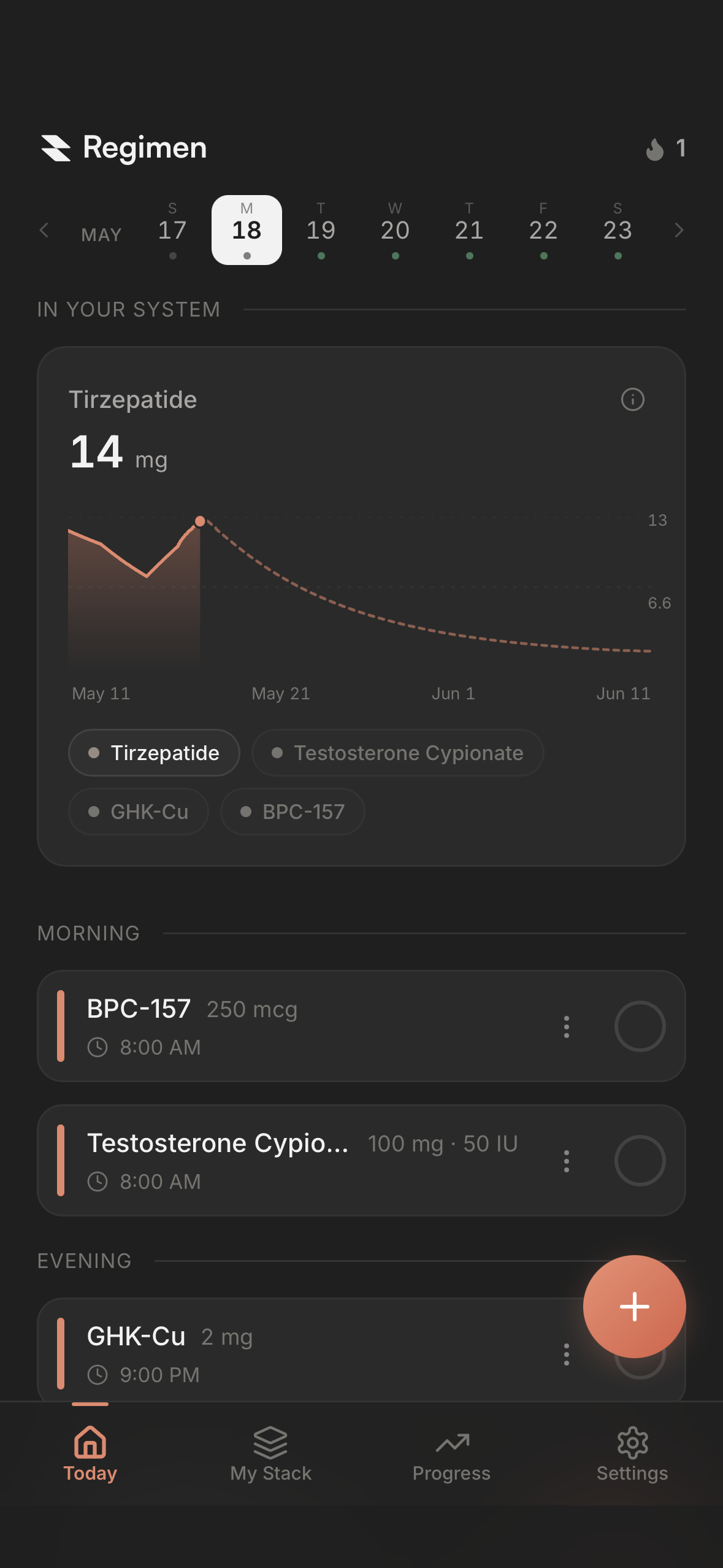
Here’s where tracking earns its keep. Muscle loss is invisible day to day. You won’t feel three kilos of lean mass leaving the way you feel a bad night’s sleep. What you can watch is the trend: whether you’re actually hitting protein, whether your strength and energy are holding as the weight comes off. Regimen connects your compound to how you’re doing over time, so if the scale is dropping but your energy and strength are sliding with it, you see that pattern early instead of guessing. That’s the idea behind its built-in pattern detection, matching what you’re taking to what’s actually shifting.
Bottom line on muscle: up to a third of what you lose can be muscle, most of it goes early, and the fix is enough protein plus lifting a couple times a week. Start now.
The vitamins and minerals to keep an eye on
Muscle is the headline. These are the supporting cast, and a few of them come with lab-reading traps worth knowing.
Vitamin B12. Animal proteins are the top source of B12, and they’re often the first foods that fall off your plate when nothing sounds good. Low intake plus slowed digestion is a setup for running short. If you’re on metformin too (a lot of people with diabetes are), your risk is higher, because metformin depletes B12 on its own over time. There’s also a lab wrinkle worth knowing: semaglutide may interfere with some B12 assays and produce a falsely low reading, especially alongside metformin. Not a reason to ignore a low result, just a reason to interpret it with your provider.
Folate. Same story, less intake means less folate. It sits on every baseline lab panel for a reason. One sentence on the genetics you may have seen online: if you carry an MTHFR variant, you may absorb the methylated form (methylfolate) better than plain folic acid, which is a supplement-form detail to raise with your provider, not the main event.
Iron. When red meat and iron-rich foods drop out, iron follows. Older GLP-1 data (liraglutide) showed roughly a 10 percent drop in iron intake, and iron-deficiency anemia showed up in 3.2 percent of users within a year. The catch: a basic blood count can look normal while your iron stores are already draining. That’s why the useful test is ferritin plus a full iron panel, not just hemoglobin.
Vitamin D. The most common deficiency in that study, 13.6 percent at a year. And this one has the sneakiest lab trap of the bunch. Vitamin D is stored in your fat. When you’re losing fat fast, that stored D gets released into your blood, which can make an early test read normal or even high. So you get a “you’re fine” result while your actual stores are draining underneath. Don’t let one early-normal reading talk you out of re-checking later.
Calcium and bone. This one flies under the radar. Bone density tends to drop roughly 1 to 3 percent for every 10 percent of body weight you lose, mostly because a lighter body puts less load on your bones and bone responds to load. Low vitamin D makes it worse, because without enough D your body starts pulling calcium out of your bones. The protective combination is calcium (food plus supplement, in the 1,000 to 1,200 mg/day range), enough vitamin D, and weight-bearing or resistance exercise. Which, conveniently, is the same lifting that protects your muscle.
Hydration is its own thing (and easy to miss)
This one sneaks up on people because the drug quietly turns down your thirst signal.
Between nausea, the occasional vomiting or diarrhea, dry mouth, and reduced thirst (there’s actually a name for the drug-induced version, hypodipsia), you can slide into dehydration without feeling thirsty at all. In that diabetes study, volume depletion was diagnosed in 3.5 percent of users within a year.
The fix is boring and it works. Drink on a schedule, not when you feel like it, because the feeling isn’t reliable anymore. A common target is around 2 to 3 liters of fluid a day unless your provider tells you otherwise. Pale-yellow urine is your quick gauge.
And it’s not just water. When you’re getting sick repeatedly, you’re losing electrolytes too. Intake data after liraglutide showed magnesium dropping about 14 percent and potassium running persistently low. If you’ve had a rough day of vomiting, plain water alone won’t cut it. A sugar-free rehydration mix, or a sports drink cut 1:1 with water, helps replace what you lost. Sodium, potassium, and magnesium are the three to think about.
The labs clinicians actually watch
Since there’s no official GLP-1 guideline yet, this list is borrowed from the bariatric panel (the sleeve gastrectomy protocol) that groups like BOMSS in the UK and ASMBS in the US use. Here’s what tends to be on it and why.
| Lab | Why it’s on the list |
|---|---|
| Vitamin B12 | First food group to drop; metformin and a possible assay quirk both muddy the reading |
| Folate | Reduced-intake risk; on every baseline panel |
| Ferritin + full iron studies | Catches low iron before it shows up as anemia |
| 25-hydroxyvitamin D | Most common deficiency; fat loss can mask it early |
| Calcium | Protecting bone during fast weight loss |
| Homocysteine | Early-warning marker that rises before B12 and folate look off |
| Magnesium, zinc, potassium, CMP | Mineral and electrolyte status, especially with GI side effects |
One row deserves a spotlight, because it’s the insider move most people have never heard of.
Homocysteine. Your standard B12 test can read “normal” while your body is already running short. Homocysteine is a functional marker, meaning it reflects whether your B12 and folate are actually doing their job, not just whether they’re floating around in your blood. When those run low, homocysteine climbs, and it often climbs months before the basic B12 and folate tests catch the problem. It’s the early-warning light on the dashboard. Worth asking whether it belongs on your panel.
On timing: get a baseline before you start or early in treatment, then re-check around 3 to 6 months. The bariatric-derived rhythm is roughly 3, 6, and 12 months, then once a year. The first 6 to 12 months, and any time symptoms flare up, are the highest-yield windows to test.
Here’s the practical problem with labs, though. A single vitamin D or ferritin number in a portal tells you almost nothing. The value is in the direction it’s moving across two or three draws, and that’s exactly what gets lost when the results live in different PDFs months apart. Dropping your results into Regimen puts them on one timeline next to your compound and how you’ve been feeling, so you can see B12 or ferritin trending instead of squinting at one reading and hoping it’s fine.
So what do you actually do?
- Protein plus lifting is your muscle insurance. Aim for the higher-protein target your provider agrees on, and do some resistance work a couple times a week. Front-load it, because the muscle loss happens early.
- Get a baseline lab panel before or early in treatment, then re-check at 3 to 6 months: B12, folate, ferritin and iron, vitamin D, calcium, and ask whether homocysteine belongs on there.
- Hydrate on a schedule. Around 2 to 3 liters a day, and replace electrolytes if you’ve been sick. Thirst isn’t a reliable signal anymore.
- A daily multivitamin covers the general gaps in a shrunken diet. Target specific supplements (D, B12, iron) based on your labs, not guesses.
- Know the two lab traps. Vitamin D can read falsely high while you’re losing fat. B12 can read falsely low if you’re on metformin. Read both with your provider.
None of this is a reason to second-guess the medication. It’s what makes the medication work in your favor: you lose the fat, keep the muscle, and don’t quietly run low on the things that keep you feeling like yourself.
Frequently Asked Questions
Do GLP-1s block nutrient absorption?
No. They don’t interfere with how your gut absorbs nutrients. The deficiency risk comes from eating a lot less, so fewer vitamins, minerals, and protein come in. That’s why the fix is about intake, not about fighting your digestion.
How much of the weight I’m losing is muscle?
More than you’d want. Mayo Clinic cites 25 to 40 percent of weight lost as lean mass; other sources say 20 to 30. And most of it happens early, in the first several months, which is why protein and resistance training matter from the start rather than eventually.
How much protein should I be eating?
There’s no single magic number, and this is a conversation for your provider. For reference, Mayo Clinic points toward 1.2 to 1.6 grams per kilogram of body weight per day for people trying to hold onto muscle, versus 0.8 g/kg for the average person. The practical takeaway: most people on these drugs eat too little protein, so the direction is more.
Which labs should I ask my doctor for?
A reasonable starting panel: vitamin B12, folate, ferritin with full iron studies, 25-hydroxyvitamin D, and calcium. Ask about homocysteine too, since it can flag a B12 or folate problem months before the standard tests do. Get a baseline early, then re-check around 3 to 6 months.
Why can my vitamin D look normal even if I’m low?
Vitamin D is stored in body fat. When you’re losing fat quickly, some of that stored D gets released into your bloodstream, which can make an early test read normal or even high while your actual stores are draining. Don’t let one early-normal result stop you from re-checking down the line.
Should I just take a bunch of supplements to be safe?
A daily multivitamin is a reasonable baseline to cover a smaller diet. Beyond that, target specific supplements based on your lab results, not guesses. Some can interact with each other or with your other meds, so loop in your provider before stacking things.
Does metformin change any of this?
Yes. Metformin depletes B12 over time on its own, so if you’re on both metformin and a GLP-1, your B12 risk is higher. It can also make a B12 lab reading tricky to interpret. Worth flagging to your provider so they watch it more closely.
See what’s actually shifting, not just what you’re taking
Knowing what to track is the easy part. The hard part is noticing the drift, a vitamin D that slid low, protein you keep missing, the fatigue that crept in over three weeks while you were busy being happy the scale moved.
That’s what Regimen is built for. Log your GLP-1, drop in your lab results so you can watch B12 and ferritin trend over time, and check in on how you actually feel day to day. Regimen’s built-in pattern detection connects your compound to your labs and your daily markers and surfaces what’s changing, so when your energy dips you have the pattern in front of you instead of trying to remember back two months. Get the weight loss and keep the strength that makes it worth it. Start tracking with Regimen. Tracking a specific compound? Regimen also has focused pages like the semaglutide tracker and tirzepatide tracker.
This article is for educational purposes only and is not medical advice. Always consult a qualified healthcare provider before starting supplements, changing your diet, or ordering lab work.
Ready to track your GLP-1?
- Smart reminders so you never miss a dose
- Track weight, photos, and progress over time
- Medication level curves for every compound