The Bottom Line
15-40% of weight loss from GLP-1 medications comes from lean mass, not fat. TRT can help preserve muscle during GLP-1 therapy by maintaining an anabolic environment, but it is not a magic fix. Resistance training and adequate protein are non-negotiable regardless of TRT status. The men who track body composition, not just scale weight, are the ones who catch muscle loss early enough to adjust.
The Muscle Loss Problem with GLP-1 Medications
“Am I losing muscle on my GLP-1?” is the most common anxiety across every semaglutide, tirzepatide (tirz), and retatrutide (reta) community. The short answer: probably some, yes. The more useful answer: it depends on what you are doing alongside the medication.
Clinical trial data consistently shows that 15-40% of total weight loss from GLP-1 receptor agonists comes from lean mass rather than fat. This happens because GLP-1 medications work primarily by reducing appetite, creating a caloric deficit. Any caloric deficit, whether from medication or willpower, results in some lean mass loss unless you actively protect against it.
Why this matters beyond aesthetics: losing muscle reduces your basal metabolic rate, decreases functional strength, and makes weight regain more likely when you eventually reduce or stop the medication. A person who loses 50 lbs but 20 of those pounds are muscle has a very different metabolic future than someone who loses 50 lbs of mostly fat.
What the Research Shows About TRT + GLP-1
Testosterone replacement therapy creates an anabolic environment that shifts the weight loss ratio toward fat loss and away from muscle loss. Combined clinic data shows that TRT + GLP-1 therapy can produce 10-20% body mass reduction with meaningfully better lean mass preservation compared to GLP-1 alone.
There is an interesting bidirectional relationship here. GLP-1 medications can boost testosterone levels by 53-77% in hypogonadal men through weight loss alone. Visceral fat contains aromatase, which converts testosterone to estrogen. As visceral fat decreases, this conversion slows, and testosterone levels rise naturally.
However, this natural testosterone increase from weight loss is modest and inconsistent. Exogenous TRT provides a stronger, more predictable anabolic effect. For men who are clinically hypogonadal and starting a GLP-1, the combination addresses both the metabolic and hormonal components simultaneously.
How to Protect Muscle During GLP-1 Weight Loss
Whether or not you are on TRT, these strategies are the evidence-based approach to preserving lean mass during GLP-1 therapy:
Resistance Training: 2-4x Per Week (Non-Negotiable)
This is the single most important factor. Resistance training sends the signal that your body needs to keep its muscle. Without that signal, your body will break down muscle for energy just as readily as fat. Focus on compound movements: squats, deadlifts, bench press, rows, overhead press. Progressive overload matters less during a deficit than simply maintaining your current training weights.
Protein Intake: 0.7-1.0g Per Pound of Ideal Body Weight
This is challenging on a GLP-1 because appetite suppression makes eating difficult. Prioritize protein at every meal. If you can only eat 1,200 calories in a day, make sure 400-500 of those calories come from protein. Protein shakes become a practical tool here, not because whole food is not better, but because drinking calories is easier than eating them when your appetite is suppressed.
Moderate Caloric Deficit
GLP-1 medications can suppress appetite so aggressively that some people end up eating 800-1,000 calories per day. This is too low for muscle preservation regardless of what else you are doing. Target a 300-500 calorie deficit from your maintenance. If the medication is pushing you below that, you may need to consciously eat more, which feels counterintuitive but is necessary.
Sleep: 7-9 Hours
Growth hormone release peaks during deep sleep. Recovery from resistance training requires adequate rest. Sleep deprivation increases cortisol, which is catabolic. If you are on TRT + GLP-1 and lifting 4x/week but sleeping 5 hours a night, you are undermining everything else.
If on TRT: Stable Dosing and Proper Frequency
For men combining TRT with a GLP-1, stable testosterone levels matter more than peak levels. More frequent, smaller injections (every other day or daily) maintain steadier anabolic signaling compared to large weekly doses that create peaks and troughs. Use our TRT dose calculator to dial in your frequency.
How to Know If You Are Losing Muscle vs Fat
This is where tracking separates the informed from the anxious. Read our full body recomposition tracking guide for the complete protocol. The quick version:
- Strength going down? Possible muscle loss. If your bench press drops from 185x8 to 165x8 over a month, investigate.
- Waist shrinking but weight stable? Likely recomp. This is a good sign, not a bad one.
- Weight dropping fast (more than 2 lbs/week sustained)? Too aggressive. You are almost certainly losing muscle. Increase calories.
- Waist shrinking + strength stable + weight slowly declining? The ideal scenario. You are losing fat and preserving muscle.
The TRT + GLP-1 Monitoring Protocol
If you are running both compounds, your bloodwork needs to cover both systems. Here is the consolidated panel to request from your provider quarterly:
| Test | Why It Matters | Which Compound |
|---|---|---|
| Total/free testosterone | Confirm adequate TRT levels | TRT |
| Estradiol (E2) | Aromatization monitoring | TRT |
| CBC with hematocrit | TRT can elevate red blood cells | TRT |
| HbA1c, fasting glucose | GLP-1 metabolic effects | GLP-1 |
| Lipid panel | Both compounds affect lipids | Both |
| Thyroid panel (TSH, free T4) | GLP-1 thyroid monitoring | GLP-1 |
| Liver enzymes (ALT, AST) | General safety | Both |
| Body composition scan | Fat vs lean mass tracking | Both |
For a deeper dive on bloodwork interpretation, read our complete TRT blood work guide.
What Real-World Patterns Show
Based on aggregate community data and published clinic results, men combining TRT with GLP-1 therapy consistently report several patterns:
- A subjective feeling of “losing fat, not just shrinking” compared to GLP-1 alone
- Strength maintenance or improvement during significant weight loss phases
- Visible body composition changes by month 3-4 of combined therapy
- Better energy and workout capacity compared to GLP-1 monotherapy, where fatigue can be an issue
These are patterns, not guarantees. Individual results depend on training consistency, protein intake, sleep, TRT dosing, GLP-1 dose, and genetics. The men who track all of these variables are the ones who can adjust when something is not working instead of guessing.
The Bottom Line on Muscle Preservation
GLP-1 muscle loss is real but manageable. TRT helps by maintaining an anabolic environment, but it is not sufficient on its own. The combination that actually protects muscle is:
- Resistance training 2-4x/week (the most important factor)
- Adequate protein (0.7-1.0g per lb of ideal body weight)
- Moderate caloric deficit (not the extreme suppression some GLP-1 users experience)
- Consistent tracking of strength, waist circumference, and body composition
- Regular bloodwork to ensure both compounds are doing their jobs
What We See in Regimen Data
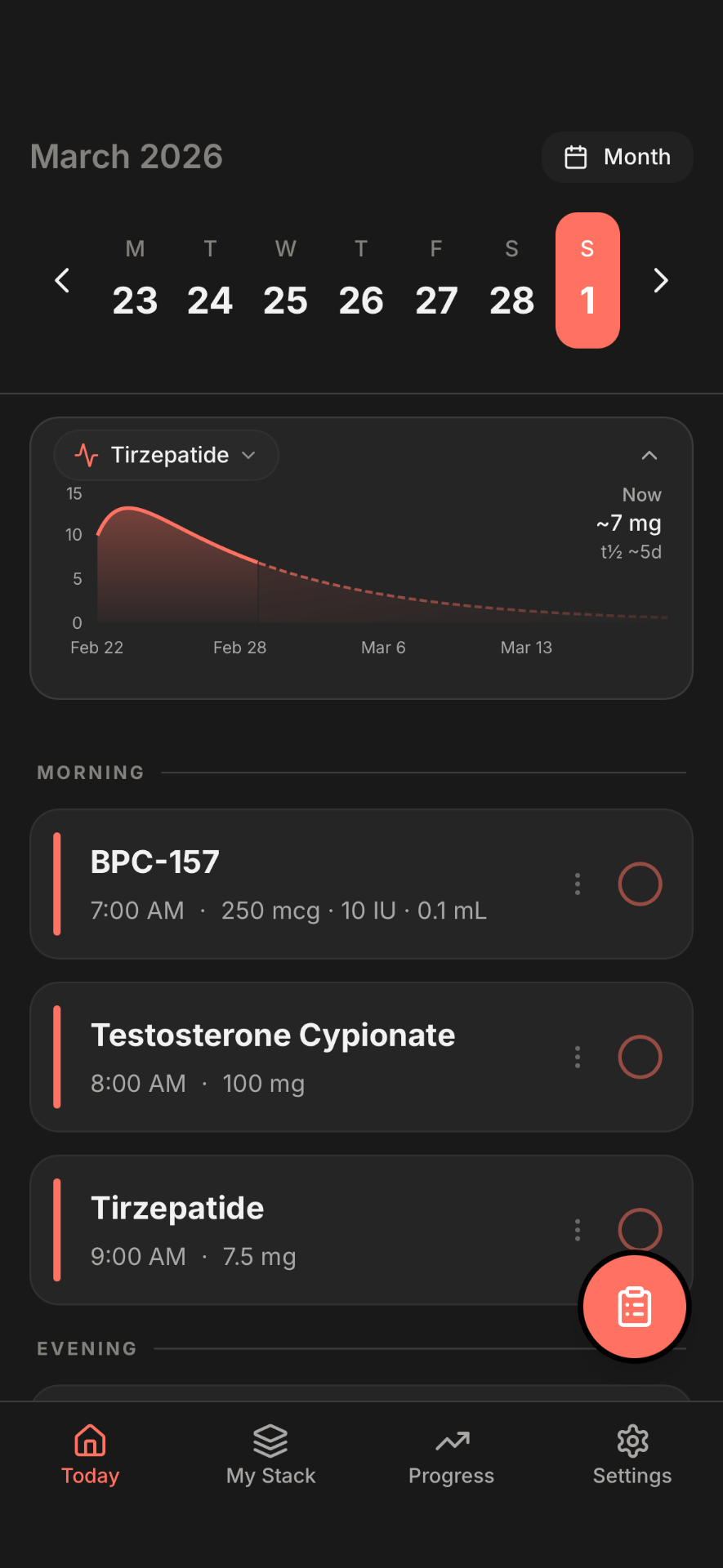
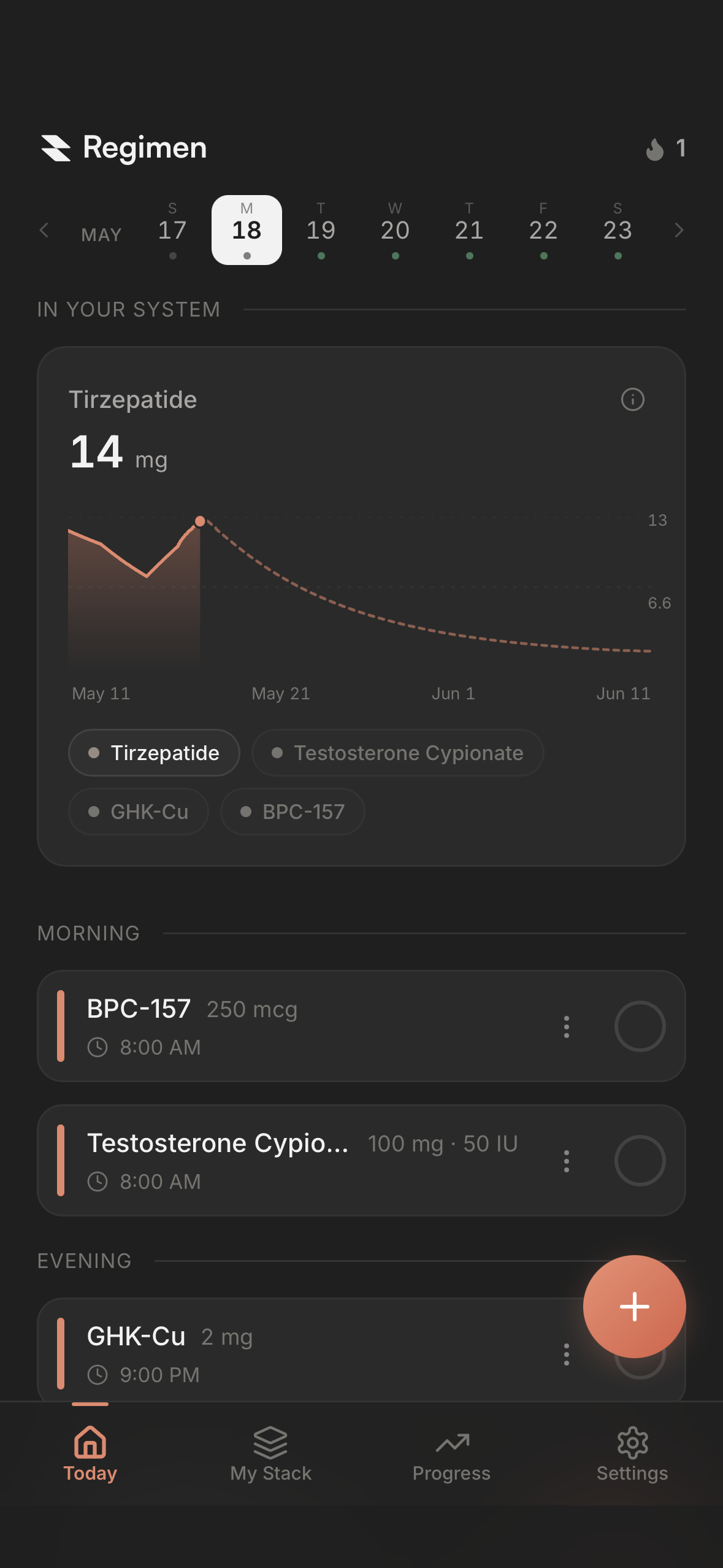
GLP-1 receptor agonists are the most tracked compound category on Regimen, and the data around how these users behave reveals needs that go beyond a weekly dose reminder. Nearly 70% of Regimen subscribers list weight loss or body composition improvement as a primary goal - and the most common frustration they report is not forgetting doses. It is not knowing whether their protocol is actually working the way they want it to. Weight on a scale fluctuates wildly on GLP-1 medications, and users need a clearer picture than a single number can provide.
Among subscribers running both TRT and a GLP-1, the tracking patterns are distinct. These users log body measurements more frequently than GLP-1-only users, and they are more likely to track strength benchmarks alongside weight. The combination creates a more complete picture: if weight is dropping but strength is stable and waist is shrinking, the protocol is working as intended. If weight drops fast and strength drops with it, the data surfaces the problem before it becomes significant. Over 30% of Regimen subscribers track two or more compounds simultaneously, and the TRT + GLP-1 combination is one of the fastest-growing protocol patterns on the platform.
Related Resources
- How to Track Body Recomposition: 5 Metrics Better Than Scale Weight
- TRT Body Recomposition Timeline
- TRT Side Effects Management Guide
- TRT Dose Calculator
- TRT Blood Work Guide
This article is for educational purposes only and is not medical advice. Combining TRT and GLP-1 medications requires medical supervision. Do not start, stop, or modify any medication without consulting your healthcare provider. Individual results vary based on genetics, training, nutrition, and medical history.
Ready to track your GLP-1?
- Smart reminders so you never miss a dose
- Track weight, photos, and progress over time
- Medication level curves for every compound