The Bottom Line
Tirzepatide in 2026: the FDA shortage was resolved in late 2024, mass compounding wound down through 2025, generic competition is years away, and dosing research is shifting toward daily microdosing. Here’s what changed and what to watch.
Last updated: May 2026. This page is updated quarterly with the latest regulatory, clinical, and access news around tirzepatide (Mounjaro and Zepbound). If you want a quick read-out on where things stand right now, scan the section headers.
Tirzepatide remains the highest-efficacy approved GLP-1 medication for weight loss and type 2 diabetes. But the landscape around it shifted meaningfully through 2024 and 2025: the FDA resolved the shortage, compounding pharmacies wound down production, and a wave of new dosing research is starting to land.
FDA and Regulatory Updates
The FDA officially removed tirzepatide from its drug shortage list on October 2, 2024 after Eli Lilly confirmed supply could meet present and projected demand. That removal triggered a phased wind-down of compounded tirzepatide:
-
503A compounding pharmacies were given until February 18, 2025 to stop producing tirzepatide.
-
503B outsourcing facilities were given until March 19, 2025.
-
By Q2 2025, the bulk of mass-market compounded tirzepatide had exited the legal supply chain.
Some 503A pharmacies continue to compound tirzepatide for patients with documented medical need (allergy to an FDA-approved formulation excipient, dosing requirements not commercially available). This is a much smaller market than the 2023 to 2024 shortage period.
Recent Clinical Data
Two trial readouts from 2025 are worth knowing about:
- SURMOUNT-5 (head-to-head vs semaglutide). Published in NEJM in May 2025, this 72-week trial showed tirzepatide produced 20.2% mean weight loss vs 13.7% for semaglutide. Tirzepatide produced 47% more relative weight loss in a direct comparison.
- SURMOUNT-MMO (cardiovascular outcomes). Ongoing through 2027, this is the trial that will determine whether tirzepatide carries an MACE (major adverse cardiovascular events) reduction label like semaglutide. Interim safety data has been clean.
Generic Tirzepatide Timeline
Tirzepatide’s primary composition-of-matter patent runs through 2036. Eli Lilly holds additional formulation, manufacturing, and method-of-use patents extending past 2040. Realistic generic entry timeline:
- Pre-2036: No generic competition unless a patent challenge succeeds.
- 2036 to 2040: Possible generic entry, but secondary patents may still block.
- Post-2040: Broader generic availability likely.
For users hoping cheaper generic tirzepatide will arrive in the next 2 to 3 years: it won’t. Price relief will come (if it comes) from PBM negotiations, manufacturer assistance programs, or a competing branded triple-agonist like retatrutide (reta).
Compounding Pharmacy Status
As of May 2026, the compounding picture for tirzepatide is:
- Most large telehealth GLP-1 brands have shifted to compounded semaglutide or retatrutide (still in 503A grey zone) rather than tirzepatide.
- Patient-specific tirzepatide compounding continues for documented clinical need.
- Several state pharmacy boards have issued guidance clarifying that “shortage” is not a permissible reason to compound tirzepatide as of 2025.
If a vendor in 2026 is still advertising mass-market compounded tirzepatide without medical-necessity documentation, that is now a regulatory grey area at best.
New Dosing Research
Tirzepatide is FDA-approved at weekly doses from 2.5mg to 15mg. The research frontier in 2025 to 2026 is moving in two directions:
- Daily microdosing. Splitting weekly doses into daily fractional injections (typically 1/7 of the weekly dose) to flatten the peak-trough cycle. Early observational data suggests reduced GI side effects and steadier appetite suppression. Not FDA-labeled. See our GLP-1 microdosing guide.
- High-dose protocols. Some clinicians are exploring above-label dosing (17.5mg, 20mg weekly) for patients who plateau at 15mg. No published trial data yet supports this.
Tirzepatide vs Retatrutide
Retatrutide (Eli Lilly’s triple agonist still in phase 3) produced roughly 24% mean weight loss in trials vs tirzepatide’s roughly 22.5%. It is not yet FDA-approved and is not expected before late 2026 or 2027. For a full comparison, see Retatrutide vs Tirzepatide and Switching from Tirzepatide to Retatrutide.
Frequently Asked Questions
Is tirzepatide still in shortage in 2026?
No. The FDA officially resolved the tirzepatide shortage on October 2, 2024. Branded Mounjaro and Zepbound are commercially available, though local pharmacy stock can still fluctuate.
When will generic tirzepatide be available?
Earliest realistic generic entry is 2036, when Eli Lilly’s primary patent expires. Secondary patents may delay broader generic availability until 2040 or later.
Can I still get compounded tirzepatide in 2026?
Only with documented medical necessity (typically allergy to an FDA-approved formulation excipient, or a dose not commercially available). Mass-market compounded tirzepatide for cost reasons is no longer FDA-permitted as of February to March 2025.
What’s the best app for tracking tirzepatide?
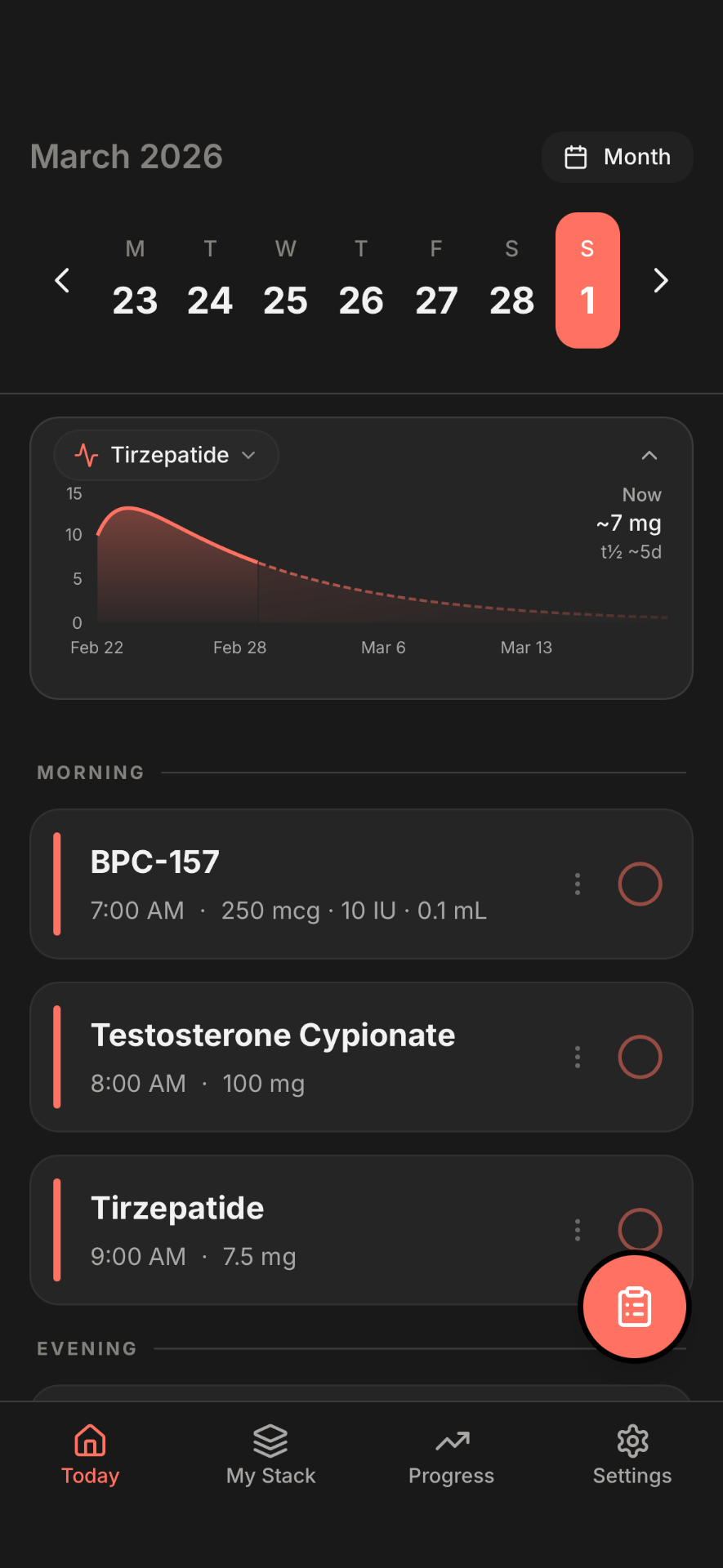
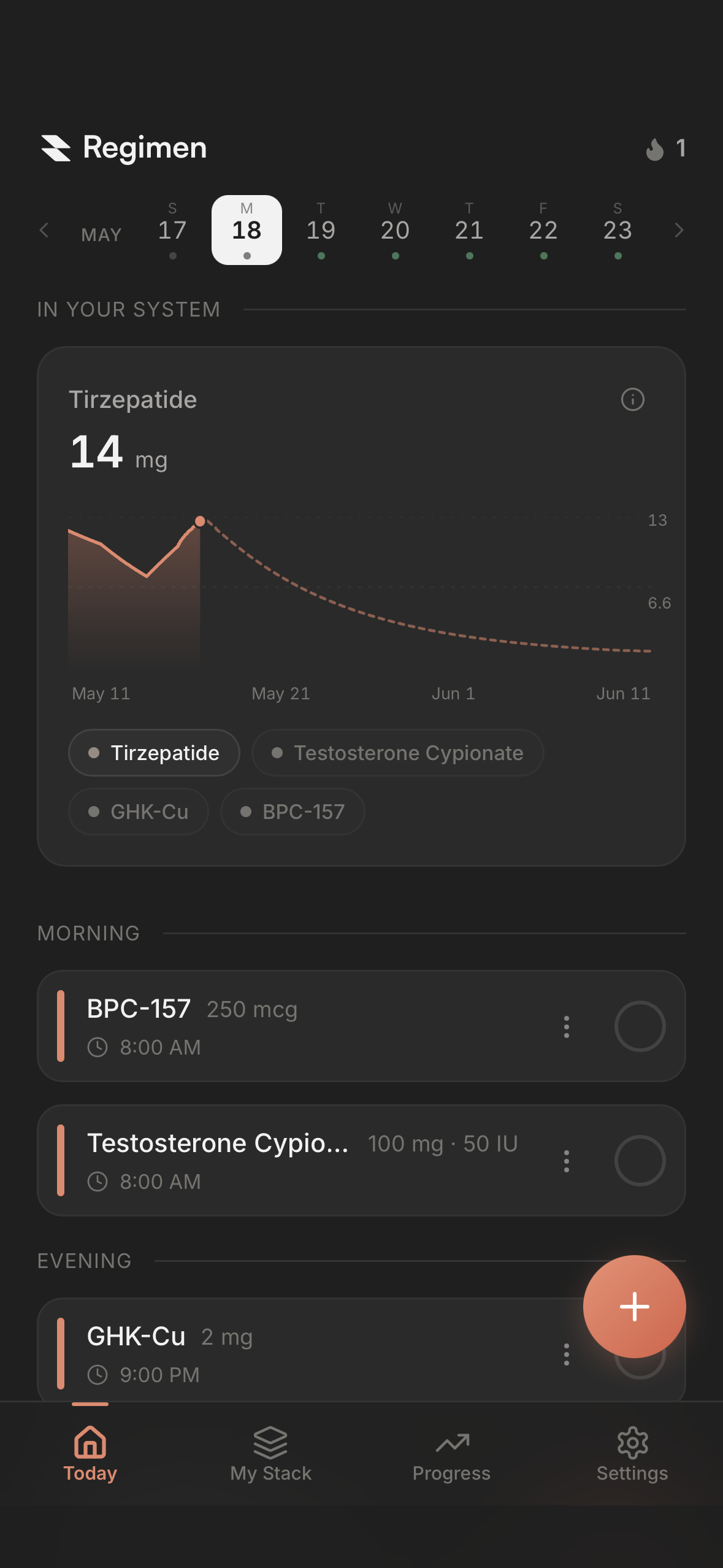
Regimen is a purpose-built tracker for tirzepatide that logs each weekly injection with dose, site rotation, and time. The free tier covers one compound, with no time limit: PK curves, injection site rotation, dose reminders, and Apple Health / Health Connect correlation so you can see how tirzepatide is affecting your sleep, body composition, or weight over time.
Is daily tirzepatide microdosing FDA-approved?
No. Tirzepatide is FDA-approved as a once-weekly injection. Daily microdosing is off-label and not supported by formal trial data, though some clinicians use it to reduce peak-trough GI side effects.
Disclaimer: This article is for educational purposes only and is not medical advice. Tirzepatide (Mounjaro, Zepbound) is a prescription medication. Always consult your prescribing clinician before starting, stopping, or modifying any medication protocol.
Ready to track your GLP-1?
- Smart reminders so you never miss a dose
- Track weight, photos, and progress over time
- Medication level curves for every compound