Retatrutide is investigational and not FDA-approved. This article summarizes published trial data and community reports. It is educational, not medical advice.
If you’re a woman starting reta and wondering whether the side effects hit differently for you, here’s the straight version. The big ones (nausea, fatigue, the heart-rate stuff) are the same starting point for everyone. A few things do skew female: UTIs showed up more, women lost more weight than men in the trial, and there’s a birth-control point that actually matters. The one honest gap: nobody has published side-effect data broken out by sex yet, so anyone handing you exact ‘women get X% more nausea’ numbers is guessing. That gap is worth knowing, because a lot of “what women need to know about reta” content online just invents the specifics. Here’s what’s actually real.
The honest gap: no sex-stratified side-effect data
The published reta trials did not break adverse events down by sex. So if someone gives you exact “women get X% more nausea on reta” figures, that number is not coming from the trials. The side-effect starting point (nausea, vomiting, diarrhea, constipation, fatigue, heart-rate rise) is the same profile we cover in the main side-effects guide, for everyone.
Women lost more weight in the trial
One sex difference the trial did report: among people with higher BMI on 8 mg or 12 mg, women lost about 28.5% and 26.6% of body weight, versus about 19.8% and 21.9% for men. That is a response difference, not a side-effect one, but it is real and worth knowing.
The one female-skewed side effect: UTIs
In phase 3 TRIUMPH-1, urinary tract infections ran a bit higher on reta (about 6.8 to 8.1%) than placebo (4.8%), were mostly mild to moderate, did not cause anyone to stop, and 92% occurred in women. Rapid weight loss and metabolic shifts can play into this. Worth having on your radar, not worth fear over. If you have had UTIs in the past, mention it to your prescriber before starting.
Contraception and pregnancy
This is the part that actually matters for women on reta.
There is no reta-specific pregnancy safety data, and because it is still investigational, the safe stance is to avoid it in pregnancy or when trying to conceive. From the approved class: these drugs can make oral birth control less reliable (the tirzepatide label advises a backup or non-oral method for 4 weeks after starting and after each dose increase), and semaglutide’s label says to stop it at least 2 months before a planned pregnancy because it lingers in the body. Reta likely behaves similarly, though a specific reta label does not exist yet.
If pregnancy is possible, this is a real conversation to have before you start, not something to figure out later.
Fertility footnote: faster weight loss can restore ovulation on its own, especially in women with PCOS. So “I have not been getting pregnant, so I do not need to worry about it” is not a safe assumption once reta is in the picture.
Blood pressure medication is worth flagging
This is not sex-specific, but it matters more for anyone already on blood-pressure medication. Reta lowers BP meaningfully, and a hypotension signal climbs at higher doses, especially when stacked with existing BP meds. See the reta cardiovascular write-up for the numbers. If you are on a BP med, loop your prescriber in before starting.
What women in the community actually report
Two honest notes. First, a lot of women running reta are microdosing for recomposition, not just weight loss, at doses well below the 8 to 12 mg trial arms, so their side-effect experience tends to be milder. Second, community discussion of sex-specific effects (cycle changes, energy shifts) exists but is thin and unverified, so we will not dress anecdote up as data. The one thing worth taking seriously from both the trials and the community is the contraception point above. That is not anecdote; that is the drug class.
What the evidence supports vs what is unknown
| Claim | Evidence status |
|---|---|
| Women lose more weight than men on reta | Supported (phase 2 trial data) |
| UTIs skew heavily female on reta | Supported (phase 3, 92% of UTI cases in women) |
| Oral contraception may be less reliable | Class-based caution (tirzepatide label; reta has no label yet) |
| Avoid in pregnancy or when trying to conceive | Class-based caution; no reta-specific safety data |
| Sex-stratified rates for nausea, fatigue, etc. | No published data |
| Cycle changes or hormonal side effects specific to reta | No published data (anecdote only) |
Frequently Asked Questions
Do retatrutide side effects differ for women?
The trials have not published sex-stratified side-effect data, so any specific “women get more of X” claim online is not evidence-based. What is documented is that women lost more weight on average and that UTIs skewed heavily female. The core side-effect profile is the same starting point for everyone.
Does retatrutide cause UTIs?
In phase 3 TRIUMPH-1, UTIs ran a bit higher on reta than placebo (about 6.8 to 8.1% versus 4.8%), and 92% occurred in women. Mostly mild to moderate, no one stopped over them. Worth flagging to your prescriber if you have a UTI history.
Can you take retatrutide on birth control?
Reta itself does not have a published label yet, but the tirzepatide label advises using a backup or non-oral contraception method for 4 weeks after starting and after each dose increase, because slowed gastric emptying can reduce absorption of oral contraceptives. Same caution likely applies to reta.
Is retatrutide safe during pregnancy?
There is no reta-specific pregnancy safety data, and it is still investigational, so the safe stance is to avoid it during pregnancy or when trying to conceive. Semaglutide’s label recommends stopping at least 2 months before a planned pregnancy because it lingers; reta likely behaves similarly.
Do women lose more weight on retatrutide?
In the phase 2 trial, yes: women on 8 mg or 12 mg with higher BMI lost about 28.5% and 26.6% of body weight, versus about 19.8% and 21.9% for men. That is a response difference, not a side-effect one.
Can retatrutide affect your period?
The trials have not reported cycle-specific data. Rapid weight loss on its own can shift cycle timing and restore ovulation (especially in PCOS), and hormonal shifts from meaningful body composition change are expected. Anything specifically attributable to reta versus the weight loss itself has not been separated in published data.
What to track
The useful markers for women on reta:
- Cycle length and any changes
- UTI symptoms (early flagging matters)
- Energy, mood, and sleep alongside dose changes
- Weight and body composition over months, not weeks
- Contraception method and any switches
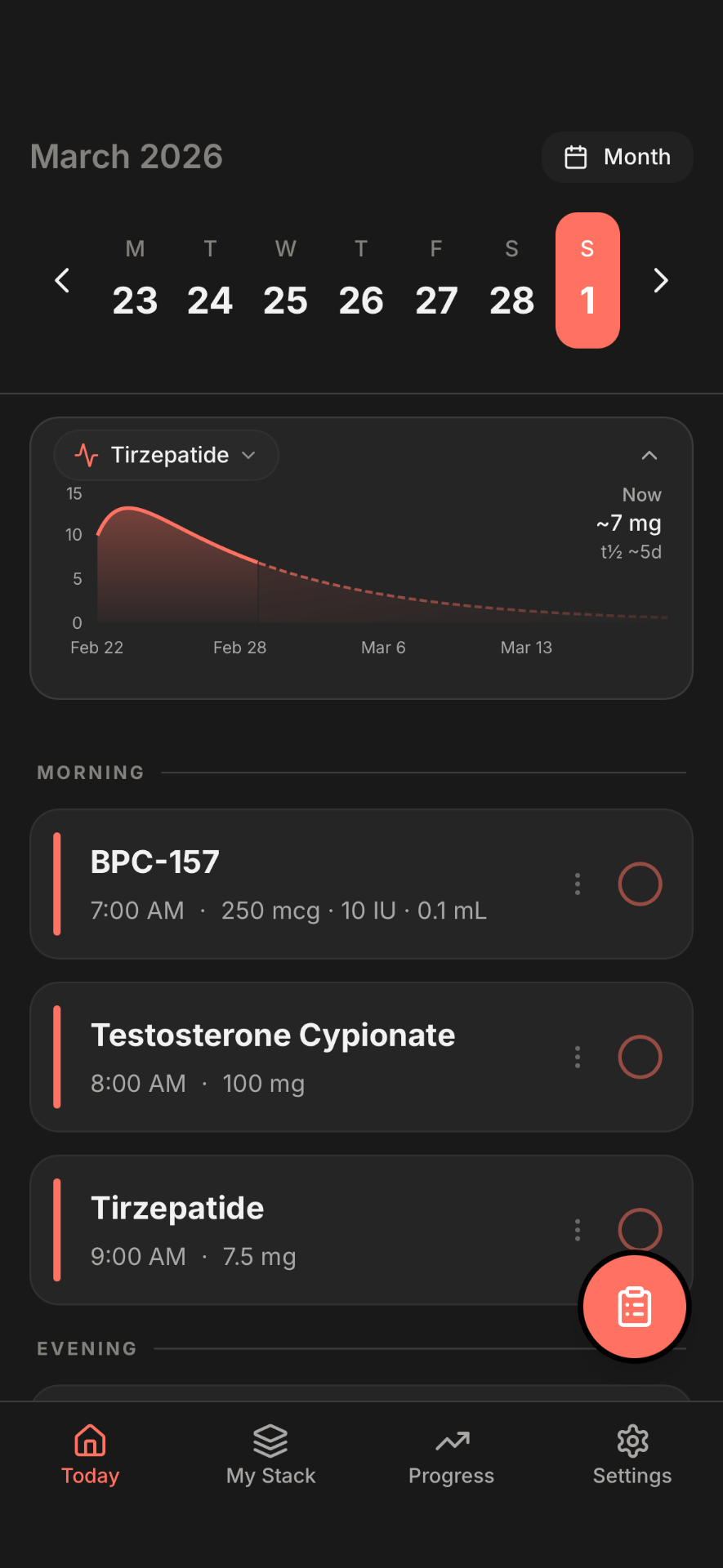
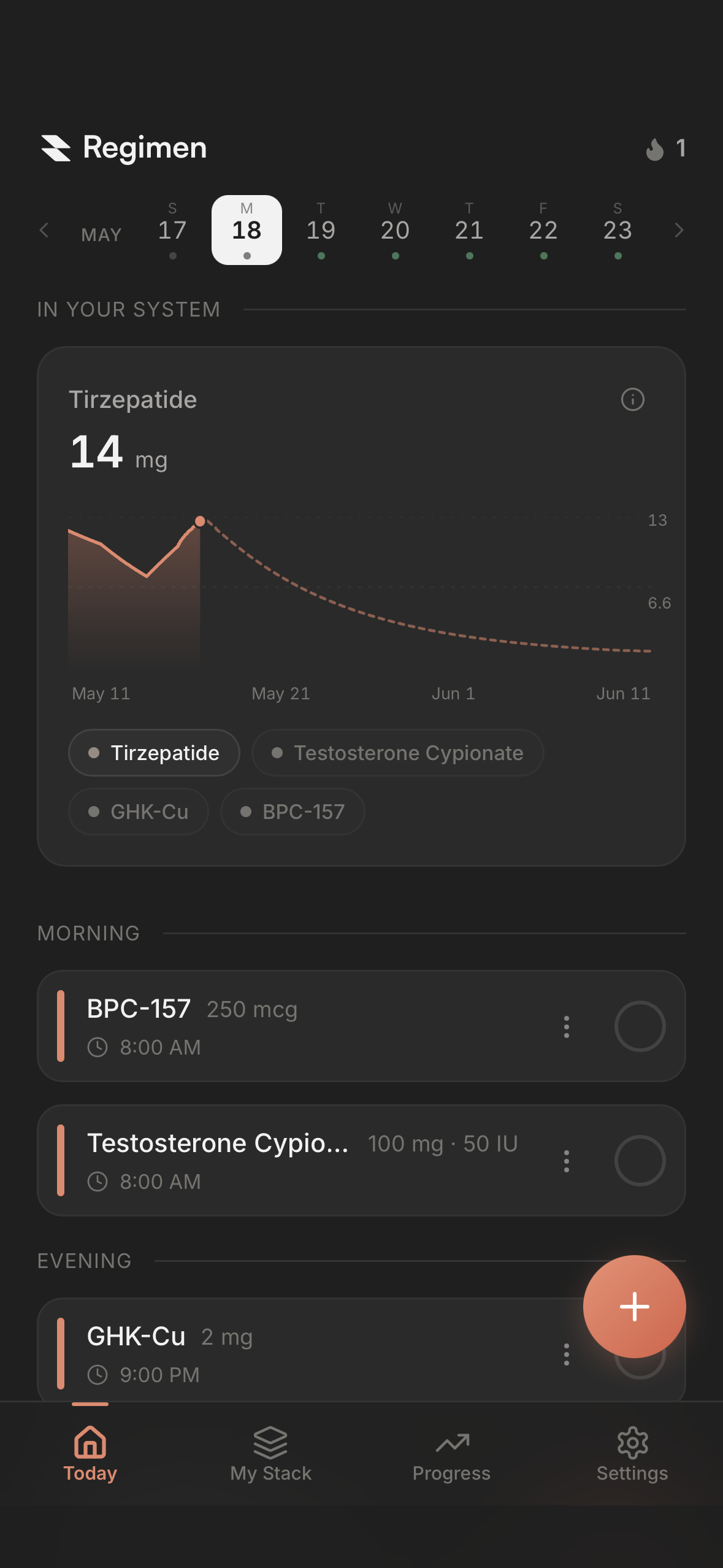
The Regimen retatrutide tracker lets you log cycle, symptoms, and doses in one place so patterns show up instead of hiding in memory. Free for one compound.
Related reading
- Retatrutide Side Effects: What to Expect, Start to Finish (the hub)
- GLP-1s for PCOS: What to Know
- Retatrutide and Heart Rate: The Cardiovascular Data
- Retatrutide Tracker
This article summarizes published trial data (phase 2 NEJM 2023 and phase 3 TRIUMPH-1 symposium data) and community reports. It is not medical advice. Retatrutide is investigational; talk to a licensed provider before starting, changing, or stopping any medication.
Ready to track your GLP-1?
- Smart reminders so you never miss a dose
- Track weight, photos, and progress over time
- Medication level curves for every compound