If you have PCOS, you’ve probably run into the claim that GLP-1s like Ozempic or Mounjaro can help. The honest answer: yes for some things, not really for others, and there’s one catch around fertility that matters more than anything else here. This is what the research actually shows, which drugs have the evidence, and what to watch.
Let’s start with what these drugs are and why they landed in the PCOS conversation at all.
GLP-1s are the class behind semaglutide (Ozempic, Wegovy) and tirzepatide (Mounjaro, Zepbound). They were built for diabetes and weight loss. Women with PCOS started using them, saw their weight move and their periods come back, and word spread. That’s the whole origin story. It’s off-label, which we’ll get to, but the reason it works isn’t a mystery.
Important
GLP-1s are not FDA-approved for PCOS. They’re prescribed off-label. They are also contraindicated in pregnancy and while trying to conceive: stop semaglutide at least 2 months before a planned pregnancy, and tirzepatide about 1 month before (confirm the current label with your doctor). This article is educational, not medical advice.
Why a “diabetes drug” does anything for your ovaries
The engine behind most PCOS is insulin resistance. Your cells stop responding well to insulin, so your body pumps out more of it to keep up. Now you’ve got high insulin around all the time.
High insulin does two annoying things. It tells your ovaries to make more testosterone, and it lowers a protein called SHBG. Think of SHBG as a sponge that soaks up spare testosterone. Less sponge plus more testosterone means more free testosterone doing the damage you can see: irregular or missing periods, acne, hair where you don’t want it.
Then weight gain makes insulin resistance worse, which makes everything worse. It’s a loop that feeds itself.
Here’s why GLP-1s are a different kind of tool. Most PCOS treatments manage one symptom. GLP-1s go after the engine. They help you lose weight and they improve how your body handles insulin, which drains the loop from the source. Fix the insulin and the weight, and a lot of the downstream mess starts settling on its own.
One note if you’re lean: roughly 30 to 50% of slim women with PCOS still have insulin resistance. This isn’t only a “lose weight” story. The insulin problem can be there even when the scale looks fine.
On Ozempic? Regimen’s Ozempic app logs the shot in one tap, reminds you before the next one, and ties your side effects and weight to each dose step.
Wondering what is normal? Ozempic side effects by dose has every rate from Novo’s label, including the three warnings most articles skip.
What actually improves, and by how much
Real numbers, and I’ll flag which ones are solid and which are shaky.
Weight and waist (strongest evidence)
This is where GLP-1s are hard to argue with.
A 2025 meta-analysis pooling 13 randomized trials (Scientific Reports, May 2025) found women with PCOS on GLP-1s lost about 3.6 kg of body weight, dropped their BMI by 1.6 points, and lost about 5 cm off their waist, all highly statistically significant.
Those pooled numbers look modest because they average short trials together. Real-world use runs bigger. A UK service that tracked 4,241 women with PCOS on tirzepatide reported a mean 18.8% weight loss at 10 months, with more than 90% losing at least 10% of their body weight (ObesityWeek 2025).
Insulin resistance (good evidence)
That same 13-trial meta-analysis found a real drop in HOMA-IR, a standard insulin-resistance score. Not dramatic, but consistent and pointed the right way. Since insulin is the engine, this one matters more than its size suggests.
Periods coming back (moderate, and genuinely promising)
This is the one you probably care about most.
In a 2025 randomized trial, women taking semaglutide plus metformin had a 72.5% cycle recovery rate at 16 weeks, versus 42.3% on metformin alone. A separate 2023 meta-analysis of 11 trials found GLP-1s clearly beat metformin and placebo on menstrual frequency, and longer treatment (24 to 32 weeks) worked better than short courses.
So periods often do come back. It tracks closely with losing weight and improving insulin, and it can take a few months. Not instant, not guaranteed, but a real and common outcome.
Acne and unwanted hair (weakest evidence)
The androgen side, meaning testosterone and the acne and facial hair it drives, has the thinnest evidence. One liraglutide trial showed free testosterone dropped about 19%. But when researchers pooled all the trials together in 2025, the androgen changes basically washed out to not statistically significant. A 2026 review in the European Journal of Endocrinology found most trials didn’t even measure testosterone properly, and rated the reproductive-outcome evidence “low to very low” certainty.
What that means for you: skin and hair might improve, mostly as a downstream effect of losing weight and calming insulin, not because the drug directly zeroes out testosterone. Some women see a real difference. Plenty don’t. If acne and hair are your main reason for trying this, treat any improvement as a bonus rather than the plan.
Semaglutide vs tirzepatide vs retatrutide for PCOS
You’ve probably seen people swear tirzepatide is the stronger one. For general weight loss they’re not wrong, it works on two hunger pathways instead of one (GLP-1 plus GIP). But for PCOS specifically, the picture is more lopsided than the hype.
| Semaglutide (Ozempic/Wegovy) | Tirzepatide (Mounjaro/Zepbound) | Retatrutide (investigational) | |
|---|---|---|---|
| PCOS-specific research | Stronger. A dedicated randomized trial, a monotherapy cohort, more trials running now. | Thin. Mostly real-world and retrospective data. First dedicated PCOS trial started Dec 2025. | None yet. No PCOS-specific data at all. |
| How it works | GLP-1 only | GLP-1 + GIP | GLP-1 + GIP + glucagon (triple agonist) |
| Weight loss | Strong | Likely as strong or stronger | Largest in obesity trials so far, but not PCOS-tested |
| PCOS periods/fertility proof | Some direct trial data | Essentially unstudied in trials so far | Unstudied |
Here’s my read. If you want the drug with the most actual PCOS evidence behind it today, that’s semaglutide. Tirzepatide probably works at least as well for the weight and insulin side, and early real-world PCOS numbers look great, but the PCOS-specific trials haven’t reported yet.
Retatrutide is the one a lot of people are watching. It’s a triple agonist, hitting the same metabolic machinery as the other two plus a glucagon pathway, and it’s put up the biggest weight-loss numbers in obesity trials to date. On mechanism alone, you’d expect it to help the insulin-and-weight engine that drives PCOS. But it’s still investigational, it isn’t approved, and there is zero PCOS-specific data on it. So it’s a promising bet on paper, not a proven option. Anyone selling it as a PCOS treatment right now is way out over the evidence.
Bottom line across all three: semaglutide is proven, tirzepatide is promising, retatrutide is theoretical.
How this compares to metformin, inositol, and berberine
You’ve probably tried some of these, or been told to. Here’s how a GLP-1 stacks up against the usual PCOS toolkit.
Metformin. The old reliable insulin-sensitizer. Cheap, oral, decades of safety data. The 2023 international PCOS guideline recommends it mainly for the metabolic side. GLP-1s beat it on weight, waist, and insulin sensitivity in head-to-head data. But metformin has one thing GLP-1s don’t: it’s generally considered safe to continue when you’re trying to conceive, and is often kept on board through fertility treatment. That’s a real difference if kids are on the near-term menu.
Myo-inositol. A supplement (around 4 g/day) that can gently improve insulin sensitivity and cycle regularity, roughly comparable to metformin with fewer stomach issues. The catch: the 2023 guideline calls the evidence “limited and inconclusive.” It’s a gentle first step, not a heavy hitter.
Berberine. The “natural metformin” of supplement shelves. Weakest evidence of the group. A recent trial found it didn’t move metabolic or hormonal markers much, though it seemed to help some cycle and skin outcomes. Not guideline-endorsed, and supplement quality is all over the place.
Where GLP-1s fit. They’re not first-line in the guidelines. Think of them as the strongest metabolic lever, for when weight is a big driver and lifestyle changes plus something like metformin or inositol haven’t been enough. And they play well with metformin. The best cycle-recovery data came from the semaglutide-plus-metformin combo, not either one alone.
The fertility catch (read this part twice)
This is the piece that matters more than everything above, because it’s where people get blindsided.
When your cycles come back, your fertility can come back fast, sometimes before you notice. People call the surprise pregnancies that happen this way “Ozempic babies.” On top of that, these drugs can make birth control pills less reliable, because slowed digestion (and any vomiting) can throw off how well the pill absorbs. Tirzepatide is the bigger offender there. So you can absolutely get pregnant unexpectedly on a GLP-1.
And you should not be on one while trying to conceive or while pregnant. GLP-1s are contraindicated in pregnancy: animal studies show fetal harm, and the human data is too thin to call safe. The Wegovy (semaglutide) label says stop it at least 2 months before a planned pregnancy because it lingers in your system. For tirzepatide, guidance points to roughly 1 month. Labels get updated, so confirm the current one with your doctor.
Put those two facts together and you get the real guardrail: if having a baby is your near-term goal, a GLP-1 might be the wrong tool right now, and metformin might fit better. If it isn’t, and you’re on a GLP-1, ask about a backup or non-pill birth control method. This is the exact mechanism behind a lot of the surprise pregnancies.
A couple things to keep straight
It’s off-label. No GLP-1 is FDA-approved specifically for PCOS. You’re getting it through the obesity or type-2-diabetes door, at your clinician’s call. That’s normal and common, just know it going in.
Stopping usually means regain. Weight regain is common after stopping, and when the weight comes back, insulin resistance and irregular cycles can come back with it. Treat a GLP-1 as ongoing management for an ongoing condition, not a one-and-done fix. Some people lean on lifestyle changes plus metformin or inositol as a bridge afterward.
This isn’t medical advice. Dosing, monitoring, and whether this is right for you is a conversation with your doctor. The point here is to help you walk in already knowing the questions to ask.
Knowing whether it’s actually working
The hardest part of PCOS on a GLP-1 isn’t taking the shot. It’s telling whether it’s doing anything real, versus just costing you money and a queasy afternoon each week.
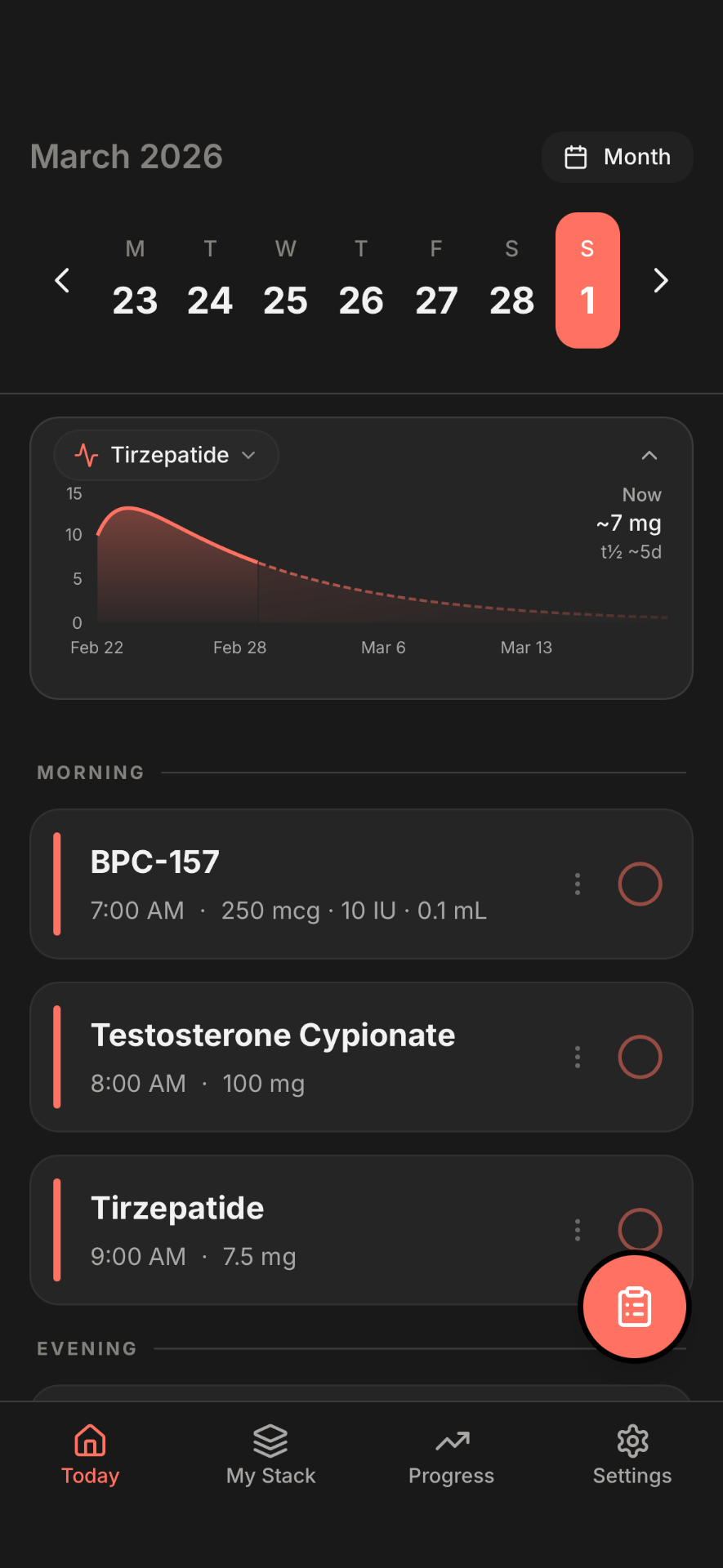
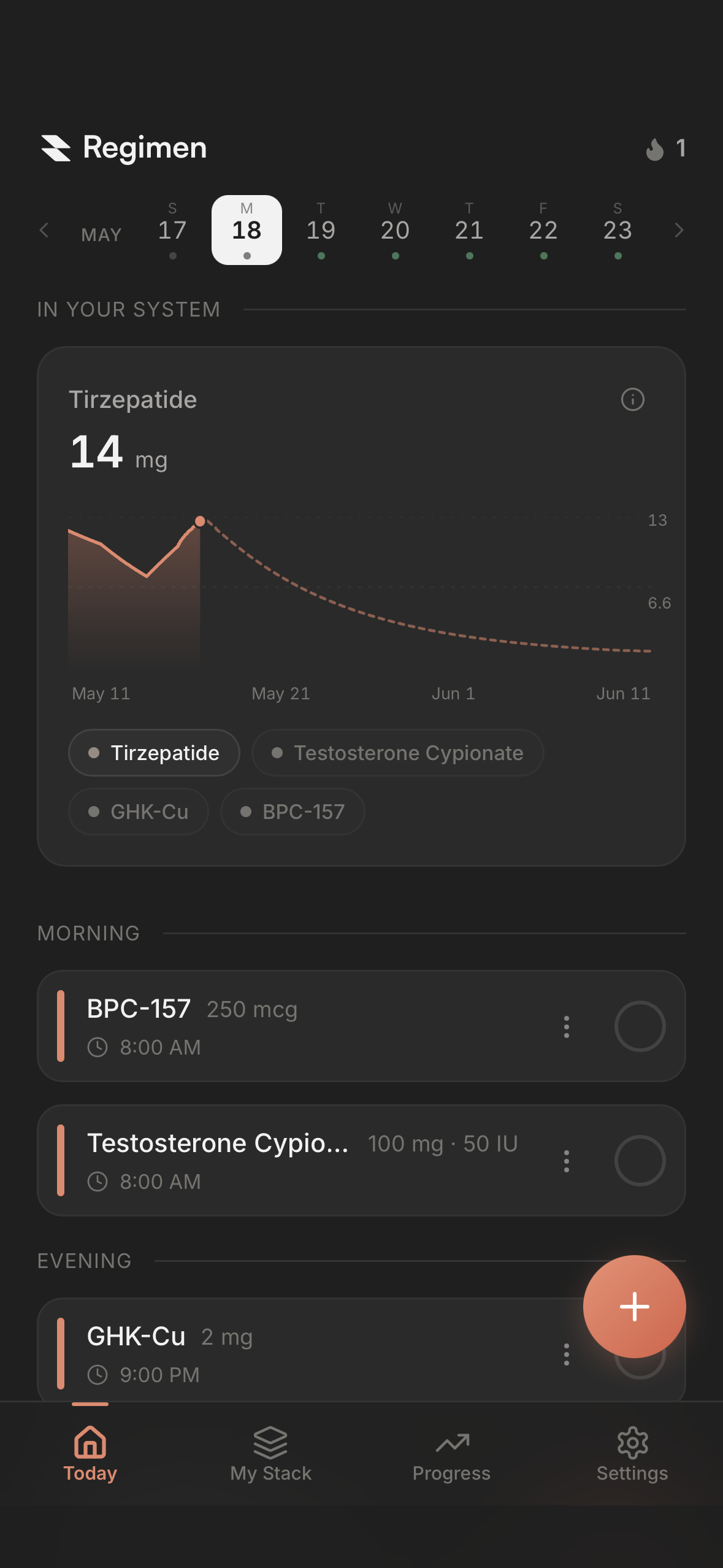
That’s the whole reason Regimen exists. It connects the compound you’re taking to your actual results over time, your labs (insulin, testosterone, SHBG, A1c), your weight, and your daily markers like cycle changes, cravings, and energy. Its built-in pattern detection watches those together and surfaces what’s moving and what isn’t, so you’re not guessing. When your fasting insulin finally drops, or your period shows up after two years, you see the pattern instead of a vague “I think it’s helping.”
Then you walk into your doctor’s appointment with the receipts instead of a hunch. That’s the difference between managing PCOS and just hoping.
Naming note: as of May 2026, PCOS was officially renamed PMOS (Polyendocrine Metabolic Ovarian Syndrome) to reflect that it’s a whole-body condition, not just an ovarian one. Almost everyone still says PCOS, so that’s what we use here.
Frequently Asked Questions
Is Ozempic FDA-approved for PCOS?
No. No GLP-1 (semaglutide, tirzepatide, or liraglutide) is FDA-approved specifically for PCOS. Doctors prescribe it off-label, usually through the obesity or type-2-diabetes indication, based on your individual case.
Will a GLP-1 make my period come back?
Often, yes. In a 2025 trial, about 72% of women on semaglutide plus metformin got regular cycles back, versus 42% on metformin alone. It’s tied to losing weight and improving insulin, and it can take a few months. Common, but not guaranteed.
Can I get pregnant while taking Ozempic for PCOS?
Yes, and this catches people off guard. Returning cycles can restore fertility quickly, and GLP-1s can make birth control pills less reliable. But these drugs are not safe in pregnancy, so you shouldn’t be on one while trying to conceive. Wegovy’s label says stop at least 2 months before a planned pregnancy; tirzepatide guidance points to about 1 month. Talk to your doctor about timing and contraception.
Semaglutide, tirzepatide, or retatrutide for PCOS?
Semaglutide has the most PCOS-specific research today, including a dedicated randomized trial. Tirzepatide likely works at least as well for weight and insulin, with strong early real-world data, but its PCOS trials haven’t reported yet. Retatrutide is a triple agonist with the biggest weight-loss numbers in obesity trials, but it’s still investigational and has no PCOS-specific data at all. Proven, promising, theoretical, in that order.
Does a GLP-1 help PCOS acne and unwanted hair?
Maybe, and modestly. When researchers pooled the trials in 2025, the testosterone changes weren’t statistically significant. Any skin or hair improvement is usually a downstream effect of weight loss and better insulin, not the drug directly lowering testosterone. Some women notice a difference; many don’t.
How does a GLP-1 compare to metformin for PCOS?
GLP-1s beat metformin on weight, waist, and insulin sensitivity. But metformin is cheaper, has decades of safety data, and is generally considered okay to continue while trying to conceive, which GLP-1s are not. The strongest cycle-recovery data came from combining semaglutide with metformin.
What happens if I stop taking it?
Weight regain is common, and with it, insulin resistance and irregular cycles can return. It’s best thought of as ongoing management for an ongoing condition, not a permanent fix. Many people transition to lifestyle changes and sometimes metformin or inositol afterward.
Does it work for lean PCOS?
Possibly. Roughly 30 to 50% of slim women with PCOS still have insulin resistance, so the underlying metabolic problem GLP-1s target can be present even at a normal weight. There’s less specific research here, so this is a conversation to have with your doctor.
This article is for educational purposes only and is not medical advice. GLP-1s are off-label for PCOS and are contraindicated in pregnancy and while trying to conceive. Always consult a qualified healthcare provider before starting, modifying, or stopping any medication.
Ready to track your GLP-1?
- Smart reminders so you never miss a dose
- Track weight, photos, and progress over time
- Medication level curves for every compound