Where BPC-157, TB-500, and the rest of the peptide shelf actually stand with the FDA in 2026, what April’s reclassification changed, and what the July PCAC reviews will decide next.
Quick answer
It’s a gray area, and it just moved. In April 2026 the FDA removed 12 popular peptides, including BPC-157, TB-500, KPV, MOTS-c, and Semax, from the bulk-substances list it had flagged for compounding limits. That is NOT the same as approving them. None are FDA-approved drugs, none can be legally sold for human use, and all of them are still unapproved new drugs the FDA is actively reviewing. The “research chemical” label you see on every vial gives you zero legal cover. So: not illegal to possess in the narcotics sense, not approved, not freely sold. Gray.
What actually changed in April 2026
For a while, the FDA had grouped BPC-157 and TB-500 into a bucket (Category 2) that effectively kept compounding pharmacies from making them. On April 23, 2026, the FDA pulled 12 peptides out of that bucket, alongside a push from the new HHS leadership (the RFK Jr. announcement) to reopen the door on peptides.
The 12: BPC-157, TB-500, KPV, injectable GHK-Cu, LL-37, DiHexa, DSIP, Epitalon, PEG-MGF, Melanotan II, MOTS-c, and Semax.
Here’s the part that gets misread everywhere: being removed from that list is not a green light. It doesn’t make any of these approved, and it doesn’t automatically make them compoundable. It just took them out of the “explicitly restricted” pile and put them back into “under review.” For the news-cycle read of what compounders are doing about it right now, see our April 2026 FDA ruling recap.
What it does NOT mean
Three things people are getting wrong right now:
- Not approved. No peptide on that list is an FDA-approved drug. Approval is a whole separate, years-long process none of these have finished.
- Not freely compoundable. Removal from the list doesn’t hand pharmacies the go-ahead. That’s the exact question the FDA is still working through.
- Not “legal to sell for human use.” Selling any of these for people to inject is still selling an unapproved new drug. That’s why every vendor slaps “research use only” on it.
The July 23-24 PCAC reviews (what’s being decided next)
The FDA’s compounding advisory committee (PCAC) is reviewing these peptides for 503A compounding on July 23-24, 2026:
- July 23: BPC-157, KPV, TB-500, MOTS-c
- July 24: DSIP, Semax, Epitalon
This is the meeting that starts to answer whether any of these can be legally compounded going forward. It’s worth watching if you care where this lands.
So what does “research chemical” actually protect?
Nothing, legally. The label is a workaround, not a shield. What matters under the law is how the substance is classified and how it’s sold, not what the sticker says. Buying “for research” doesn’t change that the thing in the vial is an unapproved drug if you’re putting it in your body.
The honest read: enforcement mostly targets sellers, not individual users, which is why this market exists in the open. But “rarely enforced against buyers” is not the same as “legal,” and it’s worth knowing the difference.
One more thing if you compete
If you’re drug-tested, this is simpler and stricter. WADA bans BPC-157 at all times, and TB-500 has been banned since 2011. The FDA reshuffle changes nothing for anti-doping. A removed-from-a-list peptide will still cost you a ban.
What this means for tracking
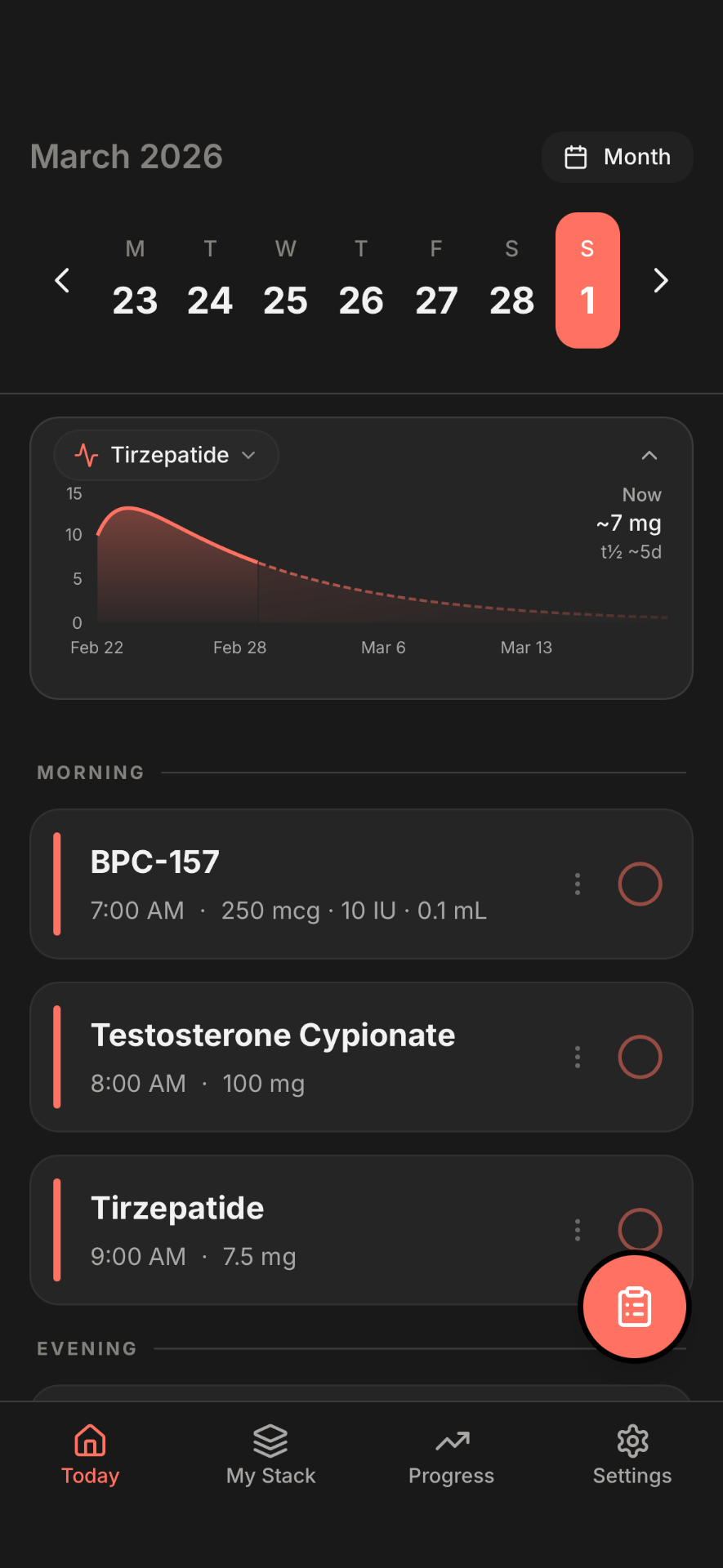
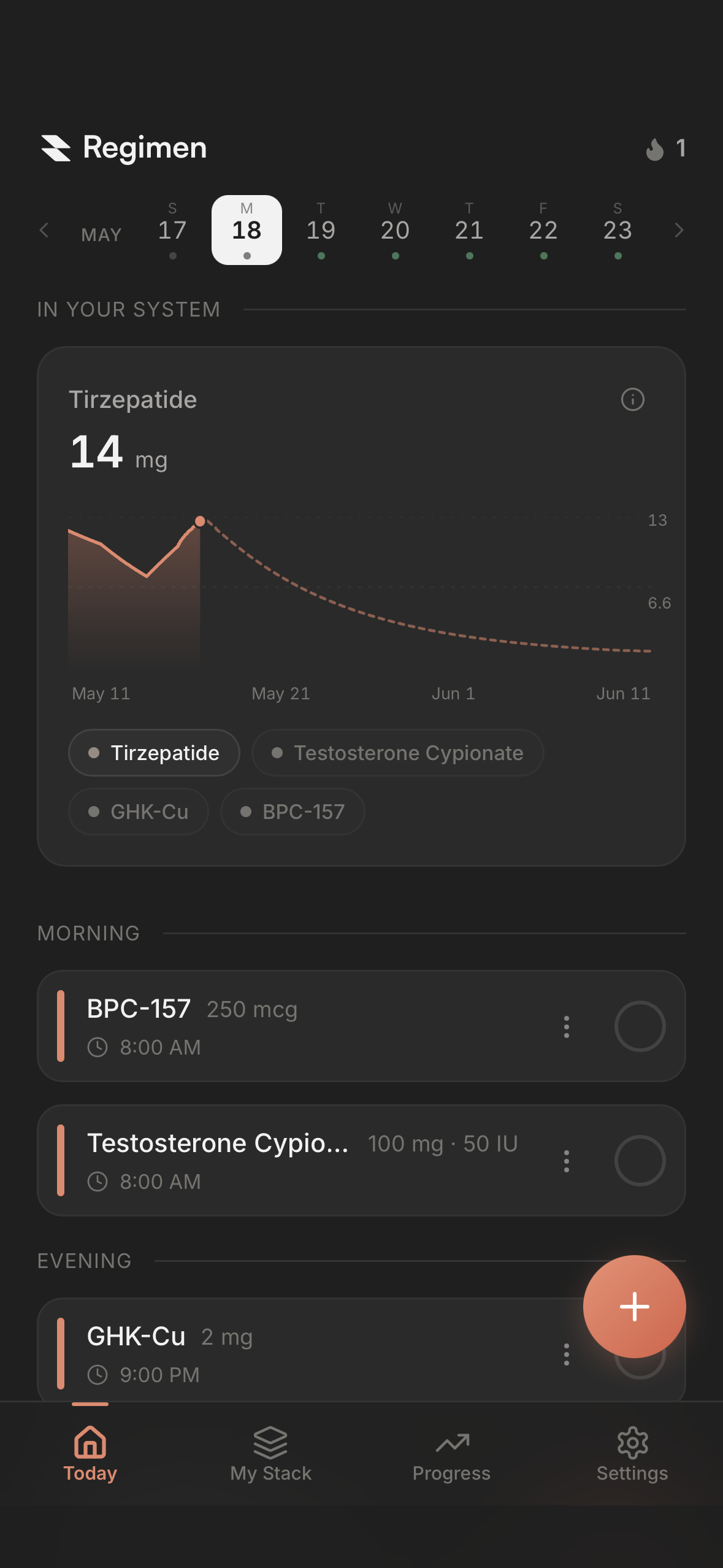
None of this is medical advice, and it’s a moving target, so the smart move is to keep your own clean record: what you took, how much, and how you responded. If the rules shift again (and they will this year), you want your own data, not a guess. Regimen logs your peptides, doses, and how you’re feeling on one timeline. Track your peptides in Regimen.
Frequently Asked Questions
Are peptides legal in the US in 2026?
They’re in a gray area. None are FDA-approved or legal to sell for human use, but most aren’t controlled substances either. April 2026’s reclassification removed 12 peptides (including BPC-157 and TB-500) from a compounding-restriction list, which put them back under review, not approved.
Is BPC-157 legal in the US?
BPC-157 isn’t FDA-approved and can’t be legally sold for human use, but it’s not a scheduled narcotic. It was removed from the FDA’s Category 2 list in April 2026, so it’s under review, not banned outright. “Research use only” gives no legal protection.
Did the FDA approve peptides in 2026?
No. The April 2026 change removed 12 peptides from a restriction list, which is not approval. They remain unapproved new drugs, and the PCAC is reviewing them for compounding on July 23-24, 2026.
What does “research chemical” mean legally?
Legally, nothing helpful. It doesn’t change the substance’s classification. Injecting an unapproved drug is the same whether or not the label says “for research.”
Can I get BPC-157 from a compounding pharmacy now?
Not settled. Removal from the restriction list didn’t automatically make it compoundable; that’s what the July 2026 PCAC review is deciding.
Related reading
- The April 2026 FDA ruling: what compounders are doing about it
- BPC-157 dosage protocol guide
- How Canadians access BPC-157, TB-500, and Semax
- Peptide access in Australia (SAS-B, compounding pharmacies)
This article is for informational purposes only and does not constitute medical or legal advice. Regulatory status is changing rapidly; verify current FDA guidance and consult a licensed healthcare provider and, where relevant, an attorney before acting on any of the above.
Ready to track your protocol?
- Smart reminders so you never miss a dose
- Track weight, photos, and progress over time
- Medication level curves for every compound