The peptide community in South Africa has been growing quietly for years. The rugby culture, the gym culture, the biohacking scene. There’s real demand here. Here’s the honest picture on what’s available, how people access it, and what to watch out for.
The Legal Status of Peptides in South Africa
Most research peptides (BPC-157, TB-500, GHK-Cu, Semax, and others) are not listed as scheduled controlled substances under South Africa’s Medicines and Related Substances Act.
But “not scheduled” does not mean “fully legal.” Peptides in South Africa sit in a regulatory grey area:
- They are not explicitly approved medicines (no registered product)
- They are not explicitly banned as controlled substances (no scheduling)
- They are not licensed for human use through formal channels
The consequence of this grey area: you can source and possess most research peptides without the same legal risk as a Schedule 5 or Schedule 6 substance, but the absence of regulatory oversight means no quality standards apply. The responsibility for sourcing safely falls entirely on you.
Import Risk: What SARS Customs Actually Does
This is where the grey area gets real. South African Revenue Service (SARS) customs officers can and do seize shipments of unregistered medicines entering the country. “Unregistered medicine” is defined broadly under the Medicines Act, and many peptides fit that definition.
The risk profile for imports:
- Small personal-use quantities are less likely to be caught than larger commercial shipments
- Packages from known research chemical suppliers are sometimes flagged
- Seizure is the typical outcome when caught (not prosecution), but there is no guarantee
- Declared contents matter: mislabeling creates additional legal exposure
If you are considering importing peptides, understand that there is a real chance of loss with no recourse. Factor that into your sourcing decision.
Local SA Suppliers and Compounding Pharmacies
The most practical options for sourcing peptides in South Africa without import risk:
Local research chemical suppliers: A number of suppliers operate within South Africa selling research peptides. Quality varies significantly. Always request a Certificate of Analysis (COA) showing third-party lab testing. Never purchase from a supplier who cannot provide a COA.
Compounding pharmacies: Some compounding pharmacies in South Africa will compound peptides when a private doctor is involved. This is the most legitimate route: a private physician writes a compounding request, the pharmacy prepares the peptide, and you have a documented chain of custody. Not every compounding pharmacy will do this, but it is worth asking.
The compounding route is slower and more expensive than buying direct. The advantage is that you know what you’re getting.
Most Used Peptides in the SA Community
The compounds with the most traction in South Africa’s fitness, rugby, and biohacking communities:
- BPC-157 (Body Protection Compound): the most widely used peptide in SA. Used for injury recovery (joints, tendons, ligaments), gut health, and anti-inflammatory effects. Rugby culture drives a lot of the demand here.
- TB-500 (Thymosin Beta-4 fragment): muscle and tissue repair, often stacked with BPC-157. Common post-injury or post-surgery protocol.
- GHK-Cu (Copper peptide): used topically and systemically for skin quality, hair thickness, and wound healing. Growing use in the SA aesthetics community.
- Semax: cognitive enhancement, focus, neurological support. Less common than BPC/TB-500 but gaining ground in biohacking circles.
- BPC-157 + TB-500 stack: the combination protocol. Used when recovery is the primary goal. Each peptide works on different parts of the repair pathway.
Storage and Reconstitution
Peptides arrive as lyophilised (freeze-dried) powder. Before use, they need to be reconstituted with bacteriostatic water.
Storage rules:
- Lyophilised powder (unreconstituted): store at -20°C for long-term storage, or at 2-8°C if you’ll use within 3 months
- Reconstituted peptide: always 2-8°C (refrigerated), use within 4 weeks
Reconstitution math: use the peptide calculator to get your exact volume of bacteriostatic water and the resulting concentration per unit on an insulin syringe.
Sourcing Safely: What a COA Actually Tells You
A Certificate of Analysis is the minimum standard for peptide sourcing. A legitimate COA shows:
- The compound identity (confirmed by HPLC or mass spectrometry)
- Purity percentage (look for >98%)
- Absence of heavy metals and contaminants
- The testing lab’s name and report date
How to read a peptide COA walks through a report field by field.
A COA from the supplier’s own internal lab is worth less than one from an independent third-party lab. Ask for the independent lab COA specifically.
If a supplier cannot provide one, do not buy from them.
Common Questions About Peptides in South Africa
Are peptides legal in South Africa? Most research peptides are not scheduled controlled substances in South Africa, meaning they do not carry the same legal risk as a Schedule 5 or Schedule 6 drug. However, they are also not registered medicines approved for human use. They exist in a legal grey area.
Can SARS customs seize peptide shipments? Yes. SARS customs can seize unregistered medicines, and many peptides qualify as unregistered medicines under the Medicines Act. Import seizure is a real risk, particularly for larger quantities or packages from flagged suppliers.
Is BPC-157 available in South Africa? BPC-157 is not a registered medicine in SA and is not sold in pharmacies. It is available through local research chemical suppliers and some compounding pharmacies (with physician involvement). Quality varies: always verify with a COA.
What is the BPC-157 + TB-500 stack used for? BPC-157 and TB-500 are often stacked for injury recovery. BPC-157 focuses on gut healing, tissue repair at specific injury sites, and anti-inflammatory effects. TB-500 promotes broader muscle and connective tissue regeneration. Together, they cover more of the recovery pathway than either alone.
How do I reconstitute BPC-157? Add bacteriostatic water to the lyophilised peptide vial using an insulin syringe. The volume of water determines your concentration per unit. Use the peptide calculator to calculate your exact reconstitution volume based on vial size and desired dose.
Tracking Your Peptide Protocol
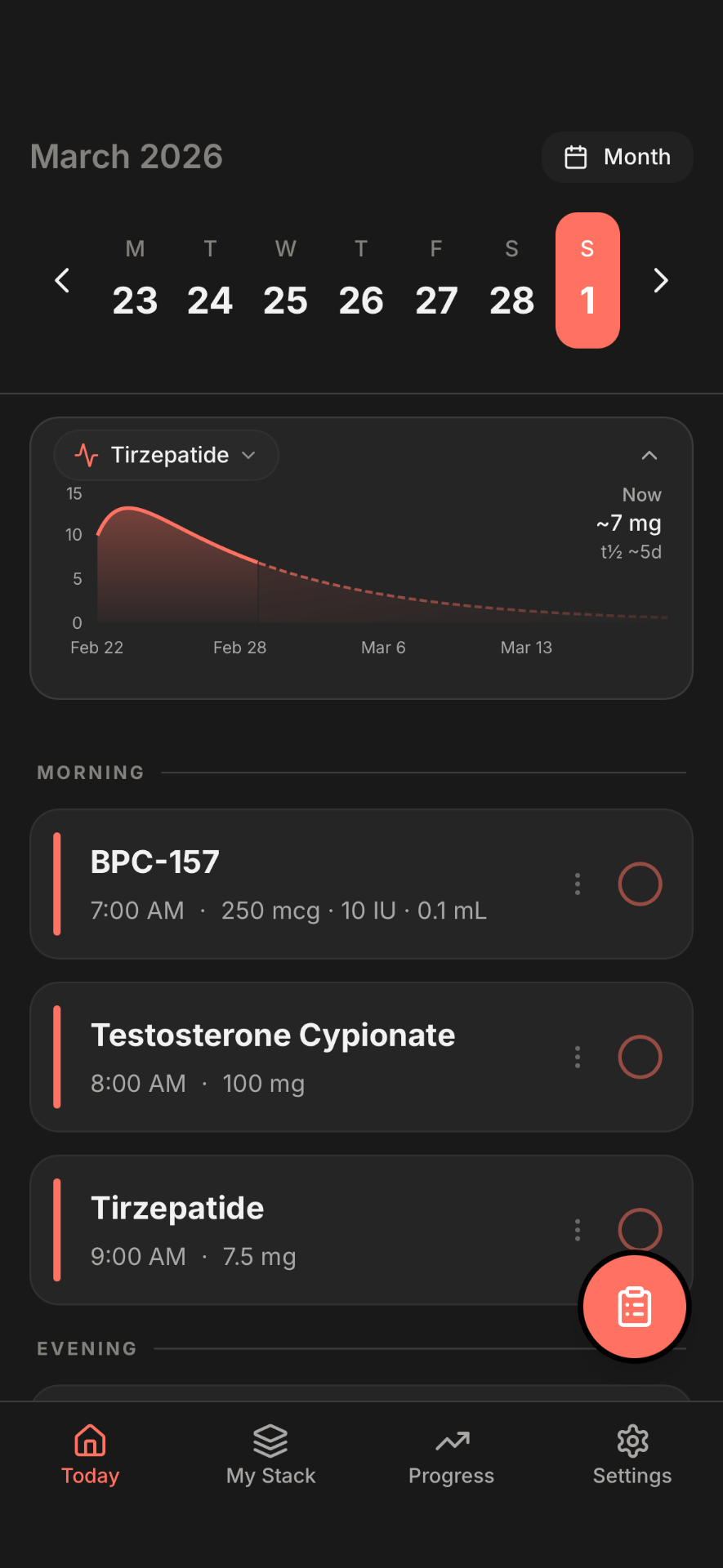
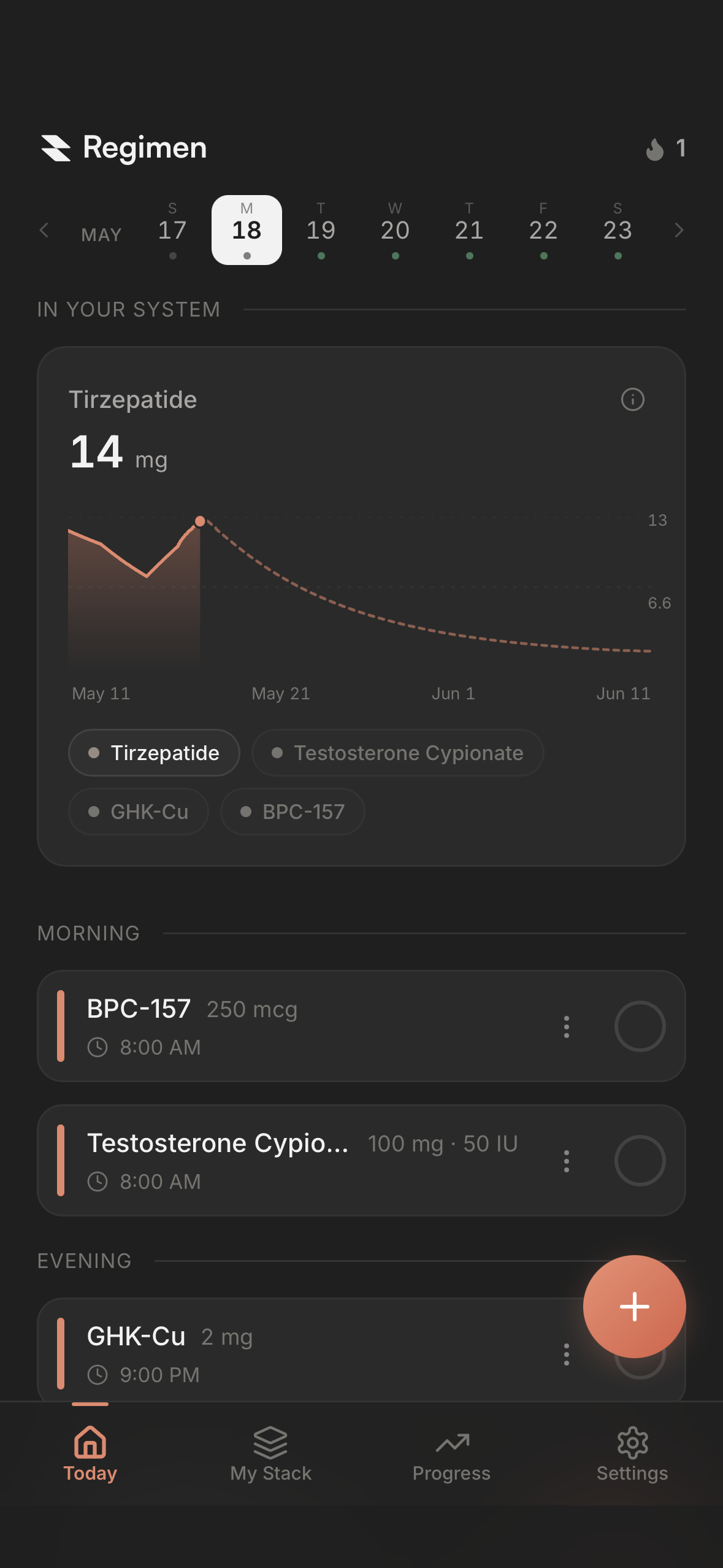
Peptide protocols involve multiple variables: dose size, injection frequency, site rotation, and cycle timing (on/off phases). Regimen tracks all of it. Log each injection, set reminders for daily or twice-daily protocols, track how you feel across the cycle, and use the built-in peptide calculator for reconstitution math.
If you’re also running TRT in South Africa, see our full South Africa TRT guide for clinic access and monitoring details.
For GLP-1 medications in SA, see the South Africa GLP-1 guide.
This article is for informational purposes only and does not constitute medical advice. Discuss all treatment decisions with your healthcare provider.
Ready to track your protocol?
- Smart reminders so you never miss a dose
- Track weight, photos, and progress over time
- Medication level curves for every compound
Frequently Asked Questions
Can SARS customs seize peptide shipments coming into South Africa?
Yes. SARS customs can seize unregistered medicines entering South Africa. Many research peptides qualify as unregistered medicines under the Medicines and Related Substances Act. Import seizure is a real risk, especially for larger shipments or packages from flagged research chemical suppliers.
What is the BPC-157 and TB-500 stack used for?
BPC-157 and TB-500 are commonly stacked for injury and tissue recovery. BPC-157 targets localised tissue repair, gut healing, and anti-inflammatory effects. TB-500 promotes broader muscle and connective tissue regeneration. The combination covers more of the repair pathway than either peptide alone.
How do I reconstitute BPC-157 for injection?
Add bacteriostatic water to the lyophilised BPC-157 powder using an insulin syringe. The amount of water you add determines the concentration per unit on your syringe. Use a peptide reconstitution calculator to determine the exact volume based on your vial size and target dose.