Starting TRT in South Africa means going private almost every time. The public sector rarely touches it. Here’s how to navigate the private route cleanly.
Why the Public System Almost Never Handles TRT
State hospitals in South Africa focus on primary care priorities: HIV/AIDS, TB, maternal health, trauma. Testosterone replacement for hypogonadism sits outside that priority list. In practice, if you walk into a public hospital looking for TRT, you’ll likely be turned away or redirected. It happens, but it’s not reliable or consistent.
The practical path for most South Africans is private, either through a GP or a specialist men’s health clinic.
Private Clinics for TRT in South Africa
Several private clinics now offer dedicated men’s health and TRT services across the country, alongside private GP and wellness clinics that manage TRT. Some offer consultations over WhatsApp or video call, which makes them accessible wherever in South Africa you are and is useful if you’re not near a major city. Others consult in person.
Standard process across most private clinics: you book a consultation, they order your bloods, you come back to review results and, if indicated, start treatment. Some clinics can compress this into a single visit if you arrive with existing blood work.
Total cost at a private clinic including medication typically runs R1,500 to R3,000 per month, depending on medication type and consultation frequency.
Medications Available in South Africa
The product landscape in SA is narrower than in the UK or US. Here’s what’s actually available:
- Testosterone Cypionate (Depo-Testosterone): the main injectable used in South Africa. Supply issues that affected availability in 2023 have been largely resolved as of 2024. Standard protocols are weekly or twice-weekly injections.
- Testogel / Androgel (testosterone gel): daily topical application. Available and commonly prescribed. More expensive annually than injections: gel runs R10,000 to R24,000 per year, compared to R641 to R1,603 per month for injectable protocols.
- Sustanon 250: currently NOT available in South Africa due to ongoing supply issues. Do not plan your protocol around Sustanon unless you confirm current availability with your clinic directly.
The UK-style “Nebido every 10 weeks” protocol is less common here. Cypionate is the workhorse.
Does Medical Aid Cover TRT in South Africa?
The major medical aids (Discovery, Momentum, Vitality, Bonitas) all cover testosterone for diagnosed hypogonadism, but only under specific conditions:
- Coverage falls under chronic medication benefits, not general consultations
- You need a formal hypogonadism diagnosis confirmed by two separate morning blood tests
- Your doctor must submit a motivation letter to your medical aid
- Blood work must show objectively low testosterone alongside clinical symptoms
If you meet those criteria and your doctor does the paperwork properly, medical aid can meaningfully offset ongoing medication costs. The consultation and diagnostic costs are typically out-of-pocket regardless.
Obesity or “low-normal” testosterone without a confirmed diagnosis generally does not qualify for chronic benefit coverage. The threshold is clinical hypogonadism, not optimisation.
What Blood Work You Need
To get diagnosed and start TRT in South Africa, most private clinics will run:
- Total testosterone (two separate morning readings, taken before 10am, ideally on different days)
- LH (luteinising hormone)
- FSH (follicle-stimulating hormone)
- SHBG (sex hormone-binding globulin)
- Full blood count
- PSA (prostate-specific antigen) if you’re over 40
The two-morning-reading requirement matters. A single low result is not typically enough for a formal hypogonadism diagnosis. Make sure both tests are done before 10am as testosterone fluctuates significantly throughout the day.
Monitoring and Lab Work in South Africa
The two main private pathology providers in South Africa are Pathcare and Lancet Laboratories. Both have national footprints, walk-in collection centres in most cities, and turnaround times of 24 to 72 hours for standard hormone panels. Ampath is a third option in some regions.
For ongoing TRT monitoring, the standard panel most private clinics request includes:
- Total testosterone
- Free testosterone (calculated or direct)
- Estradiol (E2), ideally a sensitive assay
- Haematocrit and full blood count (to monitor red blood cell production)
- SHBG and PSA on a less frequent cadence
Typical out-of-pocket cost for a TRT follow-up panel through Pathcare or Lancet runs R400 to R900 all-in, depending on whether you bundle PSA and SHBG. Diagnostic panels at the start of treatment are more comprehensive and run higher.
Most private clinic protocols in South Africa require lab work at 6 to 8 weeks after starting or changing a dose, then every 6 months once you’re stable. Haematocrit is the value that most often forces a protocol adjustment, so keep an eye on it.
Injectable and Topical Options Available in South Africa
The product range in SA is narrower than in the US or UK. Here’s what is actually stocked through standard pharmacy channels in 2026:
| Product | Form | Typical private cost / month |
|---|---|---|
| Depo-Testosterone (cypionate) | Injectable, weekly or twice-weekly | R650 to R1,600 |
| Sustanon 250 | Injectable blend | Not currently available through standard SA pharmacy channels |
| Testogel | Topical gel, daily | R900 to R2,000 |
| Androgel | Topical gel, daily | R900 to R2,000 |
Depo-Testosterone is the workhorse of South African TRT. Gels are available and prescribed when injections are not suitable, but the annual cost difference is significant. Sustanon 250 has been intermittently unavailable; do not build a protocol around it without confirming current stock with your clinic and pharmacy.
Calculating Your Protocol
Once you have a prescription, the TRT dose calculator helps you work out exactly what to draw per injection. If you’re moving to a twice-weekly or daily injection split, the split dose calculator handles that math for you.
Common Questions About TRT in South Africa
Is testosterone a controlled substance in South Africa?
Yes. Testosterone is a Schedule 5 substance under South Africa’s Medicines and Related Substances Act. It requires a prescription from a registered medical practitioner. Importing without a prescription, or obtaining it without a prescription, is illegal.
Can I get TRT from a GP or do I need a specialist?
Many private GPs in South Africa are comfortable prescribing TRT. You do not need to see a specialist (endocrinologist or urologist) unless your GP requests a referral or your case has a complex underlying cause.
Can I get TRT through my medical aid in South Africa?
Yes, but only with a formal hypogonadism diagnosis. The major medical aids (Discovery, Momentum, Bonitas, Vitality) cover testosterone under chronic medication benefits when two morning blood tests confirm clinically low testosterone and your doctor submits a motivation letter. Optimisation outside of a clinical hypogonadism diagnosis generally is not covered. Consultations and diagnostic bloods are typically out-of-pocket regardless.
Is Sustanon available in South Africa?
As of 2026, Sustanon 250 is not reliably available through standard South African pharmacy channels. Supply has been intermittent for several years. Most private clinics now default to Depo-Testosterone (cypionate) for injectable protocols. Do not plan a protocol around Sustanon without confirming current stock with your specific clinic and pharmacy.
How much does private TRT cost per month in South Africa?
Total cost on private pay typically runs R1,500 to R3,000 per month, including consultation amortisation and medication. Injectable cypionate protocols sit at the lower end (around R650 to R1,600 for medication alone). Gel-based protocols sit at the higher end. Lab work adds R400 to R900 per draw, usually every 6 months once stable. Medical aid can offset medication costs for confirmed hypogonadism under chronic benefits.
How long before TRT starts working?
Most people notice improved energy and mood within 4 to 6 weeks. Libido often responds faster. Body composition changes take 3 to 6 months of consistent protocol. Lab values stabilise around 6 to 8 weeks after starting.
Tracking Your Protocol
Wherever you access TRT in South Africa, the tracking principles are the same. Log every injection, track how you feel week to week, and monitor blood work at 6 and 12 weeks after starting. The TRT dose calculator helps with dosing math.
If you’re a woman considering testosterone therapy, our guide to injectable hormone tracking for women covers exactly how to manage this.
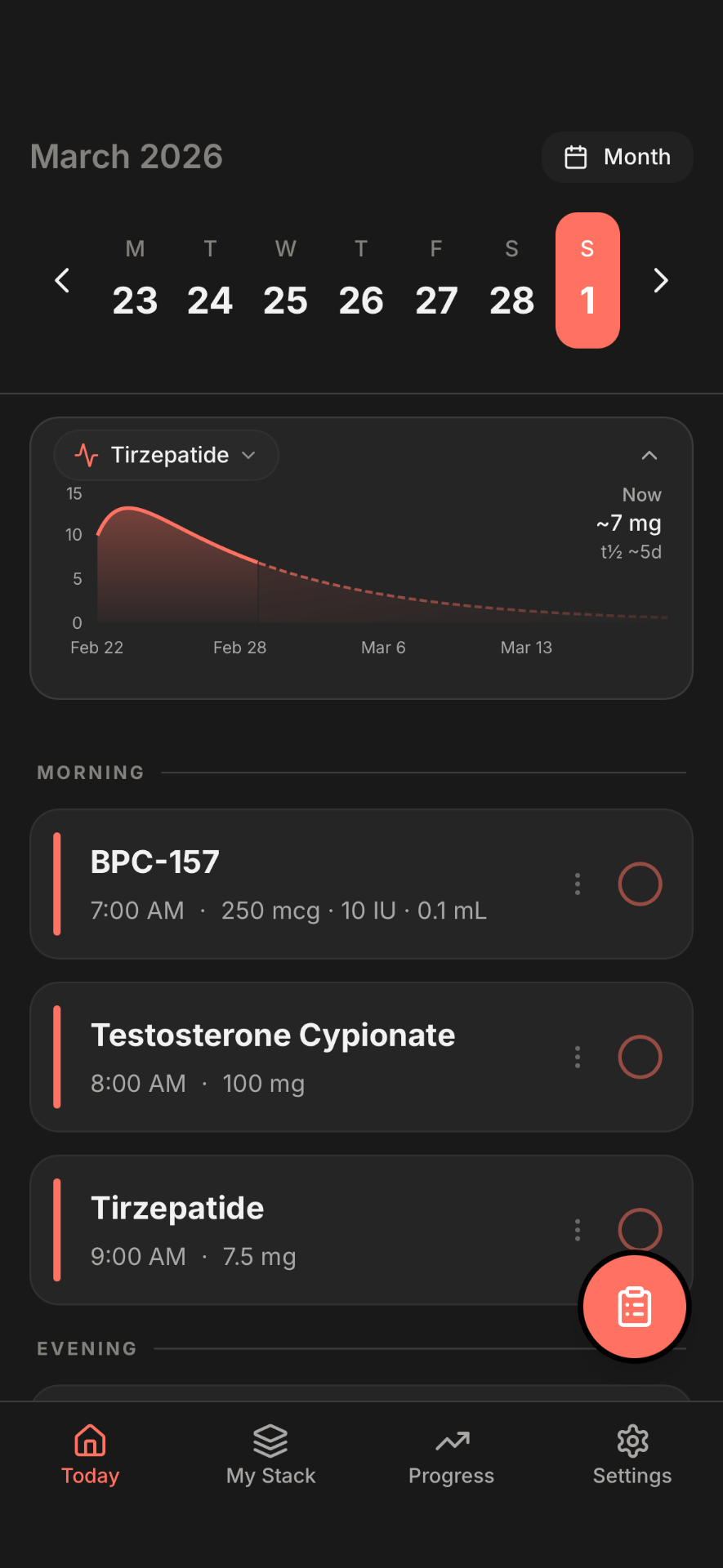
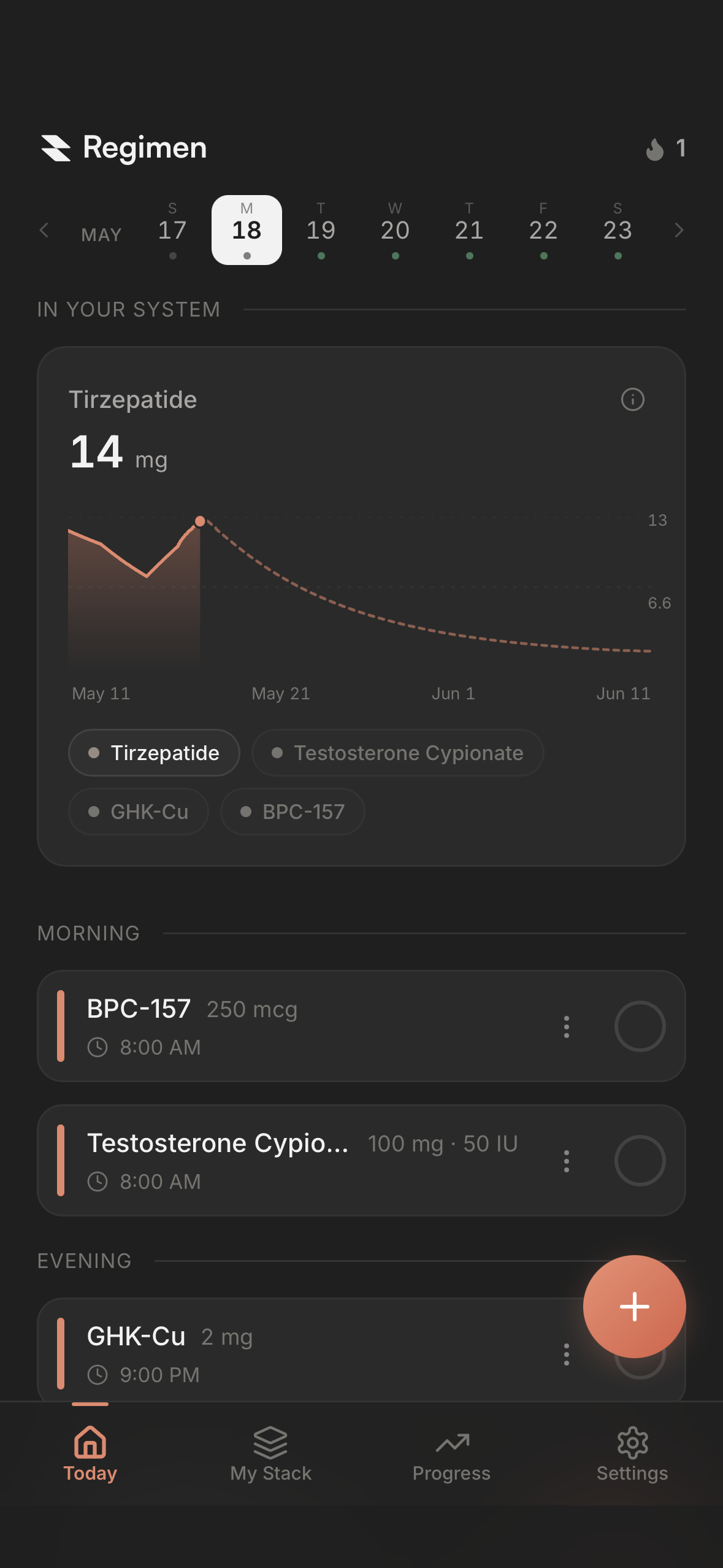
Regimen lets you log injections, track energy and mood daily, model your blood levels over time, and store your blood work results alongside your protocol history. Available on iOS and Android.
If you’re also exploring peptides in South Africa, see the South Africa peptides guide. If you’re looking at GLP-1 medications, see the South Africa GLP-1 guide.
This article is for informational purposes only and does not constitute medical advice. Discuss all treatment decisions with your healthcare provider.
Ready to track your protocol?
- Smart reminders so you never miss a dose
- Track weight, photos, and progress over time
- Medication level curves for every compound