BPC-157 · U-100 · U-50 · U-40 insulin syringe
BPC-157 Dosage Calculator (Dose to Syringe Units)
Enter how you reconstituted your BPC-157 and the dose you're using, and this shows the exact units to draw on your insulin syringe. (BPC-157 is a research peptide, not FDA-approved.)
Peptide Reconstitution Calculator
Calculate your exact dose
Enter your vial details to calculate how many units to draw for your dose.
Common doses: BPC-157 (250-500mcg), TB-500 (2000-5000mcg)
This calculator is for informational purposes only, so always double-check your result with a healthcare provider. We assume no liability for dosing errors.
Last updated September 2026 · Reviewed by the Regimen Team
How to use it
How to use this calculator
- 01
Enter your vial size
Most BPC-157 vials are 5 mg or 10 mg. The label tells you.
- 02
Enter the BAC water you added
Commonly 1 to 3 mL. Whatever you actually mixed in.
- 03
Enter your dose in mcg
Use the dose you've decided with your provider or protocol.
- 04
Read units and mL
The calculator returns the exact units to draw on a U-100, U-50, or U-40 syringe, plus the resulting concentration and doses per vial.
BPC-157 dose to units reference (5 mg vial in 2 mL BAC water, U-100)
Common amounts people discuss, shown for reference. This is not a dosing recommendation. Use the amount your provider or protocol specifies. Concentration: 2,500 mcg/mL on a U-100 syringe.
| Dose | Volume (mL) | Units (U-100) |
|---|---|---|
| 250 mcg | 0.100 | 10 |
| 500 mcg | 0.200 | 20 |
| 750 mcg | 0.300 | 30 |
| 1000 mcg | 0.400 | 40 |
How to work out your BPC-157 units
The number of units you draw isn’t about the dose alone, it’s about how you mixed the vial. Reconstitute a 5 mg vial with 2 mL of bacteriostatic water and you’ve got 2,500 mcg per mL. A 250 mcg dose is 0.1 mL, which is 10 units on a U-100 syringe. Mix the same vial with 1 mL instead and every number on the syringe changes. So the rule is: set your mix first, then read the units off it. The calculator handles both steps once you enter your vial and water.
Common ways people reconstitute BPC-157
Most people use a 5 mg or 10 mg vial and somewhere between 1 and 3 mL of bacteriostatic water, picking the amount of water that makes their dose land on an easy number of units. There’s no single “right” mix, it’s about what’s convenient to draw and store. A 5 mg vial in 2 mL is a common starting point because round doses come out to clean unit numbers. Whatever you choose, keep it consistent so your units mean the same thing every time.
Why units, not just mcg
Units are marks on the syringe that measure volume, how far up the barrel the liquid sits, not the amount of peptide. That’s why “how many units is 250 mcg of BPC-157” has no fixed answer until you say how concentrated your solution is. Once you’ve entered your mix above, the units fall straight out of it.
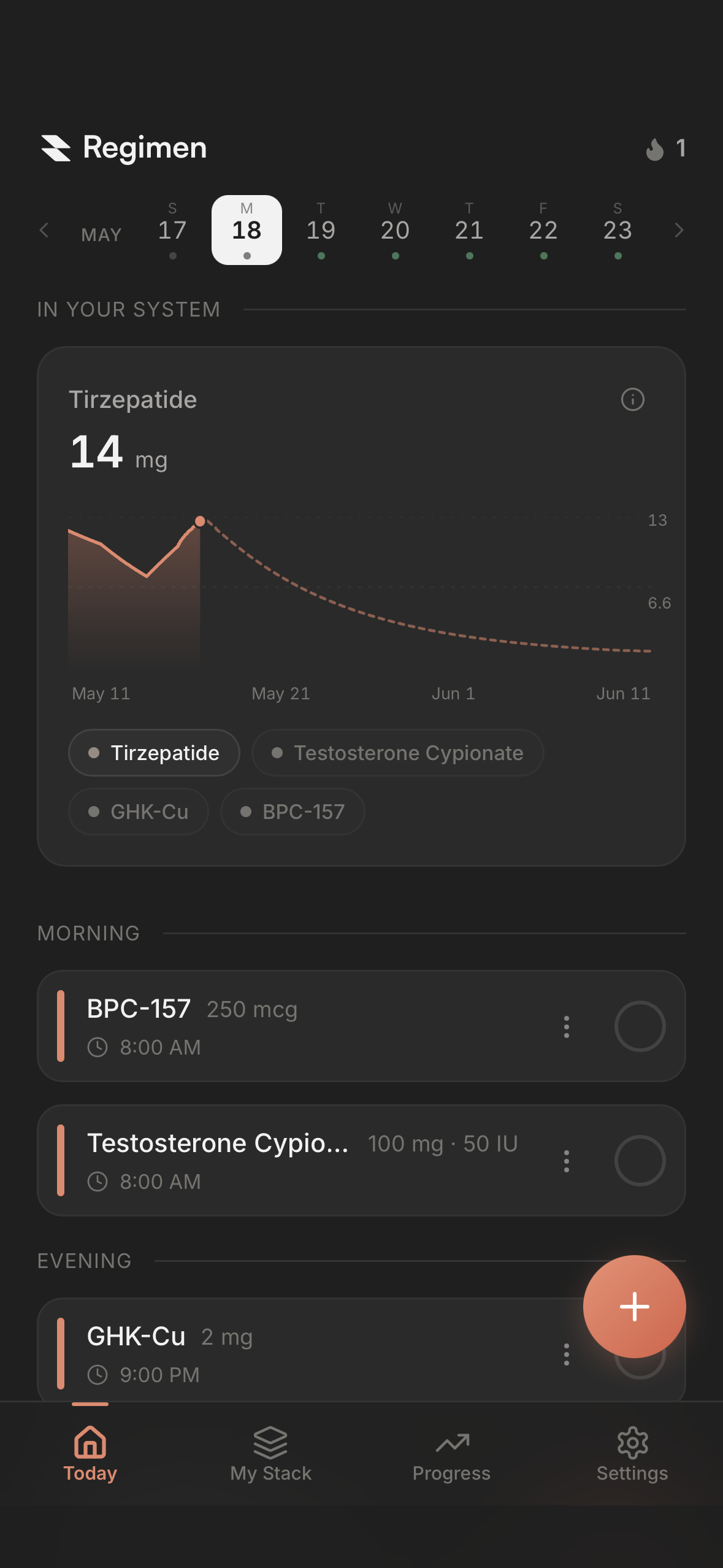
Keep your vial size, water, and dose saved so you’re not re-deriving units every time. Log your BPC-157 protocol in Regimen and your draw amount rides along with every shot.
Related: the general peptide reconstitution calculator, mg to units converter, and units to mL converter.
This tool is for self-tracking and education. It organizes a dose you choose; it does not provide medical advice or recommend a dose. BPC-157 is a research peptide and is not FDA-approved. Follow a qualified provider and your product label.
Get the app
Stop re-deriving your BPC-157 units
Regimen saves your reconstitution and shows the exact units to draw on every BPC-157 dose log.
- Built-in dose calculators
- Smart injection reminders
- Track weight and side effects
- Private, secure health data


Free to download. Free for your first compound.
Questions