The Bottom Line
There is no single “better” delivery method for peptides. Nasal sprays are ideal for small, brain-targeting peptides like Semax and Selank, where the nose-to-brain pathway gives them a direct shortcut that injections cannot match. Injections are better for most body-targeting peptides (BPC-157 for tissue repair, GH peptides, GLP-1s) where you need high systemic bioavailability and precise dosing. This guide breaks down exactly which peptides are better nasally, which are better injected, and why, with real bioavailability numbers and a clear decision framework.
Overview of Peptide Delivery Methods
Intranasal (Nasal Spray)
Sprayed into the nostrils where the peptide absorbs through the nasal mucosa. The nasal lining is thin, highly vascularized, and for certain peptides, offers a direct pathway to the brain through olfactory and trigeminal nerves. This nose-to-brain route bypasses the blood-brain barrier, which is the whole reason nasal delivery exists for neuroactive peptides.
Subcutaneous Injection (SubQ)
Injected into the fat layer just under the skin, typically in the abdomen, thigh, or deltoid area. The peptide absorbs gradually into the bloodstream over minutes to hours. This is the most common route for peptides that need to reach systemic circulation. Bioavailability is typically close to 100%.
Intramuscular Injection (IM)
Injected directly into muscle tissue. Absorption is faster than SubQ because muscles have more blood flow. Used less commonly for peptides than for certain medications and vaccines.
Oral
Swallowed. For most peptides, this is the worst route. Stomach acid and digestive enzymes break down peptide bonds before the compound reaches your bloodstream. Oral bioavailability for most peptides is under 5%. The exceptions are peptides specifically engineered for oral delivery (like oral semaglutide/Rybelsus, which uses an absorption enhancer to survive the GI tract).
Bioavailability Comparison by Peptide
This is the table that actually matters. Bioavailability tells you what percentage of the dose you take actually reaches your system in active form.
| Peptide | Intranasal Bioavailability | SubQ Bioavailability | Notes |
|---|---|---|---|
| Selank | ~92.8% | ~100% | Exceptionally high nasal absorption. Nasal is the preferred route. |
| Semax | ~60-70% | ~100% | Good nasal absorption. Brain-targeting makes nasal preferred. |
| Oxytocin | ~2-5% (systemic) | ~100% | Very low systemic, but intranasal targets the brain directly. |
| BPC-157 | Limited data, likely low | ~100% | Mostly used SubQ near injury site. |
| PT-141 | ~4% | ~100% | Very poor nasal absorption. FDA product is SubQ. |
| CJC-1295/Ipamorelin | Not practical | ~100% | Too large for nasal absorption. SubQ only. |
| Semaglutide | Not practical | ~100% | SubQ or oral (with absorption enhancer). Not suited for nasal. |
| Tirzepatide | Not practical | ~100% | Dual GIP/GLP-1 agonist. SubQ only. |
| TB-500 | Limited data | ~100% | Standard delivery is SubQ. |
The pattern is clear: small peptides that target the brain (Semax, Selank, oxytocin) do well nasally. Everything else generally needs to be injected.
Advantages of Nasal Sprays
The Nose-to-Brain Pathway
This is the biggest advantage. Your nasal cavity has direct nerve connections to the brain. The olfactory nerve and the trigeminal nerve both terminate in the nasal mucosa and connect directly to brain structures. When you spray a peptide into your nose, a portion of it travels along these nerves and enters the central nervous system without ever going through the bloodstream or crossing the blood-brain barrier from the vascular side.
For peptides where the brain is the target (Semax, Selank, oxytocin), this pathway means faster onset (minutes), higher brain concentrations per dose, and less systemic exposure.
No Needles
Needle anxiety is real. For protocols that require 2-3 doses per day (common with Semax and Selank), the convenience factor is enormous. Nobody wants to inject subcutaneously three times a day. Spraying your nose three times takes about 10 seconds total.
Rapid Onset
Nasal absorption is fast. For peptides with good nasal bioavailability, you are looking at 5-15 minutes to noticeable effects. This makes nasal delivery practical for timing-dependent use (dosing before a focus session, before a social event, before a presentation).
Better Compliance
Simpler protocols get followed more consistently. People are more likely to actually take their peptide 2-3 times daily if it means spraying their nose versus loading a syringe.
Disadvantages of Nasal Sprays
- Lower bioavailability for most peptides. Outside of Selank (92.8%) and Semax (60-70%), nasal bioavailability is generally poor.
- Limited to small molecules. Peptides above roughly 20-30 amino acids generally cannot cross the nasal epithelium.
- Variable absorption. Nasal congestion, allergies, spray angle, and mucosa condition all affect how much gets absorbed.
- Nasal irritation. Regular use can cause dryness, irritation, or mild burning in the nasal passages.
Advantages of Injections
- Precise, consistent dosing. When you draw 0.3mL in a syringe, you get 0.3mL. Every time.
- High bioavailability. SubQ injection delivers close to 100% bioavailability for virtually all peptides.
- Works for all peptide sizes. There is no molecular weight cutoff for injection.
- Local targeting. For peptides like BPC-157 that work best near an injury, SubQ injection near the target tissue puts the peptide exactly where it needs to be.
Disadvantages of Injections
- Needles. Needle anxiety, injection prep time, and proper sharps disposal add friction.
- Injection site rotation and reactions. SubQ injections can cause localized redness, swelling, or small lumps. Proper site rotation is necessary.
- Sterile technique requirements. Reconstituting peptides, maintaining clean vials, using new syringes each time.
- Not ideal for brain-targeting. For brain-targeting peptides, SubQ injection actually delivers LESS to the brain per dose than nasal spray, despite higher total systemic bioavailability.
Which Peptides Are Better Nasally?
Semax. All Russian clinical research used intranasal delivery. The direct olfactory/trigeminal pathway gets Semax to the brain faster than systemic absorption from SubQ injection can. Full Semax guide.
Selank. With 92.8% intranasal bioavailability, you lose almost nothing by going nasal. And you gain the brain-direct pathway plus no needles. Full Selank guide.
Oxytocin. Systemic nasal bioavailability is very low (~2-5%), but intranasal oxytocin targets the brain directly via nerve pathways.
Which Peptides Are Better Injected?
BPC-157. Primarily used for tissue healing. SubQ injection near the injury site puts it where it needs to work. BPC-157 mixing guide.
GH Secretagogues (CJC-1295, Ipamorelin, Tesamorelin). Too large for nasal absorption and don’t benefit from the nose-to-brain pathway because the target is hormonal.
GLP-1 Agonists (Semaglutide, Tirzepatide, Retatrutide). Large peptides that need sustained systemic levels. SubQ injection provides the pharmacokinetics they require. Use the peptide reconstitution calculator for injectable dosing.
TB-500. Systemic tissue repair peptide. SubQ injection provides the high bioavailability and systemic distribution TB-500 needs.
PT-141 (Bremelanotide). Originally developed as a nasal spray, switched to SubQ injection for the FDA-approved product (Vyleesi) because nasal bioavailability was only ~4%.
Decision Framework: When to Choose Each
| Your Situation | Best Route | Why |
|---|---|---|
| Using Semax or Selank | Nasal spray | Brain-targeting peptides benefit from nose-to-brain pathway |
| Using BPC-157 for a specific injury | SubQ injection near injury | Local concentration at the injury site matters |
| Running a GH peptide protocol | SubQ injection | Too large for nasal absorption |
| On a GLP-1 protocol | SubQ injection | Sustained systemic levels required |
| Needle-phobic | Nasal peptides that work well nasally | Do not force a nasal route for peptides that absorb poorly |
| Want the most precise dosing | SubQ injection | Near-100% bioavailability and zero variability |
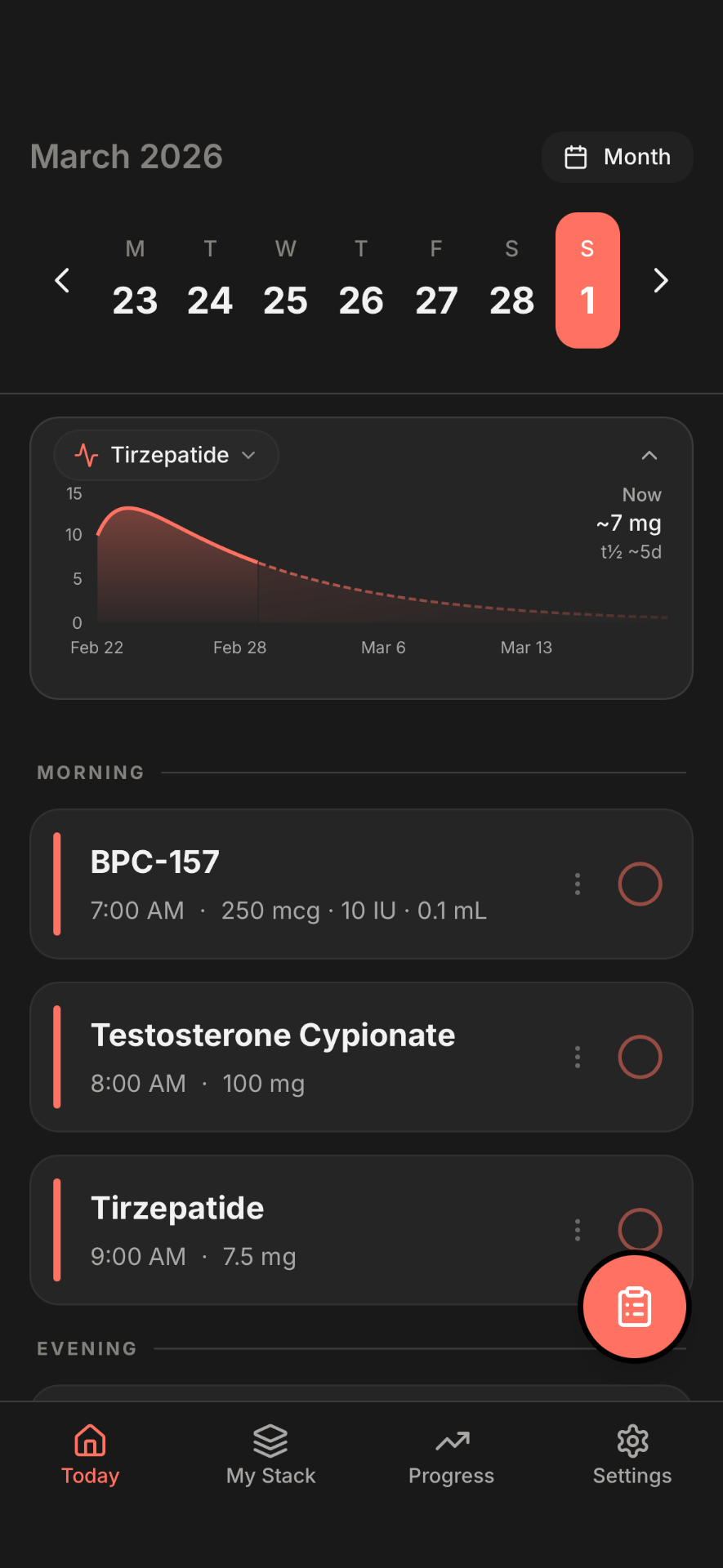
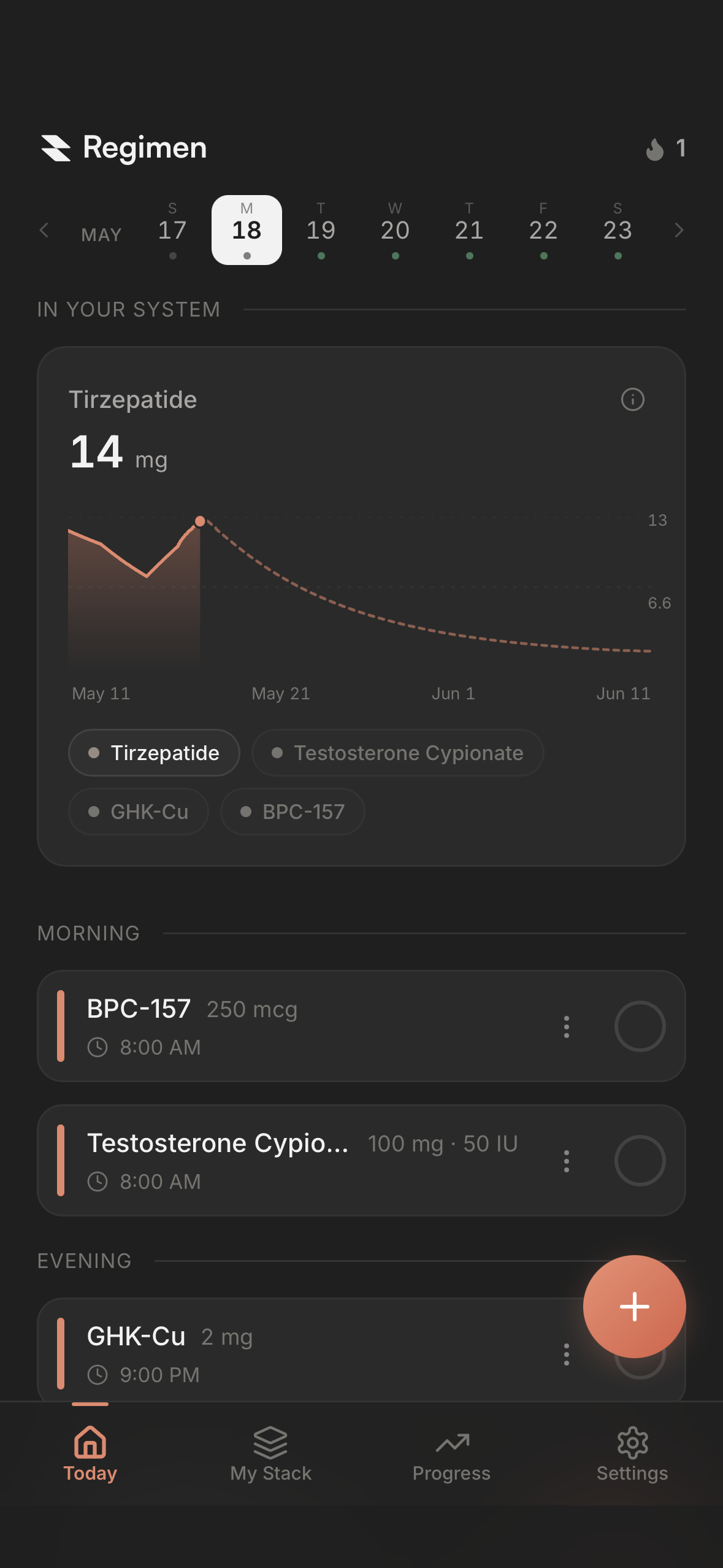
The Regimen app lets you track both injectable and nasal protocols in the same place, including injection site rotation, nasal dosing schedules, and subjective effect tracking across all your compounds.
Frequently Asked Questions
Can I use any peptide as a nasal spray?
No. Only small peptides (roughly under 20 amino acids) with favorable absorption properties work well nasally. Larger peptides like GLP-1 agonists cannot cross the nasal mucosa in meaningful amounts.
Is nasal spray less effective than injection?
For brain-targeting peptides (Semax, Selank), nasal may deliver MORE to the brain than injection. For body-targeting peptides (BPC-157, GH peptides, GLP-1s), injection is more effective.
How do I know which delivery method to use for my peptide?
Ask: Is the target the brain or the body? Brain-targeting peptides often work better nasally. Body-targeting peptides need injection. Check bioavailability data for your specific peptide.
Can I switch between nasal and injection for the same peptide?
For peptides like Semax that work both routes, yes. Just remember dosing is different between routes.
Why was PT-141 changed from nasal spray to injection?
Because nasal bioavailability was only roughly 4%. The FDA-approved version (Vyleesi) is SubQ injection.
Can nasal congestion affect my peptide dose?
Yes. Congestion reduces mucosal surface area and can block the peptide from reaching olfactory nerve pathways. Use a saline rinse before dosing if congested.
Related Articles
- Semax Nasal Spray: Dosage Guide, Benefits, and Protocols
- Selank Nasal Spray: Dosage, Anxiety Benefits, and Protocol Guide
- Semax vs Selank: Which Nootropic Peptide Nasal Spray Is Right for You?
- How to Store Peptides
- BPC-157 Reconstitution Calculator Guide
Warning
This guide is for informational purposes only and does not constitute medical advice. Peptides discussed here are not FDA approved unless noted otherwise. Consult a healthcare provider before starting any peptide protocol.
Ready to track your protocol?
- Smart reminders so you never miss a dose
- Track weight, photos, and progress over time
- Medication level curves for every compound
Do nasal sprays expire faster than injectable peptides?
Reconstituted peptide solutions generally have similar shelf lives regardless of delivery method (typically 28 days refrigerated for DIY reconstitution). Pre-made nasal sprays may have different expiration timelines based on their specific formulation and preservatives.
Is one delivery method safer than the other?
Both are generally safe when used properly. Nasal sprays carry minimal risk (mild nasal irritation is the main side effect). Injections carry a small risk of injection-site infection if sterile technique is sloppy, and localized reactions (redness, swelling) are common. Neither route is inherently dangerous.