Starting T is one of the biggest moments of your life. You’ve probably been thinking about it for months or years, reading timelines, watching voice comparison videos, mentally preparing for that first shot. And now you’re here, or you’re about to be, and the reality is setting in: this is a years-long process with a lot of moving parts.
This guide covers the practical stuff. What actually happens in your first year on testosterone, what you’ll want to document (and what you’ll regret not documenting), how common protocols work, and tips from people who’ve been where you are. Whether you’re about to start, a few months in, or years into your protocol and looking for a better system, this is the resource you can come back to.
What to Expect in Your First Year on T
Every body responds differently. Genetics, dose, body composition, and age all play a role. That said, here’s a general timeline based on clinical guidelines and years of community experience. Don’t treat this as a checklist. Your timeline is yours.
Weeks 1 to 4: The subtle stuff
Skin gets oilier. You might notice increased energy, a shift in mood, or changes in libido. Some people describe a feeling of “something is different” that’s hard to pin down. These early weeks can feel frustratingly slow when you’re watching for visible changes, but your body is adjusting to new hormone levels.
Months 1 to 3: Body starts responding
Acne often shows up (the “second puberty” nickname is earned). Fat may start shifting from hips and thighs. Periods typically lighten or stop within the first few months for most people, though it can take up to six months. Appetite and metabolism may change. Emotionally, many people report feeling more stable or more present, though the adjustment period varies.
Months 3 to 6: Voice and body changes
This is when most people start hearing their voice change. It’s usually gradual: cracking, a slight drop, then a more noticeable shift. Some people get lucky and it drops fast; for others it takes closer to a year. Fat redistribution becomes more visible. You might notice your face shape changing. Muscle comes on easier if you’re working out.
Months 6 to 12: The “when did that happen?” phase
By now, the changes are adding up in a way that people around you might notice. Voice deepening continues. Facial hair may start appearing (usually fine peach fuzz at first, and it takes 2+ years to fill in for most people). Body hair increases. If you’ve been taking progress photos, comparing month 1 to month 10 can be genuinely shocking. The changes happen so slowly day-to-day that you don’t see them until you look back.
The comparison trap: Every thread about timelines has someone who got a full beard at month 6 and someone who had peach fuzz at year 2. Both are normal. Your body isn’t on anyone else’s schedule. The most useful comparison is you vs. you three months ago, and that’s only possible if you’ve been documenting.
Things You’ll Wish You Documented
Ask anyone who’s been on T for a year or more what they wish they’d done differently, and the answer is almost always some version of: “I wish I had tracked more from the beginning.” Here’s what’s worth documenting and why.
Voice recordings
Record yourself saying the same sentence (or reading the same paragraph) every week or two. You won’t hear changes day-to-day, but comparing month 1 to month 6 is incredible. Some guys use a voice tracking app alongside their protocol tracker. Even just a voice memo on your phone works. The key is consistency, same conditions each time.
Progress photos
Face photos in the same lighting, same angle. Body photos if you want to track fat redistribution and muscle changes. Facial hair growth is incredibly satisfying to document over months. The important thing is consistent conditions: same spot, same lighting, same angle. Otherwise you’re comparing apples to oranges.
Energy and mood patterns
Testosterone affects energy, mood, confidence, sleep, and mental clarity. If you’re on a weekly or biweekly schedule, you might notice mood shifts that correlate with your injection cycle. Feeling great on days 1 to 4 and dipping on days 6 to 7? That’s a pattern worth knowing about, especially when talking to your provider about dose timing.
Body changes and milestones
Facial hair growth, acne, body hair, body composition shifts. Also milestones like when your period stops, when your voice cracks for the first time, when you first get clocked correctly by a stranger. These things feel memorable in the moment but fade over time. A quick note with a date preserves them.
Your actual injection data
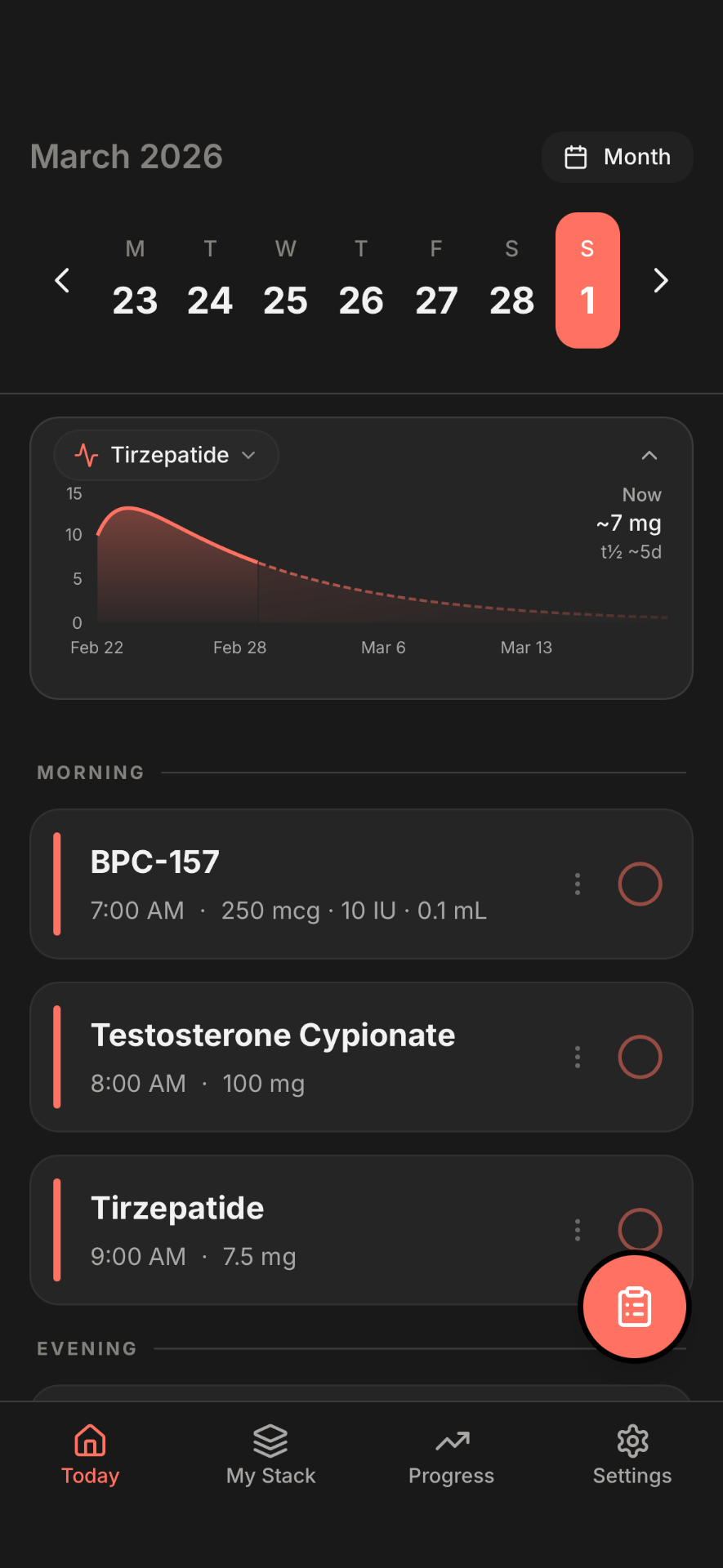
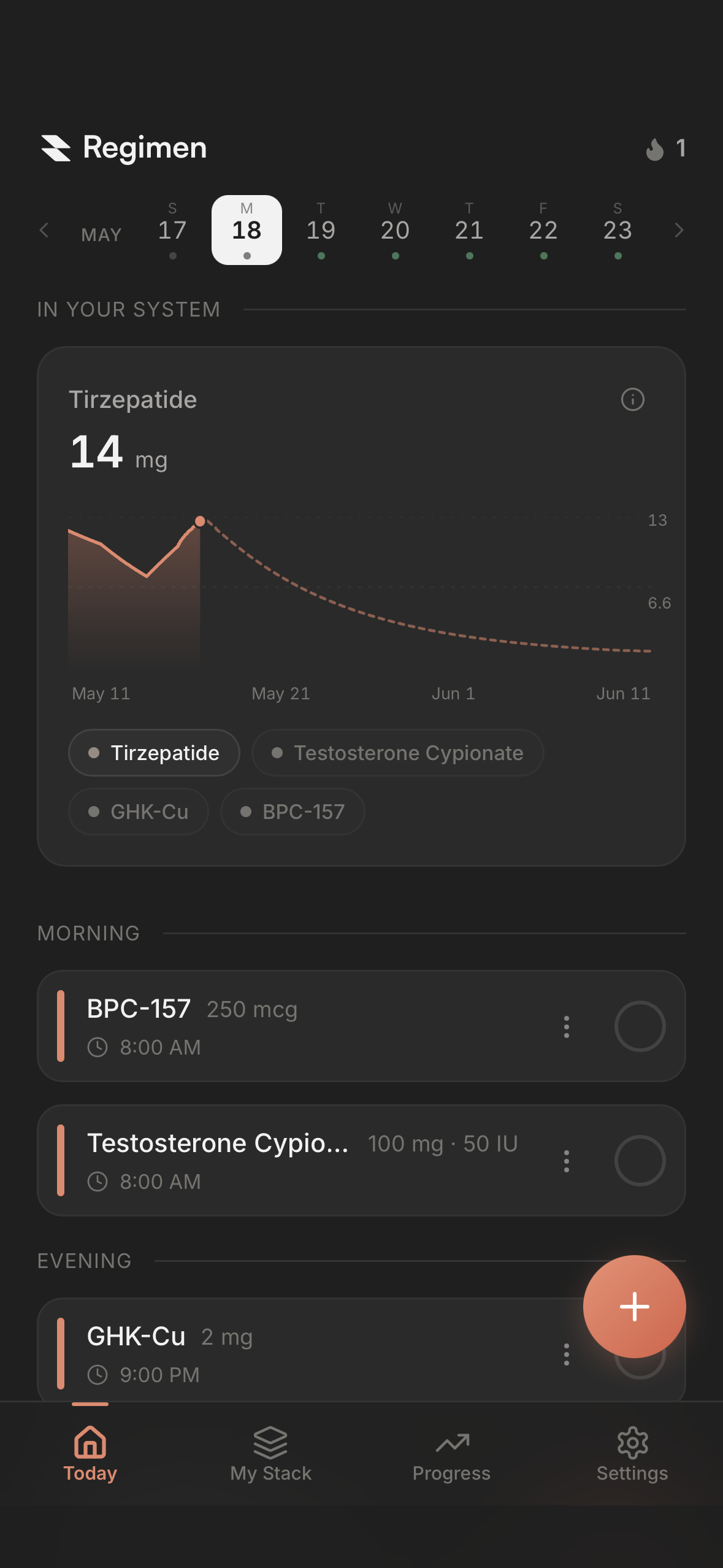
Date, time, dose, injection site. Simple, but important. Especially if your dose changes (which it probably will in the first year). Being able to look back and say “my voice started dropping two weeks after we increased from 50mg to 80mg” is useful data for you and your provider. A tracking app like Regimen handles the dose logging, reminders, and notes in one place, so you don’t have to maintain a spreadsheet.
Common T Protocols
Your provider will prescribe what’s right for you based on bloodwork and how you’re responding. Here are the most common options you’ll encounter:
| Protocol | Compound | Typical Dose | Notes |
|---|---|---|---|
| Weekly IM | Testosterone Cypionate | 50 to 100 mg/week | The most common starting protocol. Intramuscular injection, usually into the thigh or glute. |
| Biweekly IM | Testosterone Cypionate or Enanthate | 100 to 200 mg every 2 weeks | Fewer injections, but bigger peaks and troughs. Some people feel an energy/mood dip in week two. |
| Weekly SubQ | Testosterone Cypionate | 50 to 80 mg/week | Uses an insulin syringe (tiny needle). Growing in popularity, especially with people who have needle anxiety. |
| Daily or EOD SubQ | Testosterone Cypionate | 7 to 15 mg/day | More frequent but tiny injections for very stable levels. Good for people sensitive to hormonal fluctuations. |
| Gel or Cream | Testosterone Gel (AndroGel, Testim) | Varies | Daily topical application. No needles. Risk of transferring to others through skin contact. |
Most people start with weekly intramuscular cypionate. Use the TRT dose calculator to figure out your exact injection volume based on your prescribed dose and vial concentration. If needles are a barrier, subcutaneous injections with insulin syringes are increasingly prescribed and use a much smaller needle. Some people eventually move to daily or every-other-day subcutaneous protocols for more stable levels. See how your injection frequency affects your testosterone levels with our half-life visualizer. See our microdosing testosterone guide for more on that approach.
On dose comparisons: Don’t worry about what dose someone else is on. Starting doses are often lower while your provider monitors bloodwork and response. The “right” dose is whatever gets your levels where they need to be for you, and that’s individual.
Community Tips
These come from years of community discussions. Individual experiences vary, and your provider’s guidance always takes priority, but this is the kind of practical wisdom that’s hard to find in a clinical pamphlet.
On needle anxiety
Nearly three years on T and still can’t do shots alone? That’s more common than you think. A lot of people have someone hold their hand or sit with them during injections, even years in. If needle anxiety is affecting your consistency, ask your provider about switching to SubQ with insulin needles. The needle is so small it barely registers. Some people describe it as easier than a blood draw. Ice the area beforehand, put on a show you like, and don’t watch the needle go in.
SubQ vs. IM: what people actually experience
Studies show comparable absorption for both routes. The real difference is comfort: SubQ uses a 29 to 31 gauge needle (tiny), can be done in the abdomen or thigh fat, and hurts less. IM uses a larger needle (22 to 25 gauge) and goes into muscle, usually the thigh or glute. A lot of people who switch from IM to SubQ say they wish they’d started there. If your provider only prescribes IM, it’s worth asking about SubQ as an option.
The biweekly roller coaster
If you’re on every-two-week injections and feeling great for the first week, then crashing with low energy, mood dips, or irritability in week two, you’re not imagining it. That’s a real hormonal trough. A lot of people feel dramatically better after switching to weekly injections (same total dose, just split in half). If you’re experiencing this, log how you feel each day for a couple of cycles and bring that data to your provider. It’s hard to argue with a pattern written down.
What people wish they’d tracked from day one
Voice recordings (same sentence, same conditions, every couple of weeks). Face photos in consistent lighting. When their period stopped. The date acne started and whether it correlated with a dose change. How their mood and energy varied across their injection cycle. Nobody thinks they need this data until they’re six months in and trying to remember when things changed.
Don’t compare timelines
At four weeks, it’s easy to look at other people’s timelines and feel like nothing is happening. Some people see visible changes fast; for others, it’s a slow build. Both are normal. Genetics play a huge role. The best thing you can do is track your own changes against your own starting point, not against someone else’s six-month update.
Site rotation matters
Alternate left and right sides for IM (thighs or glutes). For SubQ, rotate between abdomen and thighs, switching sides each time. Repeated injections in the same spot cause scar tissue that can affect absorption. It’s a small habit that makes a real difference over months and years of injections.
Why All This Data Matters
You will have appointments where your provider asks when a change started, how you’ve been feeling since a dose adjustment, or whether a specific symptom correlates with your injection schedule. If you have that data logged, those conversations are productive. If you’re going from memory, you’re guessing.
Logged data also helps if you ever need to switch providers (which happens more than it should). A complete protocol history with notes and timeline beats a verbal summary every time.
And honestly? Looking back at your own journey with actual data, photos, and notes is something future-you will be grateful for. The changes happen so gradually that you forget where you started. Having a record preserves that.
Regimen handles the injection logging, dose reminders, notes, progress photos, and estimated blood level curves in one place. It supports testosterone cypionate and enanthate, any injection schedule your provider prescribes (weekly, biweekly, daily, every-X-days), and you can track other compounds alongside T if your protocol includes anything else. Injection site rotation and bloodwork logging are both supported.
Frequently Asked Questions
What’s a normal starting dose of testosterone?
Most providers start between 25 and 100 mg per week of testosterone cypionate, depending on your weight, labs, and their protocol. Starting lower and titrating up based on bloodwork is standard. Your provider will check levels at 6 to 8 weeks and adjust from there.
When will my voice drop?
Most people notice voice changes starting somewhere between 3 and 12 months on testosterone. It usually begins with cracking or a slight roughness, then gradually deepens over a year or more. Genetics play a big role. Recording yourself regularly is the best way to track it.
SubQ vs. IM - which is better?
Neither is objectively better. Studies show similar absorption and outcomes. SubQ uses a smaller needle, hurts less, and is easier to self-administer. IM delivers medication directly into muscle. If needle anxiety is a factor, SubQ with insulin syringes is worth asking your provider about.
What should I track from day one?
At minimum: injection date, dose, and site. Beyond that, voice recordings, face/body progress photos in consistent lighting, notes on mood and energy patterns across your injection cycle, and milestones like when your period stops or your voice first cracks. The data you don’t collect early is gone forever.
How do I deal with needle anxiety?
It’s extremely common, even after years on T. Ask about switching to SubQ with insulin needles (much smaller), ice the injection site beforehand, put on something to watch, don’t watch the needle go in, and have someone with you if it helps. Anxiety about injections doesn’t mean you’re doing something wrong.
What bloodwork should I get on testosterone?
At minimum: total testosterone, free testosterone, estradiol, CBC (especially hematocrit), and a metabolic panel. Test at 6 to 8 weeks after starting or any dose change, then every 3 to 6 months once stable. Always test at trough (before your next injection).
Start tracking your protocol
Regimen tracks testosterone cypionate, enanthate, and any other compound in your protocol. Log injections, add notes on changes, take progress photos, and see your estimated blood levels between injections.
Disclaimer: This article is for informational purposes only and is not medical advice. Testosterone therapy should be prescribed and monitored by a qualified healthcare provider. Individual responses to hormone therapy vary. Always follow your provider’s guidance on dosing and monitoring.
Ready to track your protocol?
- Smart reminders so you never miss a dose
- Track weight, photos, and progress over time
- Medication level curves for every compound