Compounded Semaglutide and Tirzepatide in 2026: What's Still Available
If you were getting compounded Ozempic or Mounjaro from a compounding pharmacy and something changed, or you're worried it might, this guide explains exactly what happened, what's still accessible, and what your options are.
The short version: compounding pharmacies can no longer make identical copies of brand-name semaglutide or tirzepatide the way they could during the shortage. But the situation is more nuanced than a simple ban, and options still exist.
What Changed: The End of the Shortage Exemption
During the GLP-1 drug shortages of 2023 and 2024, the FDA placed semaglutide (Ozempic/Wegovy) and tirzepatide (Mounjaro/Zepbound) on its official shortage list. When a drug is on the shortage list, licensed compounding pharmacies can legally prepare copies to meet patient demand, even without FDA approval of the compounded version. This is what opened the door for the wave of compounded GLP-1 access through telehealth clinics and compounding pharmacies.
As the shortage eased and brand-name supply stabilized, the FDA removed semaglutide and tirzepatide from the shortage list. When a drug comes off the shortage list, the exemption that allowed compounding ends with it.
This means:
- 503A pharmacies (prescription compounders) can no longer compound copies that are essentially identical to brand-name semaglutide or tirzepatide
- 503B outsourcing facilities had FDA-imposed wind-down deadlines
- Ongoing court challenges from compounding pharmacies have created additional complexity in how and when these rules apply
What's Still Available in 2026
The landscape has not closed entirely. Here's what exists:
1. Compounded formulations with added ingredients
503A pharmacies can still compound semaglutide or tirzepatide preparations that are meaningfully different from the brand-name product. For example, formulations that include vitamin B12, L-carnitine, or NAD+ as active added ingredients. These are not "copies" of Ozempic but combination formulations. Many telehealth clinics and compounding pharmacies have shifted to this model.
The regulatory status of these combination formulations is contested and evolving. Some legal challenges argue that any compounding of these active ingredients remains prohibited; others argue that meaningfully different formulations are permissible. As of April 2026, this remains in active litigation.
2. Brand-name access
With supply more stable in 2026, brand-name Ozempic, Wegovy, Mounjaro, and Zepbound are more consistently available than during the 2023-2024 peak shortage. Insurance coverage and prior authorization remain the primary barriers.
3. Prior authorization and patient assistance programs
Novo Nordisk and Eli Lilly both operate patient assistance programs. Coverage varies significantly by insurance plan and diagnosis (type 2 diabetes vs. obesity without diabetes).
4. Retatrutide (pipeline)
Retatrutide, a triple GIP/GLP-1/glucagon agonist in Phase 3 trials, is not yet approved. When approved, it is expected to be significantly more effective than semaglutide or tirzepatide. Phase 3 results and FDA review are expected in 2026-2027.
What This Means for Your Protocol
If you were on compounded semaglutide or tirzepatide:
- If you're still getting it from your pharmacy: Ask your provider or pharmacy to clarify whether the formulation has changed (added ingredients) and what the current regulatory basis is. Many providers have adapted their approach.
- If your access was cut off: Brand-name options are more available than a year ago. Talk to your doctor about insurance coverage, prior authorization, or patient assistance programs.
- If you're considering starting: The branded products are the most regulated and consistent option. Compounded alternatives with added ingredients exist but come with regulatory uncertainty.
The Regimen GLP-1 calculator works for any concentration of semaglutide or tirzepatide, whether brand-name pens (pre-dosed) or compounded vials. If your formulation or concentration changes, update it in your protocol and the calculator recalculates automatically.
That flexibility also matters if your provider uses lower-dose or split-dose titration. For a deeper look at low-dose approaches, read the Microdosing Semaglutide and Tirzepatide Guide.
Tracking Through the Change
One of the most important things you can do when your GLP-1 source, formulation, or dose changes is track the transition carefully. Many users who switched from compounded to brand-name (or vice versa) noticed different response patterns, likely due to different titration pacing, formulation differences, or just the psychological effect of the change.
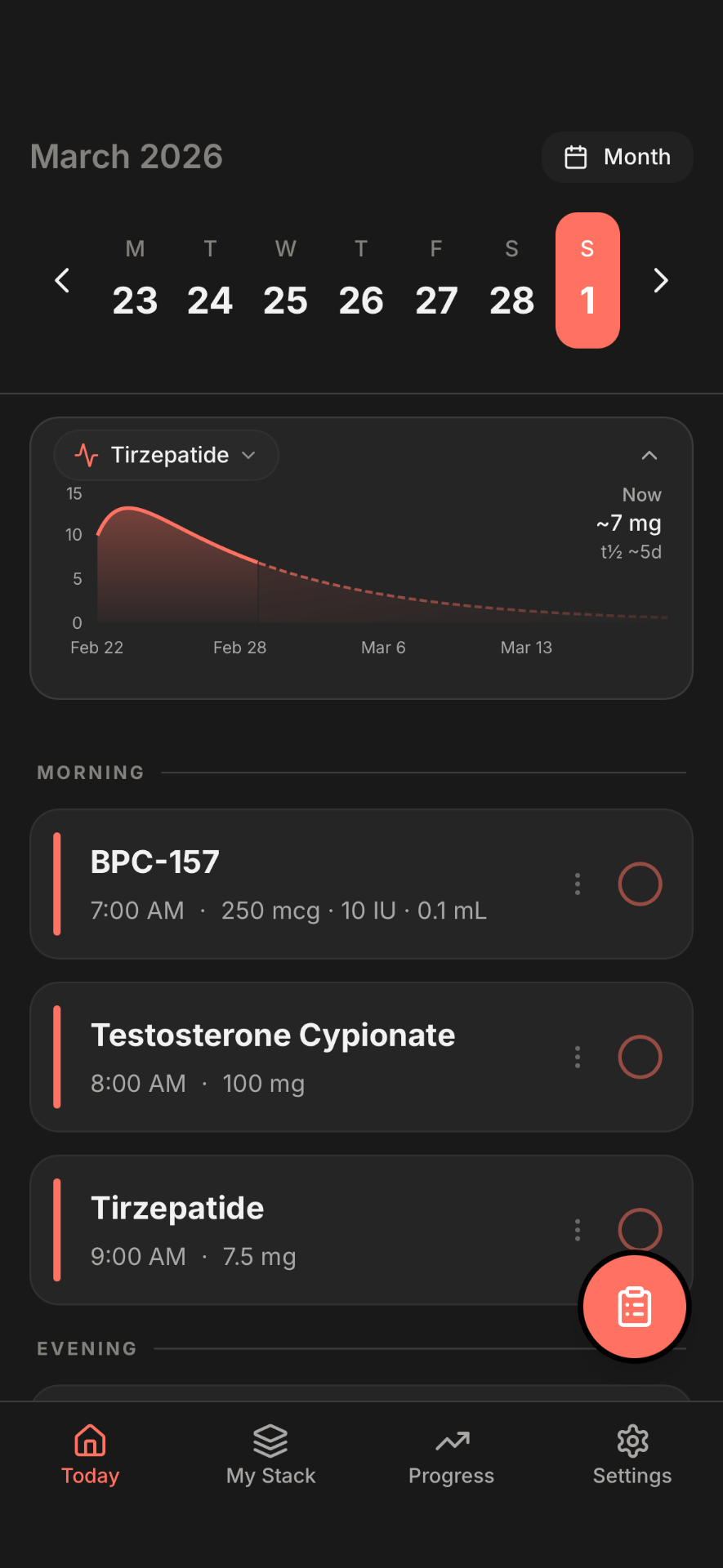
Regimen maps your GLP-1 dose log against your weight, sleep quality, and resting heart rate via Apple Health and Google Health Connect. If something changes in your protocol, your data shows whether and when you felt it.
- GLP-1 dose calculator — calculate injection volumes for any compounded semaglutide or tirzepatide concentration
- Switching from tirzepatide to retatrutide — for users planning ahead for the next generation
Frequently Asked Questions
This article is for informational purposes only and does not constitute medical advice. Always work with a licensed healthcare provider when making decisions about your medication protocol.
Ready to track your protocol?
- Smart reminders so you never miss a dose
- Track weight, photos, and progress over time
- Medication level curves for every compound