TRT in Canada: How to Get Testosterone Prescribed in 2026
Testosterone replacement therapy is fully legal and available in Canada, but how you access it, and what kind of protocol you end up on, depends a lot on whether you go through the public system or a private clinic.
Here's how it actually works.
The Two Paths to TRT in Canada
Path 1: Through Your Provincial Health System
The public system covers TRT for diagnosed hypogonadism: low testosterone with symptoms and confirmed bloodwork.
What you need:
- A GP referral to an endocrinologist (or a GP willing to prescribe directly in some provinces)
- Testosterone bloodwork confirming low levels: typically two morning total testosterone tests below the reference range, plus symptoms
- A confirmed diagnosis of hypogonadism
What to expect:
- Blood work is covered by provincial health insurance
- Testosterone itself is covered by most provincial drug plans when prescribed for hypogonadism
- Wait times for endocrinologist referrals vary significantly by province:
- BC and Ontario: 3-12 months is common
- Alberta: generally shorter
- Quebec: longer wait times reported
- GPs in smaller centres or family health teams sometimes manage TRT directly, no specialist needed
The catch with the public system: Provincial prescriptions are often written for monthly or bi-weekly injections. This is the standard of care in the public system but is not optimal. Weekly or twice-weekly injections produce significantly more stable testosterone levels and are standard in most private clinics. The medication is the same; it's the protocol that differs.
Path 2: Private TRT Clinics
Private men's health clinics are the fastest-growing access point for TRT in Canada. They offer:
- Same-week or next-week appointments (no 3-12 month specialist wait)
- Optimized protocols from the start (weekly or twice-weekly injections)
- Ongoing blood work monitoring included in monthly fees
- Telehealth available in most provinces, no in-person visit required
Cost: $150-$350/month depending on the provider, which typically includes consultation, monitoring, and prescription.
Most Commonly Prescribed Testosterone in Canada
| Compound | Form | Notes |
|---|---|---|
| Testosterone cypionate | Injectable (200mg/mL) | The most common injectable; also available as Depo-Testosterone (brand) |
| Testosterone enanthate | Injectable | Widely available; slightly shorter half-life than cypionate |
| AndroGel / Testim | Topical gel | Commonly prescribed; less popular among patients optimizing for stable levels |
| Natesto | Nasal gel | Less common; sometimes prescribed for fertility preservation |
Injectable testosterone is the standard for optimization-focused protocols. Gels are commonly prescribed in the public system but produce more variable absorption.
Dosing and Injection Frequency
Standard TRT dose in Canada: 100-200mg/week of testosterone cypionate or enanthate.
Public system prescriptions are often written as 200mg every two weeks, a single large injection every 14 days. This is the same total weekly dose as 100mg/week split into two injections, but the bi-weekly approach creates large peaks (high T + high E2 in the days after injection) and troughs (low T before the next injection).
Weekly or twice-weekly injections are significantly better at maintaining stable levels. Private clinics typically start patients on weekly or twice-weekly protocols.
Use the TRT dose calculator to calculate your injection volumes. Enter your dose and vial concentration to get the exact mL per injection. The split dose calculator helps if you're splitting your weekly dose across two injections.
Blood Work and Monitoring
The core panel for TRT management includes:
- Total testosterone (primary measure)
- Free testosterone (often more clinically meaningful)
- Estradiol (E2): estrogen management matters on TRT
- Hematocrit / hemoglobin: testosterone raises red blood cell count; monitor to avoid polycythemia
- LH / FSH: typically suppressed on TRT (relevant if fertility is a concern)
- PSA: baseline and periodic monitoring for men over 40
Blood work is typically done every 6-12 weeks when titrating, then every 3-6 months once stable. In the public system, blood work is covered by provincial insurance. Private clinics include monitoring in their monthly fee or charge separately.
Tracking Your TRT Protocol
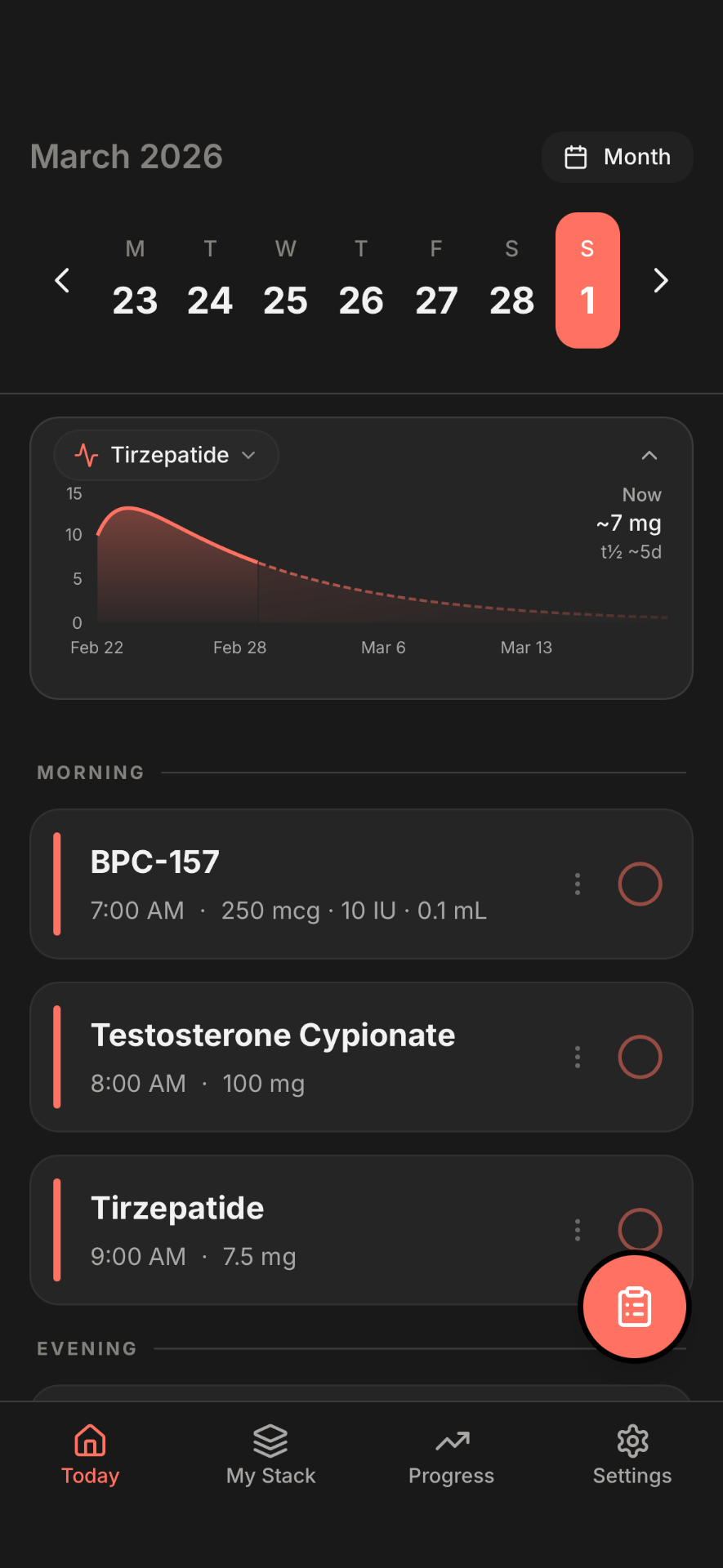
Regimen logs your testosterone dose schedule, models your testosterone blood levels using pharmacokinetic data, and connects with Apple Health to surface how your metrics track against your protocol timeline.
Use the free testosterone calculator to estimate your free T from your total T and SHBG results.
Frequently Asked Questions
Ready to track your protocol?
- Smart reminders so you never miss a dose
- Track weight, photos, and progress over time
- Medication level curves for every compound