TB-500 Dosage & Protocol Guide (2026)
This guide covers standard dosing, the loading vs maintenance protocol, reconstitution, and how to stack TB-500 with BPC-157.
Standard TB-500 Doses
TB-500 is dosed in milligrams (mg), not micrograms -- it is a larger peptide than BPC-157. Vials are typically sold as 5mg lyophilized powder.
| Protocol Phase | Dose | Frequency |
|---|---|---|
| Loading phase | 4-10mg | Twice weekly for 4-6 weeks |
| Maintenance | 2-6mg | Once weekly or biweekly |
| Low-dose maintenance | 2mg | Once every 2 weeks |
Most practitioners use a loading phase of 4-10mg per week (split into 2 injections) for the first 4-6 weeks to build up tissue saturation, then drop to a lower maintenance dose. Total cycle length is typically 4-12 weeks.
How to Reconstitute TB-500
TB-500 is a lyophilized powder that requires reconstitution with bacteriostatic water (BAC water).
Standard reconstitution for a 5mg vial:
| BAC Water Added | Concentration | Volume per 2.5mg dose |
|---|---|---|
| 1mL | 5mg/mL | 0.5mL (50 units on insulin syringe) |
| 2mL | 2.5mg/mL | 1.0mL |
| 2.5mL | 2mg/mL | 1.25mL |
Recommended: Add 1-2mL of BAC water to a 5mg vial. This gives a concentration that keeps injection volumes manageable.
Steps:
- Wipe vial top with alcohol swab
- Draw BAC water into syringe
- Inject water slowly down the inside wall of the vial -- do not aim directly at the powder
- Swirl gently until dissolved
- Store refrigerated (2-8 degrees C), use within 4-6 weeks
Use the peptide reconstitution calculator to calculate the exact volume per injection for any dose.
Injection Protocol
TB-500 is injected subcutaneously or intramuscularly:
- SubQ: 27-31g insulin syringe, abdomen or thigh. Most common approach.
- IM: Some practitioners prefer IM for TB-500 due to the larger volume involved with higher doses.
- Site: Unlike BPC-157, TB-500 is generally injected systemically (not near the injury site) -- it circulates and acts on tissues throughout the body.
- Frequency: Twice weekly during loading; once weekly or biweekly for maintenance.
TB-500 vs BPC-157: How They Differ
| TB-500 | BPC-157 | |
|---|---|---|
| Mechanism | Actin-binding, cell migration | Growth factor upregulation, angiogenesis |
| Dose unit | mg | mcg |
| Dosing frequency | Weekly or biweekly | Daily or twice daily |
| Injection site | Systemic (anywhere) | Near injury site or systemic |
| Primary use case | Systemic tissue repair, inflammation | Tendon, gut, localized healing |
| Stacking | Commonly stacked with BPC-157 | Commonly stacked with TB-500 |
Stacking TB-500 with BPC-157
The "healing stack" of TB-500 + BPC-157 is one of the most common peptide protocols used for injury recovery. The rationale: they work through complementary mechanisms, with TB-500 providing systemic anti-inflammatory and cell migration effects while BPC-157 promotes localized angiogenesis and growth factor upregulation.
Common stacking protocol:
- BPC-157: 250-500mcg SubQ twice daily (near injury site if applicable)
- TB-500: 5-10mg SubQ twice weekly (loading phase), systemic site
Run both compounds for 4-8 weeks, then assess. Some practitioners continue BPC-157 on a maintenance dose while tapering off TB-500.
Tracking Your TB-500 Protocol
TB-500 is typically used for a specific purpose -- an injury, chronic inflammation, or post-surgical recovery. Tracking your protocol and response gives you actionable data instead of guesswork.
What to track:
- Dose and injection schedule
- Subjective pain or mobility score (1-10)
- Sleep quality and resting heart rate (from Apple Health or Google Health Connect)
- Weekly progress notes
Tracking TB-500 with an App
What's the best app for tracking TB-500?
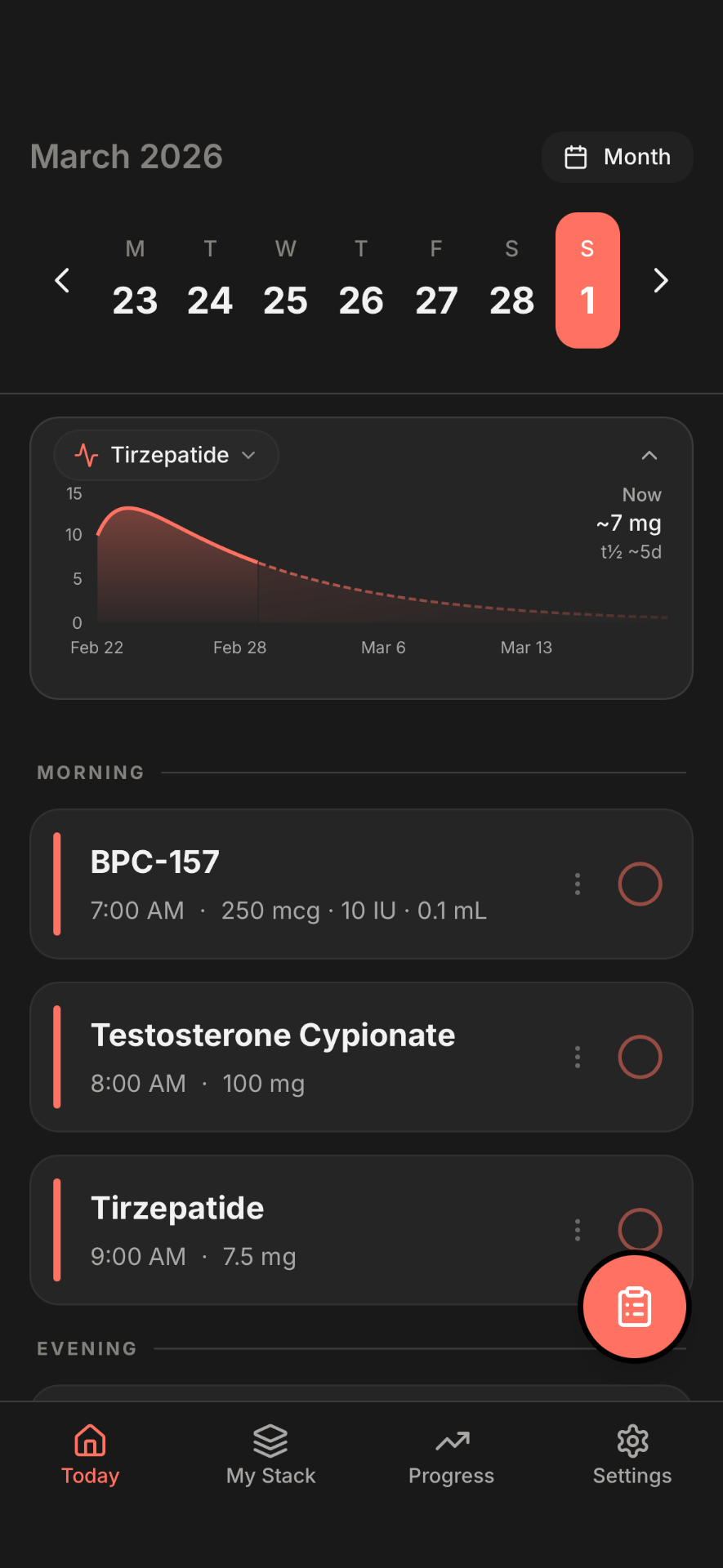
Regimen is a purpose-built tracker for TB-500 that logs each injection with dose, site rotation, and time. The free tier covers one compound with all features unlocked: PK curves (half-life visualization), injection site rotation, dose reminders, and Apple Health / Health Connect correlation so you can see how TB-500 is affecting your sleep, body composition, or weight over time.
Can I track TB-500 in Apple Health?
Apple Health doesn't have native TB-500 tracking, but apps like Regimen sync dose logs to Apple Health and pull metrics (weight, body fat, sleep) back so you can correlate medication with outcomes.
How do I track TB-500 side effects?
A tracker app with structured check-in metrics (energy, sleep, recovery, soreness) is more reliable than a notes app. Regimen tracks 20+ check-in metrics that link directly to your dose log, so patterns become visible after 3 to 4 weeks.
Frequently Asked Questions
TB-500 is commonly stacked with BPC-157 for enhanced recovery. See the April 2026 FDA ruling for the latest on compounding access.
Regimen is a tracking tool, not a medical service. We do not provide medical advice. Always consult your healthcare professional before starting, changing, or stopping any medication protocol.
Ready to track your protocol?
- Smart reminders so you never miss a dose
- Track weight, photos, and progress over time
- Medication level curves for every compound