Quick answer
Research peptides like BPC-157, TB-500, and CJC-1295 are not approved for human use in Korea, but a growing private anti-aging clinic market in Seoul and Busan offers peptide protocols through medical channels. Pricing varies widely. Personal import is restricted by the Korea Customs Service. Most Korean users access peptides through either licensed clinics or international research-chemical suppliers.
This guide describes the Korean peptide market as of May 2026. Regulatory status, customs enforcement, and clinic offerings change. Consult a licensed Korean medical provider before starting any peptide protocol.
The Korean Peptide Scene in 2026
Korea has the infrastructure for a peptide market that most countries do not. Aesthetic and anti-aging medicine is a major industry in Seoul. Clinics in Gangnam, Apgujeong, and Cheongdam already run NAD+ infusions, glutathione, exosome therapy, and a growing slate of peptide protocols. The regulatory situation is more cautious than the practice on the ground.
Legal Status: MFDS, Customs, and What’s Actually Approved
The Ministry of Food and Drug Safety (MFDS) is Korea’s drug regulator. As of 2026, the typical research peptides (BPC-157, TB-500, CJC-1295, Ipamorelin, GHK-Cu) are not approved as human therapeutic drugs in Korea. Clinical-use peptides that are approved (insulin, GLP-1 medications, somatostatin analogues, etc.) are available by prescription through the standard pharmacy system.
The Korea Customs Service restricts personal import of unapproved medications. Small personal-use shipments of research peptides can be seized; enforcement is inconsistent but not negligible. Importing in commercial quantity for resale carries real legal exposure.
Anti-Aging Clinics in Seoul: The Established Path
Private anti-aging and wellness clinics in Seoul are the most common legitimate access point. Many of these clinics work with hospital-affiliated compounding pharmacies that can prepare specific peptides on a physician order. The pattern: initial consult with the clinic doctor, blood panel, then a tailored protocol that may include NAD+, glutathione, GHK-Cu, and increasingly BPC-157 or similar.
Notable clusters: Gangnam-gu (largest concentration of anti-aging clinics), Apgujeong (premium aesthetic clinics), Cheongdam, and Yongsan. Busan has a smaller but established scene. Pricing is significantly higher than international research-chemical sourcing, but you get sterile-compounded product with physician oversight.
Peptides Available Through Korean Clinics
- GHK-Cu: widely offered, both injectable and topical formulations
- BPC-157: increasingly offered for recovery and joint use
- NAD+ and NAD+ precursors: very common, IV and IM protocols
- Glutathione: a staple of Seoul aesthetic medicine
- AOD-9604: offered at some weight-management focused clinics
- Thymosin alpha-1: immune protocols at some clinics
- Exosomes: not technically peptides, but in the same clinic menu
Personal Import: Customs Restrictions and Risk
Importing peptides personally carries real risk. Korea Customs Service can seize unapproved medications at the border, and shipments labeled as “research chemicals” or arriving from known peptide suppliers attract attention. Enforcement is uneven; some packages arrive without incident, others are stopped. The penalty for personal-use seizure is typically the loss of the shipment rather than prosecution, but commercial-scale imports are a different matter.
Users who go this route generally accept the loss risk and order in small quantities. Anything that requires temperature-controlled shipping is poorly suited to international order anyway, which is part of why local clinic sourcing wins for many users despite the higher price.
Cost Comparison: Korean Clinics vs International Suppliers
| Peptide | Seoul clinic (monthly) | International research supplier (monthly) |
|---|---|---|
| BPC-157 | KRW 250,000 to 600,000 | KRW 60,000 to 120,000 |
| GHK-Cu (injectable) | KRW 200,000 to 500,000 | KRW 50,000 to 100,000 |
| TB-500 | Limited clinic availability | KRW 100,000 to 200,000 |
| NAD+ IV | KRW 300,000 to 800,000 per session | Not directly comparable |
The clinic premium covers sterile compounding, physician oversight, and a documented chain of custody. The international supplier route is cheaper and faster to set up but carries customs risk and quality-assurance questions.
Popular Peptides in the Korean Market
BPC-157 is the most-discussed peptide in Korean recovery and longevity communities, used for joint and gut issues. GHK-Cu has crossed over from aesthetic medicine (where it has been used for years in Korean skincare formulations) into injectable anti-aging protocols. AOD-9604 sees adjunct use in weight-management clinics, often paired with prescribed GLP-1 medications. NAD+ is more infusion than peptide, but it dominates the longevity-clinic menu.
Reconstitution and Dosing in Korea
Bacteriostatic water (정균수) is not as readily available in Korean pharmacies as it is in the US, but clinics that compound peptides have it, and it can be ordered through medical supply channels. Insulin syringes are available at any pharmacy without a prescription, which makes the dose-drawing side of the workflow straightforward. The math is the same as everywhere else: total mg in the vial divided by mL of BAC water gives concentration, and your dose in mcg divided by concentration gives volume to draw. The peptide calculator handles it. For intranasal protocols (Semax, Selank, BPC-157 nasal), the intranasal calculator covers the spray-volume math.
Tracking Your Protocol Discreetly
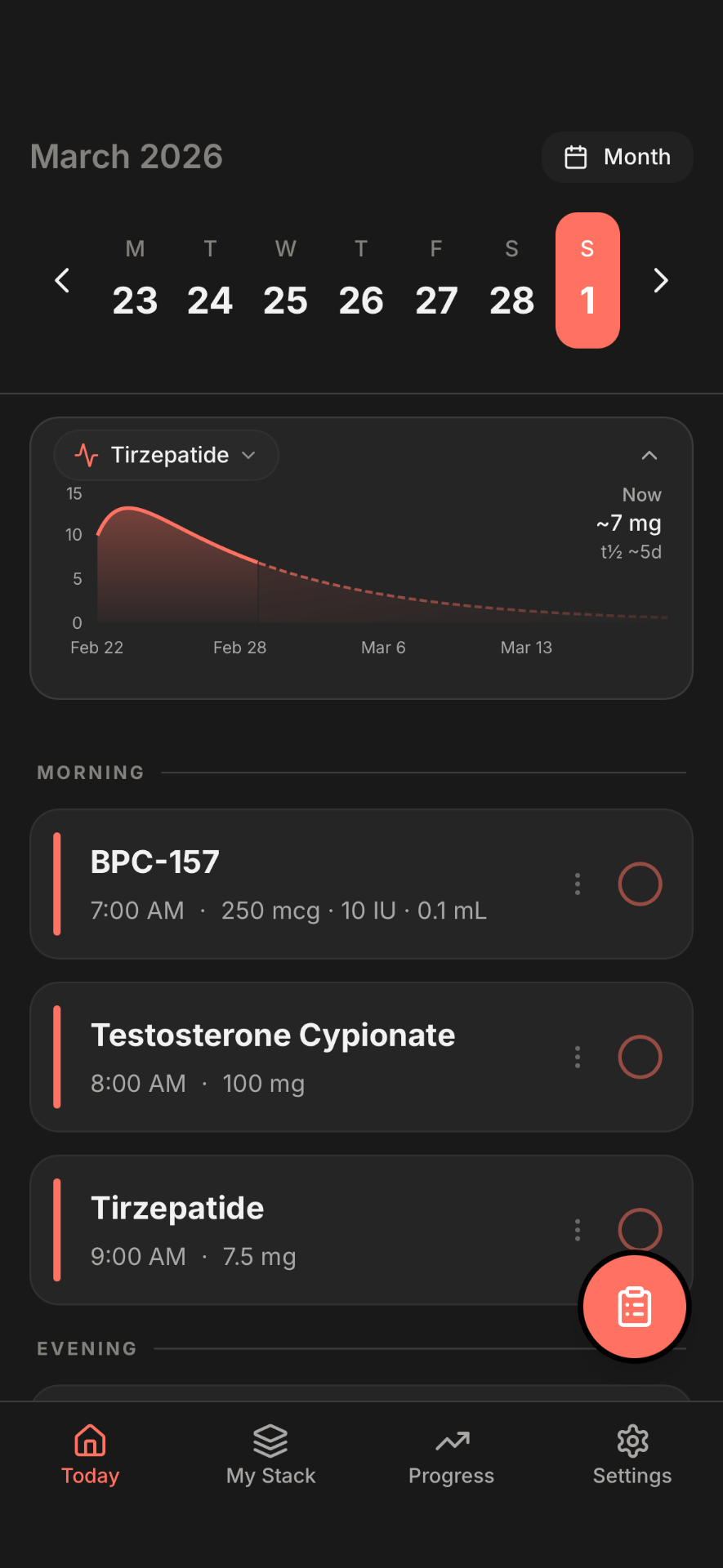
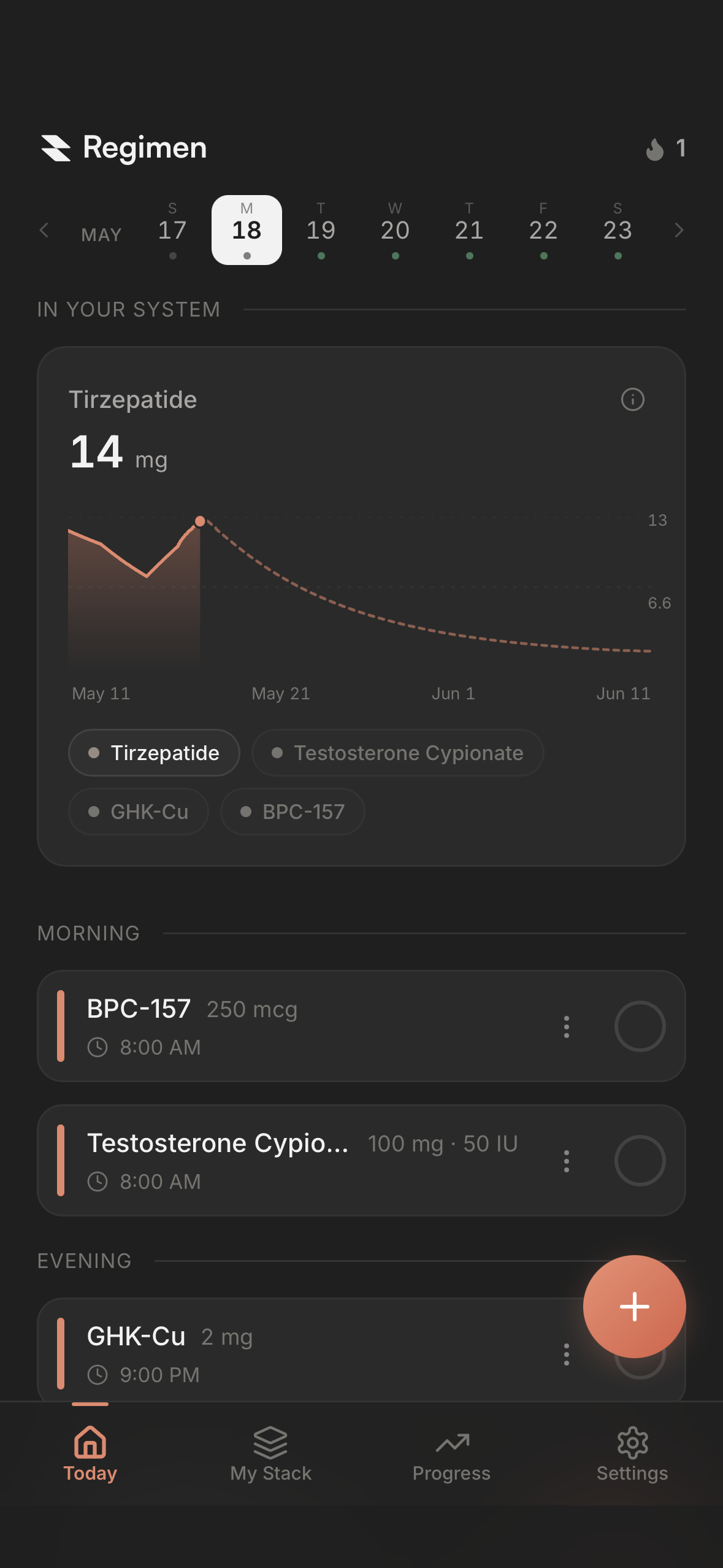
Regimen handles peptide protocol tracking without requiring you to identify the compound to anyone else. Reconstitution math, dose logging, injection-site rotation, and daily markers on pain, recovery, energy, and sleep are all in the app. Regimen’s built-in pattern detection connects daily markers to your dose schedule so you can see whether a stack is actually moving the needle. For protocol context, see the BPC-157 and TB-500 recovery stack and the peptides that work as nasal sprays guide.
Frequently Asked Questions
Are peptides like BPC-157 legal in Korea?
BPC-157 and most research peptides are not approved as human therapeutic drugs by the MFDS, but they are available through private anti-aging clinics that use physician-ordered compounded preparations. Personal import is restricted and packages can be seized by Korea Customs Service. Clinic-mediated access is the cleanest legal path.
Can I import peptides into Korea?
Personal import is restricted and enforcement is inconsistent. Small shipments sometimes clear, sometimes get seized. Commercial-quantity import for resale carries real legal exposure. Most Korean users who source internationally accept the seizure risk and order in small quantities, but the clinic route is more reliable.
Which Seoul clinics offer peptide therapy?
A growing number of private anti-aging and wellness clinics in Gangnam-gu, Apgujeong, Cheongdam, and Yongsan offer peptide protocols. Specific clinic recommendations change frequently; the more useful filter is whether the clinic uses sterile-compounded product, has physician oversight, and runs proper baseline blood panels before starting a protocol.
How much does peptide therapy cost in Korea?
Clinic-sourced peptides typically run KRW 200,000 to 600,000 per month per compound, with significant variability by clinic and protocol complexity. NAD+ IV sessions are commonly KRW 300,000 to 800,000 per session. International research-chemical suppliers can be a fifth to a tenth of those prices but carry customs and quality-assurance trade-offs.
Is GHK-Cu available in Korea?
Yes, GHK-Cu is one of the most widely offered peptides in Korean anti-aging clinics. It has a long history in Korean skincare formulations, and the injectable protocols have crossed over into the anti-aging clinic menu over the past several years. Topical GHK-Cu serums are available retail; injectable GHK-Cu is through clinics.
Do Korean pharmacies sell peptides?
Standard retail pharmacies in Korea stock MFDS-approved peptide drugs (insulins, GLP-1 medications, etc.) by prescription. Research peptides are not stocked at retail pharmacies. The route for those is through compounding-capable clinic pharmacies or international sourcing.
What peptides are approved by MFDS?
MFDS-approved peptide medications include insulins, GLP-1 receptor agonists (semaglutide, liraglutide, etc.), somatostatin analogues, and various other therapeutic peptides used in standard medical practice. Research peptides commonly used for recovery and longevity (BPC-157, TB-500, CJC-1295, Ipamorelin) are not on the approved list and circulate through clinic and import channels.
Related reading
- Regional access guides: TRT, GLP-1, and peptides by country
- How to start peptides: a beginner’s guide
Ready to track your protocol?
- Smart reminders so you never miss a dose
- Track weight, photos, and progress over time
- Medication level curves for every compound